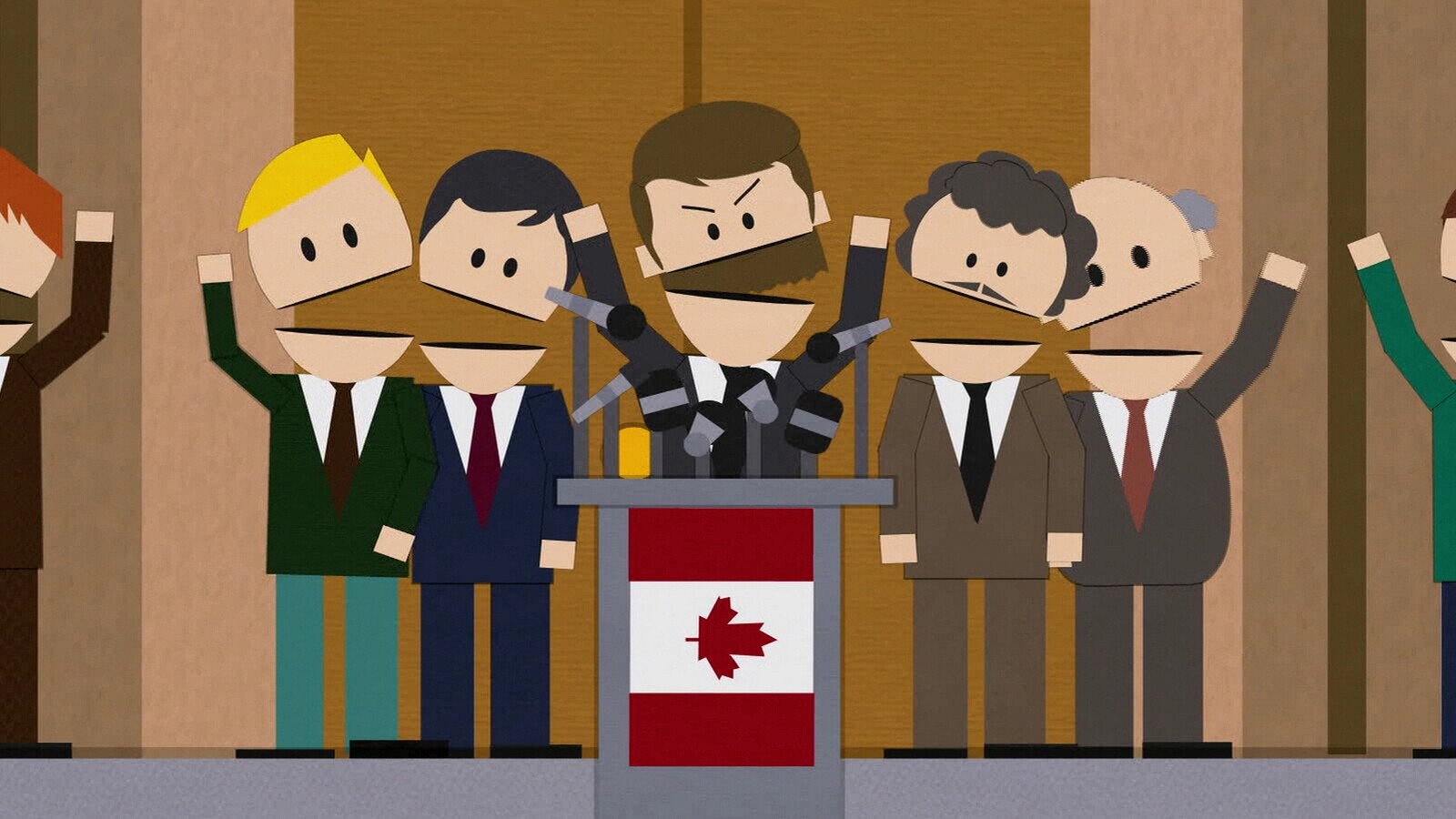
For international South Park fans, July 2025 delivered the kind of surprise usually reserved for Kenny walking into a dangerous situation. Viewers opened Paramount+, searched for the animated comedy, and discovered that nearly three decades of episodes had vanished.
There was no dramatic farewell tour, no final Cartman monologue, and no helpful countdown warning subscribers that 26 seasons were about to leave the building. The series simply disappeared from Paramount+ libraries outside the United States after the platform’s international streaming license expired.
The removal affected viewers across major Paramount+ markets, including the United Kingdom, Canada, Australia, Ireland, continental Europe, and parts of Latin America. It also arrived during a complicated negotiation involving creators Trey Parker and Matt Stone, Paramount Global, Warner Bros. Discovery, and Paramount’s then-pending merger with Skydance Media.
The good news is that the disappearance was not a permanent cancellation. Paramount later announced a new five-year agreement covering the show’s back catalog and future episodes. Still, the incident offered a remarkably clear lesson about modern streaming: paying for a service does not mean the service permanently controls what appears inside it.
What Happened to South Park on Paramount+?
In early July 2025, international subscribers began reporting that regular episodes of South Park were no longer available on Paramount+. Searches that had previously produced season after season suddenly returned little more than a handful of specials.
The disappearance was not caused by censorship, a technical outage, or a coordinated attempt to protect the world from Mr. Garrison. Paramount+ had reached the end of the contractual window that allowed it to stream the television series internationally.
Once that licensing period expired, the platform could no longer legally offer the episodes unless a new agreement was completed. Streaming libraries are updated by territory, so the removal did not look identical everywhere. However, reports from multiple countries described the same basic experience: the traditional series was gone, while certain Paramount+ specials remained.
Why Some South Park Specials Stayed Online
The continued availability of specials made the situation especially confusing. A subscriber could find titles such as South Park: Post COVID or South Park: The Streaming Wars but not the regular seasons surrounding them.
That happened because the specials and the episodic library were covered by different agreements. Paramount had commissioned a series of longer-form projects for Paramount+ under an earlier deal with Parker and Stone. Those productions were treated separately from the hundreds of standard episodes originally made for Comedy Central.
From a legal perspective, the distinction made sense. From a viewer’s perspective, it looked like someone had carefully removed every hamburger from the refrigerator while leaving behind three packets of ketchup.
Why Paramount Did Not Automatically Control the Show
Many subscribers asked the obvious question: Doesn’t Paramount own Comedy Central, the network that airs South Park? How could Paramount lose the right to stream a program associated with its own television channel?
The answer lies in the difference between owning or distributing a television franchise and controlling every form of distribution in every country. Streaming rights can be divided by platform, territory, format, and contract period. A company may hold broadcast rights while another service owns exclusive subscription-streaming rights.
South Park is particularly complicated because Parker and Stone negotiated unusually powerful contractual positions over the course of the show’s success. Their companies retained substantial involvement in the program’s digital distribution, production, and licensing.
As a result, Paramount could not simply place every episode on Paramount+ forever. It needed the appropriate rights, even though Comedy Central had been the show’s television home since its debut in 1997.
The $500 Million HBO Max Agreement
In 2019, WarnerMedia secured exclusive U.S. streaming rights to the existing South Park library in a deal reportedly worth more than $500 million. The series became a major attraction for HBO Max when that service launched in 2020.
The relationship later became contentious. Warner Bros. Discovery sued Paramount and related companies in 2023, arguing that content promised under the agreement had been redirected into Paramount+ specials. Paramount disputed those claims and filed counterclaims of its own.
The lawsuit demonstrated how a single franchise could become tangled in overlapping definitions. Was a long episode a television episode, a movie, a special, or something else entirely? In ordinary conversation, that distinction might sound trivial. In a contract worth hundreds of millions of dollars, every minute suddenly develops a law degree.
The Paramount-Skydance Merger Complicated Negotiations
The 2025 streaming negotiations were already difficult, but Paramount’s pending merger with Skydance added another layer of corporate tension. Parker and Stone publicly complained that the transaction was interfering with the show’s business and production plans.
In a blunt statement posted through the official South Park account, the creators blamed the merger situation for disrupting the series. Their frustration surfaced after the Season 27 premiere was moved from July 9 to July 23, 2025.
Reports at the time suggested that representatives connected to the incoming ownership structure had become involved in discussions over the value and destination of the streaming rights. Parker and Stone’s representatives objected to that involvement, arguing that it affected their ability to negotiate freely with potential buyers.
The conflict mattered because South Park was no longer merely a successful television comedy. It was a global streaming asset with more than 300 episodes, enormous cultural recognition, and a loyal audience willing to follow it between platforms.
For Paramount+, gaining full control of the library could help reduce subscriber cancellations and strengthen the service’s adult-animation lineup. For Parker and Stone, the approaching expiration dates created an opportunity to negotiate a premium price. For viewers, it created a period in which everyone argued over the restaurant while the customers stood outside holding forks.
Why the International Removal Felt So Sudden
Streaming services regularly add and remove movies, but losing an entire 26-season series without a prominent advance warning feels different. South Park was not an obscure catalog title hiding behind seventeen menu screens. For many Paramount+ subscribers outside the United States, it was a major reason for maintaining a subscription.
The removal also happened close to the expected debut of a new season. Paramount had spent years presenting itself as the international streaming home of South Park, so viewers reasonably expected the relationship to continue.
Some subscribers contacted customer support and received explanations stating that the platform’s rights window had ended. Others reported canceling their subscriptions after discovering that the program they watched most had vanished.
Technically, the service was following the terms of its license. Practically, the communication was poor. A small “leaving soon” label would not have solved the contractual dispute, but it would have prevented subscribers from wondering whether their app was broken, their account had malfunctioned, or Canada had finally declared war on Cartman.
Where International Viewers Could Still Watch
Availability varied significantly by country during the interruption. In some regions, episodes continued to appear through television channels, digital stores, free ad-supported services, or local streaming partners.
Canadian viewers, for example, could find selected South Park content through Pluto TV. Viewers in the United Kingdom had access to episodes through services such as NOW, depending on the active catalog and package. Australian audiences could check Paramount-affiliated free-to-air or streaming options, including Network 10 platforms.
Individual seasons and episodes were also available for digital purchase in certain markets through stores operated by Amazon, Apple, and other providers. Buying episodes was more expensive than accessing them through a subscription, but purchased content was generally less vulnerable to an overnight licensing rotation.
Because streaming rights change frequently, the most reliable method was to search legitimate local platforms rather than assume that U.S. availability applied internationally. A show offered on one service in Colorado could be licensed to an entirely different company in Copenhagen.
The $1.5 Billion Deal That Ended the Standoff
The streaming uncertainty did not last long. In late July 2025, reports emerged that Paramount and Parker and Stone’s Park County company had reached a new global streaming agreement valued at approximately $1.5 billion over five years.
Paramount officially announced the broader renewal on July 23, the same day Season 27 premiered on Comedy Central. The agreement covered 50 new episodes, continued the show’s relationship with Comedy Central, and included all 26 previous seasons for Paramount+ distribution around the world.
The deal reportedly worked out to roughly $300 million per year. That enormous figure reflected more than the cost of producing new episodes. Paramount was paying for global streaming rights to a durable library that had attracted audiences across multiple generations.
Unlike many comedy series, South Park can rapidly respond to current events. Its short production schedule allows Parker, Stone, and their team to turn political controversies, celebrity scandals, and technological anxieties into episodes while the topics are still dominating public discussion.
That immediacy makes the show especially valuable in a streaming market full of expensive programs that take two or three years to produce. South Park may look like construction-paper chaos, but from a business perspective, it behaves like a highly efficient content factory powered by satire and terrible parental supervision.
What the Disappearance Revealed About Streaming
Subscribers Rent Access Rather Than Own Libraries
A streaming subscription provides temporary access to a changing collection. It does not guarantee that a particular title will remain available for the duration of a customer’s membership.
This distinction is easy to ignore until a favorite program disappears halfway through a season. The platform still works, the monthly charge still arrives, and the “continue watching” row still exists. The one thing the subscriber wanted to continue watching, however, has packed a suitcase and moved to an undisclosed location.
Global Services Still Operate as Regional Businesses
Streaming platforms market themselves as worldwide entertainment destinations, but licensing remains highly regional. Separate agreements may control the United States, Canada, the United Kingdom, Australia, Latin America, and Europe.
That fragmentation explains why online conversations about availability are often confusing. One viewer may insist that a series is still present, while another says it has disappeared. Both can be correct because they are looking at different national catalogs.
Major Franchises Have More Bargaining Power
The reported value of the new South Park deal showed that proven libraries remain extremely important. Streaming companies need new releases, but they also rely on familiar shows that subscribers rewatch repeatedly.
A 28-year-old animated comedy can be more valuable than a brand-new series because its audience, characters, and viewing habits are already established. There is less uncertainty about whether people will press play. The only mystery is how many times someone can rewatch “Scott Tenorman Must Die” before friends begin asking concerned questions.
Subscriber Experience: What the South Park Blackout Felt Like
Imagine opening Paramount+ on a Friday evening after a long week. You have snacks, no urgent responsibilities, and a carefully selected plan to watch several episodes of South Park. The night appears organized, which is already suspicious.
You select the “continue watching” row, but the familiar thumbnail is gone. You search for the title and find only a few specials. At first, you assume the app is having one of its moments. You restart it. You sign out and sign back in. You check the television, phone, and laptop, performing the traditional multi-device ritual required whenever modern technology insists that the problem is probably you.
After several minutes, you discover reports from other subscribers in your country. The show has disappeared because a licensing agreement expired. Nothing is wrong with your internet connection, television, password, or ability to spell “South Park.” A business contract somewhere has simply reached its final day.
For a casual viewer, this is annoying. For someone who subscribed mainly to watch the series, it changes the value of the entire service. The monthly price remains the same, but the personal benefit has dropped sharply. Streaming subscriptions are emotional purchases as much as financial ones. People do not usually subscribe because a platform contains “thousands of hours of entertainment.” They subscribe because it carries two or three specific programs they actually enjoy.
The experience becomes stranger when the platform continues displaying South Park specials. The search results suggest that the service knows exactly what you want but is offering a legal technicality instead. It is the streaming equivalent of ordering a pizza and receiving only the promotional refrigerator magnet.
Next comes the hunt for alternatives. A viewer checks local television apps, ad-supported platforms, digital stores, and competing subscription services. Availability pages contradict one another because some were written before the removal, some apply only to the United States, and others have not been updated. The supposedly convenient world of streaming begins to resemble detective work with monthly fees.
Some fans decide to wait. Others purchase favorite seasons or cancel Paramount+. A few discover that local broadcasters still carry episodes. Many simply become more skeptical about treating any streaming platform as a permanent archive.
The eventual Paramount agreement resolved the immediate rights problem, but the experience left an impression. Subscribers learned that even a show strongly associated with a media company can vanish from that company’s service. Corporate ownership, production rights, broadcast rights, and streaming rights are not interchangeable.
That lesson may influence future choices. A viewer who once maintained five subscriptions might begin rotating services monthly. Another may buy digital copies of frequently rewatched shows. Someone else may return to physical media, where the disc never announces that its licensing window has expired.
Most importantly, the blackout demonstrated that communication matters. Viewers can understand that contracts end. What frustrates them is discovering the change only after pressing play. A clear warning, regional availability page, and realistic explanation would make these transitions less chaotic.
Streaming companies cannot prevent every licensing dispute, but they can avoid treating subscribers like background characters who missed the previous episode.
Conclusion
The disappearance of South Park from international Paramount+ catalogs was the result of an expired streaming license colliding with difficult negotiations, overlapping distribution agreements, and corporate merger tensions.
It was not evidence that the series had been canceled or permanently banned. Paramount and the creators ultimately reached a new five-year agreement that included the complete back catalog and 50 additional episodes.
For international fans, however, the interruption was a reminder that streaming convenience rests on a complicated network of temporary contracts. Your favorite show may look safely settled inside an app today, but behind the cheerful interface, teams of lawyers may already be arguing over where it wakes up tomorrow.
SEO Metadata