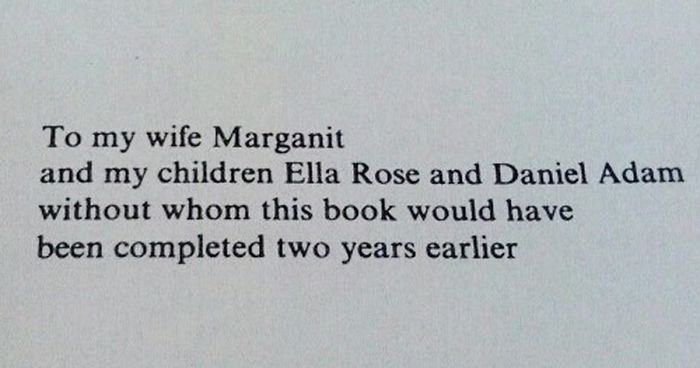
Most readers open a book hunting for Chapter One like it owes them money. Fair enough. But tucked before the story begins, usually on a quiet little page after the copyright information, lives one of publishing’s most underrated art forms: the book dedication.
A great dedication can be romantic, savage, mysterious, funny, political, painfully sincere, or so oddly specific that you immediately want to know the backstory. It is the literary equivalent of a whispered aside at a dinner party. Sometimes it says, “I love you.” Sometimes it says, “Thanks, Mom.” Sometimes it says, “This book exists because you annoyed me just enough.” Honestly, that may be the highest form of creative fuel.
The title “57 Times Writers Took Book Dedications To Another Level” celebrates those rare first-page moments when writers refuse to be boring. Instead of a plain “To Sarah,” they deliver a tiny comedy sketch, a love letter, a revenge note, a memorial, a clue, or a miniature autobiography. The dedication page may be short, but when handled well, it can tell readers exactly what kind of mind they are about to spend time with.
Why Book Dedications Matter More Than Readers Think
A book dedication is part of the front matter, but it is not just decorative furniture. It tells us where the author’s emotional compass was pointing when the book left the desk and entered the world. A dedication can honor a spouse, child, teacher, parent, mentor, friend, reader, pet, critic, enemy, or complete stranger who unknowingly helped ignite the work.
What makes the best book dedications unforgettable is compression. A novelist may need 90,000 words to build a world, but the dedication often has fewer than 20 words to reveal the human being behind that world. That is why clever book dedications feel so satisfying. They are small, sharp, and packed with personality, like espresso shots for book lovers.
57 Ways Writers Took Book Dedications To Another Level
Here are 57 memorable dedication moves, inspired by real author examples, publishing history, and the wild creativity readers have spotted in the first pages of books.
- The “private message in public” dedication: Some authors make the page feel like a note slipped under a door. John Cheever, F. Scott Fitzgerald, and Dashiell Hammett all used compact dedications that hinted at entire relationships behind just a few words.
- The eternal spouse tribute: Vladimir Nabokov’s repeated dedications to Véra turned a name into a lifelong literary signature. Subtle? Not really. Iconic? Absolutely.
- The grief that becomes a monument: Toni Morrison’s dedication in Beloved transformed the dedication page into an act of historical remembrance, proving that a few words can carry the weight of generations.
- The friendship salute: Herman Melville dedicated Moby-Dick to Nathaniel Hawthorne, turning admiration into literary history. The whale was huge, but so was the author crush.
- The children’s book that apologizes to children: Antoine de Saint-Exupéry’s dedication in The Little Prince famously explains why a book for children is dedicated to a grown-up, then beautifully corrects itself.
- The “you grew faster than my manuscript” dedication: C.S. Lewis addressed The Lion, the Witch and the Wardrobe to Lucy Barfield with tenderness and a joke every slow writer understands.
- The dedication as hidden puzzle: Salman Rushdie’s dedication in Haroun and the Sea of Stories forms an acrostic for his son, making the page a secret door inside a public book.
- The “thanks for the whole book” dedication: John Steinbeck’s East of Eden dedication presents the novel like a box filled with everything he had to give. That is not a dedication; that is emotional carpentry.
- The joke at a loved one’s expense: P.G. Wodehouse thanked his daughter for sympathy and encouragement, then joked that without it, the book would have been finished faster. Family: the original productivity blocker.
- The fictional heartbreak series: Lemony Snicket’s recurring dedications to Beatrice across A Series of Unfortunate Events turned the dedication page into a running tragicomic subplot.
- The anti-dedication: Charles Bukowski’s Post Office dedication basically refuses to dedicate the book to anyone. It is blunt, cranky, and very Bukowski.
- The revenge dedication: E.E. Cummings reportedly used the dedication in No Thanks to point at the publishers who rejected him. Petty? Maybe. Memorable? Definitely.
- The stepfather roast: Tobias Wolff’s This Boy’s Life uses a sharp remark about what he did not know “filling a book.” It is memoir as comeback.
- The academic grudge dedication: Alfie Kohn’s note about using Harvard libraries despite access restrictions proves that even research can come with a side of sass.
- The “blame, don’t thank” dedication: Lowell Edmunds turned the usual gratitude ritual upside down by blaming editors who had rejected his work. Acknowledgments, but make them spicy.
- The reader-inclusive dedication: J.K. Rowling split the dedication of Harry Potter and the Deathly Hallows seven ways and included readers who stayed with Harry until the end.
- The dedication to a lost friend: John Green dedicated The Fault in Our Stars to Esther Earl, giving the page emotional gravity before the story even begins.
- The library origin story: Sean Carroll’s dedication to his mother for taking him to the library captures a whole childhood of curiosity in one clean line.
- The dedication that thanks a moral risk: Gloria Steinem’s My Life on the Road uses the page to honor Dr. John Sharpe and connect personal history to public activism.
- The “put the dragons in” dedication: George R.R. Martin’s thanks to Phyllis for encouraging dragons is a reminder that one friend’s suggestion can change fantasy history.
- The dedication to fellow practitioners: Fonda Lee’s dedication to martial artists shows how research, training, and community can shape fictional action.
- The family-and-fiction blend: Isabel Allende’s dedication in The House of the Spirits honors real women and story women at the same time.
- The adventure invitation: Agatha Christie’s dedication in The Secret Adversary speaks to people with ordinary lives who crave secondhand danger. Very polite. Very dangerous.
- The promise fulfilled: Tom Crewe’s dedication in The New Life honors a teacher after a childhood promise. Teachers everywhere may now start collecting signed contracts.
- The school-visit dedication: Kendare Blake dedicated a book to students because a kid in the back row asked. The lesson: always ask. Worst case, you get homework.
- The celebrity crush dedication: Shannon Hale’s nod to Colin Firth in Austenland turns literary admiration into charming comic restraint.
- The cover-artist roast: Derek Landy’s dedication to a cover artist humorously complains that readers praise the cover too much. Writers: famously grateful, but only up to a point.
- The maximalist name-drop: Nelson DeMille’s Wild Fire dedication parodies authors who thank famous people for thin reasons, then joyfully overdoes it.
- The honest parent dedication: Hillis Lory dedicated a book to two little daughters who were “no help” in writing it. Any parent who has typed with one hand understands.
- The marriage proposal dedication: Page Powars used a book launch and dedication page to propose to his partner. That is not just next-level; that is “bring tissues to the bookstore” level.
- The lifelong muse dedication: Julian Barnes repeatedly dedicated novels to Pat Kavanagh, showing how devotion can become part of an author’s public pattern.
- The cryptic dedication: Zadie Smith’s On Beauty uses a short personal dedication that invites curiosity without explaining itself. Sometimes mystery is the point.
- The inside-joke dedication: Grace Metalious dedicated Peyton Place to George “for all the reasons he knows so well.” Readers do not know the reasons, which is exactly why it works.
- The dedication that changes after life changes: Kaye Gibbons revised a dedication after remarriage, reminding us that books stay still, but people do not.
- The dedication to a cultural hero: Christopher Buckley dedicated his first book to John Lennon, connecting personal sadness with a public loss.
- The “don’t overdo it” philosophy: Nicholson Baker’s comments about dedications show another approach: variety, restraint, and avoiding the feeling of a private club.
- The romantic minimalism: Gregor von Rezzori’s “for whom else but you” style proves that a dedication can be both simple and theatrical.
- The dedication as mood lighting: Some writers use the page to set the emotional temperature before the first chapter. Dark comedy, grief, romance, or menace can begin before the plot does.
- The dedication to the reader: Addressing readers directly makes the person holding the book feel chosen. This trick is especially powerful in fantasy, romance, and young adult fiction.
- The dedication to critics: A few authors use the dedication page to wink at people who doubted them. It is more elegant than yelling, and it has better shelf life.
- The dedication to parents: “To Mom” or “To Dad” may seem simple, but when paired with a revealing detail, it can become unforgettable.
- The dedication to children: Authors often dedicate books to children who inspired them, interrupted them, or reminded them why stories matter.
- The dedication to a pet: Dogs, cats, and other companions appear in many author tributes. They may not edit chapters, but they do attend every writing session.
- The dedication to a place: Some books are dedicated to cities, towns, libraries, schools, or rooms where the work took shape.
- The dedication to the dead: These dedications can feel like letters mailed to a country with no postal service, which is why they often hit hardest.
- The dedication to the living but unnamed: “You know who you are” can be charming or maddening. Either way, readers immediately want gossip.
- The dedication as apology: Writers sometimes use the page to apologize to family members for deadlines, emotional absence, or the suspicious number of fictional murders.
- The dedication as warning: Some dedications jokingly warn relatives about spicy scenes, dark plots, or characters who are absolutely not based on them. Probably.
- The dedication as confession: A dedication can reveal a debt the author has carried for years, from a mentor’s faith to a friend’s kindness.
- The dedication as comedy setup: A funny dedication primes readers to expect wit before the story even starts.
- The dedication as brand voice: Humorists, thriller writers, memoirists, and fantasy authors can use dedications to announce their tone immediately.
- The dedication as worldbuilding: In series fiction, recurring dedications can become part of the reader’s ritual, almost like opening credits.
- The dedication as emotional contrast: A funny dedication before a serious book can disarm readers. A serious dedication before a funny book can add unexpected depth.
- The dedication as proof of community: Some dedications remind us that books are not made by isolated geniuses but by people surrounded by teachers, librarians, partners, friends, and readers.
- The dedication as tiny autobiography: When a dedication mentions one person and one precise act, it can reveal more than a full author bio.
- The dedication as literary Easter egg: Hidden acrostics, coded initials, and private references reward readers who slow down.
- The dedication as the first punchline: The best funny book dedications make readers laugh before page one. That is efficient storytelling with excellent fuel economy.
What Makes a Book Dedication Unforgettable?
It Has a Clear Emotional Job
The strongest dedications know exactly what they are doing. They thank, tease, mourn, flirt, confess, or honor. Weak dedications feel like default settings. Great dedications feel chosen.
It Sounds Like the Author
A dedication should not sound like it was assembled from refrigerator magnets labeled “sincere,” “timeless,” and “beloved.” If the author is funny, let the dedication be funny. If the book is intimate, let the page breathe. If the writer is a little unhingedin the charming literary waythis is the perfect spot to wave the flag.
It Gives Readers a Tiny Story
Readers love dedications because they suggest a story behind the story. Who was Beatrice? Why did the kid in the back row matter? What did Phyllis know about dragons? Why is George being thanked for reasons only he knows? A good dedication opens a second narrative without making us file paperwork to understand it.
How Writers Can Create Better Dedications
For authors, the biggest lesson is simple: do not treat the dedication page like a receipt. Treat it like a stage. You do not need to be dramatic, but you should be intentional. A dedication can be one line, one paragraph, or one carefully aimed joke. What matters is that it fits the book and feels honest.
If you are writing your own book dedication, start by asking what kind of debt the book owes. Did someone give you time, courage, money, childcare, criticism, coffee, silence, or the exact sentence that unlocked the plot? Did someone believe in the project when it looked like a folder full of panic? Did someone make you angry enough to prove them wrong? Congratulations, you have material.
The best book dedication ideas usually come from specificity. “To my mother” is nice. “To my mother, who took me to the library” is vivid. “To my children” is sweet. “To my children, who were no help in writing this book” is memorable. The difference is not length; it is detail.
Reader and Writer Experience: Why These Dedications Stay With Us
There is a special experience in finding a dedication that feels bigger than the page. You pick up a book expecting plot, but the first emotional ambush arrives before the story has even put on shoes. One moment you are casually flipping past the copyright page; the next, you are laughing at a joke about toddlers, blinking at a memorial, or wondering whether an author just proposed marriage in front of an entire bookstore. The dedication page is where the book quietly leans toward you and says, “Before we begin, you should know something.”
For readers, this creates intimacy. A dedication reminds us that books do not fall from the clouds fully formatted and smelling faintly of printer ink. They come from messy human lives. Someone encouraged the writer. Someone annoyed the writer. Someone died before the book was finished. Someone made soup, paid rent, proofread drafts, protected writing time, recommended dragons, or simply took a child to the library. When readers see that, the book becomes warmer. It has fingerprints.
For writers, dedications can be surprisingly difficult. After months or years of wrestling with chapters, deadlines, edits, doubt, and the suspicious belief that every sentence is secretly terrible, the author faces one small page that asks, “So, who was this really for?” That question can feel more exposing than a whole chapter of confession. A dedication is brief, but it is public forever. Choose poorly, and future editions may stare at you like an awkward family photo. Choose well, and the page becomes a keepsake.
That is why humor works so beautifully here. A funny dedication gives the author a way to be sincere without sounding like a greeting card trapped in formalwear. It can thank a spouse while admitting the spouse survived chaos. It can honor children while confessing they were loud. It can wink at readers, critics, librarians, teachers, or anyone who has ever asked, “So when is your book coming out?” The joke carries affection; the affection gives the joke a heart.
Dedications also create community. Readers share them online because they feel instantly portable. You do not need to summarize a 400-page novel to explain why a dedication made you laugh. You can screenshot one page and say, “Look at this.” That is how dedications become tiny viral artifacts. They are book culture’s snack-size treasures: quick to read, easy to share, and surprisingly filling.
The deeper lesson is that small spaces can hold large feelings. A dedication may be the shortest page in a book, but it can carry gratitude, grief, defiance, romance, memory, or comedy with astonishing force. In an age of endless content, that restraint feels refreshing. No algorithm, no performance, no ten-slide explanationjust a few words placed before the story begins. And sometimes, those few words are enough to make readers stay.
Conclusion
The best book dedications prove that writers never really stop writing, even on the page most readers almost skip. A dedication can be a love note, a prank, a tribute, a jab, a coded message, or a tiny monument. It can make readers laugh before the plot starts or cry before the first chapter has had a chance to hurt them properly.
So the next time you open a book, do not rush past the dedication. Pause for a second. That little page may contain the author’s best joke, deepest wound, sweetest thank-you, or most elegant act of revenge. Chapter One can wait. The dedication might already be telling a story.