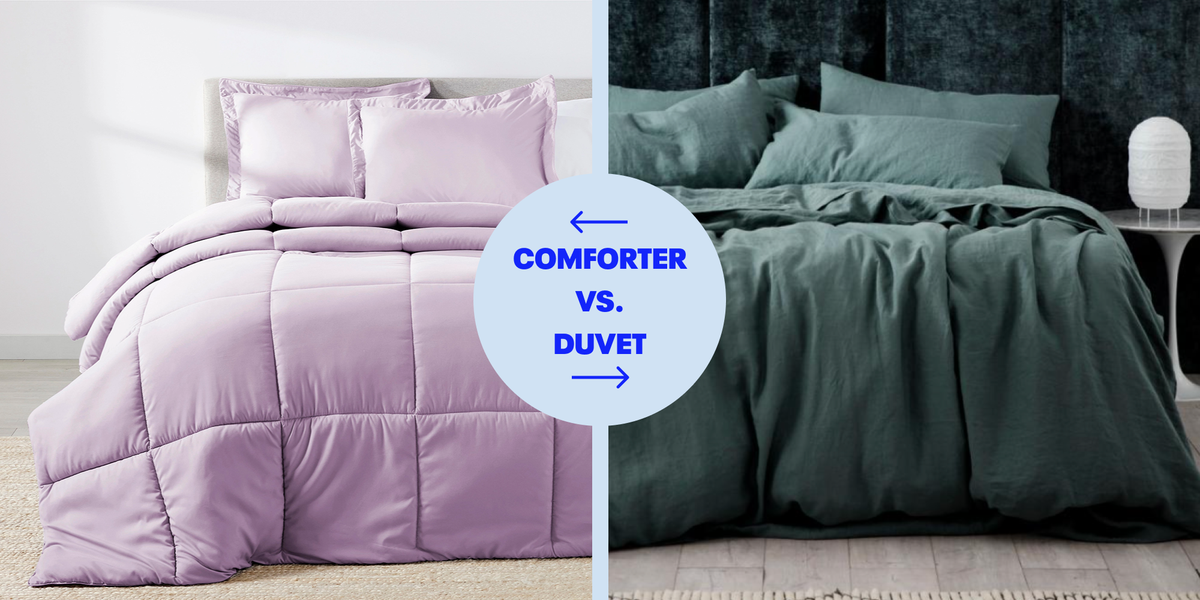
At first glance, choosing between a duvet and a comforter seems like one of those decisions that should require approximately twelve seconds. Both are fluffy. Both sit on top of a bed. Both promise to keep you warm while you negotiate with the alarm clock.
Then the shopping begins. Suddenly, you are comparing inserts, covers, fill power, corner loops, box stitching, down alternatives, and washing instructions that sound more complicated than assembling a small appliance.
The most important difference is surprisingly simple: a duvet is generally a two-piece bedding system consisting of an insert and a removable cover, while a comforter is a finished, one-piece bed covering designed to be used as-is. That construction difference affects nearly everything else, including cleaning, styling, storage, cost, warmth, and how quickly you can make the bed.
This duvet vs. comforter comparison explains what actually matters so you can choose bedding that works with your sleep habits, climate, decorating preferences, and tolerance for wrestling a giant fabric envelope.
What Is a Duvet?
A duvet usually refers to a soft, insulated insert placed inside a removable duvet cover. The insert provides warmth, while the cover protects it and gives the bed its visible color, pattern, and texture.
Think of the duvet cover as an enormous pillowcase. Instead of holding a pillow, it holds a fluffy insert filled with down, feathers, wool, silk, cotton, polyester, microfiber, or another insulating material. Most covers close with buttons, snaps, or a zipper. Interior ties attach to loops on the insert to limit shifting.
The Main Parts of a Duvet System
- Duvet insert: The insulated inner layer responsible for loft and warmth.
- Duvet cover: The removable outer shell that provides protection and style.
- Corner loops and ties: Small but valuable features that prevent the insert from migrating into one sad corner overnight.
- Closure: Buttons, snaps, or a zipper that keeps the open end secured.
Duvet inserts are frequently sold in lightweight, all-season, and heavyweight versions. This lets shoppers choose insulation based on room temperature and personal sleeping preferences. A hot sleeper in Florida and a cold sleeper in Minnesota should not be shopping for the same weight simply because both own queen-size beds.
What Is a Comforter?
A comforter is a single, finished piece of quilted bedding. Its outer fabric and insulating fill are permanently sewn together, so there is no removable cover to install before use.
Comforters may be white, but many are sold in decorative colors, prints, and textures. They often come in coordinated sets with pillow shams, sheets, or bed skirts. Open the package, spread the comforter over the bed, perform one ceremonial fluff, and the job is essentially done.
Stitching holds the filling between the outer fabric layers. Depending on the product, this may involve sewn-through boxes, channels, or baffle-box construction. The purpose is to keep the fill distributed evenly and reduce clumping or cold spots.
Although a comforter does not require a cover, a plain comforter with corner loops can sometimes be used as a duvet insert. Product terminology varies between brands, so the construction and care label are more reliable than the name printed in large letters on the package.
Duvet vs. Comforter: Quick Comparison
| Feature | Duvet | Comforter |
|---|---|---|
| Construction | Insert plus removable cover | One finished quilted piece |
| Ready to use | Usually requires inserting into a cover | Yes |
| Style flexibility | High; change the cover | Lower; the design is permanent |
| Routine cleaning | Wash the cover regularly | Wash or clean the entire comforter |
| Initial cost | Often higher because two pieces are needed | Often lower, especially in bedding sets |
| Bed-making effort | Simple daily use, but cover changes take effort | Fast and straightforward |
| Storage | Extra covers fold compactly | Multiple comforters require more space |
| Best suited for | Style changes, flexible warmth, easier routine laundering | Convenience, matching sets, immediate use |
The Difference That Matters Most: One Piece or Two?
The duvet’s removable cover is not a minor accessory. It changes how you live with the bedding.
With a duvet, the cover absorbs much of the contact with skin, sweat, body oils, pet hair, dust, and midnight snack evidence. You can remove and wash the cover without laundering the bulky insert every time. The insert still needs appropriate care, but generally not as frequently as the fabric touching you each night.
A comforter has no removable outer layer. Unless you place it inside a duvet cover, the entire comforter must be cleaned when its visible surface becomes dirty. That may be easy with a lightweight, machine-washable twin comforter. It can be considerably less entertaining with a king-size model that transforms a home washing machine into an unwilling participant in an engineering experiment.
Which One Is Warmer?
Duvets are often described as warmer and loftier than comforters, but the label alone does not determine warmth. Fill material, fill quantity, construction, loft, shell fabric, and overall weight matter more.
A heavyweight down comforter can be warmer than a lightweight duvet insert. Likewise, a thin down-alternative insert may feel cooler than a thick comforter with dense synthetic filling. Compare the manufacturer’s warmth rating instead of assuming every duvet belongs in an Arctic research station.
Choose a Warmth Level Based on How You Sleep
- Lightweight: Suitable for hot sleepers, warm climates, summer use, or bedrooms kept warm at night.
- All-season: A practical middle option for moderate climates and temperature-controlled bedrooms.
- Heavyweight: Designed for cold sleepers, colder rooms, winter weather, and people who believe “cozy” should approach hibernation.
Couples should also consider whether they share the same temperature preference. When one person sleeps hot and the other sleeps cold, two separate lightweight covers or a dual-weight product may create more peace than repeatedly adjusting the thermostat.
Down vs. Down Alternative Fill
Both duvets and comforters can contain natural or synthetic fill. The right choice depends on warmth preferences, budget, allergies, care requirements, and personal values.
Down Fill
Down consists of the soft insulating clusters beneath the exterior feathers of ducks or geese. It is prized for its high loft, strong insulation, compressibility, and relatively light feel. A quality down insert can create the fluffy, cloudlike appearance associated with luxury hotel beds.
However, down usually costs more and may require more careful cleaning. People with sensitivities should check product specifications and certifications rather than assuming every down product will or will not cause a reaction.
Down Alternative Fill
Down alternative generally uses polyester or microfiber engineered to imitate the loft of natural down. It is commonly more affordable, often easier to wash, and widely available in allergy-conscious options.
Synthetic filling may feel heavier for the same level of warmth and can compress over time. Quality varies considerably, so compare construction and warmth ratings instead of treating every polyester-filled product as identical.
Other Fill Materials
Wool can provide excellent insulation while managing moisture. Silk is lightweight and smooth but often expensive. Cotton-filled bedding feels breathable and familiar, though it may not achieve the dramatic loft of down. Newer plant-derived and regenerated fibers also appear in products marketed toward warm sleepers.
Which Option Is Easier to Clean?
For routine laundering, the duvet system usually wins because the removable cover is less bulky than a full comforter. Many cotton, linen, percale, and sateen duvet covers can be machine-washed, although the care label always has the final vote.
The duvet insert itself may require a large-capacity washer, professional cleaning, spot cleaning, or a delicate cycle. A comforter has similar potential restrictions, except its entire decorative surface must be cleaned at once.
Basic Care Tips for Both
- Read the manufacturer’s care label before washing.
- Use a washer large enough for the bedding to move freely.
- Choose mild detergent and avoid using more than necessary.
- Dry the item completely to prevent musty odors and damaged fill.
- Use dryer balls when permitted to help separate and redistribute filling.
- Stop the drying cycle periodically to fluff and reposition bulky bedding.
- Spot-clean small spills quickly rather than waiting for them to become family history.
Households with pets, children, allergies, or frequent spills may benefit most from a washable duvet cover. A machine-washable comforter can also be practical, especially when simplicity matters more than decorative flexibility.
Style and Bedroom Design
A duvet is the more flexible decorating tool. You can keep the same insert and rotate covers for different seasons, color schemes, or moods. Crisp cotton percale can create a cool, tailored look. Sateen provides a smoother finish. Linen adds texture and relaxed wrinkles that look intentional, even when they arrived through ordinary laziness.
Extra duvet covers also occupy relatively little closet space. Owning three comforters in three designs, by comparison, may require a linen closet with real estate ambitions.
A comforter offers convenience and a polished appearance without separate assembly. Coordinated comforter sets make it easy to create a unified bedroom, which can be useful for guest rooms, dorm rooms, children’s bedrooms, and quick makeovers.
The trade-off is commitment. When the comforter’s pattern no longer suits the room, changing the look usually means replacing or covering the whole item.
Cost: Which Bedding Option Is Cheaper?
A comforter is frequently less expensive upfront because one purchase provides the complete bed covering. Budget-friendly comforter sets may also include shams and other coordinating pieces.
A duvet setup requires both an insert and a cover, and those pieces are often sold separately. Premium down, wool, linen, and long-staple cotton can raise the initial price considerably.
Long-term value is less obvious. A durable duvet insert can remain in use while inexpensive covers update the bedroom. A decorative comforter may need replacement when it becomes worn, stained, flattened, or stylistically trapped in a decade you would rather forget.
Before comparing prices, confirm exactly what is included. A suspiciously affordable “duvet set” may contain only the cover and pillow shams, not the insert pictured in the beautifully staged product photo.
Sizing and Bed Coverage
Duvet and comforter dimensions are not perfectly standardized. Two products labeled “queen” may have noticeably different measurements. Always compare the listed width and length with the dimensions and depth of your mattress.
Comforters are often designed with generous overhang, while some duvet inserts sit closer to the mattress edges. This is a common tendency rather than a universal rule.
A thick mattress, pillow top, or tall foundation may require a wider product. Measure from one desired side edge, across the mattress, and down to the opposite edge. Couples who compete for coverage may also prefer sizing up, provided the larger insert fits the chosen duvet cover correctly.
For duvet systems, try to match the cover and insert dimensions closely. An undersized insert creates empty fabric corners. An oversized insert may bunch, although a slightly fuller insert is sometimes used deliberately to create a puffier appearance.
Duvet Pros and Cons
Advantages
- The removable cover is easier to wash than most full inserts.
- Covers can be changed without replacing the insulated layer.
- Different insert weights can accommodate seasonal temperatures.
- Spare covers take up relatively little storage space.
- The full, lofty appearance works well in relaxed and hotel-inspired rooms.
Disadvantages
- The insert and cover can cost more together.
- Putting on a duvet cover requires practice.
- Poorly secured inserts may shift or bunch.
- Some inserts require professional or specialized cleaning.
- The bed may look rumpled more quickly than one dressed with a structured comforter.
Comforter Pros and Cons
Advantages
- It is ready to use immediately.
- No separate cover needs to be installed.
- Comforter sets simplify bedroom coordination.
- Many options are affordable and machine-washable.
- The stitched construction can create a consistently neat appearance.
Disadvantages
- The entire item must be cleaned when the surface becomes dirty.
- Large sizes may not fit a standard home washer or dryer.
- Changing the room’s style may require replacing the comforter.
- Multiple designs consume substantial storage space.
- Filling may flatten after repeated use and laundering.
Who Should Choose a Duvet?
A duvet is likely the better choice when you enjoy changing bedroom decor, want to wash the outer layer frequently, have limited storage for bulky bedding, or prefer a plush, flexible bed setup.
It also makes sense for people who want separate lightweight and heavyweight inserts for different seasons. Pet owners may appreciate being able to remove a hair-covered cover without washing the insulated insert every few days.
Choose a cover with interior ties and an insert with matching loops. Those tiny details can determine whether the duvet stays evenly distributed or begins each morning shaped like an unexplained continent.
Who Should Choose a Comforter?
A comforter is ideal when convenience is the priority. It works especially well for guest bedrooms, children’s rooms, dormitories, rental properties, and anyone who wants a complete coordinated look without managing multiple components.
Look for a machine-washable model if the comforter will receive heavy use. A breathable cotton shell may feel more comfortable in warm rooms, while the fill weight should match the sleeper’s temperature needs.
A comforter is also a sensible option for people who genuinely dislike changing duvet covers. Bedding should improve your evening, not provide an upper-body workout accompanied by vocabulary you would not use around children.
Can You Put a Duvet Cover on a Comforter?
Yes, in many cases. A plain comforter can function as a duvet insert, particularly when its dimensions fit the cover and it has corner loops.
Without loops, the comforter may still fit, but it can shift more easily. Removable duvet clips can help, although they may be noticeable depending on their design.
This hybrid approach provides the simplicity of an existing comforter with the washable protection and style flexibility of a duvet cover. Check that the combined layers do not make the bed uncomfortably warm.
Common Duvet and Comforter Myths
Myth: Every Duvet Is Warmer Than Every Comforter
Warmth depends on the filling, quantity, construction, and weight. Product specifications matter more than terminology.
Myth: Duvets Never Need Cleaning
The cover reduces direct exposure, but inserts still collect dust, moisture, and residue over time. Follow the manufacturer’s cleaning schedule and care instructions.
Myth: Comforters Cannot Use Covers
Many can. A compatible duvet cover may protect the comforter and provide an inexpensive style update.
Myth: A Higher Price Guarantees Better Sleep
Premium materials may improve durability, loft, or feel, but the best bedding is the product that suits your temperature, care habits, sensitivities, and budget.
Practical Experiences: What Using Both Types of Bedding Reveals
The differences between a duvet and a comforter become much clearer after living with each one. In ordinary daily use, a comforter feels wonderfully uncomplicated. You pull it over the bed, smooth the top, arrange the pillows, and leave the room feeling unusually competent. There is no insert to align, no corner tie hiding in a mysterious fold, and no button that somehow fastened itself to the wrong loop.
That simplicity is especially noticeable in a guest room. A washable comforter can be removed, cleaned, dried, and returned to the bed as one complete piece. Guests are unlikely to care whether the bedding follows the latest layered-design trend. They care that it is clean, comfortable, and not decorated with a pattern that produces motion sickness.
The experience changes when the comforter needs frequent cleaning. A bulky queen or king comforter may fill an entire washing machine. During drying, damp filling can collect in heavy sections, requiring repeated pauses for shaking and fluffing. If the machine is too small, a trip to a laundromat or professional cleaner becomes part of the routine.
A duvet initially presents the opposite experience. Installing the cover can feel awkward the first few times. The insert drifts, the corners disappear, and one side looks perfectly full while the other resembles an empty envelope. The process becomes much easier after learning an inside-out or rolling method and using every available corner tie.
Once assembled, however, the duvet system becomes convenient. When the cover needs washing, it comes off and goes into the machine with far less drama than a thick comforter. The protected insert remains on standby. A second cover can go on immediately, which is helpful when the first one is still drying or when a pet has claimed it as a full-time shedding platform.
Seasonal changes also reveal the duvet’s strength. A crisp percale or linen cover can make the bed look lighter during warm months. A brushed cotton or heavier textured cover creates a cozier appearance in winter. The room changes without requiring storage space for several enormous comforters.
Comforters still win when speed matters. Children can pull them into place without aligning separate layers. College students can unpack them and have a finished bed in minutes. A coordinated set removes much of the design work, which is useful when choosing pillow shams is not how someone hoped to spend Saturday afternoon.
Pets create another practical dividing line. A duvet cover provides a replaceable barrier against fur, muddy paws, and surprise accidents. With a decorative comforter, the entire item is exposed unless a washable blanket or cover is added. For homes with cats or dogs, the removable layer can be worth the extra setup effort.
Couples often discover that warmth matters more than appearance. A thick duvet may look luxurious but become uncomfortable when one partner sleeps hot. A lightweight insert, breathable cover, or separate bedding arrangement may work better. Similarly, a thin comforter may require an extra blanket for a cold sleeper.
The real-world lesson is that neither option is universally superior. A comforter reduces assembly and decision-making. A duvet reduces the burden of changing styles and washing the outer surface. The better choice is the one whose inconveniences bother you less. That may not sound romantic, but it is an excellent rule for bedding and possibly several other areas of domestic life.
Final Verdict: Duvet or Comforter?
Choose a duvet when you value washable covers, seasonal flexibility, compact storage, and the ability to refresh your bedroom without replacing the insulated insert. Choose a comforter when you prefer a simple one-piece product that is ready to use, easy to coordinate, and often less expensive upfront.
Do not make the decision based solely on which product looks fluffiest in a photograph. Check the actual dimensions, fill material, warmth rating, construction, corner attachments, and care instructions. Those details determine whether your new bedding becomes a nightly favorite or a very expensive object that occupies most of a closet.
In the duvet vs. comforter debate, the difference that matters is not the name. It is how the bedding fits your real life: how warm you sleep, how often you wash it, how frequently you redecorate, and how much patience you can summon while standing inside a duvet cover.