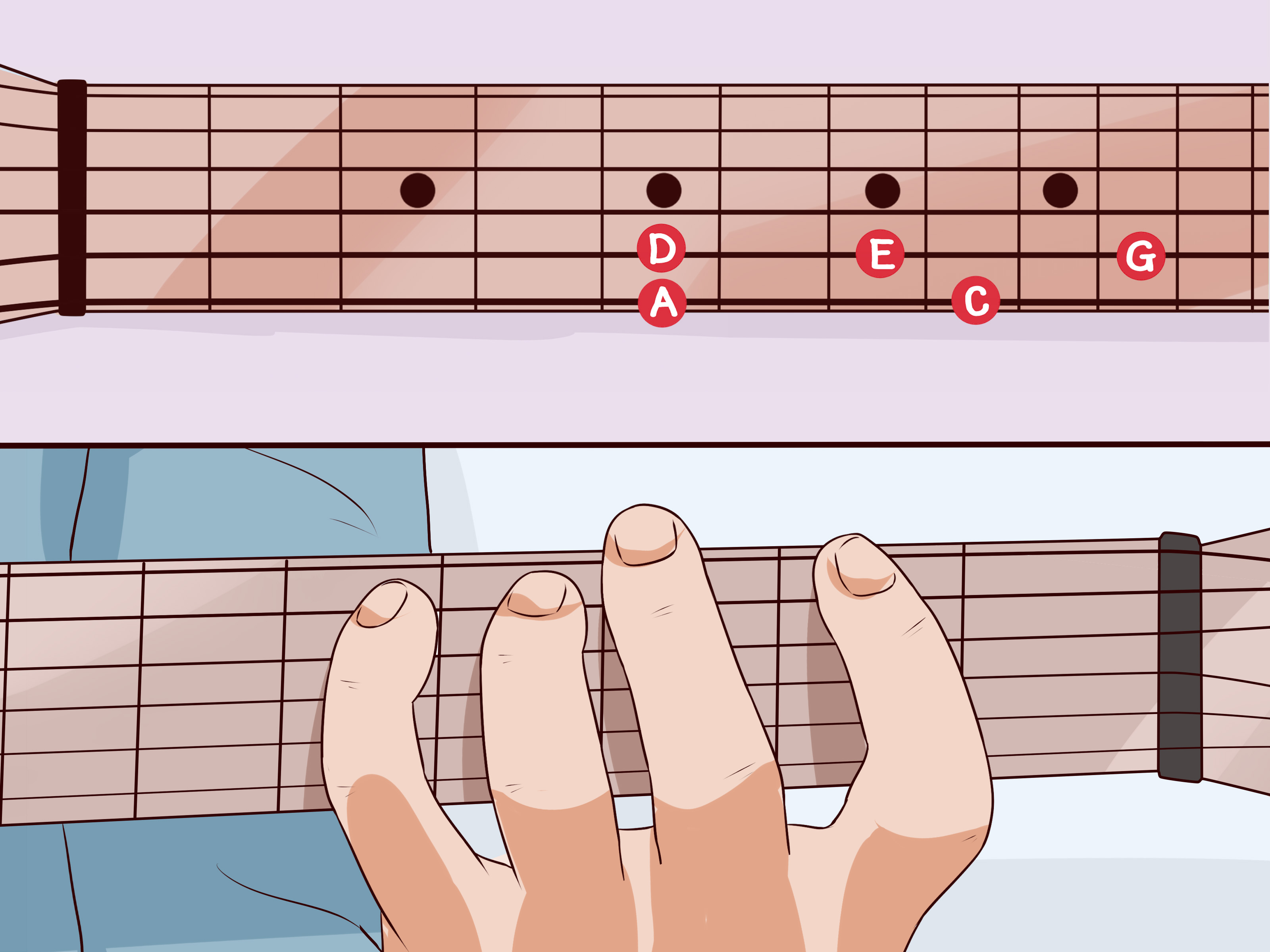
Ever played a guitar solo that sounded great in your bedroom, then mysteriously turned into a lost tourist when the chords started changing? You are not alone. Plenty of players learn scales, memorize a few tasty bends, and then discover that a chord progression has the audacity to keep moving underneath them.
The good news is that soloing over chord progressions is not a secret handshake reserved for jazz wizards wearing suspiciously expensive hats. It is a practical skill built from hearing the harmony, choosing meaningful notes, and connecting them with rhythm and personality. In this guide, you will learn three reliable ways to solo over chord progressions: targeting chord tones, using scales with intention, and connecting arpeggios through voice leading.
Note: The examples use guitar-friendly theory, but these approaches work on any melodic instrument. Your fingers may differ; the musical logic does not.
Why Chord Progressions Matter When You Solo
A chord progression is the musical road beneath your solo. If the rhythm section moves from C major to A minor to F major to G major, the harmony changes even though several notes remain shared. A solo that notices those changes feels connected to the song. A solo that ignores them can still work, but it may sound like it is reading a different map.
Think of scales as the alphabet and chord tones as the important words. You need both. A scale gives you available notes and melodic freedom. Chord tones tell the listener, “Yes, I know where we are.” The strongest solos usually combine the two: chord tones on important beats, scale notes between them, and a little tension before a satisfying resolution.
Before you start improvising, identify three things:
- The key center or tonal home of the progression.
- The chord quality of each chord: major, minor, dominant seventh, diminished, and so on.
- The notes that define each chord, especially its third and seventh.
You do not need to calculate every interval at the speed of panic. With practice, your ears and hands begin to recognize the shapes automatically. That is the goal: less spreadsheet, more music.
Way 1: Target Chord Tones on Important Beats
Start with the Notes Inside Each Chord
The most direct way to solo over chord progressions is to aim for chord tones. These are the notes that make up the chord itself. For a major triad, use the root, third, and fifth. For a seventh chord, add the seventh.
For example, consider this common progression in C major:
C – Am – F – G
- C major: C, E, G
- A minor: A, C, E
- F major: F, A, C
- G major: G, B, D
You could play the entire C major scale over this progression, and it would generally fit. But when you land on E over C, C over Am, A over F, and B over G, the listener hears the changes clearly. The notes do not merely fit; they explain the harmony.
Make the Third Your Best Friend
The third is especially useful because it tells the ear whether a chord is major or minor. On a C major chord, E gives you that sunny major flavor. On an A minor chord, C reveals the minor sound. If you are not sure what note to target, try the third first.
This tiny habit makes a dramatic difference. Many beginner solos lean heavily on roots and fifths because they feel safe. They are safe, but they can also be vague. Roots say, “I am near the chord.” Thirds say, “I know exactly which chord this is.”
Use Strong Beats for Your Target Notes
Chord tones become more convincing when they arrive on strong beats, especially beat one or beat three in 4/4 time. You can use passing tones, bends, slides, chromatic notes, or scale fragments on weaker beats, then resolve to a chord tone when the new chord arrives.
Try this simple exercise over C – Am – F – G:
- Play only one note per chord.
- Choose a chord tone for each note.
- Hold the note long enough to hear the harmony change beneath it.
- Add one or two nearby scale notes before each target note.
A simple target line could move from E over C, to C over Am, to A over F, and then B over G. It is not flashy, but it is musical. Flash can come later. First, make the chords feel like they invited you to the party.
Try Guide Tones for Stronger Harmonic Direction
Guide tones are usually the third and seventh of a chord. They are powerful because they define chord quality and often move smoothly into the next chord. In a ii–V–I progression in C major, such as Dm7 – G7 – Cmaj7, one useful guide-tone line is F – F – E.
F is the third of Dm7, then becomes the seventh of G7, and resolves down to E, the third of Cmaj7. That short line contains a surprising amount of musical information. You are not simply playing notes; you are leading the listener through the progression.
Way 2: Use a Scale as Your Home Base, Then Aim for the Changes
One Scale Can Work, but It Should Not Drive the Car Alone
Using one scale over an entire progression is a practical and effective starting point. It gives your hands a familiar map and helps you create flowing melodic lines. In a diatonic progression such as C – Am – F – G, the C major scale works across every chord:
C, D, E, F, G, A, B
The trick is not merely running the scale up and down like you are testing a smoke alarm. Instead, use the scale to travel between chord tones. Treat the chord tones as destinations and the other notes as roads, scenic routes, or the occasional wrong turn that becomes charming if you recover gracefully.
Build Phrases Instead of Climbing the Scale
Scale practice often teaches your fingers to move vertically: up, down, repeat, wonder why nobody applauded. Improvisation works better when you create short phrases with a beginning, middle, and ending.
Over a C major chord, try a phrase that begins on G, moves through A and B, and resolves to C or E. When the chord changes to A minor, shift your attention to A, C, or E. You are still using the same scale, but your landing notes change with the harmony.
Here is a simple phrase concept over C – Am – F – G:
- Over C: play G – A – B – E.
- Over Am: answer with E – D – C – A.
- Over F: move through G – F – A.
- Over G: create tension with A – B – D, then resolve back toward C when the progression repeats.
This is not about memorizing one magic line. It is about hearing how the same scale changes character when the chords underneath it change.
Use Pentatonic Scales Without Getting Stuck in the Box
Pentatonic scales are popular because they are forgiving, expressive, and excellent for rock, blues, country, pop, and many other styles. The A minor pentatonic scale contains A, C, D, E, and G. Because it shares notes with C major, it can work nicely over a C major progression.
However, pentatonic playing becomes more interesting when you add chord-specific notes. Over a G major chord, for instance, B is the major third. It is not in A minor pentatonic, but adding it briefly can make the G chord sound much more defined. This is one reason great blues and rock solos often mix minor pentatonic phrases with major thirds and chord-tone targets.
Use pentatonics as a comfortable launching pad, not a permanent apartment. They are wonderful places to live, but you should still visit the rest of the neighborhood.
Know When One Scale Is Not Enough
A single parent scale works best when the chords come from the same key. Once borrowed chords, altered dominants, key changes, or unusual modulations appear, you may need to adjust your note choices. For example, if a progression in C major suddenly includes A7, the note C# becomes important because it defines the A major sound inside that dominant chord.
This does not mean you need to panic and change scales every half second. It means you should listen for the notes that make a chord unique. When in doubt, target the chord’s third or seventh and let your ear guide the rest.
Way 3: Outline the Changes with Arpeggios and Voice Leading
Turn Chords into Melodic Shapes
An arpeggio is simply a chord played one note at a time. Instead of strumming C major as C, E, and G together, you play those notes separately. Arpeggios are one of the clearest ways to make a solo follow chord changes because they contain the harmony in plain sight.
For the progression C – Am – F – G, you could outline each triad:
- C major arpeggio: C, E, G
- A minor arpeggio: A, C, E
- F major arpeggio: F, A, C
- G major arpeggio: G, B, D
That said, playing every arpeggio from the root straight upward can sound more like a warm-up exercise than a solo. The goal is to use fragments, inversions, skips, slides, and rhythmic variety. Arpeggios should reveal the chord, not announce themselves with a megaphone.
Connect Nearby Notes Instead of Leaping Everywhere
Voice leading means moving smoothly from one chord tone to the nearest useful chord tone in the next chord. This is what makes a line sound connected rather than assembled from spare parts.
For example, over C – Am – F – G, the note E belongs to both C major and A minor. You can hold it or repeat it as the harmony changes. Then move from E down to C over Am, from C down to A over F, and from A up to B over G. Suddenly, the progression feels like one continuous melody.
Common tones are especially valuable. They let you bridge two chords without sounding abrupt. Smooth voice leading is not only for jazz players with intimidating chord diagrams. It is everywhere in good pop, rock, country, R&B, and classical-influenced guitar writing.
Use CAGED Triads as Fretboard Landmarks
For guitarists, triad shapes are one of the fastest ways to see chord tones across the neck. Rather than thinking only in scale boxes, learn small major and minor triads on the top three or four strings. These shapes show you where the root, third, and fifth live near any scale position.
When you can see a C major triad, an A minor triad, an F major triad, and a G major triad in the same area of the neck, soloing becomes less mysterious. You can play a melodic phrase, land on a nearby chord tone, then continue without jumping to another planet on the fretboard.
Make Arpeggios Sound Like Music
To avoid the “I have learned arpeggios and would now like everyone to know” sound, use these ideas:
- Start an arpeggio from its third or fifth instead of its root.
- Play only two or three notes from the shape.
- Use bends, slides, hammer-ons, and pull-offs.
- Repeat a rhythm while changing the notes to match each chord.
- Leave space after a strong phrase.
Arpeggios become especially effective when mixed with scale notes. A short arpeggio can define the chord, while a scale run adds motion and personality. That combination gives you clarity without making every bar sound like a theory lecture.
A Simple Practice Routine for Soloing Over Changes
You do not need a four-hour practice marathon and seventeen color-coded notebooks. A focused routine can build real progress.
- Play the chords first. Strum or loop the progression until you can hear its movement.
- Sing target notes. Before playing, sing the third of each chord or the note you want to land on.
- Use one note per chord. This feels almost too simple, which is exactly why it works.
- Add passing notes. Connect target notes with notes from the key or a nearby chromatic approach.
- Build two-bar phrases. Make a statement, then answer it.
- Record yourself. Your phone is less emotionally invested in your solo than you are, which makes it an excellent judge.
Spend time with slow backing tracks. Slow tempos expose weak note choices, but they also give you room to hear the chord changes. Once your target notes feel natural, gradually increase the tempo without sacrificing the melody.
Player Experiences: What Changes When You Stop Treating the Fretboard Like a Fire Drill
Most players have a memorable first encounter with chord-tone soloing. It often begins with a minor identity crisis: “Wait, you mean I cannot just play my favorite pentatonic box forever?” Technically, you can. Nobody will confiscate your guitar. But once you begin hearing chord changes inside your solos, the instrument feels much larger and more logical.
A common experience is discovering that slower solos suddenly become more satisfying. Before learning to target chords, many guitarists try to solve uncertainty with speed. If a note feels questionable, play eight more notes before anyone notices. This strategy is entertaining for approximately three seconds. Targeting chord tones changes the equation. One well-placed note on the downbeat can sound more convincing than a blur of technically impressive notes that never acknowledge the harmony.
Another major shift happens when players begin hearing the third of each chord. A guitarist may know the scale perfectly but still feel lost when the progression changes from major to minor. Then they deliberately land on E over C major and C over A minor, and the light bulb switches on. The two notes may be only a few frets apart, yet they tell completely different harmonic stories. That realization is often the moment improvisation stops feeling like random note selection.
Players also tend to become less dependent on memorized licks. Licks are useful. They are vocabulary, and every great improviser has a collection of familiar phrases. But a lick that works over one chord may stumble over the next if it does not connect to the harmony. Learning to adjust the ending of a lick toward the third, fifth, or seventh of the next chord gives you freedom. Instead of abandoning a phrase because the chord changed, you can steer it into the new harmony.
There is also an ear-training benefit that sneaks up on people. At first, a player may need to stop and calculate: “The next chord is F major, so the third is A.” After repeating that process over many songs, the sound becomes recognizable. You start to hear the pull toward certain notes before your brain names them. That is a healthy sign. Theory has moved from being a set of labels on paper to being something your ears can predict in real time.
Jam sessions provide another useful lesson: the best note choice is not always the fanciest one. When a band is loud, the drummer is excited, and somebody has accidentally launched into the bridge early, a clear chord tone can save the day. It gives the audience and the other musicians a sense of direction. A simple phrase that respects the harmony usually sounds confident, even when the player is quietly doing emergency navigation behind the scenes.
Many guitarists also report that their rhythm improves when they focus on chord changes. Instead of filling every empty space, they begin leaving room for the progression to breathe. A pause before a target note creates anticipation. A bend that resolves exactly when the chord changes creates drama. A repeated rhythmic motif makes a solo feel composed, even when it is improvised. The notes matter, but timing often decides whether those notes sound meaningful.
Finally, soloing over chord progressions becomes more enjoyable once you stop trying to use every possible idea at once. You do not need a chord-scale substitution, a diminished run, a tapping sequence, and a heroic sweep arpeggio in every chorus. Choose one approach for a practice session. Target thirds. Connect arpeggio fragments. Use one pentatonic shape but resolve to chord tones. Small constraints create better listening, and better listening creates better solos.
The real reward is that songs begin to sound less like a series of separate chords and more like connected musical conversations. Your solo no longer floats above the progression. It walks through it, reacts to it, and occasionally says something worth hearing.
Conclusion: Make the Changes Your Musical Ally
Learning how to solo over chord progressions is less about finding a magic scale and more about understanding musical gravity. Target chord tones to make the harmony clear. Use scales and pentatonics to create motion and expression. Connect arpeggios with smooth voice leading so your phrases feel intentional rather than accidental.
Start with simple progressions, slow tempos, and one target note per chord. As your ears improve, the fretboard becomes easier to navigate and your solos become more melodic, confident, and personal. The chord progression is not there to trap you. It is there to give your solo somewhere interesting to go.