Professional wrestling teaches a person how to do three things very, very well: take a hit, hold a crowd, and keep smiling while absolute chaos is happening around them. As it turns out, those skills travel nicely. Some wrestlers leave the ring and end up in city hall. Others stroll into Hollywood, launch businesses, write books, build media brands, or turn personal reinvention into an art form. The ring may be square, but the career paths after it are anything but.
That is what makes post-wrestling careers so fascinating. Fans spend years watching larger-than-life characters fly off turnbuckles and cut promos like Shakespeare after three energy drinks. Then the bell stops ringing, and suddenly those same performers are running counties, starring in blockbuster films, building wellness brands, or hosting television shows. It is a reminder that the best wrestlers were never just athletes. They were communicators, entrepreneurs, entertainers, and sometimes, unapologetic chaos merchants with excellent timing.
Below are 15 of the most interesting post-wrestling careers of pro wrestlers. Some of these second acts were polished and strategic. Others looked like they were invented after too much coffee and not enough sleep. Nearly all of them worked because the performers understood a simple truth: once you know how to command attention, the world becomes one giant entrance ramp.
Why Post-Wrestling Careers Matter
The best second acts in wrestling are not random. They usually grow out of the same traits that made someone successful in the ring in the first place. Charisma turns into screen presence. Discipline becomes business grit. A gift for storytelling becomes writing, acting, podcasting, or politics. Wrestling may be scripted, but surviving it is not. The schedule is brutal, the injuries are real, and the pressure to stay relevant never politely waits its turn. That is why a successful transition after wrestling says something important: the performer had more than one gear all along.
15 Post-Wrestling Careers Of Pro Wrestlers
1. Dwayne “The Rock” Johnson Movie Star, Producer, and Business Machine
If there were a Mount Rushmore of post-wrestling careers, Dwayne Johnson would probably demand a bigger mountain. After becoming one of WWE’s most magnetic stars, he made the leap into acting and turned himself into one of the most recognizable entertainment brands on Earth. What separates Johnson from the average wrestler-turned-actor is scale. He did not just land roles; he built a full-blown multimedia empire. Films, production work, endorsements, and business ventures all fed into the same polished image: part action hero, part motivational speaker, part walking energy drink.
His second act worked because he understood reinvention. He did not try to be “The Rock, but in a movie.” He gradually became a mainstream star who could carry action, comedy, family films, and giant franchise spectacles without looking like he had wandered in from another building. That is not a side hustle. That is a full career transplant with better lighting.
2. John Cena Actor, Author, and All-Around Good Guy With a Steel Jaw
John Cena’s post-wrestling career feels like proof that hustle can, in fact, be seen. After years as WWE’s franchise player, Cena expanded into film, television, books, and philanthropy on a remarkable scale. His acting career grew because he leaned into timing, not just toughness. He could be funny, self-aware, intense, and unexpectedly warm. That made him more flexible than the usual “big tough guy with a dramatic squint” template.
Cena also built a reputation outside wrestling as an author and a famously committed Make-A-Wish supporter, which added a layer many stars never quite achieve: trust. His public image became bigger than catchphrases and title belts. He turned himself into a mainstream figure who could headline a movie, host a show, promote literacy, and still feel unmistakably like John Cena. That kind of brand extension is harder than it looks, especially when your original uniform involved jorts.
3. Dave Bautista Character Actor With Real Range
Dave Bautista could have settled for playing “large angry man near explosion” forever. Instead, he turned into one of the most respected post-wrestling actors of his generation. Yes, his physical presence opened doors, but his credibility came from choosing roles that showed restraint, timing, and surprising emotional weight. He did not merely chase fame. He chased craft.
That distinction matters. Bautista’s second act is impressive because it never felt lazy. He spoke openly about wanting to become a serious actor rather than simply a former wrestler cashing checks in action movies. The result is a career that feels deliberate. He found room in big franchises, sci-fi, comedy, and quieter work, proving that wrestling performers can bring more to screen acting than brute force and a good entrance theme.
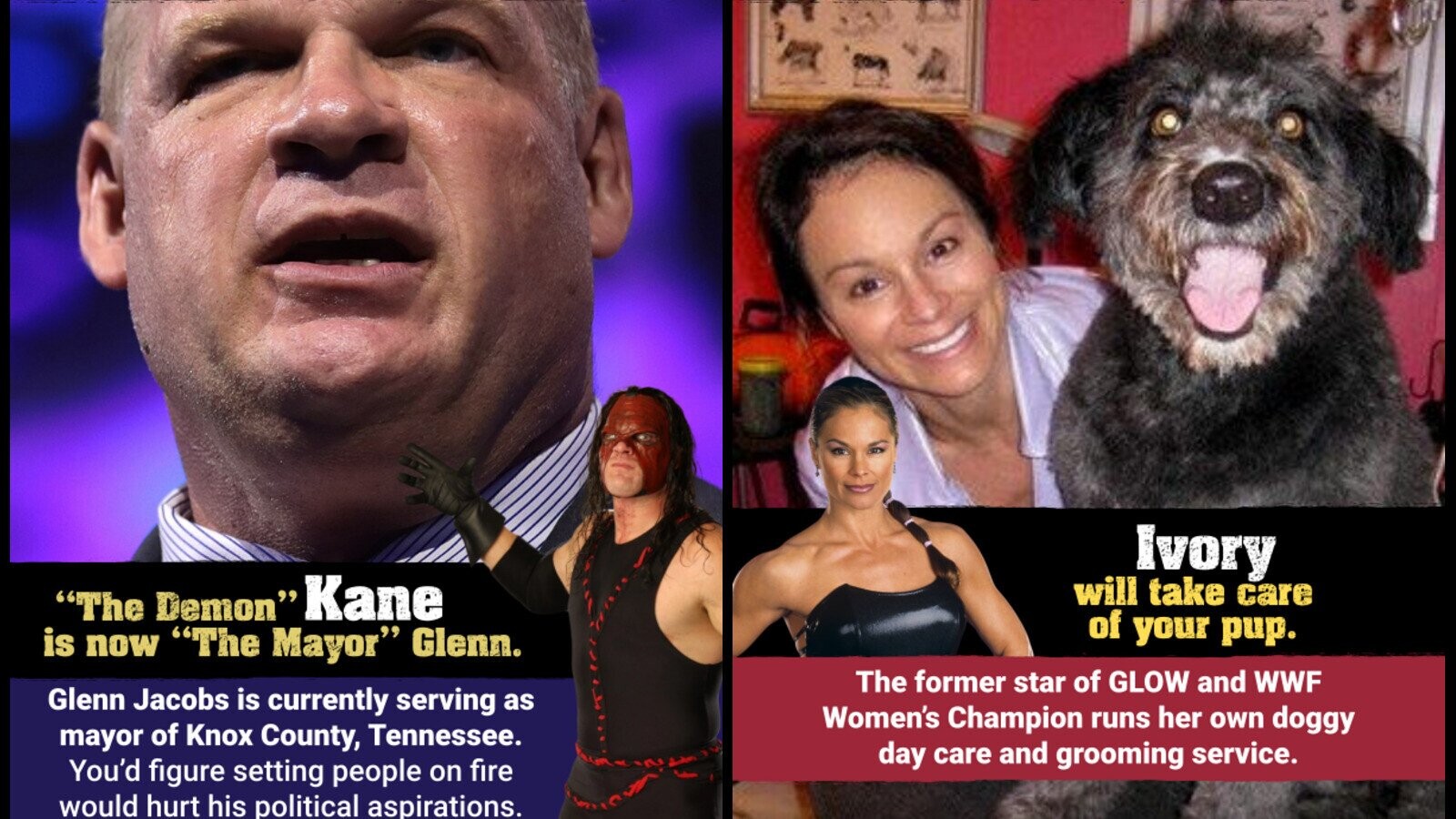
4. Glenn “Kane” Jacobs County Mayor
Few career pivots are funnier on paper than “fire-themed masked monster becomes elected official,” yet Glenn Jacobs made it real. Best known to wrestling fans as Kane, Jacobs moved into politics and became mayor of Knox County, Tennessee. That is a serious office, not a novelty cameo. His post-wrestling path shows how promo skills, confidence under pressure, and public familiarity can translate into public service and political campaigning.
What makes this transition so striking is how cleanly he separated the performer from the officeholder. The Kane character was theatrical, intimidating, and born for pyrotechnics. The political version of Jacobs had to be measured, policy-focused, and publicly accountable. That is not a costume change. That is a full shift in professional language and expectations.
5. Jesse Ventura Governor, Commentator, and Professional Curveball
Jesse Ventura did not merely leave wrestling. He kicked open a new door and made politics deal with it. After building fame as a wrestler and commentator, Ventura entered public life and eventually served as governor of Minnesota. His rise remains one of the most unusual and memorable examples of a wrestling personality turning mass recognition into political capital.
Ventura’s post-wrestling appeal came from authenticity, or at least the very specific kind of authenticity that sounds like it might challenge you to an argument in a hardware store parking lot. He was outspoken, memorable, and impossible to confuse with a standard-issue politician. Whether people agreed with him or not, they noticed him. In politics, that is half the fight and often more than half the headline.
6. Hulk Hogan Hollywood Crossover and Reality TV Fixture
Hulk Hogan helped pioneer the idea that wrestlers could become entertainment brands outside the ring. Long before social media made self-promotion feel like a full-time religion, Hogan was crossing into movies and later reality television. His acting work was uneven, but that was never the whole point. Hogan’s value was recognizability. He did not enter a room quietly, and neither did his brand.
His family reality show turned the mythic superhero of Hulkamania into something much more domestic and messy: a celebrity dad with cameras in the house. That shift mattered because it broadened the idea of what a wrestler’s second act could be. It did not have to be prestigious. It just had to be marketable, memorable, and weirdly hard to ignore.
7. “Rowdy” Roddy Piper Cult Film Favorite
Roddy Piper’s post-wrestling career never needed polish to be effective. He moved into acting and became a cult favorite, most famously through roles that let him keep the same unpredictable edge that made him so compelling in wrestling. Piper was not trying to become a smooth Hollywood leading man. He was better than that. He was distinct.
That distinction is everything in entertainment. Plenty of athletes try acting and disappear into a pile of generic tough-guy roles. Piper stood out because he brought personality first. Even when the production around him was not exactly winning awards, he was memorable. For a wrestler making the jump to film, that is often the real goal: do not blend in. Piper never had that problem.
8. Chris Jericho Rock Frontman, Podcaster, and Media Ringmaster
Chris Jericho’s post-wrestling career is the perfect example of a performer refusing to live in one category. Outside the ring, he built a strong identity as the frontman of Fozzy, a podcaster, media personality, and bestselling author. Jericho’s gift has always been reinvention, and that carried beautifully beyond wrestling. He understands audience engagement at a molecular level. Put a mic in his hand and something is happening, whether it is a promo, an interview, or a rock show.
His success also shows that some wrestlers do not need one clean second act. They build a portfolio life instead. Jericho turned his voice, literally and figuratively, into a business. Music gave him one lane, podcasting gave him another, and writing expanded the whole package. He treated fame like raw material and kept reshaping it.
9. Diamond Dallas Page Fitness Entrepreneur and Reinvention Specialist
Diamond Dallas Page went from late-blooming wrestling star to one of the most interesting wellness entrepreneurs in the business. His fitness brand turned his name into something associated with recovery, mobility, and practical training rather than just diamond cutters and swagger. That is a smart pivot because it uses credibility instead of abandoning it. Fans already knew him as a performer who understood physical punishment. Wellness felt like a believable evolution.
What makes Page’s second act especially compelling is that it was not just commercial. It came with a message of resilience. His brand appealed to people who wanted fitness without the macho nonsense and punishment culture that often dominate the industry. He became a guy who could sell hope and stretching in the same sentence, which is honestly more difficult than a top-rope finish.
10. Mick Foley Bestselling Author With a Human Voice
Mick Foley’s post-wrestling career worked because readers discovered what wrestling fans already knew: the guy was a terrific storyteller. His writing voice felt personal, funny, self-deprecating, and unusually thoughtful for someone whose job had once included being thrown into furniture for public enjoyment. Foley proved that a wrestler’s biggest strength might not be physical charisma at all. Sometimes it is narrative control.
As an author, Foley brought the backstage world to life without sounding mechanical or sanitized. He wrote with warmth and detail, and that helped him stand out in a field where celebrity books often feel ghostwritten by exhausted wallpaper. His success as an author expanded the image of what a wrestler could be. Not just tough. Not just theatrical. Smart, reflective, and unexpectedly literary.
11. AJ Mendez Memoirist, Screenwriter, Producer, and Advocate
AJ Mendez built one of the sharpest modern second acts in wrestling. After leaving the ring, she moved into writing, production, and advocacy, proving that creative control can be its own championship belt. Her memoir gave her an avenue to tell a bigger story than the one fans saw on television, and her later work in production and screenwriting showed that she was not interested in staying limited to one medium.
Mendez’s career after wrestling feels especially significant because it reflects a broader change in the industry. Wrestlers are no longer just performers for someone else’s script. Some of them become writers, producers, and architects of their own narrative worlds. She did not just leave wrestling behind. She took the storytelling skills with her and upgraded the job title.
12. Eve Torres Self-Defense Instructor and Empowerment Figure
Eve Torres took a smart and purposeful route after wrestling by moving into self-defense instruction, along with film and television work. Her second act has more utility than glamour, and that is part of what makes it stand out. Instead of leaning solely on celebrity, she built credibility around teaching and empowerment. That gives her post-wrestling career a practical dimension many former performers never pursue.
There is also a natural connection between the two worlds. Wrestling teaches body awareness, confidence, timing, and movement under pressure. Self-defense instruction demands many of the same foundations, just with a very different goal. Torres turned physical performance into physical education, which is one of the most elegant transitions on this list.
13. Booker T Commentator, Mentor, and Wrestling School Owner
Booker T never really left the wrestling ecosystem, but he absolutely changed jobs within it. His post-wrestling career as a commentator, trainer, and owner of Reality of Wrestling shows how some of the best second acts happen behind the scenes. Not every former star needs to flee the business. Some become builders of the next generation.
That role matters more than fans sometimes realize. Training talent, running a school, and mentoring younger performers requires patience, credibility, and an understanding of what actually works in front of a crowd. Booker T built a respected position as one of wrestling’s teachers. That is a legacy move. It says, “I already did the spotlight thing. Now I know where the switches are.”
14. The Miz Reality TV Survivor Turned Host and Actor
The Miz is a fascinating case because his entertainment instincts were visible before he fully became a wrestling star. Still, his career outside the ring deserves attention because he has successfully expanded into hosting, acting, and broader television work while maintaining his wrestling identity. That balance is tricky. Too much crossover and fans think you are abandoning the business. Too little and you stay boxed in forever.
What The Miz understands is performance continuity. Whether he is in a ring, on a reality show, on a red carpet, or hosting a competition series, he knows exactly how much “The Miz” to bring with him. That self-awareness is a professional weapon. He turned a personality some people initially dismissed into a long-term entertainment career, which is about as satisfying as a perfect heel promo landing on the exact right crowd.
15. Trish Stratus Fitness and Yoga Entrepreneur
Trish Stratus used her post-wrestling years to build a wellness brand that felt authentic to her image and experience. Rather than chasing random celebrity opportunities, she turned toward fitness and yoga, creating a business that matched both her athletic background and her polished public persona. That is the sweet spot in a second act: familiar enough to make sense, different enough to feel new.
Her transition also highlights how women in wrestling have often had to be especially strategic about life after the ring. Stratus did not just rely on nostalgia. She developed a lane that had staying power and practical appeal. The result is a post-wrestling career that looks less like a detour and more like a well-executed rebrand.
Final Bell: What These Second Acts Really Say
The most interesting thing about post-wrestling careers is not that wrestlers are famous enough to try new jobs. Plenty of famous people try new jobs. The interesting part is how often wrestlers bring real substance to the next one. They are used to constant reinvention. They understand branding before many executives can spell it. They know how to connect with an audience, absorb criticism, perform under pressure, and keep moving after failure. In other words, they are often absurdly well-trained for modern public life.
From movie sets to governor’s mansions, from fitness platforms to book tours, these 15 post-wrestling careers prove that the ring is not always the final destination. Sometimes it is just the loudest chapter. And when the smartest performers close that chapter, they do not disappear. They pivot, repackage, and come back through a different curtain. In wrestling terms, that is not retirement. That is a beautifully timed return pop.
Experiences Behind Post-Wrestling Life: The Part Fans Rarely See
What fans usually experience is the highlight reel. They see the wrestler become an actor, politician, author, trainer, or entrepreneur and think, “Well, of course that worked. The person was famous.” But fame is only the flashy part of the transition. The real experience behind post-wrestling life is much messier. Many wrestlers leave the ring carrying years of physical wear, a body clock wrecked by travel, and an identity tied to crowd reactions. That kind of shift can feel less like a smooth career move and more like learning to walk into silence after years of living inside noise.
There is also the challenge of credibility. In wrestling, a performer may be legendary. Outside wrestling, that same person often has to prove everything again from scratch. Hollywood does not hand out great roles because someone once cut a fantastic promo in Chicago. Politics does not become easier because a person once entered through fire with dramatic music. Writing books, building companies, launching podcasts, opening schools, or teaching wellness all require patience that fans do not always notice. The applause disappears, and the work gets quieter.
That is why the most successful post-wrestling careers usually come from people who understand adaptation. They know when to keep part of the old persona and when to leave it in the locker room. Some carry the charisma forward but change the delivery. Others discover that the skills under the gimmick were the real asset all along: discipline, public speaking, timing, physical intelligence, emotional resilience, and the ability to connect with complete strangers in seconds.
There is an emotional side to this, too. For many wrestlers, leaving full-time competition means giving up a version of themselves that fans loved. That can be exciting, but it can also be deeply strange. Imagine being recognized everywhere for one identity and then trying to persuade the world to take your second identity seriously. That experience takes nerve. It is one thing to reinvent yourself in private. It is another to do it with millions of people comparing the new chapter to your peak entrance music.
Fans feel this transition as well. Watching a favorite wrestler succeed after the ring can be oddly satisfying because it confirms something people suspected all along: the best performers were never one-dimensional. The Rock was never just a catchphrase machine. Mick Foley was never just a man who fell off things in alarming ways. AJ Mendez was never just a TV character. The post-wrestling chapter often reveals the fuller person hiding inside the gimmick. And that, more than titles or trophies, may be the most interesting victory of all.