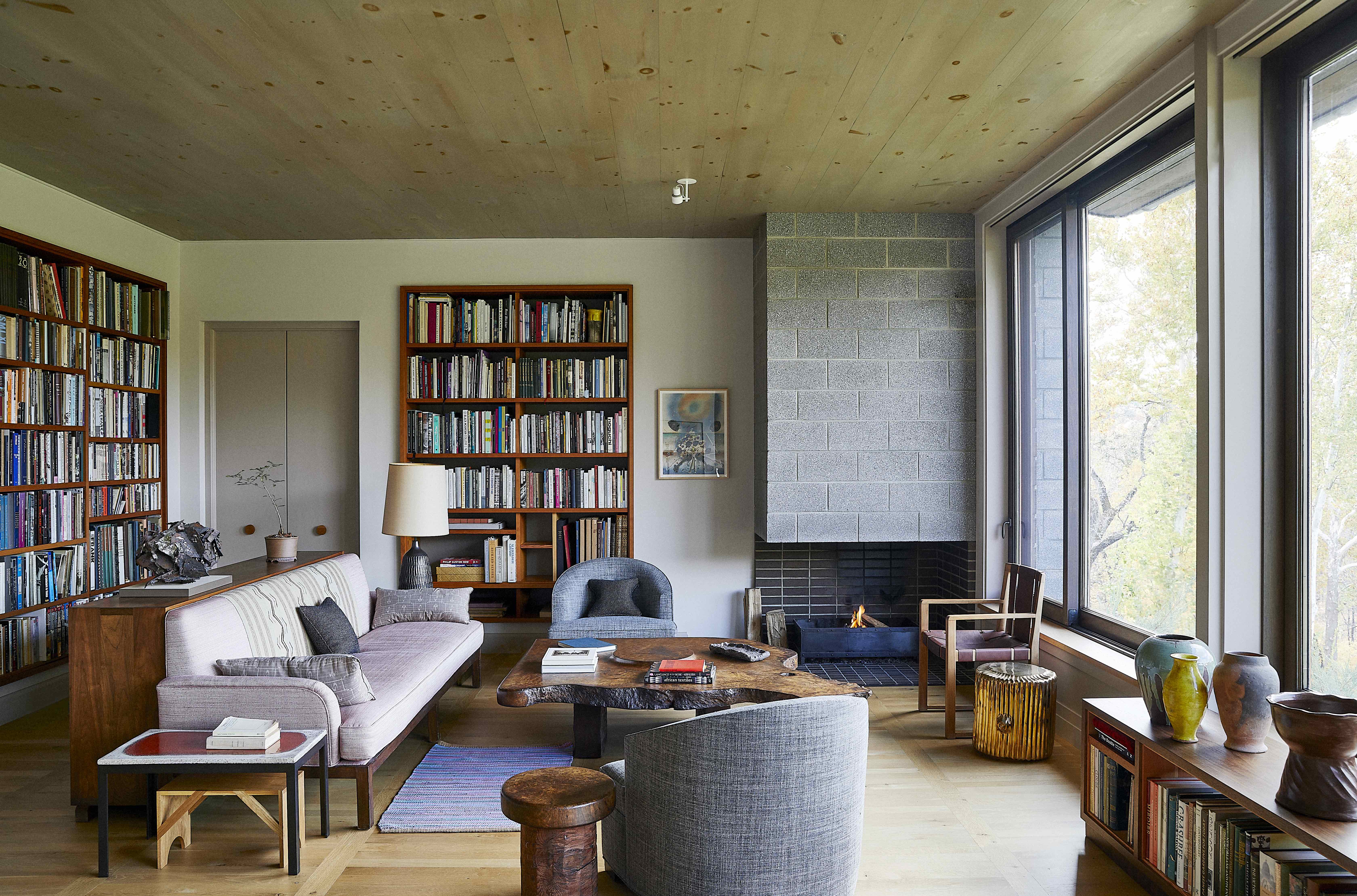
Some design books beg to be placed on a coffee table. Others quietly insist that you cancel your plans, make tea, and start imagining a life with a mudroom, a woodpile, and a neighbor who knows exactly when the apples are ready. Country Life: Homes of the Catskill Mountains and Hudson Valley, photographed by William Abranowicz with text by Zander Abranowicz, belongs firmly in the second group.
This is not merely a book about attractive houses in Upstate New York. It is a meditation on place, personality, light, age, craft, and the mysterious emotional math that turns timber, stone, paint, antiques, and landscape into a home. Published by Vendome Press, the hardcover volume gathers 20 residences across the Catskill Mountains and Hudson Valley, ranging from historically significant properties to modern homes shaped by artists, designers, collectors, writers, architects, and people who clearly understand the moral importance of a good chair near a window.
For readers interested in Hudson Valley homes, Catskills interiors, country house design, architectural photography, or simply interiors that feel lived in rather than staged within an inch of their linen slipcovers, this book is required reading in the most pleasant sense. No pop quiz follows. The reward is better taste.
Why “Country Life” Feels Different From a Typical Design Book
Many interior design books present homes as polished trophies. The rooms sparkle, the pillows obey, and every bowl of lemons appears to have a publicist. Country Life takes a warmer route. Abranowicz’s photographs do not flatten homes into style formulas. Instead, they make each house feel like a living organism shaped by weather, history, owners, accidents, collections, and long afternoons.
The Catskill Mountains and Hudson Valley are ideal subjects for this approach. The region has long attracted people who want proximity to New York City without surrendering to its permanent hum. It has also drawn painters, writers, antique dealers, chefs, environmentalists, craftspeople, and design obsessives who prefer patina over perfection. A cracked floorboard here is not a defect. It is a paragraph.
The book’s strength lies in how it treats country life as layered rather than decorative. The homes are beautiful, yes, but not in the “please do not sit on anything” way. They suggest use: muddy boots, full bookshelves, old textiles, fireplaces with opinions, and dining tables that have survived actual dinners.
Who Is William Abranowicz?
William Abranowicz is one of America’s most respected architectural and interiors photographers, known for his ability to capture not just a room’s appearance but its atmosphere. His career has included work for major design, travel, and lifestyle publications, and his eye is especially good at finding the point where architecture meets memory.
That matters because Country Life could have easily become a pretty regional survey. In less sensitive hands, the Catskills and Hudson Valley might be reduced to rustic beams, tasteful ceramics, and a suspicious number of chunky throws. Abranowicz avoids that trap. His images are composed, but they breathe. They show how a house sits in a landscape, how a doorway frames a view, how old and new materials negotiate with one another, and how the people who live there have left fingerprints without making the house feel messy.
The collaboration with Zander Abranowicz gives the book another layer. The writing does not try to compete with the photographs; it accompanies them. That is a difficult balance. Too much text in a photography book can feel like someone talking during a movie. Too little can leave the reader floating. Here, the words help situate the homes within a broader story of region, creativity, family, and design culture.
The Catskills and Hudson Valley: More Than a Pretty Backdrop
The Catskills and Hudson Valley are not simply scenic locations. They are part of the American visual imagination. The Hudson River School painters helped define a romantic vision of the American landscape, and the region’s mountains, rivers, forests, farms, and estates continue to influence how people think about retreat, nature, and domestic beauty.
That history gives Country Life unusual depth. When the book includes homes connected to figures such as Thomas Cole and Frederic Edwin Church, it is not just checking off famous names. It is showing how artistic ways of seeing the landscape shaped the region’s architecture and interiors. A porch is not merely a porch when it faces the Catskills. It becomes a viewing instrument, a stage for weather, and occasionally a very good excuse to avoid answering email.
The contemporary homes in the book continue this conversation in a different language. Modern architecture in the Catskills and Hudson Valley often succeeds when it respects the land rather than shouting at it. Glass, steel, stone, timber, and concrete can feel perfectly at home when handled with restraint. The best houses in the region do not cosplay as farmhouses unless they are farmhouses. They ask what the site wants, which is a much more intelligent question than “How many reclaimed beams can we fit in the living room?”
What Makes the Homes in “Country Life” So Compelling?
1. They Respect the Landscape
The most memorable homes in Country Life appear to understand their surroundings. Some are tucked into woods; others open toward views of fields, hills, or river valleys. The architecture rarely feels isolated from nature. Instead, windows, porches, gardens, paths, and materials create a relationship between indoors and outdoors.
This is one of the biggest lessons for anyone studying country house design: a beautiful rural home begins before the front door. The driveway, stone wall, meadow edge, tree line, and garden all help establish the mood. A house that ignores its setting will always feel slightly overdressed, like someone wearing patent leather shoes to a bonfire.
2. They Mix Old and New Without Panic
One of the pleasures of Hudson Valley interiors is the ease with which different eras can coexist. In these homes, historic bones may meet mid-century furniture, contemporary ceramics, folk art, modern lighting, or textiles collected over decades. The result is not random. It is personal.
The lesson is simple: contrast creates energy. A spare modern chair can make an old plaster wall look more beautiful. A rough-hewn table can soften a crisp architectural space. A contemporary artwork can wake up a traditional room faster than a triple espresso. The key is confidence, not matching.
3. They Value Patina
Patina is the quiet hero of country interiors. It is visible in worn wood, old stone, faded rugs, tarnished metal, and paint that has relaxed into itself. In Country Life, age is not treated as a problem to be corrected. It is part of the emotional texture of a home.
This is especially relevant today, when many interiors are designed to look instantly finished and instantly obsolete. Patina resists that cycle. It suggests patience. It says, “This house was here before the algorithm, and it will be here after your trending boucle accent chair has gone to storage.”
4. They Feel Collected, Not Decorated
The best rooms in the book have the feeling of accumulation. Objects appear chosen because they matter, not because they complete a mood board. Books, art, pottery, chairs, tools, baskets, and textiles create rooms with biography.
This collected quality is difficult to fake. You can buy furniture in an afternoon, but you cannot buy a life in an afternoon, despite what certain furniture catalogs imply. Country Life reminds readers that strong interiors often come from curiosity over time. Visit antique shops. Keep the odd painting. Inherit the weird lamp. Let your home become a record of attention.
Why This Book Works for Designers, Homeowners, and Dreamers
Interior designers will appreciate Country Life for its sophisticated use of mood, proportion, material, and restraint. Homeowners will find ideas that translate beyond the Catskills and Hudson Valley: how to make rooms feel grounded, how to use natural materials, how to combine antiques with modern pieces, and how to let a house reveal character slowly.
Dreamers may enjoy it most of all. This is the kind of book that allows you to imagine a different rhythm of life. You may begin by studying a room and end by wondering whether you could become the type of person who bakes bread, stacks firewood, and owns a dog with a literary name. The book does not demand that you move upstate. It merely makes the argument very convincingly.
Design Lessons From “Country Life” You Can Use Anywhere
Start With the View
Even if your view is not a Hudson Valley meadow but a neighbor’s fence and a recycling bin with commitment issues, consider what your windows frame. Arrange seating to take advantage of natural light. Keep window treatments simple when privacy allows. Let the outside world participate in the room.
Use Natural Materials Honestly
Wood, stone, clay, wool, linen, and iron all age gracefully when used well. The homes in Country Life show how natural materials add warmth without visual noise. They also remind us that authenticity beats imitation. A real pine table with scratches has more soul than a fake rustic surface pretending it just returned from a barn.
Layer Texture Before Color
Country interiors do not need to be beige to be calm. They need depth. Mix smooth and rough, matte and glossy, soft and hard. A room with plaster walls, wool rugs, linen curtains, old wood, and ceramic lamps can feel rich even with a restrained palette.
Let Imperfection Stay
Not every surface needs to be corrected. Not every chair needs a partner. Not every room needs to look newly installed. The most memorable houses often contain irregularities that make them feel human. A little imperfection is not a design failure. It is proof that life got there first.
The Emotional Appeal of Upstate New York Homes
Part of the fascination with Catskills and Hudson Valley homes comes from the idea of retreat. For many city dwellers, upstate living represents space, silence, trees, seasons, and the fantasy of becoming a calmer version of oneself. That fantasy is not entirely wrong, though it should be noted that rural life also includes snow management, insects, and the sudden realization that “quick errand” means 37 minutes each way.
Country Life does not romanticize the region into a postcard. Instead, it shows homes that are deeply engaged with their places. They are stylish, but they are also grounded. They honor work, craft, history, and personal eccentricity. That is what makes them compelling. A beautiful rural home is not just an escape from somewhere else. It is a commitment to being somewhere fully.
Why “Country Life” Belongs on Your Design Shelf
If your design library already includes books about modernism, traditional interiors, garden houses, artist homes, or American architecture, Country Life adds a valuable regional perspective. It captures a part of New York that is both historically rich and creatively current. The book is especially useful for readers who want interiors that feel sophisticated without becoming sterile.
It is also a reminder that architectural photography can do more than document. In Abranowicz’s hands, photography becomes interpretation. He shows us not only what these homes look like but how they feel: quiet, layered, intelligent, sometimes eccentric, and often deeply peaceful.
That emotional intelligence is why the book lingers. You may close it and remember a room, but you are just as likely to remember a quality of light, a landscape beyond a window, or the sense that a house can become a portrait of the people who care for it.
Experience-Based Reflections: Reading “Country Life” Like a Slow Weekend Upstate
The best way to experience Country Life is slowly. This is not a book to skim while half-watching television and pretending you are “multitasking,” which, let us be honest, usually means doing three things badly. It rewards patience. Open it on a quiet morning, preferably near natural light, and let each home unfold like a visit.
What stands out after spending time with the book is how strongly it changes the way you look at rooms. At first, you may notice the obvious elements: the architecture, the furniture, the art, the beams, the views. But after a while, smaller details begin to matter more. A chair angled toward a window. A stack of books that looks used rather than styled. A rug that carries age with dignity. A table that appears ready for coffee, soup, homework, tax receipts, or a mildly dramatic conversation about where to plant the hydrangeas.
That is the gift of the book. It trains the eye away from instant spectacle and toward atmosphere. Many modern interiors online are designed to stop the scroll. These homes seem designed to start a life. They do not need to shout because they have better manners. They know that a quiet room can be more memorable than a loud one.
Reading the book can also make you reconsider what “country style” means. It is not a single look. It is not only gingham, farmhouse sinks, or antlers behaving aggressively above a mantel. In the Catskills and Hudson Valley, country style can be historic, modern, bohemian, minimal, scholarly, rustic, artistic, or boldly eclectic. The common thread is not a decorating formula but a relationship to place. The homes feel aware of weather, seasons, materials, and landscape.
One practical experience the book encourages is looking at your own home with less judgment and more curiosity. Instead of asking, “What should I buy to make this room look finished?” you might ask, “What does this room already want to be?” Maybe it needs less furniture and more breathing room. Maybe it needs an old object with texture. Maybe it needs better lighting, a real reading chair, or permission to be slightly imperfect.
Another lesson is that personal taste gets better when it gets braver. The homes in Country Life are not blandly tasteful. They contain strong choices: unusual art, vintage furniture, dark rooms, pale rooms, rough surfaces, refined details, and objects that probably have stories attached. That kind of confidence cannot be copied directly, but it can be learned. Start with one thing you genuinely love and build around it. A room can survive a quirky lamp. In fact, it may thank you.
For readers who dream about a country house, the book offers inspiration without turning into a checklist. You do not need a mountain property to borrow its wisdom. You can bring some of its spirit into an apartment, a suburban house, or a small rental by choosing natural textures, honoring light, collecting slowly, and letting rooms feel lived in. The Catskills may be specific, but the design philosophy travels well.
Ultimately, Country Life feels valuable because it argues for homes with memory. It celebrates spaces shaped over time by people who notice things: the fall of light, the grain of wood, the curve of a road, the usefulness of a porch, the dignity of an old stone wall. In a culture obsessed with newness, that feels almost rebellious. Also refreshing. Possibly even medicinal, though your doctor may not accept “looked at beautiful Hudson Valley interiors” as a treatment plan.
If you love design books that offer more than shopping inspiration, this one deserves a place nearby. Keep it where you can return to it. Open it when your rooms feel too polished, too empty, or too influenced by whatever the internet declared mandatory this week. Country Life will remind you that the best homes are not assembled overnight. They are observed, edited, inherited, repaired, loved, and lived into.
Conclusion
Country Life: Homes of the Catskill Mountains and Hudson Valley is more than a beautiful photography book. It is a thoughtful portrait of a region where landscape, architecture, art, and personal history meet. William Abranowicz’s images and Zander Abranowicz’s writing reveal homes that feel authentic, layered, and deeply connected to their surroundings.
For anyone interested in Catskills homes, Hudson Valley interiors, American country house design, or the art of creating rooms with soul, this book is essential. It does what the best design books do: it sharpens the eye, expands the imagination, and makes ordinary rooms feel full of possibility. You may not finish it with a deed to a farmhouse, but you might finish it with better instinctsand possibly a sudden interest in stone walls.
Note: This article is written as an original, publication-ready synthesis based on verified information about the book, its authors, its regional context, and broader Catskills and Hudson Valley design themes. No source links or citation placeholders are included in the HTML body so it can be copied cleanly for web publishing.