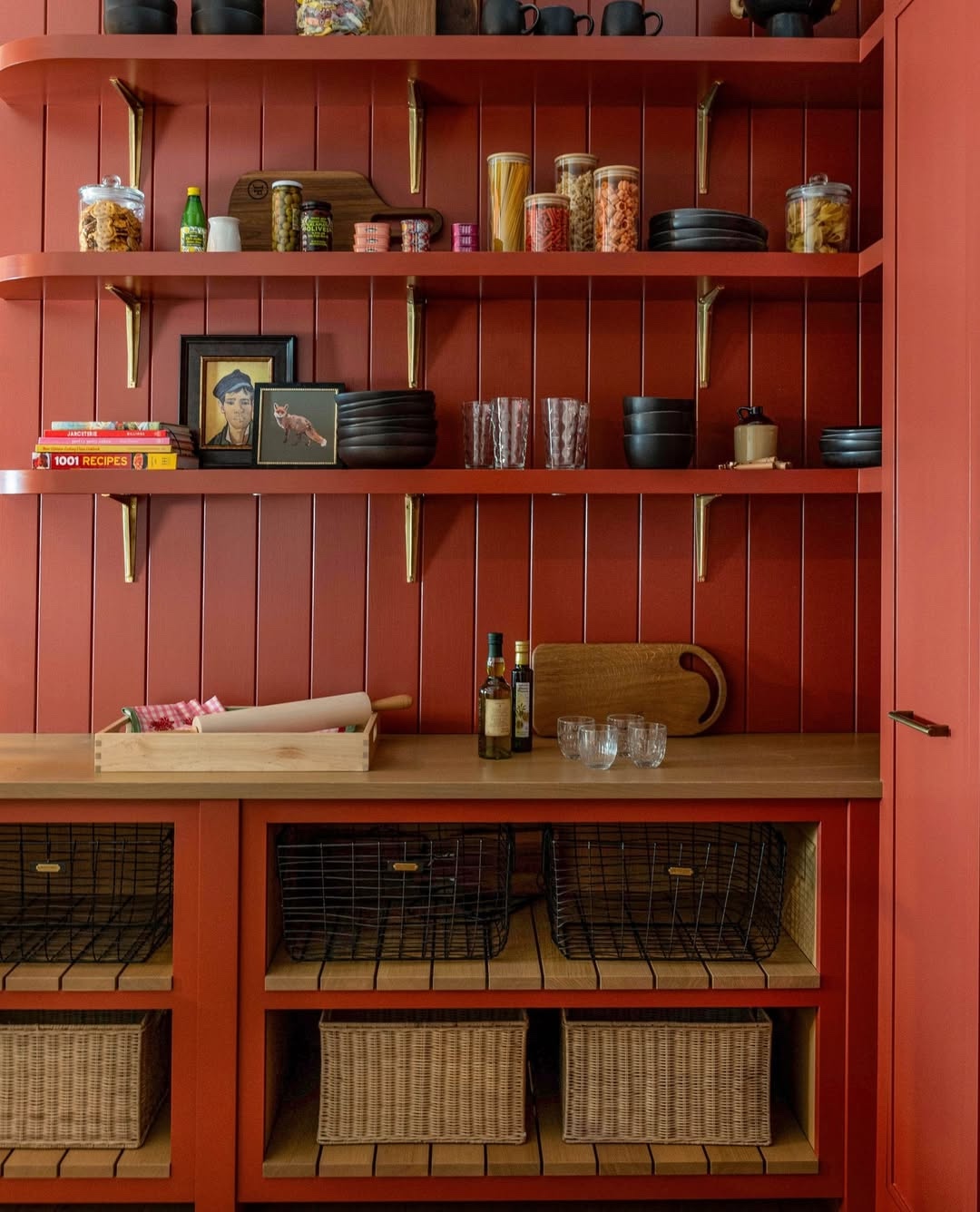
A beautiful kitchen can come from Italy, England, Denmark, or a warehouse so mysterious that even the delivery driver seems unsure where it began. But homeowners seeking shorter supply chains, domestic craftsmanship, and easier communication do not have to shop across an ocean. A growing group of American kitchen companies is producing cabinetry and complete kitchen systems with enough design credibility to make imported brands glance nervously over their perfectly tailored shoulders.
The five companies featured here cover a surprisingly broad spectrum. Boxco turns plywood into warm, modern cabinetry in Massachusetts. BOXI by Semihandmade offers an approachable direct-to-consumer system. Jewett Farms + Co. practices traditional custom cabinetmaking in Maine. Henrybuilt builds highly integrated architectural kitchens in Seattle, while Space Theory translates that systems-based philosophy into a more streamlined format.
They are not interchangeable, and that is precisely why they are interesting. Some are suited to a compact renovation with a disciplined budget. Others belong in custom homes where the kitchen island has its own lighting plan, electrical consultant, and possibly a better social life than its owners.
What Does “Made in America” Mean for Kitchen Cabinets?
Before comparing brands, it helps to clarify the label. A company can be headquartered in the United States while manufacturing overseas. A cabinet may be assembled domestically using imported hinges, drawer slides, surfaces, or sheet materials. “American-built,” “fabricated in the U.S.,” and an unqualified “Made in USA” claim can therefore mean different things.
The Federal Trade Commission generally expects an unqualified Made in USA claim to mean that a product is “all or virtually all” made domestically. Kitchen projects are especially complicated because they combine cabinets, hardware, countertops, appliances, finishes, and accessories from multiple suppliers.
For this guide, the focus is on companies that currently state that their cabinets or kitchen systems are built, fabricated, or handcrafted in American facilities. Buyers who need exact domestic-content percentages should request written details for the specific collection being ordered. Even the most patriotic drawer may be gliding on European hardware.
Made-in-America Kitchen Companies at a Glance
| Company | U.S. Production Base | Design Character | Best Suited For |
|---|---|---|---|
| Boxco | Greenfield, Massachusetts | Modern frameless plywood cabinetry | Homeowners wanting custom work with visible wood character |
| BOXI by Semihandmade | U.S.-built cabinetry | Curated slab, edge, and Shaker styles | Direct-to-consumer and semi-custom renovations |
| Jewett Farms + Co. | York, Maine | Traditional craftsmanship with personalized design | High-end custom homes and character-rich renovations |
| Henrybuilt | Seattle, Washington | Architectural, integrated kitchen systems | Luxury projects requiring design, cabinetry, and organization as one system |
| Space Theory | Seattle, Washington | Streamlined performance kitchens | Modern homeowners seeking a middle ground between semi-custom and full luxury |
1. Boxco: Modern Plywood Cabinetry from Massachusetts
Boxco is based in Greenfield, Massachusetts, where its team makes custom European-style frameless cabinetry. Its work celebrates plywood instead of treating it like an embarrassing structural secret that must be hidden under three layers of paint.
The company combines digital fabrication with hand-finishing. That pairing allows cabinets to be cut accurately while still receiving the attention associated with a smaller workshop. The finished kitchens often feature simple slab fronts, exposed wood edges, integrated pulls, warm veneers, and carefully placed color.
Why Boxco Stands Out
Boxco kitchens feel contemporary without becoming sterile. Natural maple or other wood surfaces can soften concrete counters, strong wall colors, and minimalist architecture. Because the company produces custom cabinetry, it can also address awkward corners, unusual ceiling heights, built-in seating, appliance panels, and specialized storage.
The frameless construction makes good use of interior cabinet space. It also supports the clean, continuous lines associated with modern European kitchens. Behind those quiet fronts, homeowners can incorporate pull-out recycling, pantry storage, appliance garages, tray dividers, and other practical components.
Who Should Consider Boxco?
Boxco is a strong candidate for homeowners who like modern design but still want to see and feel real wood. It is especially appealing for architecture-conscious renovations in New England and surrounding regions, although project availability should always be confirmed directly.
Because the work is custom, the process requires more decisions than ordering standardized cabinet boxes. That is an advantage when the homeowner has clear priorities and a qualified designer or contractor. It may feel less convenient for anyone who wants to select “Kitchen Number Three” from a catalog and be finished before lunch.
2. BOXI by Semihandmade: A Simpler Direct-to-Consumer Option
Semihandmade became widely known by producing stylish fronts for IKEA cabinet boxes. BOXI expands that idea by offering the cabinet boxes as well, creating a more complete direct-to-consumer system. The cabinets are currently described as U.S.-built and arrive fully assembled.
That last detail matters. Flat-pack cabinets can save money, but they also create a temporary second career in furniture assembly. Fully assembled boxes reduce job-site labor and eliminate the moment when everyone quietly wonders why three screws remain on the floor.
A Curated Selection Instead of Endless Customization
BOXI offers a controlled collection of cabinet types, door styles, and finishes. Options include clean slab fronts, Shaker designs, and other modern profiles compatible with Semihandmade’s design language. Soft-close hardware and coordinated panels help the finished kitchen look intentional rather than pieced together.
The curated approach is a strength for homeowners overwhelmed by thousands of combinations. There are enough choices to establish a distinct look, but not so many that selecting a warm white requires a three-day family summit.
Where BOXI Fits in the Market
BOXI sits between basic stock cabinetry and fully custom millwork. It is designed for customers who want an attractive American-built cabinet system, online planning support, predictable components, and nationwide accessibility without commissioning every drawer from scratch.
The trade-off is that standardized dimensions cannot solve every architectural puzzle. Fillers, trim, panels, and careful layout planning may be necessary in older homes where walls lean, floors wander, and no two corners have agreed on 90 degrees since 1924.
3. Jewett Farms + Co.: Maine Cabinetmaking with a Personal Touch
Jewett Farms + Co. began in 1999 in a small Maine woodshop and has developed into a custom cabinetry company with production in York, Maine. Its approach is relationship-driven: designers first learn how the household cooks, gathers, stores food, entertains, and moves through the room.
The company’s work can be traditional, transitional, or quietly modern, but it tends to preserve the visual depth associated with furniture-quality cabinetmaking. Doors and drawers are hand-fitted and hand-sanded, and projects are designed without the restrictions of a fixed catalog.
Cabinetry That Belongs to the Architecture
Jewett Farms is particularly effective when cabinetry must feel as though it has always belonged in the house. In a historic renovation, that might mean inset doors, furniture-style feet, paneled refrigerators, a substantial pantry, or paint selected to complement old plaster and reclaimed flooring.
In a newer home, the company can produce cleaner profiles while preserving the same degree of craftsmanship. The result is custom cabinetry shaped around the building rather than a collection of standard boxes persuaded to cooperate with decorative molding.
Who Is the Ideal Client?
Jewett Farms is best suited to clients who value detailed collaboration and expect the kitchen to be a permanent architectural investment. Pricing is project-specific, and the custom process takes more time than purchasing mass-produced cabinets.
That slower process is not inefficiency; it is part of the product. Measurements, proportions, finish samples, appliance specifications, and storage requirements are resolved before manufacturing. For the right project, the result can feel less like cabinetry purchased for a room and more like a room built around the way its owners live.
4. Henrybuilt: The American Luxury Kitchen System
Founded in 2001, Henrybuilt approaches the kitchen as an integrated system rather than a lineup of individual cabinets. Its projects are fabricated to order in Seattle and combine cabinetry, work surfaces, wall storage, lighting, hardware, interior fittings, and specialized tools.
The visual language is refined and modern, but the most important ideas are functional. Drawers, panels, rails, islands, and storage accessories are developed to work together. Instead of asking only what a cabinet should look like, Henrybuilt asks how the entire kitchen should perform during preparation, cooking, serving, cleaning, and entertaining.
Why the “System” Idea Matters
A conventional custom kitchen may still be assembled from independent decisions: cabinet doors from one source, organizers from another, lighting added later, and hardware selected after everyone is tired. Henrybuilt coordinates those pieces from the beginning.
Its kitchens can incorporate movable storage tools, integrated pulls, specialized wall systems, appliance concealment, work islands, and carefully planned transitions into adjacent living spaces. This is particularly valuable in open-plan homes where the kitchen must operate like a serious workspace without looking like one after dinner.
Luxury Pricing and Long-Term Value
Henrybuilt belongs firmly in the luxury category. Current company guidance indicates that complete kitchen systems often begin around the upper five figures, with larger or more complex projects moving well beyond that range. Design service is integrated into the package, and the company offers a lifetime warranty covering defects in materials or workmanship.
The ideal client is not simply shopping for cabinet doors. This is a choice for someone building or renovating a significant home and seeking a design partner capable of coordinating architecture, storage, material quality, and everyday performance.
5. Space Theory: Streamlined Performance from the Henrybuilt Team
Space Theory was created by the team behind Henrybuilt to offer a simplified version of the systems-based kitchen. Its products are made to order in Henrybuilt’s Seattle production facility and adapted to the dimensions of each project.
The line retains many ideas associated with Henrybuilt, including flexible wall storage, integrated functionality, carefully considered materials, and an emphasis on movement through the kitchen. However, its palette and product structure are more controlled, helping reduce design complexity and cost.
Not Quite Custom Cabinetry, Not Quite Semi-Custom
Space Theory occupies an interesting middle position. Each kitchen is fitted to its space, but the company works from a defined family of products. This creates more architectural coherence than many semi-custom lines while avoiding some of the open-ended decisions associated with bespoke cabinetmaking.
One of its recognizable products is the Daylight Island, a steel-grid structure that can be configured with drawers, appliances, storage components, and work surfaces. The open framework gives the island a lighter appearance than the giant rectangular cabinet blocks commonly parked in the center of modern kitchens.
Who Should Choose Space Theory?
Space Theory appeals to homeowners who appreciate Henrybuilt’s performance-driven approach but prefer a streamlined process and a more accessible investment. It remains a premium product, especially compared with stock cabinets, but it offers a compelling route to an integrated modern kitchen without moving into fully bespoke luxury territory.
How to Choose the Right American Kitchen Company
Begin with the Real Project Budget
Cabinet pricing rarely tells the whole story. A realistic kitchen budget should include design fees, appliances, countertops, sinks, faucets, hardware, delivery, installation, electrical work, plumbing, demolition, flooring repairs, paint, and contingency funds. The cabinet quote is not the final number; it is simply the number wearing the nicest clothes.
Decide How Much Customization You Actually Need
A custom company makes sense when the architecture is unusual or the homeowner has highly specific requirements. A curated system may be smarter when the room is straightforward and speed, simplicity, or budget control matters more than producing a cabinet precisely 17⅜ inches wide.
Study Materials Beyond the Door Sample
Ask what the cabinet boxes, doors, drawer bottoms, edge treatments, and back panels are made from. Request information about finishes, emissions compliance, cleaning requirements, repairability, hardware brands, and replacement parts. A door sample is useful, but the parts hidden behind it determine how the kitchen ages.
Confirm Installation Responsibilities
Some companies provide or coordinate installers, while others manufacture and ship the cabinetry for installation by the homeowner’s contractor. Clarify who verifies field dimensions, receives the delivery, stores the cabinets, handles damage claims, makes site adjustments, and signs off on the finished work.
Practical Experience Notes: What Shopping for an American-Made Kitchen Really Feels Like
The most useful lesson from comparing these companies is that the best kitchen rarely begins with a door color. It begins with a brutally honest inventory of daily life. How many people cook at once? Where does the coffee machine live? Do baking sheets stand vertically or form an unstable metal avalanche? Is the island used for chopping vegetables, answering email, feeding children, serving cocktails, or all four within the same 20 minutes?
Writing down those routines before meeting a designer changes the quality of the conversation. Instead of saying, “We need more storage,” a homeowner can request a drawer for food containers near the dishwasher, shallow storage for spices beside the range, or a landing surface next to the refrigerator. Good cabinetmakers can solve precise problems. They cannot easily solve the mysterious concept of “more stuff space.”
Material samples also deserve more attention than they usually receive. A finish that looks calm under showroom lighting may appear gray, yellow, or dramatically darker in the actual house. The smartest approach is to place samples beside the flooring, wall paint, countertop, and existing trim, then observe them in morning light, afternoon light, and artificial light. Yes, this feels slightly obsessive. It is still less obsessive than staring angrily at the wrong white cabinets for the next 15 years.
Another practical lesson is to involve the installer early. Beautiful drawings cannot reveal every surprise hidden behind old walls. Plumbing may occupy the exact location intended for a drawer bank. An electrical panel may interfere with a tall pantry. Floors may slope enough to require substantial leveling. When the cabinet company, designer, contractor, and installer review the same plans before production, expensive improvisation becomes less likely.
Appliance specifications should also be finalized before cabinets are ordered. “A 36-inch refrigerator” is not enough information. Clearance requirements, hinge movement, ventilation, electrical connections, water lines, panel thickness, and handle projection can alter the layout. Paneled appliances are particularly unforgiving. A small measurement error can turn a seamless refrigerator wall into an abstract sculpture about regret.
Delivery day deserves its own plan. Custom cabinets may arrive in a large truck and require protected indoor storage. Someone must inspect cartons, compare pieces with the shipping documents, photograph damage, and keep components organized for installation. Ask whether the truck provides curbside delivery, lift-gate service, room-of-choice placement, or a crew trained to handle finished cabinetry.
Finally, domestic production should be treated as one factor rather than a magic quality guarantee. American manufacturing can support skilled jobs, shorten communication chains, and make factory accountability easier. It does not remove the need to examine construction, materials, warranties, references, and service. Ask where the cabinets are fabricated, where major components originate, and what happens when a hinge, drawer front, or finished panel needs replacement years later.
Among these five companies, BOXI offers the simplest route for many mainstream renovations. Boxco is compelling for plywood enthusiasts and warm modern interiors. Jewett Farms brings traditional custom craftsmanship to deeply personalized projects. Space Theory offers an intelligent bridge between semi-custom cabinetry and luxury systems, while Henrybuilt serves clients seeking a fully integrated architectural kitchen.
Conclusion
Made-in-America kitchen design is no longer limited to ornate traditional cabinets or generic products selected from a home-center wall. These five companies demonstrate that domestic production can support minimalist plywood kitchens, convenient direct-to-consumer cabinetry, heirloom-quality millwork, and sophisticated performance systems.
The right choice depends on budget, architecture, location, desired customization, and how much guidance the project requires. Start with function, verify the manufacturing details of the exact collection, and compare complete installed costs rather than cabinet prices alone. A well-designed kitchen should make daily life easier, survive changing trends, and provide a dignified home for every pot, plate, and inexplicably accumulated garlic press.
Editorial note: Manufacturing locations, product specifications, service areas, pricing, and lead times can change. Confirm current details, component origins, warranties, and installation requirements directly with the company before placing an order.