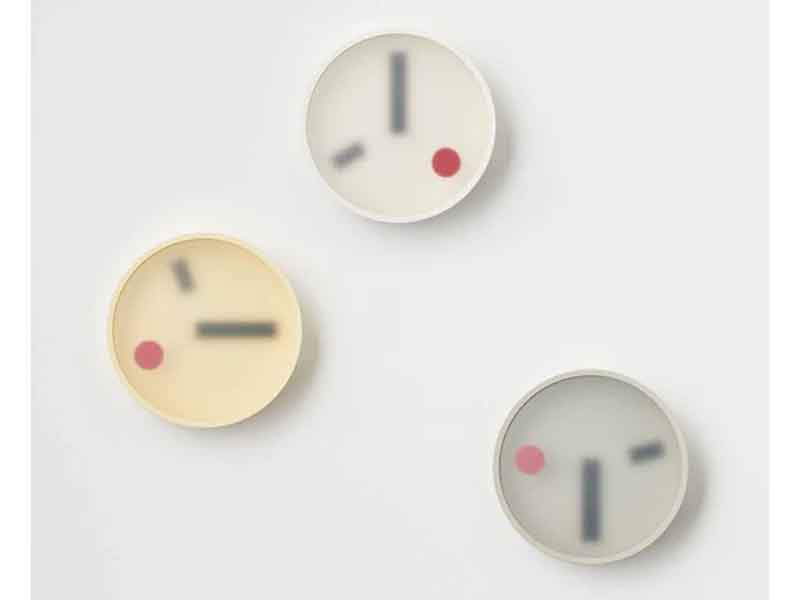
Most clocks enter a room and immediately begin bossing everyone around. “You’re late.” “Your meeting starts in five minutes.” “Why are you still drinking coffee at 3:47 p.m.?” Kehai Clocks take a very different approach. Instead of shouting the time from across the wall, the Kehai Clock whispers it. Calmly. Elegantly. Almost like a polite Japanese houseguest who knows exactly when to leave but never makes a scene.
The Kehai Clock is a minimalist wall clock designed by Makoto Koizumi for Lemnos, a Japanese design manufacturer known for turning everyday timepieces into quiet works of art. The name “Kehai” comes from the Japanese idea of a subtle presence, hint, or sign of something nearby. That meaning fits the clock perfectly: it does not erase time, but it softens it. The hands sit behind translucent glass, the face is deliberately understated, and a small red dot on the second hand moves with a gentle sense of intention.
For anyone interested in Japanese design, quiet luxury, minimalist interiors, or simply a clock that does not make your wall look like a bus station schedule board, Kehai Clocks offer a refreshing alternative. They are functional, but they are also philosophical. Yes, that sounds dramatic for a clock. But then again, most clocks do not make you question your relationship with deadlines before breakfast.
What Are Kehai Clocks?
Kehai Clocks are best understood as design objects first and timekeepers second. They are not oversized statement clocks with giant numerals, decorative gears, or rustic farmhouse slogans telling you to “gather.” Instead, the Kehai Clock uses ambiguity as part of its beauty. The hour and minute hands are visible, but softened by a translucent glass surface. The result is a clock that shows time without making time feel aggressive.
The design was originally created in 2004 by Japanese designer Makoto Koizumi and later produced by Lemnos. Its compact round form, delicate aluminum frame, frosted appearance, and quiet movement make it feel more like a sculptural object than a traditional wall clock. In many rooms, it blends into the background until you notice the red dot slowly circling the face. That tiny detail gives the piece its personality: restrained, thoughtful, and just bold enough to avoid becoming invisible.
Why the Name “Kehai” Matters
The word “kehai” suggests a presence, sign, hint, or atmosphere. This is the entire emotional engine of the clock. Many timepieces are designed around precision, visibility, and urgency. Kehai is designed around awareness. It lets time exist in the room without dominating the room.
That makes the clock especially interesting for modern homes, where people are already surrounded by screens, alerts, alarms, calendar reminders, and smart devices that seem personally offended when ignored. A Kehai Clock does not flash, ping, buzz, or demand attention. It simply exists. It gives you enough information to stay oriented, but not so much that you start calculating how many productive minutes you have wasted wondering what to eat for lunch.
The Design: Minimal, Quiet, and Surprisingly Emotional
Translucent Glass
The most distinctive feature of the Kehai Clock is its translucent glass front. Instead of placing the hands in sharp focus, the clock partially obscures them. The hands appear almost like shadows, giving the time a softer and more poetic quality. You can still read the clock, but it asks you to look with intention.
This is not a flaw; it is the point. The Kehai Clock is not meant to be the clock you glance at while sprinting out the door with one shoe on. It is better suited to spaces where atmosphere matters: a bedroom, reading corner, meditation room, creative studio, boutique office, hallway, or carefully styled living room.
The Red Dot Second Hand
The red dot is the small design detail that keeps the Kehai Clock from becoming too quiet. It moves around the face like a tiny orbiting planet, adding life to the otherwise hushed design. In a minimalist space, that red dot can become the only strong accent in the room, which is exactly why it works.
It also gives the clock a sense of movement without clutter. Traditional second hands can feel busy, especially on clocks with visible ticks and numerals. Kehai reduces that motion to a single dot, which feels more like visual punctuation than mechanical measurement.
Aluminum Frame and Compact Size
Kehai Clocks use a thin aluminum frame that feels delicate but intentional. The form is small compared with many wall clocks, so it does not overpower a room. This compact scale is important because the clock is designed to feel like a sign or presence rather than a centerpiece screaming, “Look at me, I contain numbers!”
The materials commonly associated with Kehai include aluminum, glass, and polypropylene. The clock is typically listed at about 13 centimeters in diameter and 5.5 centimeters deep, making it more of a refined wall object than a large decorative clock. Its size also makes placement more flexible, especially in apartments, small offices, and carefully composed interior settings.
Who Makes Kehai Clocks?
Kehai is made by Lemnos, a Japanese company with deep roots in clockmaking and craft manufacturing. Lemnos has a long history connected to metalwork, casting, and design-led timepieces. The brand is known for collaborating with respected designers and producing clocks that balance utility with artful simplicity.
That background matters because the Kehai Clock is not just “minimal” in the lazy sense of being plain. Good minimalist design is harder than it looks. Remove too much and an object becomes boring. Add too much and the calm is gone. Kehai sits in that difficult middle zone: simple enough to disappear, distinctive enough to be remembered.
Kehai Clocks and Japanese Minimalism
Japanese minimalism is often misunderstood as empty space with expensive chairs. In reality, it is usually about restraint, proportion, material honesty, and the feeling created by what is left unsaid. The Kehai Clock fits this tradition beautifully. It does not rely on decorative noise. It creates atmosphere through softness, shadow, and subtle motion.
In a room with natural wood, plaster walls, linen curtains, ceramic objects, or neutral colors, Kehai can feel completely at home. It does not compete with the architecture. It behaves more like a quiet detail you discover over time. That is why it appeals to fans of Japandi interiors, modern organic spaces, Scandinavian-inspired rooms, and design collectors who prefer understatement over decoration.
Where Kehai Clocks Work Best
Bedrooms
A bedroom is one of the best places for a Kehai Clock because the design reduces the pressure often associated with time. A bold digital clock can make midnight feel like a tax audit. Kehai, by contrast, keeps time present but gentle. Its quiet visual language works well above a low dresser, beside a reading chair, or on a wall facing the bed.
Home Offices
In a home office, Kehai can help create a calmer work environment. It is still a clock, so it keeps you aware of the day’s rhythm, but it does not intensify the feeling of being monitored by your own schedule. For creative professionals, writers, designers, therapists, consultants, and anyone who wants a less corporate-looking workspace, it can be a smart choice.
Living Rooms
In living rooms, Kehai works best as a quiet design accent. It pairs nicely with floating shelves, gallery walls, natural textures, and muted color palettes. Because it is small, it should be placed thoughtfully. It may not fill a large blank wall by itself, but it can look excellent as part of a curated arrangement.
Meditation and Wellness Spaces
For yoga rooms, meditation corners, spa-like bathrooms, or wellness studios, Kehai’s soft relationship with time is especially appropriate. It supports awareness without urgency. That sounds simple, but it is rare in an object whose entire job is to remind us that time is passing.
How to Style a Kehai Clock
The key to styling a Kehai Clock is to give it breathing room. Do not surround it with loud wall art, busy patterns, or shelves packed with objects. This clock looks best when the wall around it is allowed to participate in the design. Negative space is not empty; it is the clock’s best friend.
Choose the color based on the wall material and mood of the room. A white version can blend beautifully into pale plaster, white paint, or soft neutral interiors. Gray works well in concrete-inspired, modern, industrial, or cooler-toned spaces. Yellow can add warmth and personality, especially against wood, earth tones, or playful modern decor.
Because the clock is compact, it usually looks better at eye level or slightly above. Avoid placing it too high, where its subtle face becomes difficult to read. Also avoid dark corners unless the lighting is strong enough to reveal the hands behind the translucent glass. Kehai is subtle, not magical; it still appreciates a little visibility.
Is a Kehai Clock Easy to Read?
This is the practical question, and the honest answer is: it depends on what you want from a clock. If you need exact readability from across the room while boiling pasta, answering emails, and looking for your missing keys, Kehai may not be the most practical choice. Its design intentionally softens the hands, so reading the time requires a more deliberate glance.
However, if your goal is to create a calmer relationship with time, that reduced readability is part of the charm. Kehai is not trying to replace the clock on your phone, oven, laptop, microwave, smartwatch, and the tiny anxiety clock living rent-free in your brain. It is trying to make time feel less harsh in the spaces where you rest, think, and live.
Why Designers and Minimalism Fans Like Kehai Clocks
Design lovers often appreciate objects that solve a familiar problem in an unfamiliar way. A clock is one of the most common household objects in the world, yet Kehai makes it feel fresh. It asks: what if a clock did not have to be loud? What if time could be visible but not sharp? What if a second hand could be a red dot instead of a tiny stick having a nervous breakdown?
Those questions are why Kehai stands out. It turns timekeeping into a visual experience. The clock does not need decorative numbers, ornate hands, or oversized drama. Its concept is strong enough to carry the object.
Kehai Clocks vs. Traditional Wall Clocks
A traditional wall clock is usually judged by visibility, size, accuracy, and decorative style. Kehai adds another category: emotional tone. It is less about checking the exact minute and more about shaping how a room feels.
Traditional clocks work well in kitchens, classrooms, workshops, and shared spaces where quick reading matters. Kehai works best in interiors where mood, calm, and design cohesion matter more than instant readability. It is not better in every situation; it is better for a specific kind of space and a specific kind of person.
Buying Tips for Kehai Clocks
Before buying a Kehai Clock, measure the wall area where you plan to place it. The clock is compact, so it may look too small on a large empty wall unless paired with other design elements. Think of it as a refined accent rather than a dominant focal point.
Next, consider lighting. Because the hands are intentionally diffused, good ambient light will make the clock easier to enjoy. Natural daylight, soft wall lighting, or a nearby lamp can help reveal its subtle details.
Finally, buy from reputable design retailers or official Lemnos stockists when possible. Kehai is a design object, and authenticity matters. A cheap lookalike may imitate the surface idea, but it is unlikely to capture the material balance, proportions, and quiet refinement that make the original interesting.
Care and Maintenance
Kehai Clocks are generally simple to care for. Use a soft, dry cloth to remove dust from the glass and frame. Avoid harsh cleaners, abrasive pads, or anything that might scratch the translucent surface. Because the clock’s appeal depends on subtle material effects, keeping the face clean helps preserve its soft visual quality.
When installing it, make sure the wall hook or mounting point is secure. The clock is small, but careful placement protects both the object and the wall. Also, use the recommended battery type and replace it when the movement slows or stops. No clock, no matter how poetic, can run indefinitely on vibes.
Are Kehai Clocks Worth It?
Kehai Clocks are worth considering if you value design, atmosphere, and craftsmanship over maximum utility. They are not the most practical clocks for every household. They are not the cheapest option, and they are not designed for people who want giant numerals visible from three rooms away.
But for the right buyer, Kehai offers something more memorable than an ordinary wall clock. It changes the feeling of time in a room. That may sound abstract, but interior design is full of these small emotional decisions: the lamp that makes evenings softer, the chair that invites reading, the ceramic bowl that makes keys look less like clutter. Kehai belongs in that category. It is useful, but its usefulness is wrapped in calm.
Personal Experience and Living With Kehai Clocks
The experience of living with a Kehai Clock is different from living with a normal wall clock. At first, you may look at it and think, “Wait, is this clock shy?” The hands are there, but they are softened behind the translucent glass. The face does not immediately hand you the time like a receipt. You have to pause for a second, and that pause becomes part of the design.
In a busy home, this can feel surprisingly pleasant. A standard clock can become another source of pressure, especially in rooms where you are trying to relax. Kehai does not remove time from the room, but it lowers the volume. In a bedroom, that can make mornings feel less abrupt. In a study, it can keep you aware of the hour without turning every glance into a productivity report. In a living room, it becomes the kind of object guests notice slowly, then ask about.
One of the most enjoyable things about Kehai is the red dot. It gives the clock a quiet rhythm. You may not notice it every minute, but when you do, it feels almost meditative. The dot moves steadily, reminding you that time is passing, but without the sharp visual snap of a conventional second hand. It is a small detail, yet it carries much of the clock’s personality.
Placement makes a big difference. On a white wall, the white Kehai can become nearly architectural, like a small circular relief. On a gray wall, the gray version can feel modern and gallery-like. In a warmer room with wood furniture, the yellow version can add a gentle accent without becoming loud. The best placement is usually somewhere the clock can be seen up close, not across a huge room. Kehai rewards attention rather than distance.
There is also a practical adjustment period. If you are used to bold clocks with big numbers, Kehai may feel too subtle at first. That is normal. It is not trying to be the main timekeeping device for a rushed kitchen or a classroom. It is better suited to moments when you want time to feel present but not pushy. Over days and weeks, the clock becomes less like a tool and more like part of the atmosphere.
The biggest lesson from the Kehai experience is that a clock can influence the mood of a space more than people expect. We often choose clocks as afterthoughts, but they sit in our rooms measuring our lives in public. Kehai makes that measurement gentler. It is not for everyone, and that is part of its appeal. For people who love calm interiors, Japanese minimalism, and objects with a quiet idea behind them, the Kehai Clock is not just a way to tell time. It is a way to make time behave itself.
Conclusion
Kehai Clocks are a beautiful reminder that design does not always need to be loud to be memorable. With translucent glass, a delicate aluminum frame, a subtle red dot, and a philosophy rooted in the quiet presence of time, the Kehai Clock turns a common household object into something thoughtful and atmospheric.
It is not the perfect clock for every room, and that is exactly why it feels special. In the right setting, Kehai becomes more than a timepiece. It becomes a small meditation on pace, presence, and the art of not letting the clock run your entire life. Which, frankly, is a design feature many of us could use before Monday morning.
Note: This article is written for web publishing and synthesizes real product, design, and retailer information about Kehai Clocks without inserting source links into the article body.