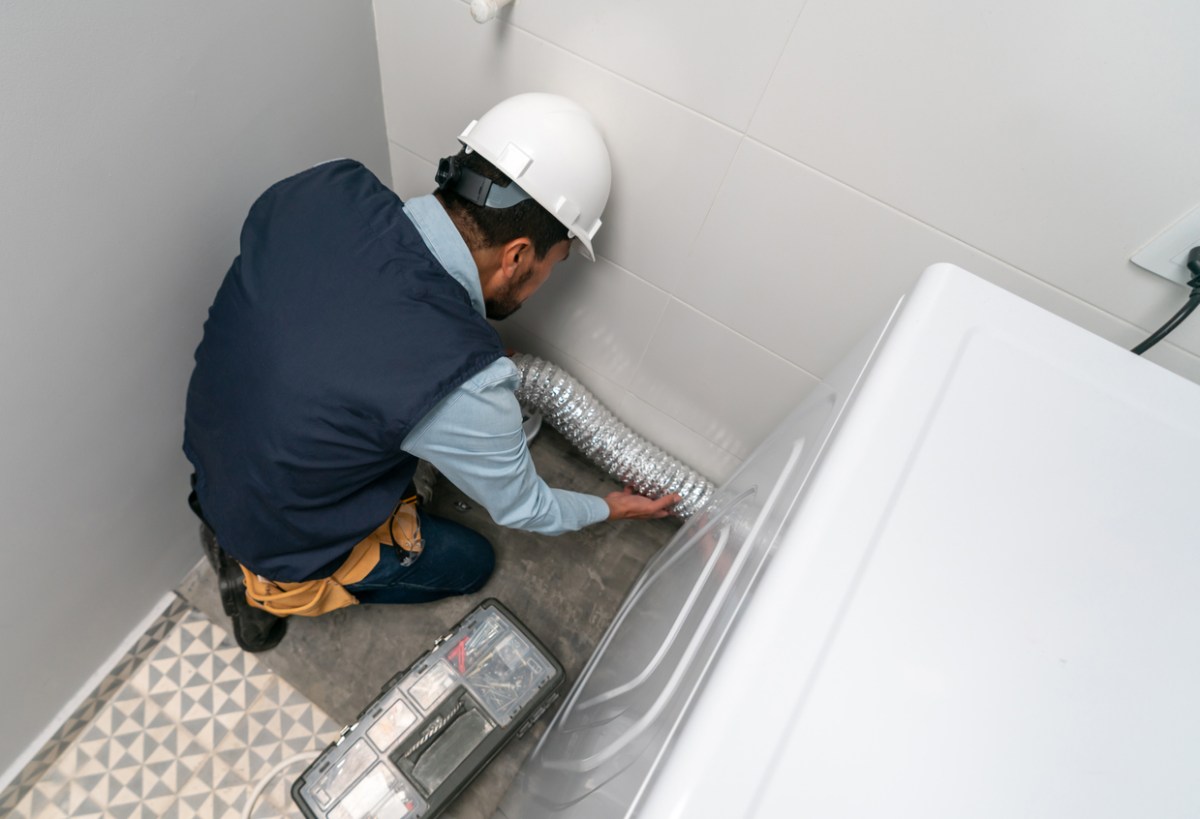
A dryer vent is not the most glamorous home upgrade. Nobody invites friends over to admire four inches of shiny ductwork disappearing into a wall. Still, a properly installed vent can shorten drying times, control moisture, protect the appliance, and reduce the risk of lint-related fires. That makes the dryer vent installation cost a relatively small but important investment.
For most U.S. homeowners, professional dryer vent installation costs approximately $140 to $600, with many straightforward projects landing near $200. A simple replacement may cost less than $150, while a long route through finished walls, a crawl space, or the roof can approach $1,000. Current national estimates vary because contractors calculate prices differently and labor rates are highly local.
Dryer Vent Installation Cost at a Glance
| Project Type | Typical Cost Range |
|---|---|
| Basic vent replacement | $80 to $200 |
| Direct installation through an exterior wall | $140 to $300 |
| Typical professional installation | $140 to $600 |
| Vent rerouting | $200 to $500 |
| Complex concealed or roof installation | $500 to $1,000 |
| Estimated cost per linear foot | $12.50 to $15 |
| Professional vent cleaning after installation | $100 to $200 |
These figures are national planning estimates rather than guaranteed quotes. HomeAdvisor reports an average of about $200 and an overall range of $80 to $1,000, while Angi places many new exterior-wall installations between $140 and $600. Dryer vent cleaning commonly adds another $100 to $200 when an existing duct is reused.
What Does It Cost to Install a Dryer Vent?
The final price depends on what the installer must do between the back of the dryer and the outside of the house. When the appliance sits beside an exterior wall, the job may require only a short metal duct, an exterior hood, foil tape, clamps, and one carefully cut opening. That is the dryer-vent equivalent of an easy Tuesday.
Costs rise when the laundry room is in the center of the home, upstairs, below grade, or surrounded by finished surfaces. The installer may need to open drywall, route ductwork between framing members, drill through masonry, work in a tight crawl space, or climb onto the roof. Each obstacle adds labor, materials, equipment, and occasionally a small amount of contractor muttering.
Basic Dryer Vent Replacement
A basic replacement generally costs $80 to $200. This type of job uses an existing wall opening and duct route. The professional removes damaged, crushed, loose, or unsuitable vent material and reconnects the dryer using an approved metal transition duct.
The project may still be subject to a minimum service charge. Even if the physical work takes 30 minutes, the contractor must drive to the property, inspect the system, bring tools, verify airflow, and accept responsibility for the installation.
New Vent Through an Exterior Wall
A short, direct installation typically costs $140 to $300. The installer marks the opening, checks for pipes and wiring, drills through the wall, installs the exterior termination hood, connects the duct, seals exterior gaps, and tests the system.
Brick, stone, stucco, concrete, and unusually thick walls can increase the price. They require specialized drilling equipment and more time than vinyl siding or wood sheathing. Cutting the wrong hole in a brick wall is an expensive way to discover the importance of measuring twice.
Long or Concealed Duct Installation
A longer run through walls, ceilings, basements, attics, or crawl spaces often costs $300 to $700. The bill may rise toward $1,000 when access is poor, drywall must be removed and repaired, or multiple trades are involved.
HomeAdvisor estimates an all-in cost of roughly $12.50 to $15 per linear foot. Its published examples place an eight-foot installation near $110, a 20-foot run around $210, and a 35-foot run around $290 before unusually difficult access or structural repairs are added.
Roof Vent Installation
A roof termination is commonly one of the most expensive options. It can require roof access equipment, flashing, waterproofing, vertical ductwork, and careful placement to prevent leaks. It is also harder to inspect and clean later.
Whenever possible, installers generally prefer the shortest practical route through a sidewall. A roof route may still be necessary in certain townhouses, interior laundry rooms, and multi-story homes, but it should be planned by someone who understands both ventilation and roofing.
Main Factors That Affect Dryer Vent Installation Cost
Vent Length
Longer vents use more material and require more labor. More importantly, a long duct creates additional resistance to airflow. The dryer must push hot, moist air and lint through the entire route, so every unnecessary foot makes the appliance work harder.
Model building codes and dryer manufacturers set limits on equivalent duct length. Elbows reduce the permitted length because each turn adds resistance. The exact allowance depends on the dryer model and locally adopted code, so the appliance installation manual should be checked before the route is finalized.
Number of Elbows
A straight duct is usually cheaper, easier to clean, and better for airflow. A route with three or four sharp turns is the opposite: more fittings, more installation time, and more places where lint can settle.
This Old House recommends using the shortest, most direct path outdoors and minimizing bends. It also favors four-inch rigid steel duct because its smooth interior catches less lint than ribbed flexible material.
Duct Material
Material selection should be based on safety and code compliance, not merely on the lowest shelf price. Some consumer cost guides still discuss plastic, PVC, foil, and flexible products, but safety agencies and appliance manufacturers consistently favor rigid or approved semi-rigid metal venting.
The U.S. Consumer Product Safety Commission advises replacing plastic or foil accordion-style ducts with rigid or corrugated semi-rigid metal. NFPA guidance also recommends metal venting to support proper airflow, while GE installation information warns against plastic and other combustible ductwork.
Rigid galvanized steel or aluminum generally costs more than a bargain flexible hose, but it is durable, resists crushing, provides smoother airflow, and is easier to clean. Saving $20 on questionable duct material is not a thrilling bargain if it creates years of restricted airflow.
Wall and Exterior Material
Cutting through standard wood framing and siding is normally faster than drilling through brick, stone, or poured concrete. Exterior finishes must also be sealed correctly to keep out rain, insects, rodents, and drafts.
If interior drywall must be opened, ask whether patching, sanding, priming, and painting are included. Some dryer vent installers handle only the mechanical work, leaving the wall looking like it lost a disagreement with a circular saw.
Local Labor Rates
Labor rates are typically higher in major metropolitan areas and regions with a high cost of living. Forbes Home reports that general handyman labor for broader laundry-hookup work may range from about $50 to $150 per hour, while professional vent installations frequently average around $200 in total.
HVAC technicians, appliance installers, general contractors, experienced handypeople, and specialty dryer-vent companies may all offer this service. Roof penetrations, gas dryers, electrical upgrades, and structural modifications may require specialized trades.
New Installation Versus Replacement
Replacing an existing connection is usually cheaper because the route and exterior opening already exist. A completely new installation requires planning, measurements, wall penetrations, new ductwork, an exterior hood, sealing, and possibly permits or inspections.
An installer should still inspect an old duct before reusing it. A vent hidden inside a wall may be crushed, disconnected, undersized, excessively long, or made from unsuitable material.
Dryer Location
A first-floor laundry room beside an exterior wall is the budget champion. An upstairs laundry closet in the middle of the floor plan is more complicated. Basement installations can be affordable when the rim joist is accessible, but costs increase if the duct must travel through finished ceilings or climb a long vertical distance.
Moving the entire washer and dryer setup is a separate and much larger project. Once plumbing, drainage, electricity, gas piping, cabinetry, and flooring are added, relocation costs can reach hundreds or thousands of dollars beyond the vent itself.
Why Proper Dryer Vent Installation Matters
A dryer vent carries heat, water vapor, and lint out of the home. If the duct is disconnected, crushed, leaking, or clogged, moisture may collect in walls and ceilings. The dryer may run longer, clothing may remain damp, and the appliance may overheat.
The fire risk is not theoretical. An NFPA analysis covering 2014 through 2018 estimated an annual average of 13,820 home structure fires involving dryers. Failure to clean contributed to 32 percent of those fires, and dust, fiber, or lint was the first material ignited in 27 percent.
The CPSC explains that lint can block airflow and cause excessive heat buildup. Warning signs include unusually long drying cycles, clothing that remains damp, little airflow at the exterior hood, excess heat in the laundry room, and a burning smell.
The U.S. Fire Administration recommends professional installation and servicing, cleaning the lint filter for each cycle, checking the duct for crushing or restrictions, and confirming that the outdoor vent cover opens while the dryer operates.
Special Considerations for Gas Dryers
A conventional gas dryer must discharge outdoors through an approved venting system. An indoor lint box is not an acceptable substitute because combustion exhaust must not be released into the living space.
Gas connections should also be inspected for leaks and installed according to the appliance manufacturer’s instructions and local requirements. When vent work is combined with gas-line changes, hire a qualified professional rather than treating the project as an experimental Saturday.
Additional Costs to Include in the Budget
Drywall Repair and Painting
Access holes may be necessary when ductwork runs through finished walls or ceilings. Ask the contractor whether the quote includes closing those openings. Mechanical installers do not always provide finish carpentry or painting.
Exterior Vent Hood
A damaged or poorly designed hood may need replacement. The termination should open freely when the dryer runs and close when it is off. It should also discourage pests without using a fine screen that quickly fills with lint.
Vent Cleaning
If an existing duct remains in place, cleaning it before connecting a new dryer is sensible. Professional cleaning generally costs around $100 to $200, although roof vents, severe clogs, bird nests, long runs, and multiple elbows may cost more.
Vent Rerouting
Rerouting commonly costs $200 to $500. It may be recommended when the original duct is too long, has excessive bends, terminates in the wrong location, or repeatedly clogs.
Permit and Inspection Fees
Requirements vary by municipality. A simple replacement may not require a permit, while new construction, exterior penetrations, gas work, or major remodeling may. The contractor should explain which approvals apply and whether associated fees are included.
DIY Dryer Vent Installation Versus Hiring a Professional
A capable homeowner may be able to complete a short, straight installation through a wood-framed exterior wall. A basic kit includes rigid metal duct, an exterior hood, approved transition material, clamps, foil HVAC tape, sealant, a drill, and an appropriately sized hole saw.
DIY becomes much less attractive when the route passes through masonry, finished walls, a second story, a roof, or a concealed framing cavity. Hidden electrical wiring and plumbing can turn one innocent pilot hole into a deeply memorable afternoon.
Professional installation is usually worth considering when:
- The dryer is powered by gas.
- The duct will be concealed inside a wall or ceiling.
- The route requires several elbows.
- The exterior opening must pass through brick or concrete.
- The vent terminates on the roof or an upper story.
- The existing duct is damaged, disconnected, or difficult to inspect.
- Local rules require a permit or inspection.
Hiring a professional also creates a clear point of responsibility. A reputable installer should explain the route, materials, equivalent length, sealing method, exterior termination, cleanup, and workmanship warranty.
How to Save Money Without Cutting Corners
- Keep the dryer near an exterior wall. A short route uses less material, requires fewer openings, and usually reduces future cleaning costs.
- Get at least three itemized estimates. Compare the duct material, route, wall repairs, exterior hood, cleanup, permit responsibility, and warrantynot just the total price.
- Schedule related work together. If the dryer needs cleaning, repair, or replacement, combining tasks may reduce separate service-call charges.
- Clear the work area. Removing shelves, hampers, stored supplies, and the old appliance can save labor time.
- Choose durable metal ductwork. The cheapest material may kink, trap lint, or require early replacement.
- Avoid unnecessary bends. A simpler route costs less to install and is easier to maintain.
- Confirm what the quote excludes. Drywall, painting, electrical work, roof repair, disposal, and permits can otherwise appear as unwelcome finale charges.
Questions to Ask a Dryer Vent Installer
- What type and gauge of duct will you install?
- Will the system terminate outdoors?
- How long is the proposed route, including elbow deductions?
- Does the route comply with the dryer manufacturer’s instructions?
- Will you seal joints with approved foil tape?
- Are drywall repair and exterior sealing included?
- Will you test airflow after completing the work?
- Does the job require a permit or inspection?
- Are you insured, and do you guarantee the installation?
- How often should this specific vent be inspected and cleaned?
Real-World Experiences and Lessons From Dryer Vent Projects
Dryer vent projects often begin with an innocent complaint: “The towels need two cycles.” Homeowners may assume the dryer is old, the heating element is failing, or the appliance has developed a personal grudge against bath linens. In many cases, the real problem is the vent.
Consider a typical first-floor laundry room where the dryer sits three feet from an exterior wall. The existing connection is a crushed foil hose folded behind the appliance like a metallic accordion. Replacing it with a properly sized metal transition duct and a short, straight exterior route may cost around $150 to $250. The work is simple, and the improvement can be immediate: stronger airflow outside, less heat in the laundry room, and shorter drying cycles.
Now compare that with an upstairs laundry closet in the center of a two-story home. The original duct may run through a ceiling, turn around framing, continue across the house, and terminate high on a rear wall. Access holes are required, the installer needs ladders, and several sections of duct must be replaced. A quote of $600 to $1,000 may initially look excessive, but the price reflects access, risk, wall repairs, and several hours of skilled labornot an unusually expensive four-inch pipe.
Another common experience occurs during appliance replacement. The delivery crew removes the old dryer and finds a plastic vent hose, a disconnected joint, or lint packed around the wall connection. The crew may refuse to connect the new appliance until the vent is corrected. This can feel inconvenient, especially when wet laundry is already forming a small mountain, but it is usually the responsible decision. New equipment should not be attached to a visibly unsafe exhaust system.
Roof vents produce their own collection of lessons. They can work when properly designed, but homeowners frequently forget about them because the termination is invisible from the ground. Years later, drying times increase because lint, nesting material, or a stuck damper restricts airflow. Cleaning requires roof access, which means the least convenient installation is often also the most expensive one to maintain.
Homeowners also learn that a low estimate may omit important work. One contractor may quote $180 for the duct alone, while another quotes $350 including the exterior hood, removal of old materials, wall sealing, airflow testing, and minor drywall repair. The second price is not necessarily worse. An itemized proposal reveals whether the estimates describe the same finished project.
Finally, the best results usually come from planning the route before choosing the exact appliance position. Moving the dryer a few feet closer to an exterior wall can eliminate elbows, shorten the duct, and reduce both installation and maintenance expenses. Laundry-room design is rarely exciting, but a well-placed dryer is the kind of boring decision that keeps paying dividends every time a load finishes on the first cycle.
Frequently Asked Questions
How much does a dryer vent installation cost on average?
The average professional project is approximately $200. Most homeowners pay between $140 and $600, while unusually simple replacements may cost less and complex routes may approach $1,000.
Who installs dryer vents?
HVAC contractors, appliance installers, dryer-vent specialists, general contractors, and qualified handypeople may install vents. Roof penetrations, gas connections, electrical changes, and structural work may require additional licensed trades.
Can a dryer be vented into a garage, attic, or crawl space?
A conventional vented dryer should discharge outdoors, not into an attic, garage, crawl space, wall cavity, or other enclosed area. Releasing humid air indoors can contribute to condensation, mold, lint accumulation, and safety problems.
Is flexible foil duct acceptable?
Flexible foil and plastic accordion-style products are prone to crushing and lint accumulation. Use duct materials permitted by local code and specified by the dryer manufacturer. Rigid metal is generally preferred for the permanent duct run.
How often should a dryer vent be cleaned?
NFPA recommends cleaning lint from the vent pipe at least annually, or sooner when drying takes longer than normal. Large households, pet owners, long vent routes, and dryers used frequently may require more frequent service.
What are the signs of a blocked dryer vent?
Common warning signs include longer cycles, damp clothing, an unusually hot appliance or laundry room, a burning odor, lint collecting around the dryer, and weak airflow at the exterior hood.
Conclusion
The cost to install a dryer vent typically falls between $140 and $600, with straightforward projects averaging around $200. The route, duct length, wall material, accessibility, labor rates, and required repairs determine where the final bill lands.
The smartest installation is usually short, straight, metal, properly sealed, and terminated outdoors. It may not become the centerpiece of a home tour, but it can help the dryer operate efficiently while moving heat, moisture, and lint where they belong: outside.
Note: Cost ranges are national planning estimates based on U.S. pricing available in 2026. Actual quotes vary by location, home construction, dryer model, contractor, permit requirements, and locally adopted building codes. Always follow the appliance manufacturer’s installation instructions.