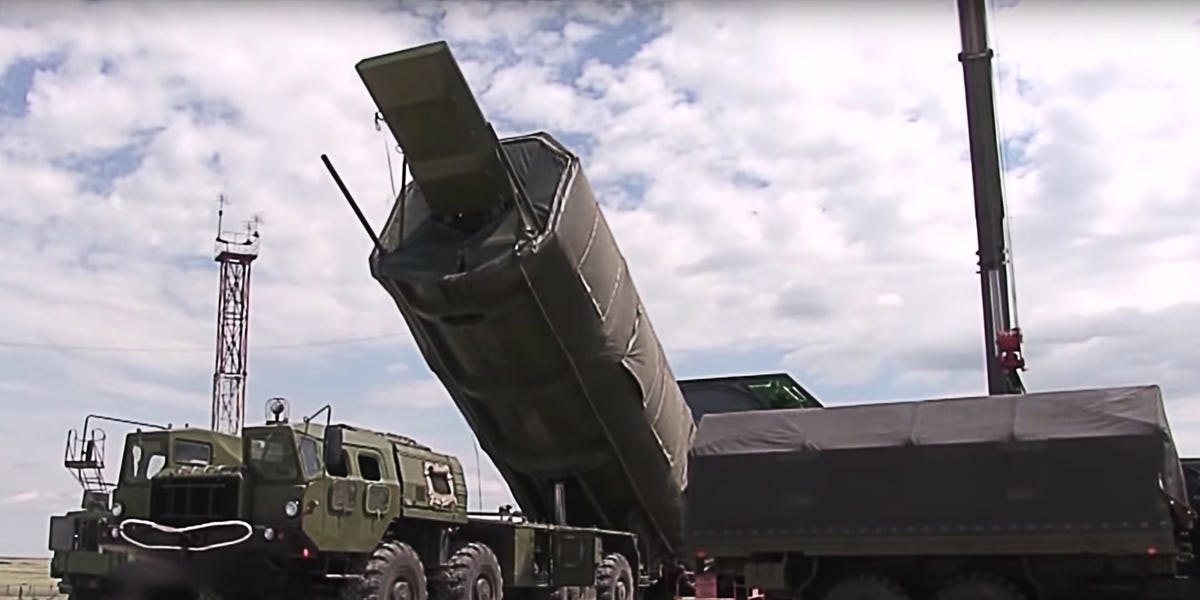
Russia’s missile arsenal is often described with words such as “unstoppable,” “game-changing,” and “hypersonic.” Those labels make excellent television graphics, but they can turn a complicated subject into a cloud of Mach numbers and dramatic music. The reality is more interesting. Russia fields a broad family of short-, intermediate-, and intercontinental-range weapons, and only some of them belong to the modern category of maneuvering hypersonic systems.
The Russian military uses these weapons for several overlapping missions: battlefield strikes, attacks on infrastructure, naval warfare, nuclear deterrence, political signaling, and attempts to penetrate missile defenses. The war in Ukraine has also provided the world with an unusually large body of evidence about how Russian ballistic missiles and hypersonic weapons perform outside a parade ground. Some have proved dangerous and difficult to stop. Others have shown that “very fast” is not a synonym for “infallible.” Physics, as usual, refuses to join anyone’s public-relations department.
Hypersonic Weapons and Ballistic Missiles Are Not the Same Thing
Hypersonic speed generally means faster than Mach 5, or five times the speed of sound. That definition alone is not enough to identify a modern hypersonic weapon. Traditional ballistic missile warheads have traveled at hypersonic speeds for decades, especially during reentry. What distinguishes newer systems is usually their ability to maneuver significantly while flying through the atmosphere, follow less predictable routes, or sustain powered hypersonic flight.
Three Basic Flight Concepts
- Ballistic missiles receive most of their energy from a rocket booster and then follow a largely predictable arc, although modern reentry vehicles can maneuver and deploy decoys.
- Hypersonic glide vehicles ride a rocket to high altitude, separate, and glide toward the target while changing direction.
- Hypersonic cruise missiles use air-breathing engines, usually scramjets, to sustain high-speed atmospheric flight.
Russia’s arsenal includes all three concepts, plus weapons that sit between the categories. The Kinzhal, for example, is frequently marketed as a hypersonic missile, but it is more accurately described as an air-launched ballistic or aeroballistic missile. The terminology may sound like alphabet soup served at Mach 10, yet the distinctions matter because each flight profile creates a different tracking and interception problem.
Russia’s Main Hypersonic Weapons
Kh-47M2 Kinzhal: The Air-Launched “Dagger”
The Kh-47M2 Kinzhal is a nuclear-capable, air-launched ballistic missile associated primarily with modified MiG-31K aircraft. U.S. analysts widely assess that it is related to the ground-launched Iskander-M. Launching from a fast, high-flying aircraft extends its reach and allows the carrier to approach from different directions, complicating early warning.
Kinzhal has been used repeatedly in Ukraine against high-value or heavily defended targets. Its speed, maneuvering ability, and steep terminal approach make interception difficult, particularly for air-defense systems not designed to defeat ballistic threats. However, the Pentagon confirmed in 2023 that Ukraine used a Patriot system to shoot down a Russian missile identified by Kyiv as a Kinzhal. That did not make the weapon harmless; it demolished the myth that the missile was literally impossible to intercept.
3M22 Tsirkon: A Sea-Launched Hypersonic Cruise Missile
The 3M22 Tsirkon, also written Zircon, is Russia’s ship- and submarine-launched hypersonic cruise missile. It is intended to attack warships and land targets while traveling at very high speed within the atmosphere. Evidence indicates that Russia began using it against Ukraine in 2024, although its real-world accuracy, terminal maneuvering, and production rate remain uncertain. Its naval basing extends the missile threat along coastlines and maritime approaches without relying on fixed launch sites.
Avangard: Strategic Hypersonic Glide Vehicle
Avangard belongs to a different class. It is a nuclear-capable hypersonic glide vehicle carried aloft by an intercontinental ballistic missile booster. After separation, the vehicle is designed to maneuver through the atmosphere at extreme speed, making its path harder to predict than that of a conventional ballistic reentry vehicle.
Russia placed the first Avangard-equipped unit on combat duty in 2019, initially using modified Soviet-era SS-19 boosters. Its mission is strategic rather than tactical: it is meant to strengthen Russia’s ability to penetrate missile defenses and preserve a credible nuclear retaliatory capability. Avangard is fielded in limited numbers, but even a small force can matter because strategic deterrence depends on the possibility of unacceptable damage, not on winning a missile popularity contest.
Oreshnik: An Intermediate-Range Signal With Strategic Weight
Russia first used the Oreshnik against Dnipro in November 2024. The Pentagon described it as an experimental intermediate-range ballistic missile derived from the RS-26 Rubezh program. The weapon carried multiple reentry vehicles in its public combat debut, creating a striking visual effect and an unmistakable political message.
Oreshnik is often called hypersonic because its reentry vehicles reach hypersonic speed, but it is fundamentally an intermediate-range ballistic missile rather than a scramjet-powered cruise missile. Russia says it can carry conventional or nuclear payloads and reach targets across Europe. Additional reported combat use and deployment activity in 2025 and 2026 increased its signaling value, although the size of the operational force remains unclear.
The Ballistic Backbone of the Russian Military
Iskander-M: The Battlefield Workhorse
The Iskander-M is a mobile short-range ballistic missile system and one of Russia’s most operationally important precision-strike weapons. It can carry conventional or nuclear warheads, maneuver during flight, and use penetration aids intended to confuse defenses. In Ukraine, short-range ballistic missiles have often been deadlier than the more glamorous hypersonic systems because they are used more frequently and give defenders little time to react.
Yars and Bulava: The Mature Strategic Force
The RS-24 Yars is the main modern land-based intercontinental ballistic missile in Russia’s strategic forces. It is deployed in mobile and silo-based versions and can carry multiple independently targetable reentry vehicles. At sea, Bulava missiles aboard Borei-class ballistic missile submarines provide a survivable second-strike capability. These mature systems matter more to routine strategic deterrence than the newest prototypes.
RS-28 Sarmat: Enormous Ambition, Repeated Delay
The silo-based RS-28 Sarmat is intended to replace the aging Soviet-built SS-18 heavy ICBM. Russia says it can carry numerous warheads, penetration aids, or possibly Avangard glide vehicles. Its large payload and potential approach routes are designed to complicate missile defense.
Yet Sarmat’s history is also a reminder that rocket engineering is not impressed by political deadlines. Independent U.S. analysis documented test failures, infrastructure delays, and uncertainty about whether operational silos had actually been loaded by early 2026. Russia conducted another test in 2026 and announced a new service timetable. The program may eventually deliver a formidable capability, but official declarations and verified deployment are not the same milestone.
Why Russia Invests So Heavily in High-Speed Missiles
Russia’s missile strategy reflects geography, military doctrine, and competition with the United States and NATO. Moscow views long-range precision weapons as a way to offset Western advantages in airpower, naval aviation, intelligence, and conventional strike. Hypersonic weapons and advanced ballistic missiles support several goals:
- Penetrating defenses: High speed, maneuvering trajectories, decoys, and unusual approach angles can reduce interception opportunities.
- Compressing decisions: Shorter warning times place political and military leaders under intense pressure.
- Holding high-value targets at risk: Air bases, ports, headquarters, missile-defense sites, and hardened facilities can be threatened from long range.
- Preserving nuclear deterrence: Strategic systems are designed to ensure that Russia can retaliate after an attack.
- Sending political messages: Tests, deployments, and selected combat launches can intimidate opponents without crossing immediately into nuclear use.
The dual-capable nature of many Russian missiles creates additional danger. A defender may know that a missile has been launched but not whether it carries a conventional or nuclear warhead. That ambiguity can strengthen deterrence, but it can also encourage worst-case assumptions during a crisis.
What the War in Ukraine Has Revealed
Ukraine has become a harsh testing ground for Russia’s long-range strike complex. The clearest lesson is that no individual “wonder weapon” determines a war. Russia has used Kinzhal, Iskander, cruise missiles, anti-ship missiles adapted for land attack, and vast numbers of one-way attack drones. The greatest pressure often comes from combining them.
A mixed salvo can approach at different speeds and altitudes. Drones may force radars to remain active and consume ammunition. Cruise missiles may weave around terrain. Ballistic missiles descend rapidly. A rare hypersonic weapon can be aimed at the most valuable target while cheaper systems saturate the surrounding defenses. The attack functions like an orchestra, except every instrument is unpleasant and the percussion section is trying to destroy the power grid.
“Sometimes” is the key word in missile interception. Missile defense is not a force field. Interceptors are expensive, inventories are finite, and a defender must protect many possible targets. Even a high interception rate can allow devastating damage when the attacker launches hundreds of weapons over time.
Can Russian Hypersonic and Ballistic Missiles Be Stopped?
There is no single answer because defense depends on the missile, launch location, trajectory, target, and available sensors. Patriot can engage some short-range ballistic missiles and has reportedly intercepted Kinzhal. Aegis, THAAD, and other systems address different portions of the threat. Future space-based tracking networks and glide-phase interceptors are intended to improve detection and engagement of maneuvering hypersonic vehicles.
Passive defense deserves more attention than it receives. A missile that hits an empty decoy hangar has technically arrived at the correct coordinates and still failed its mission. Dispersal, camouflage, redundancy, repair teams, and protected communications may lack the glamour of a Mach 10 animation, but wars are frequently won by the side that keeps functioning after the animation ends.
Strategic Risks for the United States and NATO
U.S. intelligence assessments continue to describe Russia’s advanced conventional and nuclear forces as an enduring threat. Hypersonic missiles, dual-capable intermediate-range systems, and novel strategic platforms complicate deterrence because they shorten warning times and blur the boundary between conventional and nuclear operations.
Arms control could reduce these risks through launch notifications, test transparency, deployment limits, and clearer treatment of new delivery systems. The difficulty is political trust, which is currently scarce. Technical progress is racing ahead while the rulebook has become thinner.
Operational Experiences and Practical Lessons From the Missile War
The most useful “experience” from studying Russian hypersonic weapons and ballistic missiles is not a fascination with maximum speed. It is an appreciation of the entire kill chain. A missile needs a launcher, trained personnel, mission planning, reliable communications, targeting intelligence, navigation updates, maintenance, fuel or solid motors, and a damage-assessment process. Break enough links, and even an advanced weapon becomes an expensive metal tube with career problems.
Lesson 1: Warning Time Is a Resource
Communities and military units under missile attack learn to treat minutes as equipment. Faster alerts allow aircraft to disperse, crews to enter shelters, hospitals to shift patients, and air defenses to orient sensors. Space-based warning and rapid data sharing can therefore save as many assets as an interceptor. The experience of Ukraine shows that civil-defense procedures, smartphone alerts, shelters, and disciplined response remain relevant even against the fastest weapons.
Lesson 2: Magazine Depth Matters as Much as Interceptor Quality
A defense battery with excellent missiles but only a few reloads is a temporary solution. Russia’s use of drones alongside cruise and ballistic missiles forces Ukraine to spend different interceptors carefully. The practical lesson for NATO is to pair high-end defenses with cheaper counter-drone systems, guns, electronic warfare, and a much larger production base. Shooting a premium interceptor at every inexpensive decoy is a business plan only the attacker will admire.
Lesson 3: Mobility and Deception Work
Mobile air defenses, command posts, aircraft, and logistics hubs are harder to target than fixed facilities. Decoys further complicate Russian reconnaissance and battle-damage assessment. Experience from the conflict suggests that survivability depends on moving before detection becomes targeting, limiting electronic signatures, and avoiding predictable routines. A perfectly camouflaged headquarters that broadcasts continuously is still wearing a digital neon sign.
Lesson 4: Claims Require Verification
Russian announcements often emphasize maximum range, speed, and invulnerability. Ukrainian claims may emphasize interception success. Wartime information from all sides serves operational and political purposes. Analysts therefore compare debris, satellite imagery, official confirmations, launch videos, radar data when available, and observable effects at the target. The result is often a range of confidence rather than a cinematic yes-or-no answer.
Lesson 5: Effects Matter More Than Labels
Calling a weapon hypersonic can distract from the basic question: what military result did it achieve? Did it destroy a protected target, delay operations, force dispersal, consume interceptors, or merely create headlines? In Ukraine, ordinary short-range ballistic missiles and mass-produced drones have often generated more sustained operational pressure than scarce prestige weapons. Quantity, reliability, targeting, and repetition can beat elegance.
Lesson 6: Resilience Is the Final Layer of Defense
No realistic air-defense network will stop every missile. The practical objective is to limit casualties, preserve combat power, and restore essential services quickly. Redundant power systems, spare communications links, distributed ammunition storage, protected repair facilities, and trained emergency crews reduce the strategic value of successful strikes. A society or military that can absorb damage and continue operating denies the attacker the political payoff it expected.
These experiences suggest a balanced conclusion. Russian hypersonic weapons and ballistic missiles are serious capabilities, not science-fiction props. They can threaten forces, cities, infrastructure, and strategic stability. Yet they operate within a larger military system, face technical and economic constraints, and can be countered through a combination of interception, disruption, dispersion, deception, and resilience.
Conclusion
The Russian military has built one of the world’s most diverse missile arsenals. Kinzhal provides a difficult air-launched ballistic threat; Tsirkon extends hypersonic strike options to naval platforms; Avangard reinforces strategic nuclear penetration; Oreshnik restores an intermediate-range signaling tool; and Iskander, Yars, Bulava, and the developing Sarmat form the broader ballistic foundation.
The central lesson is neither panic nor complacency. Speed and maneuverability make defense harder, but they do not repeal engineering, logistics, economics, or operational skill. The most dangerous Russian missile is not necessarily the one with the largest Mach number. It is the one launched with accurate intelligence, in sufficient numbers, against an unprepared target. Effective deterrence and defense therefore require better sensors, deeper interceptor magazines, resilient infrastructure, credible retaliation, and steady judgment when the clock is moving very fast.
Editorial note: This article is based on publicly available U.S. government, defense-research, scientific, and news assessments. Russian performance claims are identified cautiously where independent verification remains limited.