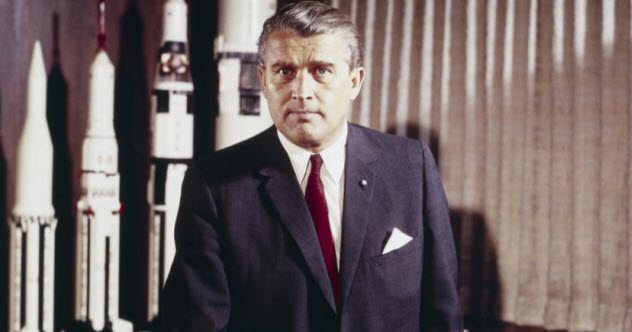
When World War II ended in 1945, many people expected the collapse of Nazi Germany to bring a clean break with its most notorious institutions. History, however, rarely uses a clean eraser. A number of scientists, engineers, physicians, and industrial chemists who had worked for the Third Reich survived the war, avoided execution, and in some cases went on to build influential postwar careers.
This is not a story about genius floating above morality like a rocket in a vacuum. It is about how technical talent, military urgency, Cold War competition, and selective accountability collided after the war. Some of the men below were convicted war criminals. Others were never convicted but had documented ties to Nazi institutions, the SS, forced labor systems, or military programs built on exploitation. Their stories are not identical, and treating them as identical would be historically lazy.
Still, the broader lesson is unavoidable: scientific achievement does not cancel moral responsibility. A brilliant rocket can reach the moon, but it cannot outrun the history of the factory where it was built.
What Does “Nazi Scientist” Really Mean?
The phrase Nazi scientists can sound simple, but it covers several different categories. Some people were Nazi Party or SS members. Some worked directly for Nazi military agencies. Some managed factories that used concentration camp prisoners as forced laborers. Others were physicians connected to criminal medical research. A few were primarily engineers whose political memberships and wartime roles remain debated or incomplete in surviving records.
That distinction matters. Not every scientist who worked in Germany during the Nazi era committed the same crimes, and not every postwar recruit was a convicted war criminal. But many benefited from a system that treated human beings as disposable machinery. The following list focuses on ten prominent figures who survived the war and whose later lives reveal the complicated legacy of Nazi science, Operation Paperclip, and postwar reconstruction.
1. Wernher von Braun
Wernher von Braun is probably the best-known Nazi rocket scientist to survive World War II. He helped develop the V-2 rocket, a long-range ballistic missile used by Nazi Germany against cities in Britain and Western Europe. The V-2 was technically impressive, but its production story was horrific. Thousands of prisoners were forced to work in brutal underground conditions at Mittelbau-Dora, where rockets were assembled under the control of the SS.
Von Braun joined the Nazi Party and held an SS rank. After the war, he surrendered to American forces and became one of the most famous recruits of Operation Paperclip, the U.S. program that brought German technical specialists to the United States. He later became a central figure in America’s rocket program, led work at NASA’s Marshall Space Flight Center, and helped develop the Saturn V rocket used during the Apollo moon missions.
His career became the ultimate historical contradiction: a man connected to Nazi weapons production and forced labor later became a public face of American space exploration. He was celebrated for reaching the stars, while the shadow of Dora remained firmly on the ground.
2. Arthur Rudolph
Arthur Rudolph was another major figure in the V-2 program. During the war, he served as a production manager connected to the Mittelwerk factory complex, where prisoners from Mittelbau-Dora were forced to manufacture V-2 rockets. The site was not an ordinary factory with bad coffee and long meetings. It was an underground production system built around starvation, violence, disease, and forced labor.
After the war, Rudolph was brought to the United States through Operation Paperclip. He became an important engineer in the American space program and eventually served as project manager for the Saturn V rocket. His postwar reputation was impressive enough to earn him awards and recognition in the aerospace field.
However, his wartime role later drew renewed scrutiny. In 1984, facing a U.S. Justice Department investigation into his involvement in Nazi forced labor programs, Rudolph agreed to leave the United States and renounced his American citizenship. His case became one of the clearest reminders that postwar success did not erase wartime records.
3. Walter Dornberger
Walter Dornberger was a German Army officer and one of the key military leaders behind the V-2 missile program. While von Braun handled much of the engineering vision, Dornberger helped oversee the broader military effort at Peenemünde, the research center where Nazi Germany developed advanced rockets and guided weapons.
Dornberger survived the war, was investigated by Allied authorities, and later moved to the United States. He worked in American aerospace and defense industries, including roles connected to Bell Aircraft. His postwar career reflected the American desire to gain access to German missile expertise before the Soviet Union could scoop up the same specialists.
His story is a reminder that the postwar race for scientific knowledge was not limited to laboratory researchers. Military planners, engineers, managers, and weapons administrators all became part of the scramble. The Cold War did not ask whether the past was tidy. It asked whether the technology could fly.
4. Kurt Debus
Kurt Debus was a German rocket engineer who worked at Peenemünde during the Nazi era and later became the first director of NASA’s Kennedy Space Center. During the 1930s, Debus belonged to the SA, the Nazi paramilitary organization. He also applied to the SS, although historical records about the precise nature of his membership and party affiliation are more complicated than those of some other figures on this list.
During the war, Debus worked on V-weapons testing and launch operations. After the war, he was brought to the United States and became part of the American rocket program. His leadership at Cape Canaveral and Kennedy Space Center made him a major figure in the launch operations behind Mercury, Gemini, and Apollo missions.
Debus represents one of the more nuanced cases in this history. His documented connections to Nazi organizations and the V-2 program are real, but the evidence surrounding his individual level of culpability differs from the evidence involving convicted industrialists or physicians tied to human experimentation. That distinction does not make the past disappear; it makes careful history more important.
5. Georg Rickhey
Georg Rickhey was the general manager of Mittelwerk GmbH, the company responsible for V-2 production at the underground factory system near Nordhausen. Mittelwerk depended on prisoners from the Mittelbau-Dora concentration camp, who were forced to work under deadly conditions. The human cost of the program was staggering, and the missile factory became one of the clearest examples of Nazi technology built on enslaved labor.
Rickhey was initially brought to the United States through the postwar recruitment effort, but he was later returned to Germany to face prosecution in the Dora Trial. He was charged in connection with the forced labor system at Mittelwerk but was acquitted. An acquittal, however, should not be confused with a declaration that the broader system was harmless or humane.
His case highlights one of the uncomfortable realities of postwar justice: proving individual criminal responsibility inside a vast bureaucracy was often difficult. A factory can have thousands of victims, hundreds of supervisors, piles of paperwork, and still leave historians arguing over who knew exactly what, when, and how much.
6. Hubertus Strughold
Hubertus Strughold was a physician and aviation medicine researcher who became known in the United States as the “father of space medicine.” During the Nazi era, he served as a leading figure in German aviation medical research connected to the Luftwaffe. After the war, he was brought to the United States and worked for the U.S. Air Force in aerospace medicine.
Strughold contributed to research on survival at high altitudes, life-support systems, and the physical challenges of spaceflight. His work influenced early American thinking about how humans might survive beyond Earth’s atmosphere, which is a fascinating scientific question until one remembers the institutional environment from which parts of that expertise emerged.
His legacy became increasingly controversial after evidence and historical research raised questions about his relationship to Nazi medical experimentation. He was not prosecuted at the Nuremberg Doctors’ Trial, and historians continue to debate the extent of his direct knowledge or responsibility. Even so, several institutions eventually reconsidered honors bearing his name. His story demonstrates that historical reputations can change when archives open and old myths meet new evidence.
7. Walter Schreiber
Walter Schreiber was a senior German military physician who survived the war and was brought to the United States through Operation Paperclip. He became associated with postwar American military medical work, but his wartime record soon attracted serious attention.
Schreiber had held senior medical positions in Nazi Germany and became linked to medical experiments involving concentration camp prisoners. Public pressure increased after journalists reported on his presence in the United States. The political embarrassment was immediate, because nothing says “awkward government hiring decision” quite like discovering that your new consultant may be connected to Nazi medical crimes.
Schreiber left the United States and eventually settled in Argentina. His case became a major example of the ethical problems surrounding Operation Paperclip. The United States wanted technical expertise, but public exposure made it difficult to pretend that expertise arrived with no history attached.
8. Kurt Blome
Kurt Blome was a Nazi physician, deputy Reich health leader, and senior official involved in biological warfare research. He was tried in the Nuremberg Doctors’ Trial, where he faced accusations involving human experimentation and biological weapons research. Blome was acquitted, but his wartime role remained deeply controversial.
After the war, American military and intelligence officials showed interest in his knowledge of biological warfare. His case demonstrates how Cold War anxiety could reshape ethical judgment. The question was no longer simply, “What did this man do?” It became, “What does he know that the Soviets might learn first?”
That is not a flattering question for any democracy to ask itself. Blome’s postwar story reveals how quickly governments can treat moral boundaries as flexible when they believe national security is at stake. The danger is not only that bad people gain opportunities; it is that institutions convince themselves the trade-off is practical.
9. Otto Ambros
Otto Ambros was a chemist and senior executive at IG Farben, the giant German chemical corporation involved in synthetic rubber, chemical weapons research, and industrial production for the Nazi war machine. He played a role in the Buna synthetic-rubber project at Auschwitz III-Monowitz, where forced laborers were exploited under catastrophic conditions.
Unlike some figures on this list, Ambros was convicted at Nuremberg. He was found guilty of crimes against humanity for his role in the use of forced labor connected to the Auschwitz industrial complex. He received an eight-year prison sentence but was released early.
After prison, Ambros returned to business and served as an adviser to major companies. His postwar career is a harsh example of how quickly industrial expertise could regain value, even when its earlier achievements were entangled with slavery, persecution, and mass murder. Chemical formulas may be neutral on paper, but industrial decisions rarely are.
10. Fritz ter Meer
Fritz ter Meer was another leading IG Farben executive whose career became closely associated with the Nazi industrial system. He helped plan the Monowitz camp and the Buna factory complex near Auschwitz, where prisoners were used as forced laborers and where deadly working conditions were built into the business model.
Ter Meer was convicted in the IG Farben Trial and sentenced to seven years in prison. Like Ambros, he was released early. He later returned to corporate life and eventually served on Bayer’s supervisory board. That postwar return to influence remains controversial because it illustrates how rehabilitation in business could move far faster than accountability for victims.
His story is especially important because it challenges the popular image of Nazi crimes as the work of only uniformed fanatics. The Third Reich also relied on executives, chemists, planners, accountants, factory managers, and corporate boards. Genocide required ideology, but it also required procurement schedules.
Why Operation Paperclip Still Matters
Operation Paperclip was not a single dramatic moment in which America opened a secret folder, stamped it “TOP SECRET,” and hired every German scientist with a slide rule. It was a long-running effort to identify, recruit, screen, and relocate technical specialists whose knowledge might be useful in the emerging Cold War.
The United States feared that Soviet officials would recruit German rocket experts, chemists, physicians, and engineers first. That fear was not imaginary. Both superpowers competed for German technical knowledge, especially in rockets, jet propulsion, chemical research, and aviation medicine. The result was a morally compromised competition in which some individuals received new careers before their pasts were fully investigated.
The legacy of Operation Paperclip is not simply “America used German scientists.” That phrase is too soft and too broad. The real question is how governments decide who deserves opportunity after participating in a criminal regime. Some recruits were valuable engineers with troubling affiliations. Others were linked to forced labor, medical abuse, or war crimes. The ethical challenge was never just scientific. It was political, legal, and human.
Experiences and Lessons From This Dark Chapter of History
Learning about Nazi scientists who survived the war can be an unsettling experience because it disrupts the tidy version of history many people grow up with. We like stories with clean endings: villains lose, heroes win, justice arrives, credits roll. But the postwar reality was messier. Some perpetrators were punished. Some were acquitted. Some were recruited. Some became professors, consultants, aerospace leaders, or corporate advisers. History did not always hand out consequences in proportion to harm.
One meaningful way to experience this history is through museums and archives that focus on victims rather than only on technology. It is easy to become fascinated by rockets, laboratories, aircraft, and futuristic machines. Those objects can feel almost magical. But a V-2 rocket is not just an engineering artifact. It is also connected to bombed cities, forced labor, underground factories, and prisoners who died while producing weapons they would never control.
Another valuable experience is reading primary documents: trial transcripts, government files, wartime correspondence, employment records, and testimony from survivors. These materials can feel dry at first, full of dates, stamps, memoranda, and bureaucratic language. Yet bureaucracy is often where moral disaster hides. A phrase such as “labor allocation” may sound harmless until you realize it refers to prisoners being transferred from a concentration camp to a weapons factory.
Students and readers can also use this topic to sharpen their media literacy. When a biography calls someone a “space pioneer,” ask what the person did before becoming a pioneer. When an institution celebrates an engineer, ask whether the celebration includes the whole record or only the convenient chapters. This is not about demanding that every historical figure be perfect. That would leave us with approximately three people and a houseplant. It is about refusing to turn achievement into amnesia.
There is also a lesson here for modern science and technology. Researchers today work in fields with enormous power: artificial intelligence, biotechnology, surveillance systems, autonomous weapons, genetic engineering, cybersecurity, and space technology. The question “Can we build it?” is never enough. Scientists, engineers, investors, and governments must also ask, “Who could be harmed?” and “Who gets to decide?” Technical progress without ethical restraint can become a very efficient engine driving in the wrong direction.
Finally, this history encourages a more mature understanding of accountability. Justice is not only about prison sentences. It is also about public memory, honest education, institutional transparency, survivor testimony, and refusing to romanticize people whose achievements depended on suffering. The moon landing remains an extraordinary accomplishment. So is modern aerospace medicine. But admiration for scientific progress should not require silence about the human cost buried beneath parts of that progress.
Conclusion
The stories of these ten Nazi scientists, engineers, physicians, and industrial leaders show that the end of World War II did not end the influence of Nazi-era expertise. Some men helped shape rockets, medicine, chemistry, and corporate industry long after the Third Reich collapsed. Their survival and postwar success force us to confront a difficult truth: technology can move forward while moral accountability lags behind.
The best way to remember this history is neither to erase scientific achievements nor to excuse the systems that made those achievements possible. It is to tell the whole story, including the victims, the forced laborers, the prisoners, the survivors, and the institutions that decided some knowledge was too useful to ignore.
Note: This article uses the term “Nazi scientists” broadly to include engineers, physicians, technical managers, and industrial chemists connected to Nazi institutions. Their levels of membership, authority, criminal responsibility, and postwar accountability were not identical.