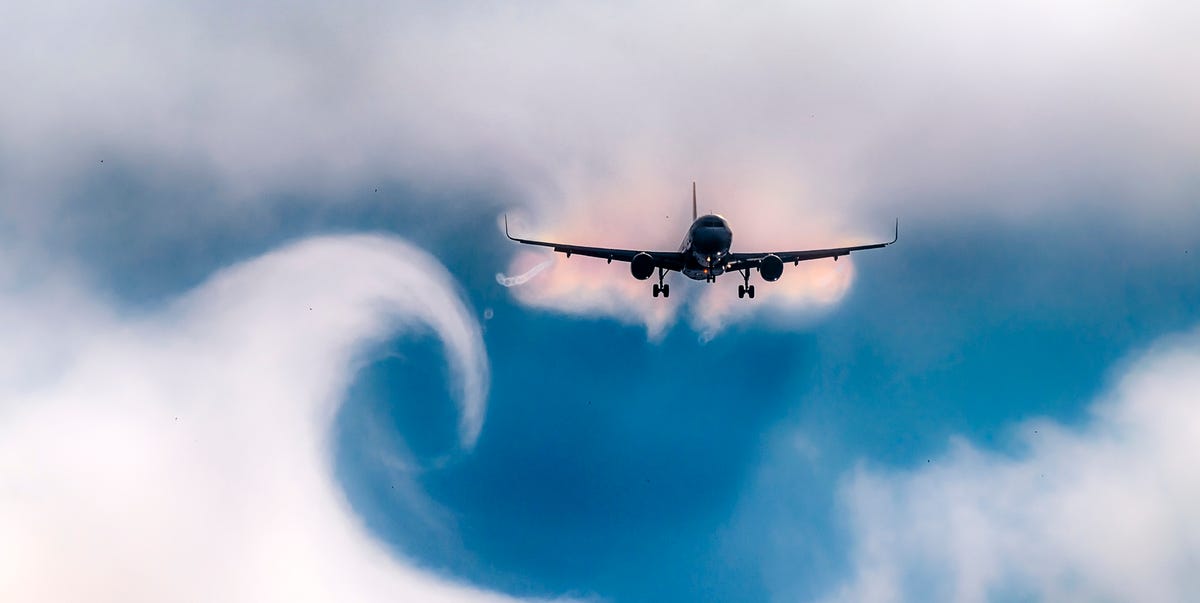
One minute, your flight is gliding along as smoothly as a shopping cart on a freshly polished supermarket floor. The next, your coffee is attempting a solo career on the ceiling. Turbulence has always been part of flying, but researchers increasingly agree that climate change is altering the atmosphere in ways that can make certain kinds of turbulence more frequent and intense.
The biggest concern is clear-air turbulence, an invisible form of aircraft turbulence that commonly develops near high-altitude jet streams. Unlike a thunderstorm, it does not arrive with dark clouds, lightning, or an obvious villainous soundtrack. It can occur in apparently calm skies, making it difficult for pilots, passengers, and conventional onboard weather radar to anticipate.
That does not mean every bumpy flight is caused by global warming, nor does it mean modern aircraft are suddenly unsafe. It does mean that airlines, forecasters, aircraft designers, and frequent flyers may need to prepare for a future in which the atmosphere occasionally behaves like a road that has postponed maintenance for several decades.
What Is Air Turbulence?
Turbulence is irregular air movement caused by changes in atmospheric pressure, wind speed, wind direction, temperature, terrain, storms, or combinations of these factors. When an aircraft enters disturbed air, it may experience changes in altitude, pitch, roll, or vertical acceleration.
Despite the popular expression “air pocket,” an airplane does not fall into an empty hole in the sky. The atmosphere is still there. The aircraft is simply passing through air moving at different speeds or in different directions, much as a boat moves through waves and swirling currents.
Common Types of Aviation Turbulence
Convective turbulence develops around thunderstorms and powerful rising or sinking air currents. It can often be identified with weather radar, satellite information, forecasts, and visual cues.
Mountain-wave turbulence forms when strong winds cross mountain ranges and create atmospheric waves. These waves can travel far above and beyond the terrain that produced them.
Mechanical and low-level turbulence can occur when wind interacts with buildings, trees, hills, temperature differences, or rough terrain near the ground.
Clear-air turbulence, frequently shortened to CAT, usually occurs at higher altitudes near jet streams, fronts, and strong zones of wind shear. It often appears in patches and may be encountered without nearby clouds or storms. The Federal Aviation Administration notes that turbulence can occur even when the sky looks clear, while National Weather Service guidance associates high-altitude CAT with pronounced changes in wind speed or direction.
Why Clear-Air Turbulence Is So Difficult to Predict
Commercial aircraft commonly cruise in the upper troposphere, roughly where several major jet streams race around the planet. These narrow bands of fast-moving wind influence weather systems, flight routes, travel times, and turbulence. A west-to-east aircraft may receive a welcome speed boost from a jet stream, but the edges of that fast-moving air can be less hospitable.
Clear-air turbulence often develops where wind speed changes sharply over a short horizontal or vertical distance. This change is called wind shear. Picture two transparent rivers of air moving beside or above one another at different speeds. Friction and instability along the boundary can produce swirling eddies capable of shaking an aircraft.
The turbulent eddies that matter to an airplane can be far smaller than the weather patterns represented by global forecasting models. CAT also lacks the water droplets that make storms visible to standard aircraft radar. Pilots may receive warnings from forecasts or other aircraft, but a previously unreported patch can still deliver an unpleasant surprise.
How Climate Change Can Strengthen Turbulence
Warming Changes the Atmosphere’s Vertical Structure
Greenhouse gases trap additional heat in the lower atmosphere. At the same time, parts of the stratosphere above it are cooling. This uneven temperature response changes the contrast between atmospheric layers and can strengthen vertical wind shear near cruising altitude.
Stronger shear does not guarantee turbulence at every location or moment. However, it can make the atmosphere more favorable for the instabilities that generate clear-air turbulence. In practical terms, the air layers sliding past each other may have a larger difference in speed, providing more energy for turbulent motion.
The Fastest Jet-Stream Winds May Get Faster
Jet streams form partly because of temperature differences across the globe. Climate change does not simply warm every atmospheric layer and latitude by the same amount. It changes temperature and moisture gradients, shifting the forces that influence upper-level winds.
A study published in Nature Climate Change found that the fastest upper-level jet-stream winds are projected to accelerate as the climate warms. The researchers estimated that extreme jet winds could increase by about 2.1% for every degree Celsius of global warming, with the fastest winds responding more strongly than average winds. Stronger jet-stream extremes can affect flight times, weather development, and the wind shear associated with clear-air turbulence.
Climate Change May Affect More Than Clear-Air Turbulence
Clear-air turbulence receives much of the attention because it can strike without an obvious cloud nearby. Yet warming may also influence mountain-wave and near-cloud turbulence. A 2023 climate-model study found increased future occurrences of turbulence from all three major upper-level sources: clear-air turbulence, mountain waves, and turbulence generated near convection. The exact changes vary by region, season, altitude, and emissions scenario, but the wider message is important: the atmosphere’s turbulence-producing machinery has several moving parts.
Warmer air can hold more moisture, potentially providing additional fuel for intense convection under favorable weather conditions. Thunderstorm-related turbulence is not the same as CAT, and individual storm behavior remains complicated. Nevertheless, airlines must prepare for changing risks both inside visible weather systems and in deceptively clear skies.
What Scientists Have Observed So Far
One of the most widely cited studies examined atmospheric reanalysis data from 1979 through 2020. Reanalysis combines historical observations with modern weather models to create a consistent reconstruction of past atmospheric conditions.
At a representative location over the North Atlantic, the study found that the annual duration of severe clear-air turbulence increased by 55%, from 17.7 hours in 1979 to 27.4 hours in 2020. Moderate CAT increased by 37%, while light CAT increased by 17%. Significant increases were also identified over the United States and parts of Europe, the Middle East, the South Atlantic, and the eastern Pacific.
Those percentages do not mean that a passenger now spends 55% more of every flight being bounced around. Severe turbulence remains much less common than light turbulence. The results describe changing atmospheric conditions across large regions and long periods, not the experience of every aircraft crossing the Atlantic.
A separate 2024 study analyzed several atmospheric datasets and used 11 climate models to examine clear-air turbulence across the Northern Hemisphere. It projected increases in many regions influenced by jet streams, with particularly strong signals over North Africa, East Asia, and the Middle East. The researchers found that moderate-to-severe CAT generally became more likely as global temperature increased, although regional results were not uniform and natural climate variability could obscure the human-caused signal in some oceanic areas.
Can Climate Change Be Blamed for a Specific Turbulence Incident?
Usually, not on the basis of a news report alone. A severe encounter may be caused by a thunderstorm, mountain waves, a jet-stream boundary, convectively generated gravity waves, or several atmospheric mechanisms working together.
Climate science is strongest when examining trends, changing probabilities, and large collections of events. A warming climate can load the dice toward conditions favorable for stronger turbulence without being the sole explanation for each individual flight. Saying “climate change is increasing the risk” is scientifically different from saying “climate change caused this exact jolt at 2:14 p.m.”
Researchers must analyze meteorological observations, aircraft data, radar information, satellite imagery, flight paths, and atmospheric models before drawing conclusions about a particular event. Even then, attribution may remain uncertain.
Does Worse Turbulence Make Flying Unsafe?
Modern commercial aircraft are engineered to tolerate forces far beyond the routine bumps passengers experience. Even severe turbulence does not automatically place the aircraft in structural danger. Pilots can adjust altitude or route, reduce speed to an appropriate turbulence-penetration range, suspend cabin service, and communicate with air traffic control and other crews.
The more immediate danger is inside the cabin. An unrestrained passenger can be lifted from a seat and strike the ceiling, an overhead bin, an armrest, or another traveler. Flight attendants are especially exposed because their work often requires standing, walking, handling carts, and assisting passengers.
FAA data show that turbulence was the leading defining event in accidents involving large U.S. Part 121 air carriers from 2008 through 2022. It accounted for 152 of 420 accidents, or 36%, and each recorded turbulence accident involved at least one serious injury. Fatal turbulence accidents involving major scheduled airlines remained exceedingly rare.
That distinction matters. Turbulence is an important cabin-safety and operational problem, but it is not evidence that commercial aircraft routinely risk breaking apart. The seat belt is usually doing more safety work than the nervous passenger clutching both armrests and negotiating with the universe.
How Airlines and Forecasters Are Adapting
Better Automated Turbulence Reports
Traditional pilot reports are useful but subjective. One pilot’s “moderate” turbulence may feel severe to someone flying a smaller aircraft. Reports can also be delayed, incomplete, or concentrated along heavily traveled routes.
Many aircraft now calculate an objective measurement known as eddy dissipation rate, or EDR. Automated EDR observations provide standardized information about turbulence intensity and can be transmitted to forecasting systems and nearby aircraft.
Scientists at the National Center for Atmospheric Research helped develop automated in-flight EDR reporting systems now used on Boeing and Airbus aircraft. These systems produce tens of thousands of observations per day, helping forecasters replace scattered anecdotes with a more consistent picture of atmospheric conditions.
Improved Forecasting Models
The Graphical Turbulence Guidance system combines several atmospheric diagnostics to estimate turbulence potential at different altitudes. Forecasts are updated frequently and can include clear-air, mountain-wave, low-level, and in-cloud turbulence.
NOAA announced updated aviation forecasting capabilities in 2026 that expanded and improved predictions for several turbulence categories. Better models will not make every turbulent patch perfectly visible, but they can reduce unnecessary exposure and help airlines plan safer, more efficient routes.
Smarter Flight Operations
Airlines can adjust routes and cruising altitudes, coordinate reports between aircraft, modify cabin-service timing, and keep crews seated when conditions are uncertain. Aircraft manufacturers may also consider changing turbulence patterns when evaluating future designs, sensors, control systems, and cabin interiors.
There is a trade-off. Detouring around rough air can add distance, fuel consumption, travel time, emissions, and cost. Better forecasting is therefore not simply about avoiding every suspicious region. It is about identifying which areas genuinely require a deviation and which can be crossed safely.
What Passengers Can Do During a Bumpier Era of Air Travel
The most useful precaution is wonderfully low-tech: keep your seat belt fastened whenever you are seated, even when the sign is off. It can be comfortably loose, but it should be secure enough to prevent an unexpected launch toward the overhead panel.
The FAA also recommends following crew instructions, paying attention to the safety briefing, and fastening the belt whenever the sign is illuminated. These steps cannot smooth the atmosphere, but they can greatly reduce the risk of injury when turbulence arrives without warning.
Secure laptops, tablets, bottles, and other loose objects. Avoid leaving a hot drink balanced on an open tray while rummaging under the seat. During a turbulent period, remain seated rather than treating the aisle like a moving sidewalk with special effects.
A seat near the wings may feel somewhat steadier because it is closer to the aircraft’s center of lift, although it cannot eliminate turbulence. Travelers who experience flight anxiety may also benefit from remembering that uncomfortable motion is not the same as an unsafe aircraft.
A Realistic Passenger Experience in a Climate-Challenged Sky
Consider a composite travel experience based on ordinary airline procedures rather than one specific flight. A passenger boards an overnight trip from the eastern United States to Europe. The weather at departure is calm, the climb is smooth, and the illuminated map promises several quiet hours above the Atlantic.
Dinner service ends, the cabin lights dim, and most passengers begin the ancient economy-class ritual of attempting to sleep while sitting nearly upright. Outside the windows, there are stars and no obvious storms. The seat belt sign is off.
A few travelers unfasten their belts. Someone opens a laptop. Another passenger begins a careful journey toward the restroom. In the galley, flight attendants prepare drinks and organize supplies.
Then the aircraft begins to vibrate. The first movement feels like a car crossing textured pavement. Seconds later, a stronger jolt lifts unsecured objects from tray tables. The seat belt sign illuminates, and the captain asks everyone to sit down immediately.
The pilots have not lost control. They may have entered a patch of clear-air turbulence near the edge of the jet stream, perhaps one reported only moments earlier by another aircraft. The crew requests a different altitude, reduces speed as appropriate, and coordinates with air traffic control. In the cabin, however, physics becomes personal.
The passenger who kept a belt loosely fastened feels a sharp tug across the lap but remains safely seated. The traveler returning from the restroom must grip a seatback while waiting for the aisle to clear. A cup slides across a tray. A flight attendant secures a service cart and takes the nearest available jump seat.
After several minutes, the movement decreases. The aircraft changes altitude, or the turbulent patch simply ends. The captain explains that the ride should improve, although occasional bumps may continue. Nothing is damaged, and the flight proceeds normally. Still, the experience feels dramatic because the turbulence arrived under a clear sky with no visible warning.
In a warming climate, this kind of encounter may become more common on some routes. That does not necessarily mean every journey will become a two-hour rodeo. Turbulence occurs in patches, and pilots can often avoid the strongest areas when forecasts and real-time reports are available.
The experience also shows why small behavioral choices matter. A fastened seat belt converts a potentially dangerous event into an uncomfortable one. Early reports from other aircraft help crews choose a better altitude. Automated EDR data make warnings more objective. Improved forecasts allow dispatchers to plan before the aircraft leaves the gate.
For flight attendants, the experience is more complicated. Passengers can remain buckled for most of a trip, but cabin crews cannot perform their jobs from a seated position. A future with more frequent unexpected turbulence may require earlier suspension of service, more conservative cabin procedures, better cart restraints, and clearer communication from the cockpit.
There may also be a psychological adjustment. Passengers often interpret sudden movement as evidence that something has gone terribly wrong. Understanding turbulence can reduce that fear. An aircraft moving vertically does not mean it is plummeting thousands of feet, and a wing flexing is normally doing what it was designed to do.
The practical lesson is not to dread every flight. It is to respect the atmosphere. The sky is not an empty blue highway; it is a moving fluid shaped by temperature, moisture, pressure, terrain, storms, and powerful high-altitude winds. Climate change is modifying that fluid, and aviation must modify its habits in response.
Conclusion
Climate change is making portions of the atmosphere more favorable for clear-air turbulence by altering upper-level temperature gradients, strengthening wind shear, and influencing the fastest jet-stream winds. Observations already show substantial long-term increases across several major aviation regions, while climate models project additional increases as global temperatures rise.
The result will probably be more frequent episodes of bumpy air on certain routes rather than a universal transformation of every flight into a theme-park attraction. Regional uncertainty remains, natural variability still matters, and no individual turbulence incident should automatically be attributed to global warming.
Commercial aviation is responding with automated turbulence measurements, improved forecasting models, faster data sharing, smarter routing, and updated cabin procedures. Passengers have an equally effective adaptation tool available right now: keep the seat belt fastened while seated. It is free, lightweight, and significantly less embarrassing than unexpectedly introducing yourself to the ceiling.
Note: This article synthesizes findings and safety guidance from 12 reputable scientific, academic, and U.S. aviation sources, including the FAA, NOAA, NASA, NTSB, NCAR/UCAR, the National Weather Service, AGU journals, Nature journals, Columbia Climate School, and peer-reviewed atmospheric research.