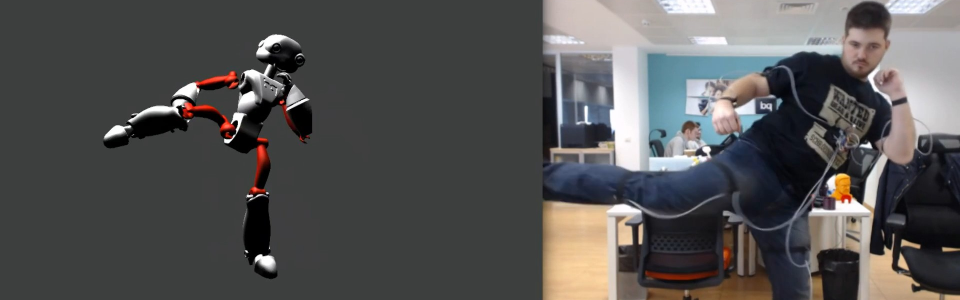
Imagine slipping into a fitted suit, performing a ridiculous victory dance in your living room, and watching a cartoon astronaut, fantasy goblin, or laser-eyed raccoon copy every move on screen. That is not wizardry. It is IMU-based motion capture, a wearable technology that turns real human movement into digital character animation without filling a room with cameras, reflective dots, and cables that look like they escaped from a sci-fi laundry basket.
Traditional motion capture often requires a controlled studio packed with cameras. An IMU motion capture suit takes a different route: tiny body-worn sensors track how your limbs rotate, accelerate, and change direction. Software then interprets that movement and applies it to a digital skeleton. Suddenly, the person doing karate kicks beside a sofa can become a cartoon superhero, a game character, a virtual streamer avatar, or a dancing potato with excellent posture.
The result is not merely faster animation. It changes who gets to create it. Independent filmmakers, game developers, VTubers, educators, musicians, and small studios can capture expressive movement in spaces that would never qualify as a Hollywood soundstage. Your garage can now be a motion-capture stage. Your hallway can become a dragon-training arena. Your cat may still judge you, but at least your animated character will look fantastic.
What Is an IMU Motion Capture Suit?
An IMU, or inertial measurement unit, is a compact sensor that usually combines accelerometers and gyroscopes, and may also use magnetometers. Together, these components help measure linear acceleration, rotation, and directional orientation. In plain English: the sensor can tell when your arm swings, your torso twists, your head nods, or your leg decides it is auditioning for a breakdancing competition.
In an IMU-based motion capture suit, multiple sensors are placed on key body segments such as the chest, pelvis, upper arms, forearms, thighs, shins, hands, and feet. The system uses those measurements, a calibrated body model, and motion-solving software to estimate the pose of a virtual skeleton. Instead of tracking reflective markers with cameras, the suit tracks the performer from the performer’s own body.
Why It Feels Like You Are Becoming a Cartoon
The magic happens after the motion data reaches a character rig. A rig is the invisible digital skeleton inside a 3D model. Once your captured body movement is mapped onto that rig, your gestures can drive nearly any compatible character: a cartoon kid, a medieval knight, a robot, a stylized animal, or an exaggerated game mascot with feet the size of paddleboards.
This process is called animation retargeting. Modern tools can transfer motion from one humanoid skeleton to another, even when the characters have dramatically different proportions. A performer can be six feet tall and animate a tiny goblin, a broad-shouldered robot, or a lanky cartoon alien. The character may look wildly different, but the timing, rhythm, weight shifts, and personality of the original movement can still come through.
That is why IMU mocap can feel more alive than manually posing every limb. A human performance contains tiny details that are hard to invent one keyframe at a time: a shoulder that rises slightly before a joke lands, a head tilt during uncertainty, a hesitant step before a jump, or the satisfying wobble of someone trying to look cool while quietly losing balance.
Why IMU Motion Capture Is a Big Deal for Animation
For decades, motion capture was associated with major film studios, large game companies, and specialized facilities. Optical systems remain extremely powerful, especially when maximum positional accuracy is needed. They use multiple cameras to observe markers or body landmarks and reconstruct movement in three dimensions. But that setup can be expensive, time-consuming, and limited by the physical capture volume.
IMU suits remove many of those barriers. Since the sensors are worn on the body, creators can capture motion in a conference room, rehearsal space, classroom, warehouse, outdoor location, or reasonably uncluttered living room. No giant camera grid is required. No reflective markers need to be glued to your forehead. No one has to explain why the dining table has been moved to make room for “important goblin choreography.”
Companies such as Xsens, Rokoko, Sony, and Noitom have helped make wearable motion capture accessible across entertainment, virtual production, live streaming, gaming, education, and research. Some systems offer real-time streaming into animation applications, allowing performers and directors to see a digital character move while the performer is still acting.
Real-Time Feedback Changes the Creative Process
Real-time feedback is one of the most exciting parts of an IMU motion capture workflow. Instead of recording a performance, exporting it, cleaning it up, importing it into another application, and discovering three hours later that your character’s feet look like they are skating on invisible butter, you can see the result immediately.
A director can tell an actor, “Make the monster more nervous.” The actor can adjust their posture, pacing, and arm movement. A few seconds later, the digital creature looks less like a tax accountant and more like a terrified cave troll. This quick feedback loop helps creators experiment faster and make smarter performance choices before they begin long cleanup sessions.
How an IMU Suit Captures Movement Without Cameras
Optical motion capture tracks where markers are in space. IMU motion capture focuses more heavily on how body segments rotate and accelerate. The suit’s software combines sensor readings with biomechanical assumptions and calibration data to estimate the movement of the full body.
Before recording, the performer usually completes a calibration pose, often standing upright in a neutral position. This tells the software where the sensors sit on the body and how the digital skeleton should align with the performer. A good calibration may not sound glamorous, but it is the difference between “animated warrior” and “human windmill who has misplaced several joints.”
Once calibrated, the performer can move naturally. The sensors send data to a computer or mobile device, where the motion is visualized on a digital avatar. Depending on the system, the data may be recorded locally, streamed wirelessly, exported as standard animation files, or sent live into applications such as Blender, Maya, Unity, Unreal Engine, MotionBuilder, or virtual production tools.
Accelerometers, Gyroscopes, and the Tiny Physics Team on Your Body
Think of the accelerometer as the sensor that notices changes in speed and movement. Think of the gyroscope as the sensor that notices rotation. A magnetometer, when used, can provide a directional reference related to the Earth’s magnetic field. The software combines this information through sensor fusion, which is a fancy phrase for “lots of math trying to prevent your avatar from becoming a haunted marionette.”
The system does not simply copy raw sensor readings and hope for the best. It filters noise, estimates orientation, applies skeletal constraints, and uses motion models to generate movement that looks believable. This is why an animation suit can turn sensor data into a character performance rather than a spreadsheet full of confused numbers.
IMU Motion Capture vs. Optical and Markerless Motion Capture
There is no single “best” motion capture technology for every project. Each approach has strengths, weaknesses, and moments when it behaves like a genius or a diva.
IMU Motion Capture
IMU suits are portable, camera-free, and useful in locations where optical setups would be impractical. They are especially appealing for indie animation, virtual production previs, live avatars, game prototyping, remote collaboration, and quick performance capture. Since the performer wears the sensors, body parts are less likely to disappear behind props or other people in the way camera-based systems can experience occlusion.
However, IMUs can experience drift, especially in long recordings or when a system has limited external reference points. Magnetic interference may also affect heading accuracy in some environments. Metal structures, electrical equipment, and certain indoor spaces can create conditions that make a digital performer slowly turn away from reality like they have received an urgent message from another dimension.
Optical Motion Capture
Optical systems remain a leading option when projects need highly precise positional data, especially for complex stunts, multiple performers, props, detailed hand movement, or research environments. They can provide exceptional accuracy, but they usually require calibrated cameras, controlled lighting, careful marker placement, and a defined capture area.
Markerless Motion Capture
Markerless motion capture uses video and computer vision to estimate body movement from camera footage. It can be fast and convenient because performers may not need to wear a suit or markers. It is useful for quick animation tests, social content, sports analysis, and projects that already have video footage.
But markerless capture may struggle with occlusion, low-quality video, overlapping bodies, limited camera angles, or complex rotations. A performer turning away from the camera, holding an object, or dancing behind a chair can become an unexpected puzzle for the software. Many modern workflows therefore mix technologies rather than treating them like rival sports teams.
What an IMU Suit Can and Cannot Capture
An IMU motion capture suit can capture impressive full-body movement, including walking, running, jumping, crouching, dancing, fighting, gesturing, and acting. It can preserve the timing and physical personality of a performer far better than a static pose library alone. A comedian’s shrug, a musician’s stage movement, or an athlete’s warm-up can become usable animation material.
Still, motion capture is not a magical “press button, receive Pixar movie” machine. It captures movement data, not finished animation. Most projects still benefit from cleanup, retargeting adjustments, foot locking, timing edits, hand animation, facial performance, and artistic exaggeration.
Feet Need Extra Attention
Feet are notoriously demanding. When a character is supposed to stand still, the viewer expects the foot to stay planted. Even a small amount of sliding can make a character look like they are standing on a polished ice rink. Animation software often uses contact detection, inverse kinematics, and foot locking to keep feet grounded and reduce sliding.
Hands and Fingers Are Their Own Tiny Drama Department
Basic body suits can capture arm and wrist movement, but detailed finger animation may require gloves, hand trackers, or manual animation. This matters for sign language, close-up acting, magic tricks, musical performance, and any scene involving a character trying to hold a teacup without looking like they have seven elbows.
Facial Motion Usually Requires Another Tool
Body motion and facial animation are often captured separately. Creators may use facial capture apps, head-mounted cameras, audio-driven facial animation, or manual keyframing. Unreal Engine’s Live Link ecosystem, for example, supports real-time facial animation sources alongside body animation workflows.
How to Turn Mocap Data Into a Cartoon Performance
The first capture is rarely the final result. The best cartoon animation does not simply copy reality. It selects the useful parts of reality, then pushes them until the character feels clear, funny, emotional, and visually readable.
A practical IMU motion capture workflow often looks like this:
- Choose or create a rigged character model.
- Fit and calibrate the IMU suit.
- Record several short takes rather than one exhausting mega-take.
- Review the movement in real time when possible.
- Clean up drift, foot sliding, shaky rotations, and unwanted pauses.
- Retarget the motion to the final character rig.
- Exaggerate poses, timing, squash, stretch, or anticipation for a more cartoon-like result.
- Add facial animation, fingers, props, camera movement, and sound.
Professional animation tools are built around this idea of refinement. MotionBuilder, Maya, Unity, Unreal Engine, and Blender workflows all provide ways to retarget, layer, edit, bake, polish, and reuse character motion. The captured performance gives animators a strong starting point, but the final personality still comes from creative decisions.
Who Benefits Most from IMU-Based Motion Capture?
Indie Game Developers
Small game teams can use an IMU suit to create custom idle animations, combat moves, traversal actions, emotes, dialogue gestures, and cinematic scenes without outsourcing every movement. A single performer can create a surprising amount of reusable animation when the data is organized carefully.
VTubers and Live Streamers
For VTubers, full-body tracking can make virtual performances feel more spontaneous. Instead of a floating head reacting to chat, the audience can see a full digital character dance, wave, panic dramatically, or demonstrate exactly how not to assemble a bookshelf.
Filmmakers and Virtual Production Teams
Directors can use IMU suits during previs to block scenes before expensive shoots. Actors can explore physical performances for creatures, digital doubles, animated characters, or virtual environments. The goal is not always final-quality footage; sometimes the goal is simply discovering what a scene should feel like before the production spends a small fortune learning the hard way.
Educators and Students
Motion capture can make animation education more hands-on. Students can act out movement, study body mechanics, compare takes, and see how timing changes character personality. It turns animation from a mysterious technical process into something more physical, playful, and understandable.
How to Choose an IMU Motion Capture Suit
Before buying or renting a motion capture suit, think less about flashy marketing footage and more about your actual workflow. The best suit for a professional studio may be excessive for a solo animator. The best portable option for a VTuber may not provide the precision needed for clinical biomechanics or stunt-heavy film work.
Consider these practical questions:
- Do you need real-time streaming or only recorded animation files?
- Which software must the suit support?
- Will you capture outdoors, in small rooms, or around metal structures?
- Do you need finger tracking, facial capture, prop tracking, or multiple performers?
- How much cleanup time can your team realistically handle?
- Will the suit be used for stylized cartoons, realistic humans, games, live events, or research?
A suit that produces slightly less perfect raw data but fits smoothly into your software pipeline may be more valuable than a technically impressive system that requires three days of troubleshooting every time someone wants their cartoon pirate to wave.
A Creator Experience: From Living Room Human to Cartoon Hero
The following is a representative creator-style scenario based on common IMU motion capture workflows, not a review of one specific product.
The first time you put on an IMU motion capture suit, you may feel less like a futuristic animator and more like a very determined person wearing expensive athletic gear. There are straps, sensor placements, cables or battery packs, and a brief moment when you wonder whether you have accidentally joined a space program. Then the software asks you to stand still in a neutral pose, and suddenly everything becomes strangely serious.
You stand upright. Your arms rest at your sides. Your feet point forward. Somewhere on the monitor, a gray digital mannequin imitates your posture. It is not glamorous. It is basically the animation equivalent of getting your driver’s license photo taken. But once calibration is complete, the mood changes fast.
You lift one arm. The character lifts one arm. You turn your shoulders. The character turns its shoulders. You do a tiny hop because you are curious, and the cartoon avatar hops too. At that point, your adult brain may quietly leave the building. You are no longer testing equipment. You are trying every movement you have ever wanted a digital creature to perform.
You walk across the room. The avatar walks. You crouch behind a chair. The avatar crouches. You wave to nobody in particular. The avatar waves with the confidence of someone who has just been elected mayor of a fictional kingdom. Then you try a dramatic sword swing, even though there is no sword. The character performs it with enough energy that you immediately begin imagining a game trailer.
The funniest moment usually arrives when you forget the suit is capturing everything. Maybe you scratch your head, stretch your neck, nearly trip over a cable, or do that awkward little shuffle people make when they are waiting for software to load. The avatar copies it all. You realize that your cartoon character has inherited your most human habits, including the suspiciously specific way you lean forward when checking whether something worked.
Then comes the creative discovery. A movement that felt normal in real life can look too subtle on a stylized character. A tiny shrug disappears. A gentle wave looks like a loose wrist. A realistic punch may not feel powerful enough for a heroic cartoon rabbit with oversized gloves. So you perform again, bigger this time. You raise your shoulders higher. You pause before the action. You push the final pose farther. Suddenly the animation reads clearly.
This is where an IMU suit becomes more than a technical tool. It becomes a performance laboratory. You can test what happens when a villain walks with heavy steps, when a robot moves too precisely, when a nervous creature keeps its elbows close, or when a cheerful mascot bounces before speaking. The suit gives you a fast way to explore movement with your whole body instead of guessing everything from a timeline.
There will still be cleanup. The feet may need locking. The hips may need adjustment. A hand may twist in a way that suggests your character briefly encountered an invisible tornado. But the core performance is there: timing, balance, hesitation, confidence, surprise, and rhythm.
That is the part that makes IMU motion capture so addictive. You are not merely moving a digital puppet. You are lending a cartoon character your instincts, your awkwardness, your energy, and your sense of play. For a few minutes, the line between performer and animation disappears. You move, the character moves, and your living room becomes a tiny studio where imagination is wearing sneakers.
Conclusion: Motion Capture Is Becoming More Human, Not Less
An IMU-based motion capture suit does not replace animators. It gives animators, performers, and creators a faster way to capture the messy, expressive, wonderfully human details that make characters believable. The suit records motion, but artists decide how that motion should feel.
For some projects, an optical studio will still be the best choice. For others, markerless video capture will be more convenient. But for creators who want portable, flexible, full-body animation data with real-time possibilities, IMU motion capture is one of the most exciting tools available.
Put on the sensors. Strike a pose. Do a cautious moonwalk. Become a cartoon dragon, a heroic space chef, or a suspiciously athletic mushroom. The technology may be sophisticated, but the creative lesson is simple: movement has personality, and now more people can bring that personality into digital worlds.