Some people watch horror movies for the adrenaline. Some watch them for the artistry. Others watch them because they enjoy yelling, “Why would you go into the basement?” while sitting safely on a couch surrounded by snacks. Whatever your reason, this guide to 156 horror movies that will creep you out is built for nights when a normal comedy simply will not provide enough emotional damage.
Horror is not one single flavor of fear. It is a whole suspicious buffet. There are ghost stories that whisper from the hallway, slashers that stomp through suburbia, demonic possession films that make old furniture seem personally hostile, and psychological nightmares that leave you staring at your bathroom mirror like it owes you money. The best horror movies work because they find ordinary fearsloneliness, grief, guilt, family secrets, bad vacations, weird neighborsand turn them into something with teeth.
This list is not ranked from “least scary” to “please sleep with the lights on.” Instead, it is organized by mood and subgenre so readers can find exactly the kind of creep they want. Think of it as a haunted menu: classic chills, slasher chaos, supernatural dread, monster mayhem, psychological terror, and modern nightmares. Bring popcorn. Maybe also bring a flashlight. Not because it helps, but because horror fans love pretending they are prepared.
Why Horror Movies Still Creep Us Out
Great scary movies understand that fear is personal. Psycho makes a motel shower feel unsafe. Jaws turns open water into a toothy lawsuit. The Exorcist weaponizes faith, family, and a bedroom. Alien makes outer space feel less like exploration and more like a workplace complaint nobody survives. These films do not merely throw monsters at the screen; they build an atmosphere where the audience starts scanning every shadow for bad news.
Another reason horror lasts is that it keeps reinventing itself. Silent-era nightmare images influenced gothic horror. Gothic horror shaped haunted house films. Slashers turned everyday suburbs into danger zones. Found-footage movies made shaky cameras terrifying. Modern horror, from Get Out to Hereditary, often blends social commentary, family trauma, and supernatural dread. The genre is basically a haunted house with endless renovations.
The Ultimate Creepy Watchlist: 156 Horror Movies
Classic Nightmares That Built the Haunted House
These foundational horror films are old enough to have wrinkles and still sharp enough to bite. They prove that atmosphere, silence, shadows, and a perfectly timed stare can be scarier than a truckload of digital blood.
- Nosferatu (1922) The vampire blueprint with a shadow that deserves its own security guard.
- The Cabinet of Dr. Caligari (1920) German Expressionism turns madness into architecture.
- Frankenstein (1931) A tragic monster story stitched together with gothic electricity.
- Dracula (1931) Bela Lugosi made capes dangerous and eye contact suspicious.
- Bride of Frankenstein (1935) Elegant, eerie, and still one of horror’s smartest sequels.
- Cat People (1942) Proof that suggestion can be scarier than showing everything.
- House of Wax (1953) Vincent Price plus melted faces equals vintage nightmare fuel.
- Diabolique (1955) A French suspense classic with a bathtub you will not forget.
- Invasion of the Body Snatchers (1956) Paranoia wrapped in science fiction.
- The Curse of Frankenstein (1957) Hammer horror brings color, blood, and theatrical dread.
- Horror of Dracula (1958) Christopher Lee makes vampirism look both regal and rude.
- Black Sunday (1960) Witchcraft, fog, and gothic beauty in one sinister package.
- Psycho (1960) The motel movie that made showers suspicious forever.
- The Innocents (1961) Ghost story or psychological breakdown? Yes.
- Carnival of Souls (1962) Low-budget, dreamlike, and deeply unsettling.
- The Haunting (1963) A haunted house film where sound does half the attacking.
- Blood and Black Lace (1964) A stylish step toward the slasher and giallo boom.
- Rosemary’s Baby (1968) Pregnancy horror with neighbors from absolute hell.
- Night of the Living Dead (1968) The zombie movie that changed everything.
- The Wicker Man (1973) Folk horror with songs, sunshine, and a terrible vacation package.
Slashers, Stalkers, and Survival Shocks
Slasher movies are horror’s most athletic subgenre. Someone runs, someone trips, and someone learns that cabins, camps, sorority houses, and abandoned schools have terrible safety ratings.
- Black Christmas (1974) A chilling holiday slasher before slashers became a full-time business.
- The Texas Chain Saw Massacre (1974) Raw, sweaty terror that feels like a panic attack in daylight.
- Carrie (1976) Teen cruelty meets supernatural revenge at the worst prom ever.
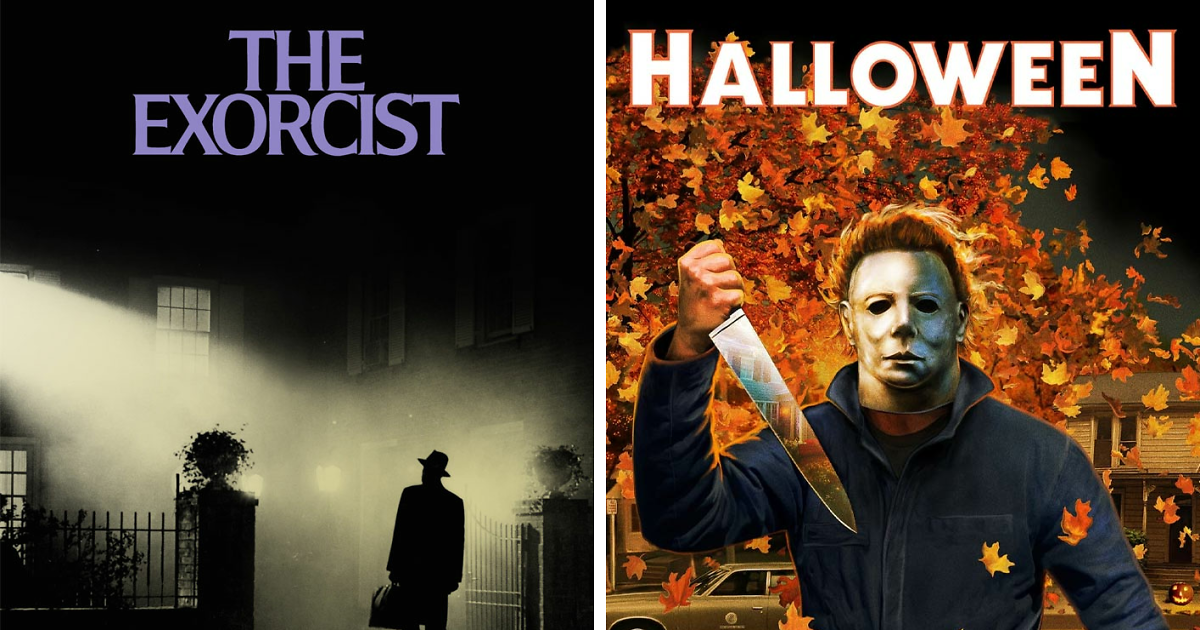
- Halloween (1978) Michael Myers turns suburbia into a slow-walking nightmare.
- When a Stranger Calls (1979) Babysitting becomes a caller-ID emergency.
- Friday the 13th (1980) Camp counselors discover nature is not healing.
- Prom Night (1980) Disco, secrets, and a masked killer with rhythm issues.
- Maniac (1980) Grimy, urban, and deeply uncomfortable.
- My Bloody Valentine (1981) Mining town romance, but make it murder.
- The Burning (1981) Another campfire warning that nobody respects.
- The Evil Dead (1981) Cabin horror with demonic chaos and aggressive trees.
- A Nightmare on Elm Street (1984) Sleep itself becomes the crime scene.
- Silent Night, Deadly Night (1984) Christmas horror for people who distrust Santa.
- Re-Animator (1985) Mad science, undead mayhem, and very bad medical ethics.
- Fright Night (1985) A vampire-next-door story with delicious 1980s style.
- The Hitcher (1986) Road-trip horror with a stranger nobody should have picked up.
- The Stepfather (1987) Domestic horror with a terrifyingly polished smile.
- Child’s Play (1988) A killer doll proves toy safety standards were too optimistic.
- Pet Sematary (1989) Grief makes terrible decisions in Stephen King country.
- Misery (1990) Fandom becomes captivity, and ankles become endangered.
- Candyman (1992) Urban legend horror with tragic grandeur.
- Scream (1996) The slasher that read the rulebook, then stabbed it.
- I Know What You Did Last Summer (1997) Secrets, hooks, and coastal guilt.
- Urban Legend (1998) Campus horror built from creepy stories everyone swears happened.
- Final Destination (2000) Death becomes the villain, and everyday objects become traitors.
Ghosts, Demons, Curses, and Haunted Houses
Supernatural horror is especially cruel because you cannot negotiate with a ghost using normal adult skills. You cannot email a demon. You cannot politely ask a curse to circle back next quarter.
- The Exorcist (1973) Still the gold standard for demonic possession horror.
- Don’t Look Now (1973) Grief, Venice, and one of cinema’s most haunting endings.
- The Omen (1976) Parenting becomes apocalyptic.
- The Amityville Horror (1979) A haunted house with extremely bad resale value.
- The Changeling (1980) Quiet, elegant, and loaded with ghostly sorrow.
- The Fog (1980) John Carpenter turns weather into revenge.
- Poltergeist (1982) Suburban ghosts attack through television, because cable was not stressful enough.
- The Entity (1982) A brutal supernatural thriller about violation and disbelief.
- Hellraiser (1987) A puzzle box opens the worst possible customer-service portal.
- The Lost Boys (1987) Stylish vampire chaos with leather jackets and saxophone energy.
- Beetlejuice (1988) Horror comedy with afterlife bureaucracy and striped-suit madness.
- Jacob’s Ladder (1990) Trauma, hallucination, and spiritual terror collapse into one vision.
- Bram Stoker’s Dracula (1992) Gothic romance dripping with blood-red style.
- Ringu (1998) The cursed videotape that made TVs feel judgmental.
- The Sixth Sense (1999) Ghostly sadness wrapped in a famous twist.
- The Blair Witch Project (1999) Found-footage panic in the woods.
- The Others (2001) Candlelit dread with a devastating emotional core.
- The Devil’s Backbone (2001) A ghost story shaped by war, memory, and loss.
- The Ring (2002) American remake, maximum wet-haired menace.
- Ju-On: The Grudge (2002) A curse that refuses to respect personal boundaries.
- The Orphanage (2007) Emotional ghost horror with a heartbreaking pull.
- Paranormal Activity (2007) A bedroom camera makes sleeping impossible.
- The Conjuring (2013) Classic haunted-house scares with polished modern timing.
- Oculus (2013) A haunted mirror proves interior design can be fatal.
- It Follows (2014) A curse that walks slowly and still wins.
Monsters, Sci-Fi Horror, and Body Horror
Monster movies ask a simple question: what if the thing outside wanted inside? Body horror asks a worse question: what if the thing inside was already making renovations?
- King Kong (1933) Giant-monster cinema with tragic spectacle.
- Godzilla (1954) Atomic anxiety in creature-feature form.
- Creature from the Black Lagoon (1954) Underwater monster elegance.
- The Fly (1958) Science experiments should come with bigger warning labels.
- The Birds (1963) Hitchcock makes nature itself seem organized and furious.
- Jaws (1975) The reason beach vacations come with nervous laughter.
- Eraserhead (1977) Industrial dream logic for brave viewers only.
- Alien (1979) Space horror with perfect creature design and workplace dread.
- An American Werewolf in London (1981) Funny, tragic, and famous for transformation horror.
- The Thing (1982) Paranoia, isolation, and practical effects that still squirm.
- Videodrome (1983) Media horror with body-melting philosophy.
- The Fly (1986) Cronenberg turns mutation into heartbreak.
- Near Dark (1987) Vampire western with dusty menace.
- Predator (1987) Jungle action becomes alien-hunter horror.
- The Blob (1988) Goo has rarely been this mean.
- Tremors (1990) Desert creature chaos with excellent monster-movie rhythm.
- Event Horizon (1997) Space travel accidentally visits hell.
- The Faculty (1998) Teen sci-fi horror with alien suspicion in school hallways.
- Ginger Snaps (2000) Werewolf horror meets puberty with teeth.
- 28 Days Later (2002) Fast infected, empty streets, and modern outbreak dread.
- Dog Soldiers (2002) Soldiers versus werewolves, no fancy silverware required.
- The Descent (2005) Claustrophobia, caves, and creatures. Absolutely impolite.
- Slither (2006) Gross, funny, and gleefully slimy.
- Cloverfield (2008) Found-footage monster panic in New York.
- The Host (2006) Creature-feature thrills with family heartbreak.
Psychological Horror and Arthouse Dread
These movies do not always jump out and scream. Some prefer to sit quietly in the corner of your brain until you realize they have been rearranging the furniture.
- Peeping Tom (1960) Voyeurism, obsession, and early psychological slasher DNA.
- Eyes Without a Face (1960) Surgical horror with poetic sadness.
- Repulsion (1965) Apartment walls close in on a fractured mind.
- Let’s Scare Jessica to Death (1971) Dreamy, ambiguous, and quietly unnerving.
- Deep Red (1975) Giallo style, murder mystery, and violent beauty.
- The Tenant (1976) Identity horror in an increasingly hostile apartment.
- Possession (1981) Marital breakdown, monster madness, and operatic panic.
- The Vanishing (1988) A disappearance thriller with a soul-freezing answer.
- Henry: Portrait of a Serial Killer (1986) Horrifying because it feels grimly ordinary.
- Audition (1999) Slow-burn romance becomes nightmare surgery.
- The Silence of the Lambs (1991) Crime thriller, horror classic, and Hannibal Lecter showcase.
- Funny Games (1997) Home-invasion horror that questions the viewer’s appetite.
- Cure (1997) Hypnotic Japanese horror with unsettling procedural dread.
- Session 9 (2001) Asylum horror powered by mood and mental collapse.
- May (2002) Loneliness becomes handmade body horror.
- High Tension (2003) Brutal French terror with relentless momentum.
- Saw (2004) A grimy puzzle-box thriller that launched a torture-horror empire.
- A Tale of Two Sisters (2003) Korean psychological horror full of grief and mystery.
- The Babadook (2014) Grief puts on a top hat and refuses to leave.
- Goodnight Mommy (2014) Family distrust sharpened into surgical unease.
- The Witch (2015) Puritan dread, folk terror, and one unforgettable goat.
- Get Out (2017) Social horror with a razor-sharp satirical blade.
- Hereditary (2018) Family trauma descends into occult devastation.
- Midsommar (2019) Daylight horror that proves sunshine can be rude.
- Saint Maud (2019) Religious obsession, loneliness, and one scorching finale.
Global, Cult, Found-Footage, and Modern Creepers
The 21st century has been excellent for horror fans and terrible for fictional real estate agents. These films show how flexible the genre has become, moving from laptops and livestreams to grief dramas, zombie trains, cursed objects, and very questionable Airbnb decisions.
- [REC] (2007) Found-footage infection horror with no room to breathe.
- Lake Mungo (2008) Mock-documentary grief horror with a chilling aftertaste.
- Let the Right One In (2008) Vampire horror that is tender, snowy, and brutal.
- Martyrs (2008) Extreme horror that tests endurance and interpretation.
- Inside (2007) French home-invasion terror with shocking intensity.
- The House of the Devil (2009) Slow-burn retro satanic panic.
- Drag Me to Hell (2009) Sam Raimi turns curses into slapstick nightmare fuel.
- The Cabin in the Woods (2011) A smart, funny autopsy of horror tropes.
- You’re Next (2011) Home invasion gets a clever survival twist.
- Kill List (2011) Hitman thriller slowly mutates into folk horror.
- Sinister (2012) Super 8 footage, family murder, and a soundtrack from hell’s attic.
- V/H/S (2012) Anthology horror with analog nastiness.
- The Autopsy of Jane Doe (2016) One corpse, one mystery, many goosebumps.
- Train to Busan (2016) Zombie action with emotional knockout power.
- Raw (2016) Coming-of-age cannibal horror with bite.
- The Wailing (2016) Supernatural mystery that keeps shifting under your feet.
- Green Room (2015) Punk survival horror with brutal realism.
- A Quiet Place (2018) Silence becomes survival strategy.
- Mandy (2018) Psychedelic revenge horror with heavy-metal fury.
- Us (2019) Doppelganger horror with social and symbolic bite.
- Tigers Are Not Afraid (2017) Fairy-tale horror shaped by real-world violence.
- Host (2020) Video-call horror that weaponizes awkward internet meetings.
- His House (2020) Haunted-house horror about trauma, migration, and memory.
- The Invisible Man (2020) Abuse, paranoia, and empty-space terror.
- Possessor (2020) Identity horror with cold, violent precision.
- Malignant (2021) Wild studio horror that saves its biggest insanity for last.
- X (2022) Slasher throwback with aging, desire, and dread.
- Pearl (2022) A Technicolor villain origin story with a broken smile.
- Barbarian (2022) Airbnb horror that gleefully refuses to behave.
- Smile (2022) A cursed grin becomes a surprisingly effective monster.
- Talk to Me (2023) Teen possession horror with a party-game hook.
- Skinamarink (2022) Experimental childhood dread in the dark.
- When Evil Lurks (2023) Possession horror with savage, unpredictable rules.
- Late Night with the Devil (2024) Talk-show format meets demonic ratings trouble.
- Longlegs (2024) Serial-killer dread with occult static in the walls.
- The Substance (2024) Body horror as fame, beauty, and self-hatred collide.
How to Choose the Right Horror Movie for Your Mood
If you want a reliable classic, start with Psycho, Night of the Living Dead, Halloween, The Exorcist, or Alien. These are not just famous horror movies; they are load-bearing walls in the haunted mansion of cinema. They helped define how horror looks, sounds, moves, and scares.
If you want something stylish and weird, go for Suspiria, Possession, Videodrome, Mandy, or Skinamarink. These films may not comfort you, but they will give your brain a strange little haunted tattoo. If you want modern crowd-pleasers, choose The Conjuring, Barbarian, Talk to Me, Smile, or A Quiet Place. They move fast, hit hard, and pair well with group screaming.
For viewers who prefer dread over gore, try The Others, The Innocents, Lake Mungo, The Witch, or Saint Maud. These movies creep rather than sprint. They are the cinematic equivalent of hearing a floorboard creak when you live alone. For the brave, extreme titles like Martyrs, Inside, and When Evil Lurks deliver a harsher experience. Do not put those on during a casual pizza night unless your friends have signed emotional waivers.
Experience Notes: Watching 156 Horror Movies Without Becoming the Weird Neighbor
A horror marathon is not just a viewing plan; it is a lifestyle experiment with snacks. The first thing you learn is that not all fear feels the same. A slasher like Scream makes you laugh, shout, and check the front door. A ghost story like The Changeling makes you sit very still, as if movement might offend the furniture. A psychological film like Repulsion or Cure does something sneakier: it follows you after the credits, tapping politely on the inside of your skull.
The second thing you learn is that setting matters. Watching Jaws at noon with a sandwich is one thing. Watching Lake Mungo at 1:00 a.m. while your house makes one tiny settling noise is a different academic discipline. Horror rewards atmosphere. Turn off the lights, silence your phone, and let the movie take control. But keep one lamp nearby unless you enjoy sprinting from the couch to the bedroom like a haunted gazelle.
Group viewing creates its own entertainment. There is always one person who claims they “don’t scare easily” and then spends ninety minutes peeking through a hoodie. There is always another person who predicts every twist incorrectly with heroic confidence. Horror movie nights are best when everyone participates: debating whether a character made the worst decision in human history, laughing at nervous moments, and pretending not to be startled by a cat entering the room.
Solo viewing is different. Alone, the quieter movies become stronger. The Witch, Saint Maud, The Others, and The Babadook work best when nobody is cracking jokes over the tension. You start noticing sound design, silence, facial expressions, and the way directors use empty space. The scariest image is often not the monster; it is the hallway where the monster might appear. Horror teaches patience, which is rude but effective.
After enough films, you also develop practical survival opinions. Never buy a suspiciously cheap house. Never read Latin from a book bound in anything questionable. Never say, “I’ll be right back.” Never investigate a noise while underdressed. Never trust dolls, mirrors, videotapes, basements, abandoned hospitals, summer camps, remote cabins, old wells, cornfields, or charming strangers at gas stations. Horror cinema is basically a public-service announcement with better lighting.
The best experience is variety. Do not watch ten possession movies in a row unless you want every sneeze to feel demonic. Mix eras and moods. Pair Frankenstein with The Fly for tragic monster evolution. Watch Halloween, then Scream to see how slashers changed. Try Night of the Living Dead, 28 Days Later, and Train to Busan for zombie history in three emotional punches. A great horror journey is not about proving bravery. It is about discovering how many ways cinema can make your pulse file a complaint.
Conclusion
The best horror movies do more than scare you for a few seconds. They create images, sounds, characters, and ideas that linger. They turn showers, televisions, highways, forests, bedrooms, family dinners, and innocent-looking dolls into suspicious objects. That is the magic of horror: it transforms the familiar into the uncanny and then politely leaves you to deal with the consequences.
This list of 156 horror movies that will creep you out gives every kind of viewer a doorway into the genre. New fans can begin with famous classics like Psycho, Halloween, The Exorcist, and Alien. Veteran horror lovers can dig into stranger corners like Possession, Lake Mungo, Saint Maud, and Skinamarink. Whether you prefer ghosts, slashers, monsters, cults, cursed media, or psychological breakdowns served with a side of popcorn, horror has a seat waiting for you.
Note: This article is original, written in standard American English, and synthesized from real horror-film history, critic coverage, and reputable entertainment references. No copied list order, source-code artifacts, or unnecessary citation placeholders are included in the HTML.