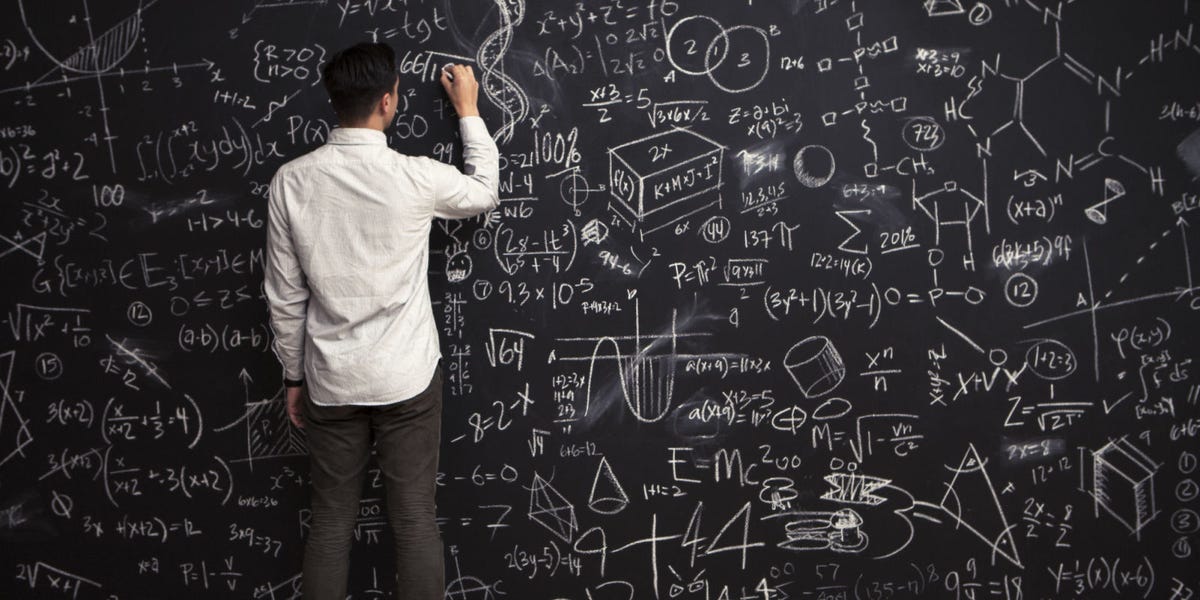
Some math problems look like they were invented during a coffee break. No advanced symbols. No giant equations. No terrifying wall of Greek letters staring into your soul. Just a short rule, a small question, and a deceptively innocent vibe. Then mathematics spends the next century losing sleep over it.
That is the weird magic of unsolved problems. They can sound so simple that a curious middle schooler can understand them, yet remain completely out of reach for the best mathematicians on Earth. These are not “simple” because they are easy. They are simple because the question itself can be stated in plain English. The hard part is proving the answer.
In this article, we will walk through five famous unsolved math problems that are easy to explain, impossible to fully solve so far, and still powerful enough to shape modern mathematics and computer science. If you have ever wondered how a tiny question can become a giant intellectual brick wall, welcome. You are among friends.
Why Simple Math Problems Can Be So Brutal
Math does not always reward intuition. A pattern can hold for millions, billions, or trillions of examples and still refuse to become a theorem. In mathematics, “it seems true” is nice. “I checked a lot of cases” is better. But neither one is a proof. And proof is the gold standard.
That is why unsolved math problems matter so much. They expose the gap between noticing a pattern and proving a pattern. They force mathematicians to invent new tools, new strategies, and sometimes entirely new fields. In other words, these problems are not just stubborn. They are productive.
So let’s meet five of the most famous simple-to-state unsolved problems in mathematics. They may look harmless. That is part of their scam.
1. The Collatz Conjecture
The rule
Pick any positive whole number. If it is even, divide it by 2. If it is odd, multiply it by 3 and add 1. Then repeat.
Start with 6, for example:
6 → 3 → 10 → 5 → 16 → 8 → 4 → 2 → 1
Start with 11 and the journey gets a little more dramatic:
11 → 34 → 17 → 52 → 26 → 13 → 40 → 20 → 10 → 5 → 16 → 8 → 4 → 2 → 1
The question
Will every positive integer eventually reach 1 if you keep applying the rule?
Why mathematicians still cannot finish the job
This is the sort of problem that sounds like it should be settled by Tuesday. The rule is tiny. You can explain it in one breath. And yet nobody has proved that every starting number ends at 1.
The Collatz conjecture is famous because it combines playground-level rules with nightmare-level difficulty. Plenty of numbers quickly fall into the 4 → 2 → 1 loop, but a full proof for all positive integers remains missing. Researchers have made partial progress, including strong “almost all” results, which suggest the conjecture behaves the way people expect. But “almost all” is not “all,” and math is extremely picky about that distinction.
What makes Collatz so fascinating is that it feels personal. You can try it yourself in under a minute, and for a brief, reckless moment, you may believe you are one inspired notebook page away from glory. Then math politely takes away your notebook and reminds you that optimism is not a theorem.
2. Goldbach’s Conjecture
The rule
Every even number greater than 2 can be written as the sum of two prime numbers.
Examples:
4 = 2 + 2
10 = 3 + 7
20 = 3 + 17
30 = 11 + 19
The question
Is that true for every even number greater than 2?
Why this problem is still open
Goldbach’s conjecture is one of the oldest unsolved problems in number theory, and it has the rare ability to sound both obvious and impossible at the same time. After all, primes are sprinkled all over the number line. Even numbers are everywhere. So it feels natural that every even number should be made from two primes.
And to be fair, the conjecture works beautifully in every ordinary example people try. Computers have checked enormous ranges. Mathematicians have also proved related results, including the weaker version that every sufficiently large odd number can be written as the sum of three primes, and that milestone represented a major achievement. But the original two-prime version still stands unbeaten.
The difficulty lies in controlling the behavior of primes with enough precision. Prime numbers are not random, but they do a remarkably convincing impression of randomness. Goldbach’s conjecture sits right in that awkward zone where evidence is overwhelming, intuition is cheerful, and proof is still nowhere to be found.
It is the mathematical equivalent of a locked front door with the key visibly sitting on the table inside.
3. The Twin Prime Conjecture
The rule
Twin primes are pairs of prime numbers that differ by 2.
Examples:
(3, 5), (5, 7), (11, 13), (17, 19), (29, 31)
The question
Are there infinitely many twin prime pairs?
Why it is a classic unsolved problem
This problem is so easy to state that it almost feels rude. Just look at the primes and ask whether pairs separated by 2 keep showing up forever. That is it. No decorative machinery. No dramatic setup. Just one beautifully compact question.
Yet the twin prime conjecture remains unsolved. What mathematicians have proved is still spectacular: modern breakthroughs showed that there are infinitely many prime pairs separated by some fixed finite gap. That was a landmark result because it proved primes can keep clustering together infinitely often. Later work sharpened that gap dramatically. But a gap of 2, the exact twin-prime gap, has not been reached in a proof.
This is a perfect example of how progress in mathematics often works. You do not always go from “nothing” to “done.” Sometimes you go from “We know absolutely nothing” to “We know something astonishingly close, but still not the whole thing.”
And yes, that still counts as enormous progress. In math, moving the mountain ten miles can still leave you one inch short of the summit.
4. The Riemann Hypothesis
The rule
This one is less recreational on the surface, but the core idea is still surprisingly compact: it makes a claim about where the important zeros of the Riemann zeta function should lie in the complex plane.
The question
Do all the nontrivial zeros of the zeta function have real part exactly 1/2?
Why people care so much
The Riemann hypothesis is not famous just because it is unsolved. It is famous because it sits near the heart of prime number theory. Prime numbers may look chaotic, but they follow subtle large-scale patterns, and the Riemann hypothesis would give mathematicians remarkably accurate control over how primes are distributed.
That is why this problem has such a legendary reputation. It connects a strange-looking complex function to one of the oldest questions in mathematics: how primes are spaced along the number line. If the hypothesis is true, a huge number of results in number theory line up beautifully. If it is false, then mathematicians would need to rethink a lot of assumptions. In less technical language, the stakes are massive.
It is also one of the Millennium Prize Problems, which means a correct proof carries a $1 million prize. Not bad for a problem first proposed in 1859. Most job listings are less patient.
The funny part is that the statement sounds compact enough to fit on a T-shirt, but actually understanding the zeta function requires serious mathematical firepower. So the Riemann hypothesis is “simple” in the sense that the central claim is concise, not in the sense that it makes for relaxing weekend entertainment.
5. P vs. NP
The rule
This problem lives in theoretical computer science, but it is deeply mathematical and famously easy to describe.
Roughly speaking, P contains problems that can be solved efficiently. NP contains problems whose proposed solutions can be checked efficiently.
The question
If a solution is quick to verify, is it also quick to find?
Why it matters outside math departments
This is the kind of problem that quietly lurks behind scheduling, optimization, cryptography, logistics, puzzle-solving, and large parts of computer science. Imagine a huge Sudoku. Checking a completed grid is usually much easier than discovering the correct grid in the first place. P vs. NP asks whether that gap between checking and finding is fundamental, or whether it only looks fundamental because we have not found the right algorithms yet.
If P were equal to NP, the consequences would be enormous. Many problems currently believed to be computationally brutal could become efficiently solvable. If P is not equal to NP, then that would confirm a deep limit on computation itself.
Like the Riemann hypothesis, P vs. NP is a Millennium Prize Problem. Unlike many popular math questions, it also affects how people think about encryption, search, optimization, and what computers can realistically do. So while it sounds abstract, its shadows stretch into everyday digital life.
The beauty of P vs. NP is how cleanly it captures a profound idea: maybe checking is easy, but creating is hard. Artists, students, and anyone who has stared blankly at a deadline already suspected this. Mathematics just formalized it.
What These Unsolved Problems Really Teach Us
These five problems do not just show that math is hard. They show how math is hard. The challenge is not always writing down a complicated equation. Sometimes the challenge is proving a tiny statement that seems true in every test anyone can think of.
That is one reason unsolved math problems continue to attract attention far beyond universities. They reveal something deeply human: the world can look understandable before it actually becomes understandable. A pattern can feel obvious while still resisting proof. A question can be simple enough for a curious beginner and deep enough to occupy experts for generations.
And perhaps that is the strangest lesson of all. Mathematics, the subject people often imagine as neat and settled, is still full of mysteries. Very old mysteries. Very elegant mysteries. The kind that smile politely while ruining your afternoon.
Experiences From the Edge of an Unsolved Problem
There is a special kind of experience that comes with meeting one of these problems for the first time. It usually starts with confidence. You read the statement, laugh a little, and think, “That can’t be the whole question.” Then you read it again. Nope. That really is the whole question. That is when the trap door opens.
For many people, the first encounter with an unsolved problem is thrilling because it feels democratic. You do not need a Ph.D. to understand the opening move. You can try the Collatz conjecture on a napkin. You can test Goldbach’s conjecture with small even numbers in your head while waiting for coffee. You can list twin primes on scrap paper. The doorway is wide open. The hallway just happens to be one thousand miles long.
Students often have the same reaction: excitement first, then confusion, then respect. A problem like P vs. NP can sound almost obvious until you begin asking what “efficient” really means. The Riemann hypothesis can feel like a neat sentence until you realize it sits on top of a mountain of analysis, complex variables, and number theory. These experiences matter because they change how people see mathematics. Instead of viewing math as a collection of finished answers in a textbook, they start seeing it as a living subject full of unanswered questions.
Teachers and math communicators have long noticed how powerful this shift can be. When learners see an unsolved problem, they also see permission to wonder. They realize that struggle is not proof of failure. It is often the normal condition of real mathematical thinking. That is a healthy shock in a world where math is too often presented as a race to the back of the book for the answer key.
There is also something humbling about trying one of these questions seriously. You begin by searching for a pattern. Then you search for a reason behind the pattern. Then you notice exceptions to your own mini-theories, or you realize your “proof” quietly assumed the very thing you were trying to prove. This is the moment math stops being a performance and becomes an investigation.
Even experienced mathematicians describe unsolved problems in almost emotional terms. Some are called beautiful, dangerous, seductive, or maddening. That language is not accidental. Hard open problems do not feel like ordinary exercises. They feel like conversations with the unknown. You push; they do not move. You come back smarter; they still do not move. But in the process, you become sharper, more creative, and more honest about what you actually know.
That may be the most valuable experience these simple unsolved problems offer. They remind us that knowledge has edges. They show us that curiosity can survive without instant answers. And they prove, in the most ironic way possible, that some of the shortest questions in mathematics can produce the longest journeys.
Conclusion
The most fascinating unsolved math problems are not always the ones covered in intimidating notation. Sometimes they are the short, clean, almost playful questions that anyone can understand and nobody can finish. The Collatz conjecture, Goldbach’s conjecture, the twin prime conjecture, the Riemann hypothesis, and P vs. NP all share that strange superpower.
They remind us that mathematics is not just a museum of solved puzzles. It is also a frontier. And on that frontier, the simplest-looking questions can be the hardest to conquer. That is frustrating, beautiful, and very on-brand for math.