Landmarks are supposed to feel inevitable. The Eiffel Tower sounds like it was born wearing a beret. The Statue of Liberty sounds as though the name was carved into the torch from day one. The White House? Surely nobody ever considered calling it anything clunkier than that, right?
Not quite. Many of the world’s most famous landmarks almost entered history under different names, official titles, promotional labels, temporary nicknames, or early working names that now sound oddly unfamiliar. Some were renamed for politics. Some changed because the public preferred a shorter, catchier phrase. Others escaped names that were technically accurate but about as memorable as a tax form left in the rain.
This list explores ten iconic landmarks that were nearly called something elseor, in some cases, actually were called something else before public habit, branding, history, or legislation gave them the names we know today. The story behind each name reveals how architecture, tourism, politics, and popular imagination all compete for the final word.
Why Landmark Names Matter More Than We Think
A landmark name is not just a label on a map. It is a tiny slogan that carries identity, memory, and emotion. “Freedom Tower” feels different from “One World Trade Center.” “Hollywoodland” sounds like a real estate brochure, while “Hollywood” became shorthand for an entire entertainment universe. “The 300-Meter Tower” may be accurate, but “Eiffel Tower” has the confidence of a global icon.
Names also shape how people experience a place. A poetic name can make a structure feel larger than life. A political name can turn concrete and steel into a national statement. A simple nickname can defeat an official title because people do not always vote with ballots; sometimes they vote with postcards, selfies, and casual conversation.
10 Famous Landmarks With Almost-Forgotten Names
1. The White House: Almost the President’s Palace
Before “The White House” became one of the most recognizable names in American history, the building was known by several more formal titles, including the President’s Palace, the President’s House, and the Executive Mansion. Those names made sense on paper. They sounded official, respectable, and very fond of polished shoes.
The current name grew from the building’s appearance. Its sandstone exterior was covered with whitewash as early as the late 18th century, helping protect it from weather damage. Over time, “White House” became the practical phrase people used. President Theodore Roosevelt made the name official in 1901, proving that sometimes the public nickname wins because it is simply better.
Imagine saying, “I’m watching a press conference from the Executive Mansion.” Technically fine. Emotionally? It sounds like a haunted board meeting. “The White House” is cleaner, more visual, and easier to remember. That is branding before branding had a marketing department.
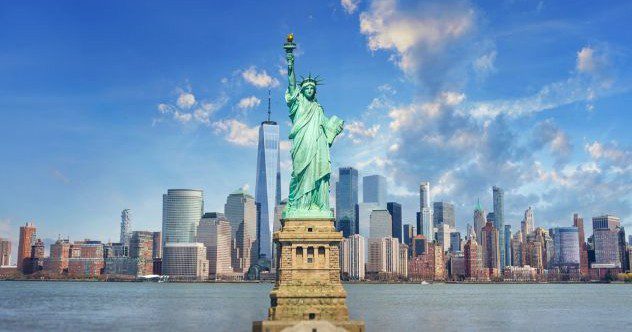
2. The Statue of Liberty: Liberty Enlightening the World
The Statue of Liberty’s full formal name is “Liberty Enlightening the World,” a grand phrase that sounds like it should arrive with a brass band and a marble staircase. The name fits the statue’s symbolism beautifully: a torch-bearing figure representing freedom, democracy, and international friendship.
Still, everyday language shortened the monument into “the Statue of Liberty.” That name is direct, emotional, and easy to say. It also works perfectly for tourism, textbooks, movies, and parents pointing across New York Harbor while children ask whether the crown has Wi-Fi.
The longer title remains important because it explains the monument’s deeper purpose. But the shorter name won the public imagination. It turns an abstract idea into a familiar figureLady Libertystanding in the harbor like the world’s most dignified welcome sign.
3. The Eiffel Tower: The 300-Meter Tower
Before it became the Eiffel Tower, the Paris landmark was known as the “300-Meter Tower.” This was not inaccurate. In fact, it was wonderfully practical. The structure was conceived for the 1889 World’s Fair, and its height was one of its most shocking achievements.
But “300-Meter Tower” sounds like something an engineer would write on a blueprint before lunch. “Eiffel Tower,” named after Gustave Eiffel, has personality. It connects the structure to the ambition, controversy, and engineering genius behind it. It also sounds better on souvenirs, which is no small advantage when your future includes millions of keychains.
The tower was controversial when proposed. Critics saw it as industrial, strange, and visually disruptive. Today, that same iron skeleton is the symbol of romance, Paris, and suspiciously expensive café views. A strong name helped transform a technical marvel into a cultural legend.
4. The Brooklyn Bridge: The New York and Brooklyn Bridge
The Brooklyn Bridge did not always enjoy its compact, muscular name. Around its opening in 1883, it was commonly referred to as the New York and Brooklyn Bridge. It was also associated with names such as the East River Bridge, because it crossed the East River between Manhattan and Brooklyn.
Those names described the structure, but they did not sing. “New York and Brooklyn Bridge” sounds like a committee was still arguing over lunch. “East River Bridge” is clear, but New York has never suffered from a shortage of rivers, bridges, or opinions. “Brooklyn Bridge,” officially adopted later, gave the landmark a stronger identity.
The name also helped Brooklyn claim its place in the city’s imagination. Even after Brooklyn became part of New York City, the bridge kept its borough pride. It is not merely a crossing; it is a stone-and-steel declaration that Brooklyn is not just “over there.”
5. Hoover Dam: Boulder Dam
Hoover Dam’s naming history is full of politics, geography, and enough administrative back-and-forth to power a smaller dam. During planning and early public discussion, the project was widely called Boulder Dam or Boulder Canyon Dam, even though the eventual site was at Black Canyon.
In 1930, Secretary of the Interior Ray Lyman Wilbur announced the name Hoover Dam, honoring President Herbert Hoover. Later, during Franklin D. Roosevelt’s administration, the name Boulder Dam continued to be used. In 1947, Congress officially settled the matter by restoring Hoover Dam as the official name.
The result is a landmark whose name reflects both engineering triumph and political temperature. “Boulder Dam” sounds rugged and geographical. “Hoover Dam” ties the project to a president and a national era of massive public works. Either way, the structure itself remains the star: a concrete giant holding back the Colorado River like it has an appointment with destiny.
6. The Hollywood Sign: Hollywoodland
The Hollywood Sign originally read “HOLLYWOODLAND.” It was not created as a timeless symbol of cinema. It was a real estate advertisement for a housing development in the hills above Los Angeles. Yes, one of the most famous symbols of global entertainment began life as a giant billboard. Hollywood has always understood marketing.
The “LAND” portion was eventually removed, and the sign became simply “HOLLYWOOD.” That shorter version transformed the sign from a neighborhood sales pitch into a global emblem of movies, celebrity, ambition, and occasionally questionable sunglasses.
The change worked because “Hollywood” already meant more than a place. It meant an industry, a dream, and a mythology. “Hollywoodland” sounds charming, but it belongs to brochures and property maps. “Hollywood” belongs to searchlights, studios, red carpets, and people saying, “I have an idea for a screenplay,” whether anyone asked or not.
7. The London Eye: The Millennium Wheel
The London Eye was originally called the Millennium Wheel, a name tied to its purpose as a landmark celebrating the turn of the millennium. It was designed by architects David Marks and Julia Barfield and opened to the public around the year 2000.
“Millennium Wheel” made perfect sense at the time. It was futuristic, celebratory, and tied to a once-in-a-thousand-years calendar moment. The problem with millennium branding is that the millennium eventually becomes yesterday’s news. The structure lasted longer than its original occasion, and “London Eye” proved more flexible.
The newer name is visual and clever. It suggests a giant eye looking over the city, which is exactly what the observation wheel offers. Visitors ride in glass capsules and take in views of the Thames, Westminster, and the London skyline. “Millennium Wheel” describes why it was built; “London Eye” describes what it feels like.
8. Burj Khalifa: Burj Dubai
Before its official inauguration in 2010, the world’s tallest building was known as Burj Dubai. The name was geographically straightforward: Dubai’s tower, and what a tower it was. At 828 meters, the building was designed not to whisper but to announce itself from the clouds.
At the opening ceremony, the tower was renamed Burj Khalifa in honor of Sheikh Khalifa bin Zayed Al Nahyan, then president of the United Arab Emirates and ruler of Abu Dhabi. The name change reflected political and financial realities after Abu Dhabi supported Dubai during a difficult economic period.
“Burj Dubai” would have been clean and city-focused. “Burj Khalifa” carries national and leadership symbolism. Either name would have stood on an astonishing structure, but the final version connects the building to a wider UAE story rather than only to Dubai’s skyline race.
9. The Space Needle: Star Tickler, Top Hat, or Big Skookum?
Seattle’s Space Needle is one of the great Space Age landmarks, built for the 1962 World’s Fair. Its final name perfectly captures midcentury optimism: sleek, futuristic, and just whimsical enough to make sense above a city famous for coffee and rain.
But during development, other names were reportedly considered, including Star Tickler, Top Hat, and Big Skookum. Each has its own personality. “Top Hat” sounds elegant but not very spacey. “Star Tickler” sounds like a children’s TV character with a suspicious amount of glitter. “Big Skookum” has regional flavor, but it might have required more explaining to tourists.
“Space Needle” won because it is simple, visual, and era-perfect. It suggests both height and futuristic ambition. The name also fits the structure’s saucer-like top and slender form. Seattle did not just get an observation tower; it got a skyline logo.
10. One World Trade Center: Freedom Tower
One World Trade Center was widely known during its development as the Freedom Tower. The name carried emotional force after the September 11 attacks and became deeply associated with resilience, rebuilding, and national remembrance.
In 2009, the Port Authority of New York and New Jersey announced that the building would be known as One World Trade Center. The official name connected the tower to the original World Trade Center site and gave it a practical commercial identity for tenants, maps, and long-term redevelopment.
Both names still carry meaning. “Freedom Tower” remains powerful in public memory, while “One World Trade Center” ties the skyscraper to a rebuilt district and a continuing urban story. The building’s 1,776-foot height adds symbolic weight, referencing the year of American independence. Few landmark names show the tension between emotion, memory, and practical city planning as clearly as this one.
What These Name Changes Teach Us About Famous Places
The best landmark names usually do three things: they are easy to remember, they capture the spirit of the place, and they give people something to feel. That is why “Hollywood” beats “Hollywoodland,” even though the longer name came first. It is why “London Eye” outlasted “Millennium Wheel,” and why “White House” feels warmer and more democratic than “Executive Mansion.”
Another lesson is that official names and popular names do not always move at the same speed. Governments can rename buildings, but public habit is stubborn. People still say “Big Ben” when they mean the tower, even though the name technically refers to the great bell. Many New Yorkers still understand “Freedom Tower,” even though One World Trade Center is the official name. Language follows feeling as much as law.
Finally, names can rescue landmarks from being trapped in their original purpose. The Hollywood Sign escaped real estate advertising. The Eiffel Tower escaped its temporary World’s Fair context. The London Eye escaped the millennium. A great landmark becomes bigger than the reason it was built, and the right name helps it make that leap.
Experiences Inspired by These Nearly Different Landmark Names
Traveling with these name stories in mind changes the way you see famous places. Instead of treating landmarks like giant objects on a checklist, you begin to notice them as survivors of debate, branding, politics, and public affection. Standing in front of a landmark becomes more interesting when you know it might have worn a completely different identity. A name is the first doorway into a place, and sometimes the old doorway is still visible if you know where to look.
For example, visiting the White House with the phrase “President’s Palace” in your head makes the current name feel even more American. “Palace” suggests royalty and distance. “White House” feels plainer, closer, and more civic. That contrast adds texture to the experience. You are not just looking at a building; you are seeing a country negotiate how formal, grand, or approachable its symbols should be.
The same thing happens in Paris. Knowing the Eiffel Tower was once described as the “300-Meter Tower” makes the current name feel almost personal. From a distance, the tower is an outline. Up close, it becomes bolts, beams, elevators, platforms, and patience. The old technical name reminds you that icons do not begin as icons. They begin as plans, measurements, objections, and people brave enough to build something that critics may dislike for a while.
In Los Angeles, the Hollywood Sign becomes funnier and more revealing when you remember “Hollywoodland.” The glamour suddenly has a real estate office hiding behind it. That does not make the sign less magical; it makes it more human. Many famous places started with ordinary goals: sell land, attract visitors, host an exposition, cross a river, or fill office space. The magic came later, after people projected their dreams onto the structure.
These naming stories are especially useful for writers, travelers, teachers, and curious readers because they remind us to ask better questions. Not just “What is this landmark?” but “Who named it?” “Who wanted a different name?” “What did the old name reveal?” “Why did the public choose one phrase over another?” Those questions turn sightseeing into storytelling. They make postcards feel like historical documents and tourist photos feel like tiny acts of interpretation.
The next time you visit a famous landmark, try learning its almost-name before you go. It gives you a private joke with history. You may look at the Space Needle and silently thank everyone who rejected “Star Tickler.” You may see the London Eye and appreciate how gracefully it outgrew the millennium. You may look at the Brooklyn Bridge and realize that the shorter name carries more power than the longer one ever could. A landmark’s final name may be famous, but its rejected names are where the personality often hides.
Conclusion
Iconic landmarks rarely arrive with perfect names. They collect identity over time through public use, politics, memory, design, and emotion. Some names are shortened because people prefer simplicity. Some are changed to honor leaders or historical moments. Some are rescued from clunky working titles that were accurate but not unforgettable.
The fascinating part is that the “almost names” do not disappear completely. They remain in archives, trivia, official histories, and travel stories, reminding us that even the world’s most famous places had awkward early drafts. And honestly, that is comforting. If the Eiffel Tower could survive being called the 300-Meter Tower, there is hope for every rough draft in the world.
Editorial note: This article is written for web publication in standard American English. It synthesizes documented naming histories from official landmark pages, public historical records, and reputable architecture/history references without inserting source links into the body copy.