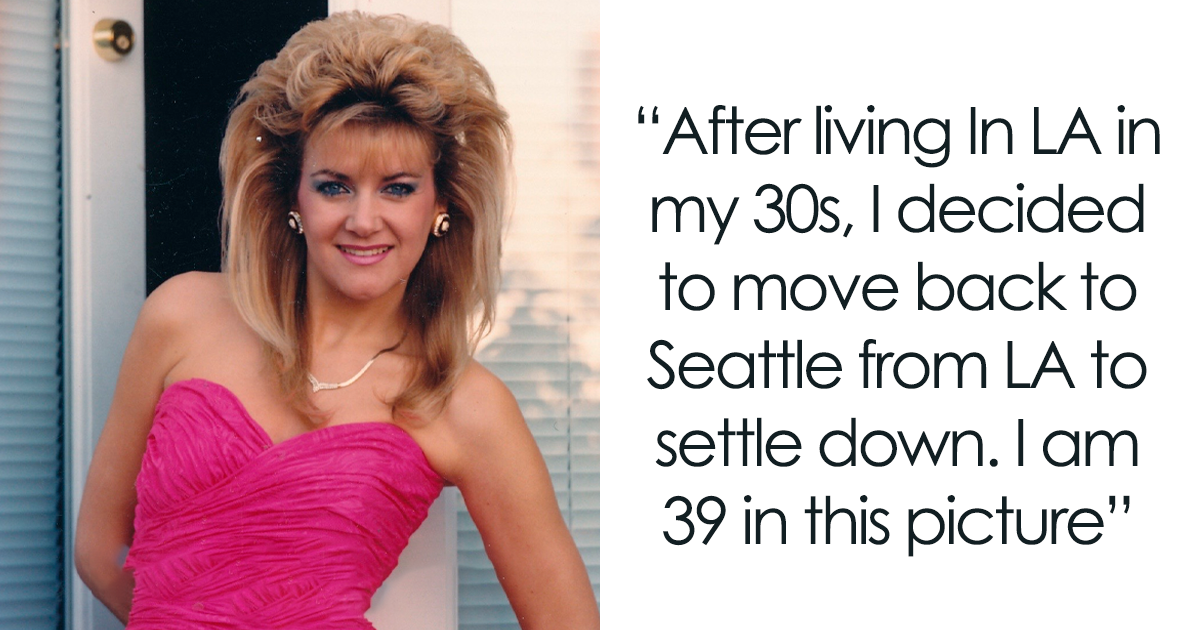
Every now and then, the internet surprises everyone by taking a short break from arguing about meaningless nonsense and deciding, collectively, to be human. That is more or less what happened when a woman shared photos of herself across seven decades, including images taken after her facelift, and people responded with admiration instead of the usual online nonsense buffet.
What made the post land was not just the facelift. It was the timeline. It was the honesty. It was the full sweep of a life laid out in photos: changing hairstyles, changing decades, changing expectations, and a face that looked different over time because, as shocking as this may sound to the anti-aging industrial complex, time does in fact keep moving. Her recent procedure became part of the story, not the whole story. That distinction matters.
In a digital world obsessed with filters, strategic lighting, miracle serums, and celebrities who claim they only drink water and mind their business, this post felt refreshingly unvarnished. People were not just admiring the result of a facelift. They were admiring the courage to show a face before, after, and all the years in between without pretending nature had nothing to do with it.
Why This Story Hit People Right in the Feelings
The viral response makes sense the second you think about it for more than five seconds. Most makeover stories online are flattened into a neat little before-and-after package. One image says “problem,” the next says “solution,” and everyone is expected to gasp on cue. But a seven-decade photo timeline does something more powerful. It tells the truth that beauty is not a static event. It is a moving target shaped by age, fashion, health, heartbreak, joy, money, stress, confidence, and sometimes a really questionable haircut from 1987.
That is why viewers connected. They were not just seeing a procedure. They were seeing a person. A whole life was present in those photos, and that changed the emotional temperature of the conversation. It became less about “Did she get work done?” and more about “Wow, she has really lived.”
There is also something quietly radical about showing aging without apology. Not anti-aging marketing. Not fake “I woke up like this” celebrity content. Just aging, documented in plain sight. That kind of openness tends to stop people in their tracks because it is still rare. Weirdly rare, honestly.
The Facelift Was Part of the Story, Not the Punchline
A lot of public reaction centered on the fact that she included her facelift rather than hiding it. That choice matters because cosmetic work is still surrounded by a strange social script. People are often encouraged to chase youth, but judged if they admit how they chased it. The message is basically: please look impossibly refreshed, but do not under any circumstances explain how. It is a ridiculous setup.
Her post sidestepped that performance completely. She did not present herself as a magical exception to aging. She did not sell the illusion that moisturizer alone pulled off a miracle worthy of a physics paper. She simply made the facelift one chapter in a much longer life story.
That honesty is a big reason people admired her. Transparency tends to read as confidence. It says, “This is me. This is what changed. This is what did not.” Online, where so much image-making depends on smoke, mirrors, and ring lights bright enough to summon astronauts, that kind of directness is practically a public service.
Why Public Honesty About Cosmetic Surgery Is Growing
This story also landed at a moment when cosmetic surgery is becoming more openly discussed in American culture. Facelifts remain one of the most recognized facial rejuvenation procedures, and public conversation around them has become less whispered and more matter-of-fact. More celebrities, influencers, and everyday patients are talking about what they had done, why they chose it, how recovery felt, and what the results really looked like once the glam team went home.
That shift is important because it helps replace fantasy with reality. A facelift is not an Instagram filter with a copay. It is surgery. It involves consultation, candidacy, recovery, swelling, bruising, downtime, expense, and risk. The modern conversation is slowly getting smarter because more people are showing the middle of the process, not just the glamorous ending.
And yet, even with all that openness, honesty still stands out. That is what made this woman’s seven-decade timeline feel so memorable. She was not just revealing a result. She was revealing context, and context is what turns vanity into vulnerability.
What a Facelift Actually Does
Let’s clear the air, because popular culture loves confusion almost as much as it loves collagen. A facelift, or rhytidectomy, is designed to lift and tighten sagging tissue in the lower face and often the neck. It can reduce jowling, soften deep folds, and create a firmer contour. What it does not do is stop aging, erase every line, fix your life, or make you 24 again with the emotional maturity of a 74-year-old. If it could do all that, plastic surgeons would have Nobel Prizes and reality television would be unbearable.
The best modern outcomes usually look like restoration, not reinvention. That is one reason many people responded warmly to this woman’s photos. Viewers were not reacting to a completely different face. They were reacting to a face that still looked like her, just refreshed. That difference is huge.
And No, Recovery Is Not a Casual Weekend Errand
One of the most useful parts of today’s facelift conversation is that medical experts keep repeating the same reminder: this is real surgery. Recovery can involve bruising, swelling, discomfort, limited activity, and a need for patience. Some people bounce back sooner, some take longer, and more extensive procedures naturally come with more healing time. In other words, nobody should treat a facelift like getting a manicure with extra paperwork.
That reality check is healthy. It keeps stories like this from turning into pure fantasy. Admiring someone’s result is fine. Pretending the process is effortless is not. The honest version is always better.
Admiration Does Not Mean Everyone Has to Make the Same Choice
This is where the conversation gets more interesting. A lot of people looked at the viral post and saw permission. Not necessarily permission to get a facelift, but permission to stop acting weird about aging. Permission to talk honestly. Permission to say, “I had work done,” or “I did not,” without turning it into a moral referendum.
That is the healthiest takeaway. A woman can choose a facelift and still believe aging is natural. Another woman can skip cosmetic procedures entirely and still love beauty, skincare, and style. These positions are not enemies. The internet tries to force them into a cage match, but real life is more nuanced than that.
What people admired in this story was less about surgical endorsement and more about personal ease. She looked comfortable with her choices. Comfortable in her timeline. Comfortable being seen. That confidence reads louder than any procedure ever could.
The Deeper Reason the Post Resonated
Let’s be honest: aging is not just biological. It is social. People do not merely get older; they get watched while getting older. Women especially are expected to age gracefully, but not too visibly; stay attractive, but not too try-hard; look natural, but somehow better than natural. It is a contradiction dressed up as advice.
That contradiction is exhausting, and many women know it intimately. By the time someone reaches her 50s, 60s, or 70s, she has usually received years of mixed messaging from magazines, TV, workplaces, family members, strangers, and now social media. Look younger. Do less. Fix this. Accept that. Try harder. Care less. Smile more. Also, please do all of that while pretending you are above it.
No wonder a straightforward photo timeline felt refreshing. It cut through the performance. It showed that a face changes because life changes. Sometimes people embrace every line. Sometimes they color their hair. Sometimes they get a facelift. Sometimes they do all three and still have to answer nosy questions at brunch. Humanity is rich that way.
Why the Seven-Decade Format Worked So Well
The structure of the post deserves some credit too. A standard before-and-after invites judgment. A long timeline invites reflection. It encourages viewers to think in decades instead of moments. That subtly changes the story from cosmetic enhancement to human continuity.
It also reminds people how quickly public beauty standards change. In one decade, big hair is glamorous. In another, minimalism takes over. One era worships filler. Another suddenly wants “natural” faces again, usually after collectively overdoing the first thing. Through all of it, the person in the photos is still the same person. That realization has a grounding effect.
In other words, the timeline did something clever without trying too hard. It made beauty feel historical instead of hysterical.
What Readers Are Probably Really Admiring
1. The honesty
People are tired of polished lies. Seeing someone tell the truth about aging and cosmetic work feels unexpectedly rare, which is a strange indictment of modern media but also very much where we are.
2. The consistency of self
Even across decades, style changes, and a facelift, she still looked like herself. That tends to make people more comfortable with cosmetic surgery because it frames the procedure as refinement rather than erasure.
3. The refusal to be embarrassed
There is power in saying, “Yes, I did this,” without turning it into a confession booth scene. That kind of self-possession is magnetic.
4. The reminder that aging is not one-note
Aging can include loss, reinvention, humor, reinvestment in yourself, and new choices that would have seemed ridiculous in your 30s. Life gets weirder, but it also gets fuller.
Experiences Related to This Story That Many People Will Recognize
What makes this topic stick is that it does not live only in celebrity culture or viral posts. It shows up in ordinary life all the time. It shows up when someone finds an old family photo album and realizes her mother looked impossibly young in one picture, exhausted in another, glamorous in a third, and somehow deeply herself in every single frame. It shows up when a woman sees a photo of herself at a friend’s birthday dinner and thinks, “Wait, is that what my neck looks like now?” It shows up when a coworker returns from vacation looking mysteriously “rested,” and everybody in the office suddenly becomes a detective with a coffee addiction.
It also shows up in quieter ways. A woman in her 40s might start noticing that she looks more tired by 3 p.m. than she feels. Someone in her 50s may realize makeup no longer sits the way it used to. A woman in her 60s might decide she is done dyeing her hair and then discover that strangers somehow have opinions about that too, which is bold behavior from people who should really be minding their own business. Another woman may book a consultation for a procedure and then cancel it, not because she is ashamed, but because after thinking it through, she decides she is fine as she is. That is also a win.
Then there are the women who do choose surgery and talk about it honestly afterward. They often say something surprisingly practical rather than dramatic. Not “I became a new woman.” More like, “I just wanted my face to match how energetic I still feel,” or “I was tired of pretending filler was doing something it clearly was not.” Those comments are rarely about perfection. They are about alignment. About feeling more like themselves again. Whether everyone agrees with the decision is almost beside the point.
There is also a generational layer here. Many younger women are watching older women navigate aging in real time, and those examples matter. When an older woman is open about what she did or did not do to her face, she can accidentally become a cultural translator. She shows younger viewers that aging is not a single cliff you fall off. It is a sequence of choices, adjustments, resistances, experiments, and changing priorities. Some of those choices are medical. Some are emotional. Some involve bangs, which history has proven to be among the most unpredictable of all interventions.
That is why stories like this travel so far. They are not only about one woman’s facelift. They are about memory, identity, self-image, and the ongoing negotiation between how we feel and how we appear. People recognize themselves in that tension. They recognize their mothers, aunts, sisters, friends, and future selves in it too. And when someone presents that whole messy, funny, deeply human process with honesty instead of performance, people do not just admire the face in the photo. They admire the person willing to be seen in it.
Final Thoughts
The woman who posted photos of herself across seven decades did something more meaningful than show off a cosmetic result. She showed a life in motion. Yes, the facelift caught people’s attention. Of course it did. But the admiration came from somewhere deeper. It came from the rare combination of transparency, humor, confidence, and lived experience.
Her post worked because it refused two bad internet habits at once: the pressure to age invisibly and the pressure to explain yourself apologetically. She did neither. She simply showed the years, showed the change, and let people respond.
And people did respond. Not because she looked frozen in time. Not because she looked artificially perfect. But because she looked like a person who had lived through decades, made choices about her own face, and was not interested in pretending otherwise. In the age of filters, that kind of honesty feels almost luxurious.
Maybe that is the real reason people are admiring her. The facelift is part of the visual story, sure. But the real glow-up is the complete lack of nonsense.