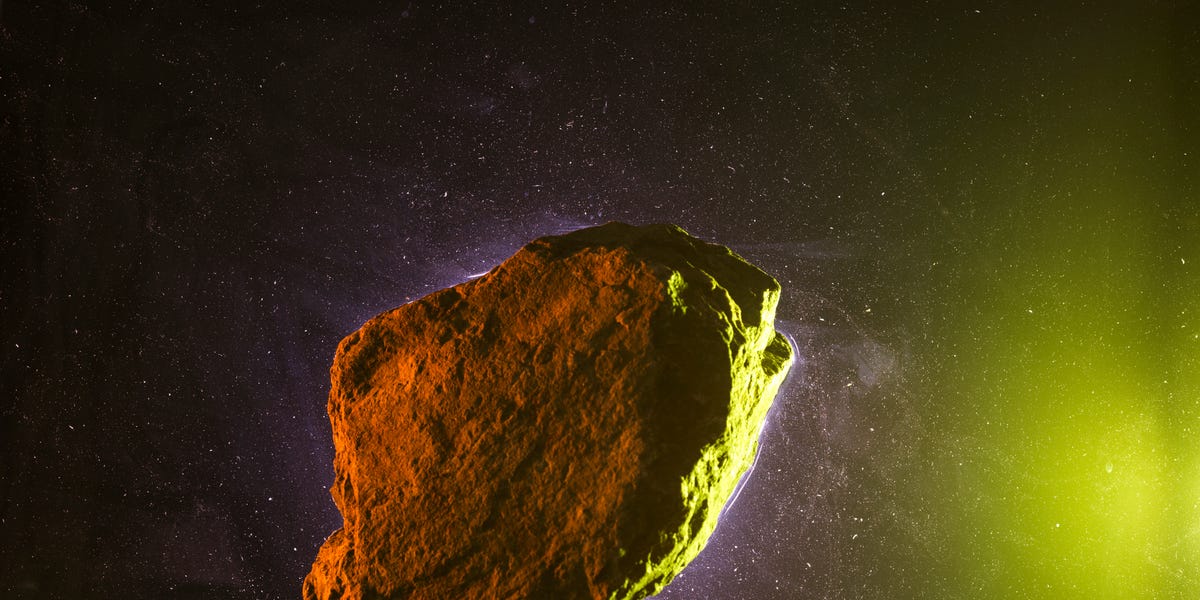
Two massive asteroids will fly by Earth this week on July 29 and 30, giving sky-watchers, space fans, and anyone who has ever nervously watched a disaster movie a perfectly good reason to look upcalmly. The two space rocks, known as 2016 CZ31 and 2013 CU83, made headlines because of their size, speed, and back-to-back timing. But before anyone starts building a backyard bunker out of patio furniture, here is the important part: both asteroids passed Earth at safe distances.
Asteroid flybys can sound dramatic because, in cosmic terms, “close” does not mean “duck.” Astronomers use the phrase “close approach” for objects that pass near Earth compared with the huge scale of the solar system. In this case, the first asteroid came within roughly 1.7 million miles of Earth, while the second passed several million miles away. That is close enough for NASA and astronomers to track carefully, but far enough that Earth had no reason to cancel weekend plans.
Still, the event was a fascinating reminder that our planet is traveling through a busy neighborhood. Near-Earth asteroids are not rare visitors. They are ancient leftovers from the formation of the solar system, and their flybys help scientists refine orbital models, improve planetary defense systems, and learn more about the rocky building blocks that helped shape planets billions of years ago.
What Happened on July 29 and July 30?
The first visitor, asteroid 2016 CZ31, made its closest approach on Friday, July 29, 2022. It was estimated to be about 400 feet wide by several astronomy reports, with broader diameter estimates placing it within a range that still makes it a serious chunk of space rock. It traveled at roughly 34,500 miles per hour, which is fast enough to make a commercial jet look like it is searching for parking.
The second asteroid, 2013 CU83, followed on Saturday, July 30, 2022. This object was even larger by common estimates, around 600 feet wide, with some size estimates allowing for a wider range depending on reflectivity. It passed Earth at a greater distance than 2016 CZ31, but its size made it especially interesting to scientists and science writers.
Quick Facts About the Two Asteroids
| Asteroid | Closest Approach | Approximate Distance from Earth | Estimated Speed | Why It Matters |
|---|---|---|---|---|
| 2016 CZ31 | July 29, 2022 | About 1.7 million miles / 2.8 million km | About 34,500 mph | A large near-Earth asteroid passing at a safe but astronomically close distance |
| 2013 CU83 | July 30, 2022 | About 4.3 million miles / 6.96 million km | About 13,100 mph | A larger asteroid classified as potentially hazardous because of orbital criteria, not because it was going to hit Earth |
Were These Asteroids Dangerous?
No, these two asteroids were not dangerous during their July 29 and July 30 flybys. That point is worth saying clearly because asteroid headlines often arrive dressed like movie trailers. A “massive asteroid” can sound terrifying, but risk depends on trajectory, distance, size, speed, and uncertainty. For these two objects, the calculated paths showed safe flybys.
Asteroid 2016 CZ31 passed at more than seven times the average distance between Earth and the Moon. Asteroid 2013 CU83 passed even farther away, roughly 18 lunar distances. In human terms, that is not a close shave; it is more like seeing a truck pass on a highway several counties over. In astronomy terms, however, it still counts as a useful close approach because scientists can update the asteroid’s orbit and learn more about its behavior.
The phrase potentially hazardous asteroid often causes confusion. It does not mean an asteroid is currently on a collision course with Earth. It means the object meets certain size and orbital-distance criteria that make it worthy of long-term monitoring. Think of it as being placed on a cosmic watchlist, not being caught sneaking through Earth’s bedroom window.
Why NASA Tracks Near-Earth Asteroids
NASA and its partners track near-Earth objects because the best time to learn about an asteroid is long before it could ever become a problem. The process is part science, part public safety, and part celestial bookkeeping. Astronomers observe moving points of light against the background stars, calculate their paths, compare new observations with older data, and refine predictions over time.
The Center for Near-Earth Object Studies, often shortened to CNEOS, computes asteroid and comet orbits and evaluates possible impact probabilities. Ground-based telescopes and space-based observatories contribute observations, while databases are updated as scientists collect more measurements. The more an asteroid is observed, the better its orbit is known.
That is why flybys like the July 29 and 30 events matter even when there is no danger. Each safe pass is a chance to sharpen the numbers. For an asteroid, a slightly improved orbit today can mean a much more confident prediction decades from now.
How Big Is “Massive” in Asteroid Language?
In everyday life, a 400-foot object is enormous. It is taller than many office towers and longer than a football field. A 600-foot object is even more impressive, roughly comparable to a large skyscraper. In the asteroid world, though, these are not planet-killers. They are still large enough to matter, but they are far smaller than the multi-mile-wide asteroid associated with the extinction of the non-avian dinosaurs.
Asteroid sizes are often estimates, especially when scientists have not directly imaged the object. Astronomers can estimate diameter from brightness, but brightness depends on both size and reflectivity. A small bright object and a larger dark object can appear similar from Earth. That is why asteroid size estimates sometimes appear as ranges rather than one exact number.
In the case of 2016 CZ31 and 2013 CU83, the commonly reported sizesaround 400 feet and 600 feethelp readers picture the scale. But scientifically, it is better to remember that asteroid diameters can be revised as more observations become available.
Why Asteroids Fly Past Earth So Often
Asteroids are leftovers from the early solar system. Most live in the asteroid belt between Mars and Jupiter, but gravitational nudges can shift some into orbits that bring them closer to Earth. These objects are called near-Earth asteroids when their paths bring them into Earth’s general neighborhood around the Sun.
Earth is not sitting still while all this happens. Our planet races around the Sun at about 67,000 miles per hour. Asteroids are also moving, often on stretched or tilted orbits. Sometimes these paths bring an asteroid and Earth relatively near one another. Most of the time, they pass harmlessly at enormous distances.
That is the big secret behind many alarming asteroid headlines: space is huge. Truly huge. The gap between Earth and the Moon alone averages about 238,855 miles. So when an asteroid passes millions of miles away, scientists still pay attention, but ordinary people do not need to panic-buy canned beans.
Could You See These Asteroids from Earth?
For most casual sky-watchers, the answer was no. These asteroids were too faint to see with the naked eye. Even though they were large by human standards, they were millions of miles away and reflected only sunlight. Observing objects like these generally requires a telescope, accurate sky coordinates, and experience tracking faint moving targets.
That does not make the event less exciting. Many of the best astronomical events are invisible without instruments. Radio signals, infrared measurements, telescope images, and orbital calculations all reveal a hidden world above us. The July 29 and 30 asteroid flybys were more of a science story than a backyard viewing party.
If you enjoy stargazing, the event still offered a great excuse to learn how asteroid tracking works. You could explore NASA’s public asteroid resources, check sky maps, or compare lunar distances to understand what “close approach” really means. Space is more fun when the numbers stop sounding like random science confetti.
What the Chelyabinsk Meteor Taught Us
Whenever large asteroids pass Earth, scientists and journalists often mention the Chelyabinsk meteor of 2013. That event involved a much smaller object, roughly house-sized, that entered Earth’s atmosphere over Russia. It exploded in the air and produced a powerful shock wave that shattered windows, damaged buildings, and injured many people, mostly from flying glass.
Chelyabinsk was not a civilization-ending event, but it was a loud cosmic alarm clock. It showed that even smaller asteroids can cause regional damage if they arrive without warning. It also helped push planetary defense into broader public conversation. The lesson was not “panic whenever a rock passes Earth.” The lesson was “find them early, track them carefully, and keep improving detection systems.”
The July 29 and 30 asteroid flybys were safe, but they fit into that bigger story. Every near-Earth object helps scientists improve the global catalog. The more complete that catalog becomes, the better prepared humanity is.
Planetary Defense Is Getting Better
Planetary defense sounds like a department from a superhero movie, but it is real science. NASA’s Planetary Defense Coordination Office works with observatories, researchers, and international partners to detect, track, and study near-Earth objects. The goal is not to blast every asteroid into glitter. The goal is to understand what is out there and identify any true threat early enough to respond.
One of the biggest milestones was NASA’s DART mission, which deliberately crashed a spacecraft into the asteroid moonlet Dimorphos in 2022. The mission successfully demonstrated that a spacecraft impact can change the motion of a small asteroid. That does not mean every future problem is solved, but it proved that asteroid deflection is not just science fiction.
Future missions and survey telescopes will improve the hunt. NASA’s NEO Surveyor space telescope is designed to detect asteroids and comets that may be difficult for ground-based telescopes to spot, including dark objects and those approaching from directions near the Sun. That matters because some dangerous objects can hide in glare until they are already close.
Why This Flyby Was a Good News Story
The best asteroid story is usually the one where nothing hits Earth. That may not be dramatic enough for a summer blockbuster, but it is excellent for everyone who enjoys breathable air, coffee, Wi-Fi, and not being vaporized before lunch.
The flybys of 2016 CZ31 and 2013 CU83 were good news because they showed the tracking system doing its job. Astronomers knew the objects were coming, calculated their closest approaches, and confirmed they posed no immediate threat. Public awareness grew, and people had a chance to learn about near-Earth asteroids without the plot taking a grim turn.
It also reminded us that asteroid science is not only about danger. Asteroids preserve clues about the early solar system. Studying them can reveal information about planetary formation, organic chemistry, water delivery, and the history of collisions that shaped the worlds we see today.
How to Follow Future Asteroid Flybys
If this event sparked your curiosity, you can follow future asteroid flybys through NASA’s near-Earth object resources, astronomy news sites, observatory updates, and skywatching calendars. When reading headlines, focus on a few key details: the asteroid’s name, estimated size, closest approach distance, speed, and whether NASA or another credible scientific organization says there is any impact risk.
Be especially careful with phrases like “headed toward Earth.” Technically, many asteroids are headed in our general direction at some point in their orbit, but that does not mean they will collide with the planet. A baseball flying past your house is not the same thing as a baseball flying through your kitchen window.
Good asteroid reporting should make you curious, not terrified. If an article gives a size but no distance, or says “NASA warning” without explaining the actual risk, treat it like a suspicious email from a prince who needs your bank details.
Experiences and Reflections: Watching Space Rocks Without Losing Sleep
There is something strangely humbling about reading that two massive asteroids will fly by Earth in the same week. One moment you are worrying about laundry, emails, and whether the leftover pizza is still socially acceptable. The next moment, you are reminded that Earth is a blue marble moving through a cosmic shooting gallerythough thankfully, a very spacious one.
The first experience many people have with asteroid news is a jolt of anxiety. The headline says “massive asteroid,” the imagination supplies dramatic music, and suddenly the brain is directing a movie starring Bruce Willis, a telescope, and a very stressed intern at NASA. But once you look at the data, the fear usually becomes fascination. Millions of miles is a huge distance. A safe flyby is not a warning siren; it is a science opportunity wearing a dramatic hat.
Events like the July 29 and July 30 flybys are great reminders to build a healthier relationship with space news. Instead of reacting only to scary words, it helps to ask better questions. How far away will the asteroid pass? How large is it? How certain is the orbit? Is it on any risk table? Has NASA described it as safe? Those questions turn a panic headline into a learning moment.
For families, teachers, and casual sky-watchers, asteroid flybys can become surprisingly fun educational moments. You can compare the flyby distance with the Moon’s distance. You can measure out scale models using a basketball for Earth and a small bead for the Moon. You can explain why “near” means something different in astronomy than it does in a grocery store parking lot. Suddenly, a scary headline becomes a doorway into physics, orbital mechanics, and the history of the solar system.
There is also a deeper emotional experience here. Asteroid tracking shows humanity at its best: curious, cautious, collaborative, and willing to plan ahead. People across the world build telescopes, write software, analyze faint dots of light, and share data so we can understand what is moving around us. That is not just technical work; it is a form of planetary citizenship.
So when two large asteroids pass by Earth, the right response is not panic. It is attention. It is appreciation for the scientists watching the skies. It is curiosity about the solar system’s leftovers. And maybe, if the night is clear, it is stepping outside for a minute, looking up, and remembering that our ordinary lives are happening on a planet sailing through a vast and ancient universe.
Conclusion
The July 29 and July 30 flybys of 2016 CZ31 and 2013 CU83 were dramatic in scale but safe in reality. These two massive asteroids passed Earth at millions of miles away, offering scientists valuable tracking opportunities and giving the public a reason to learn more about near-Earth objects. While asteroid headlines can sound alarming, the real story is one of monitoring, preparation, and scientific progress.
Asteroids deserve respect, not panic. They are ancient, fast-moving, sometimes enormous, and scientifically priceless. Thanks to modern observation programs, NASA’s planetary defense work, and improved detection technology, humanity is getting better at spotting these visitors before they surprise us. The sky may be busy, but we are watching.