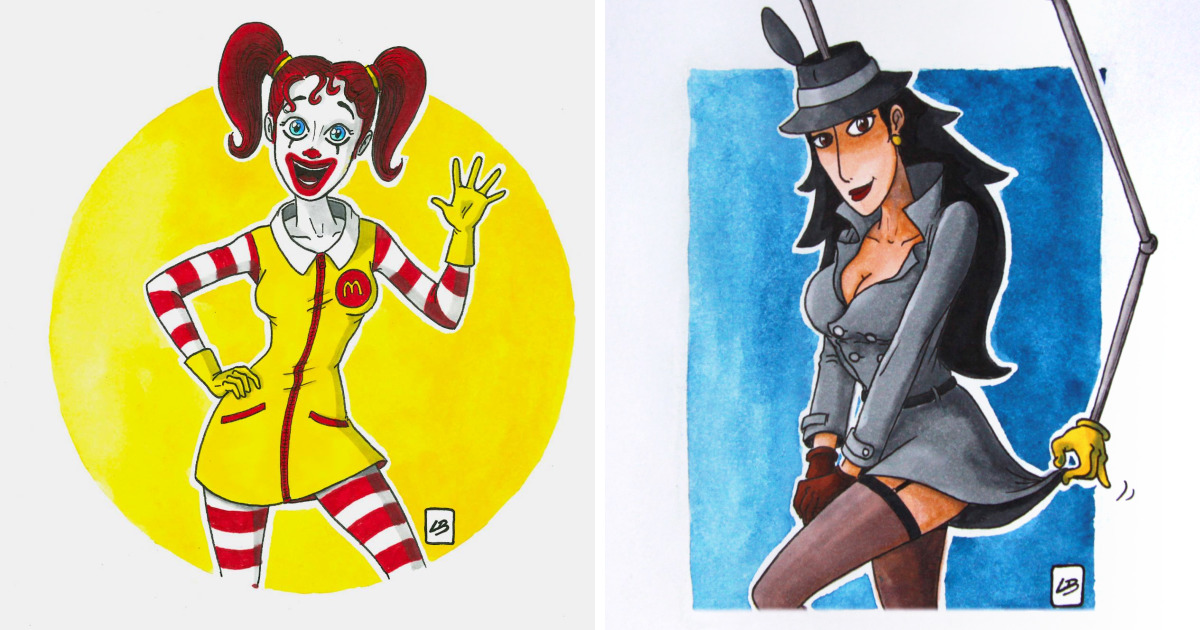
What happens when you take the heroes everyone knowsthe gadget guy, the cowboy, the boy reporter, the space savior, the masked detectiveand ask one mischievous question: “What if she had been the hero all along?” Suddenly, the cape sits differently. The smirk changes shape. The boots gain attitude. The whole character steps out of the museum of nostalgia and walks straight into a brand-new conversation.
That is the fun behind drawing female versions of pop culture’s heroes. It is not simply about giving a famous male character longer eyelashes, a smaller waist, and a dramatic hair flip worthy of a shampoo commercial. That would be lazyand frankly, most heroes already spend enough time posing like they are in a perfume ad. The real challenge is to reimagine the character’s personality, silhouette, story energy, and iconic visual language while keeping the soul recognizable.
Pop culture has always loved transformation. Comic books reboot timelines. Movies recast legends. Video games redesign characters every console generation. Fan artists remix heroes like DJs at a convention after-party. Creating a female version of a beloved hero belongs to that same tradition: it is playful, analytical, affectionate, and just a little rebellious.
Why Female Versions of Heroes Feel So Fresh
For decades, many of the most visible pop culture heroes were written, drawn, marketed, and merchandised as men. Superman, Batman, Tintin, Lucky Luke, Inspector Gadget, Luke Skywalker, Indiana Jones, and countless others shaped the way audiences imagined bravery. They were clever, stubborn, brave, flawed, stylish, and occasionally allergic to emotional communication. In other words, deeply human.
But when an artist redraws these heroes as women, the work asks a bigger question: were those heroic traits ever male in the first place? Courage does not have a gender. Curiosity does not have a gender. A dramatic entrance through smoke while wearing an impractical coat should probably not have a gender either, though pop culture has tried very hard to make it one.
Gender-swapped character art feels fresh because it exposes the design codes we usually accept without noticing. A square jaw suggests strength. Broad shoulders suggest command. Short hair suggests efficiency. A scowl suggests seriousness. But change the gender presentation and suddenly those codes become visible. The viewer starts asking: why do we read this as heroic? Why do we read that as feminine? Why does armor for men look like protection while armor for women sometimes looks like it lost an argument with a swimsuit?
The Art of Reimagining, Not Copying
The best female hero redesigns do not merely copy the original costume and resize it. They translate. Think of translation not as swapping words, but as carrying meaning across a bridge. The artist has to decide what must stay, what can change, and what should evolve.
1. Keep the Symbol
Every legendary hero has a visual anchor. Inspector Gadget has the trench coat, hat, and mechanical chaos. A cowboy hero has the hat, boots, belt, and dusty confidence. A reporter-adventurer has clean lines, curiosity, and a loyal companion. A space hero might have a tunic, a weapon, or a destiny-heavy stare that says, “I have unresolved family issues, but make it cinematic.”
When drawing a female version, keeping the symbol helps the audience instantly recognize the character. The viewer should not need a detective board, red string, and three cups of coffee to understand the reference.
2. Change the Body Language
A character’s pose can say more than the outfit. A male hero may stand wide, chest forward, chin raised. A female redesign can keep that confidence or shift it into something sharper: one hip relaxed, eyes focused, one hand ready to move. The goal is not to make her “prettier.” The goal is to make her alive.
Body language also prevents the design from becoming a costume-party version of the original. A female detective hero may lean into wit and precision. A female cowboy may feel quick, dry, and fearless. A female gadget hero may appear cheerful but dangerous to every appliance within six feet.
3. Respect the Personality
A true redesign protects the character’s emotional engine. If the original hero is brave but clumsy, the female version should not suddenly become flawless. If the original is arrogant, let her be arrogant. If he is chaotic, let her be chaos with eyeliner. A female character does not need to be softened to be likable. In fact, the most memorable heroines often get more interesting when they are allowed to be strange, stubborn, brilliant, messy, or ridiculous.
Pop Culture Already Knows This Trick Works
Gender reimaginings are not new. Comics and animation have been experimenting with alternate versions, legacy heroes, and parallel-universe identities for years. Marvel’s Gwen Stacy as Ghost-Spider works because she is not simply “girl Spider-Man.” She has her own world, band, guilt, relationships, rhythm, and visual style. Jane Foster becoming the Mighty Thor is powerful because the story gives her worthiness, pain, intelligence, and agencynot just a borrowed hammer.
DC has long shown how related identities can become independent legends. Supergirl is connected to Superman, but her story of displacement, power, grief, and identity gives her a very different emotional charge. Batgirl is part of the Batman family, yet Barbara Gordon’s intelligence, resilience, and role with the Birds of Prey make her more than a side note in someone else’s cape collection.
Even Harley Quinn, who began as a character tied to the Joker, became a pop culture force because writers and artists let her evolve into her own hurricane. She is messy, funny, dangerous, wounded, and oddly charmingthe kind of character who looks like she might steal your car, then give you surprisingly useful relationship advice.
Why Fans Love Gender-Swapped Heroes
Fans enjoy gender-swapped heroes because they make familiar characters feel new without erasing what made them beloved. It is the same pleasure as hearing a cover of a classic song. The melody is familiar, but the voice changes the mood. A female version of a famous hero can reveal humor, elegance, vulnerability, or swagger that was always hiding inside the concept.
There is also a personal element. Many viewers grew up loving heroes who did not look like them. A girl might adore a legendary adventurer, detective, cowboy, or sci-fi warrior while quietly wishing there were more versions of those characters that reflected her own sense of possibility. Fan art answers that wish with pencils, tablets, color palettes, and a healthy disregard for gatekeeping.
And yes, some people get upset. They clutch their action figures and declare that changing a character ruins childhood. But childhood is tougher than that. If it survived dial-up internet, VHS tracking lines, and cereal commercials louder than jet engines, it can survive a woman wearing a heroic hat.
The Design Choices That Make a Female Hero Version Work
Costume With Purpose
A strong redesign starts with practical questions. Can she move in this outfit? Does it tell us who she is? Would she choose this? A female version of a detective might wear a trench coat with sharper tailoring and hidden tools. A female space hero might have functional layers, worn boots, and a belt that looks like it has actually been used. A female cowboy should look ready for dust, sun, and bad decisions at high noon.
Hair as Character, Not Decoration
Hair can be expressive, but it should not become the entire redesign. Short hair can look bold. Long hair can look wild. Braids can suggest practicality. A messy bun can scream “I saved the world before breakfast and still have errands.” The right hairstyle supports the character’s lifestyle instead of turning her into a fashion mannequin trapped in an action scene.
Facial Expression Matters
The face is where parody becomes personality. A raised eyebrow can keep the original hero’s sarcasm. A confident half-smile can preserve swagger. Wide, curious eyes can maintain innocence and adventure. If the original character is famous for optimism, the female version should carry that spark. If the original is a brooding night creature with a cape budget larger than a small nation, she should brood magnificently.
Female Hero Art and Representation
The popularity of female hero redesigns also connects to a bigger cultural shift. Audiences are asking for more women in adventure, fantasy, animation, comics, gaming, and filmnot as accessories, not as trophies, and not as the person who says, “Be careful!” while the hero leaves the room. They want women who drive the story.
Recent media research has shown encouraging progress in women’s visibility on screen, especially in lead and co-lead roles, but gaps remain in overall representation, age diversity, body diversity, disability representation, and intersectional storytelling. That means fan art still has an important role. It lets artists imagine possibilities faster than big studios can schedule a franchise meeting.
When independent artists redraw classic heroes as women, they are participating in a visual conversation about who gets to be iconic. They are not waiting for permission. They are sketching alternatives, posting them online, and letting viewers say, “Wait, I would absolutely watch this movie.”
Examples of Heroes That Are Fun to Reimagine
Inspector Gadget as a Woman
A female Inspector Gadget practically draws herself into comedy. The trench coat remains essential. The gadgets should still pop out at exactly the wrong time. The humor comes from keeping her optimistic incompetence intact. She should look capable, cheerful, and one button away from accidentally deploying roller skates in a courtroom.
A Female Cowboy Legend
A female version of a classic cowboy hero works beautifully because Western design is already full of strong shapes: hats, boots, belts, gloves, dust, and silhouettes against sunsets. The key is not to over-glamorize her. Let her be sunburned, sharp-eyed, and unimpressed. She should look like she can win a duel and then complain that the coffee is terrible.
A Female Boy Reporter
Reimagining a young reporter-adventurer as a woman opens up wonderful design possibilities. Keep the clean lines, the bright curiosity, the practical shoes, and the loyal companion. Make her clever rather than ornamental. Her superpower is not strength; it is noticing the one clue everyone else missed while adults are busy being confidently wrong.
A Female Space Hero
Science fiction heroes are especially fun to redesign because space fashion has never been fully reasonable. A female space hero can keep the mythic simplicity of the original while adding emotional nuance. She can be brave, impatient, hopeful, conflicted, and very tired of prophecies. Bonus points if the costume looks like it can survive sand, snow, laser fire, and at least one awkward family reunion.
The Difference Between Empowerment and Tokenism
Not every female redesign automatically feels empowering. A lazy version simply takes a male hero, adds curves, and calls it progress. That approach treats femininity as decoration instead of identity. It may look polished, but it says very little.
A thoughtful redesign asks deeper questions. What would this character want? How would she be treated in her world? Would her challenges change? Would her confidence be read differently? Would she need to be funnier, tougher, quieter, louder, or more strategic to survive the same story?
That is where the best art lives: not in the surface swap, but in the narrative imagination behind it. A female version of a hero should feel like she had a life before the drawing and will continue having one after the viewer scrolls away.
Why This Kind of Fan Art Matters
Fan art is sometimes dismissed as light entertainment, but it is one of the most active forms of modern visual culture. It keeps stories alive between official releases. It challenges design habits. It gives young artists a playground for anatomy, costume, composition, satire, and storytelling. It also builds community, because everyone has an opinion about whether the boots are right.
Drawing female versions of pop culture heroes is especially powerful because it sits at the intersection of nostalgia and reinvention. Nostalgia says, “I loved this.” Reinvention says, “What else could it become?” Together, they create art that feels both familiar and surprising.
My Experience Drawing Female Versions of Pop Culture’s Heroes
When I first started sketching female versions of famous heroes, I thought the hardest part would be the costume. I was wrong. The hardest part was the attitude. Clothes are easy compared with personality. A hat, a coat, a belt, or a weapon can tell the viewer what character inspired the drawing, but expression tells them whether the redesign actually works.
I began by studying each original hero like a detective with a snack problem. What makes this person instantly recognizable? Is it the silhouette? The posture? The color palette? The sidekick? The absurdly specific accessory? Once I found that core detail, I built the female version around it. If I changed too much, the character became unrecognizable. If I changed too little, the drawing felt like a costume swap. The sweet spot was somewhere in between: familiar enough to spark recognition, different enough to feel like a new person had entered the room.
One of the most surprising lessons was that femininity does not have one visual language. A female hero can be rugged, elegant, chaotic, athletic, awkward, glamorous, practical, scary, funny, or all of those things before lunch. I had to resist the temptation to make every redesign conventionally pretty. Some characters needed sharp noses, tired eyes, big boots, crooked smiles, messy hair, or expressions that said, “I know exactly what I’m doing, and unfortunately for everyone else, I’m going to do it anyway.”
Drawing these heroes also made me think about how often male characters are allowed to be visually strange. They can be wrinkled, scarred, square, lanky, bulky, goofy, mysterious, or grumpy. Female characters are too often pressured into looking polished. So I tried to give my female versions room to be specific. A female gadget hero could be clumsy. A female cowboy could be dusty. A female adventurer could have scraped knees. A female detective could look sleep-deprived because saving the city is not exactly a spa weekend.
The reactions were part of the experience, too. Some viewers focused on nostalgia and laughed at the references. Others noticed the design choices: the altered pose, the adjusted costume, the way a familiar prop changed meaning in new hands. A few people immediately imagined full stories for the characters, which is the best compliment an artist can receive. When a drawing makes someone say, “I want to know what happens next,” it has done more than look nice. It has opened a door.
The most rewarding part was realizing that these redesigns were not about replacing the original heroes. They were about expanding the playground. The old versions still exist. Nobody came into the house at midnight and stole anyone’s childhood cowboy. But now there is another version standing beside him, hat tilted, boots dusty, ready for her own adventure. That is the joy of pop culture: it is not a locked glass case. It is a living sketchbook, and sometimes the best ideas begin with one playful question.
Conclusion
Drawing female versions of pop culture’s heroes is more than a visual joke or a clever fan-art challenge. It is a creative way to examine what makes a hero iconic, what makes a character memorable, and how gender shapes the way audiences read power. The best redesigns keep the spirit of the original while giving the new version her own posture, humor, confidence, and story potential.
Whether it is a gadget-filled detective, a fearless cowboy, a curious reporter, or a cosmic warrior, the female version should feel like a complete characternot a decorative remix. She should be funny if the original was funny, brave if the original was brave, flawed if the original was flawed, and unforgettable for reasons that belong to her.