Teaching a hamster tricks sounds like something a tiny circus manager invented after too much coffee, but yes, hamsters can learn simple behaviors. They may not fetch your slippers or file your taxes, but with patience, gentle handling, and the right snack-sized motivation, your hamster can learn to come when called, stand on cue, climb into your hand, spin, follow a target, and navigate a mini obstacle course like a whiskered champion.
The secret is not “training harder.” It is training smarter. Hamsters are small prey animals, which means loud noises, sudden movements, and grabby hands can make them feel like they have been cast in a rodent horror movie. A calm environment, short sessions, consistent cues, and positive reinforcement are the foundation of successful hamster trick training.
This guide breaks the process into 15 practical steps, from building trust to teaching beginner-friendly tricks. Whether you have a Syrian hamster, dwarf hamster, or Roborovski hamster, the goal is the same: make training safe, fun, and rewarding for your pet.
Before You Begin: Can Hamsters Really Learn Tricks?
Yes, hamsters can learn simple tricks through repetition and reward-based training. They are intelligent enough to recognize routines, associate sounds with outcomes, and repeat behaviors that lead to treats. However, they are not dogs in tiny fur coats. Hamsters have shorter attention spans, different sleep schedules, and very strong opinions about personal space.
The best tricks for hamsters are natural behaviors turned into cute commands. Standing, climbing, turning, following a treat, walking through a tunnel, and coming to your hand are all realistic. Complicated tricks that require long focus or physical strain are not ideal. Think “adorable mini routine,” not “hamster Olympics.”
How to Teach a Hamster Tricks in 15 Steps
1. Let Your Hamster Settle In First
If your hamster is new, give it time to adjust before starting trick training. A newly adopted hamster needs to learn that its cage is safe, the food dish is reliable, and the giant human face hovering nearby is not a natural disaster.
For the first several days, focus on quiet observation. Refill food and water calmly, avoid unnecessary handling, and speak softly near the cage. Once your hamster comes out to eat, explore, and groom normally, you can begin trust-building.
2. Train During Your Hamster’s Active Hours
Hamsters are mostly nocturnal or crepuscular, meaning they are usually most active in the evening and at night. Waking a sleeping hamster for training is a quick way to earn a grumpy squeak or a defensive nip.
Plan training sessions when your hamster is already awake and moving around. If your hamster is stretching, sniffing, using the wheel, or exploring, that is a better time to offer interaction. If it is curled up in its nest, let the tiny potato sleep.
3. Create a Safe Training Area
Before teaching tricks, choose a secure place where your hamster cannot escape, fall, or hide behind furniture. A dry bathtub lined with a towel, a playpen, or a large escape-proof bin can work well. The area should be quiet, clean, and free of other pets.
Keep the surface low and soft. Hamsters can move suddenly, and even a short fall can be dangerous. Training close to the ground reduces risk and helps your hamster feel more secure.
4. Wash Your Hands Before Training
Always wash your hands before handling or training your hamster. If your fingers smell like chips, fruit, or dinner, your hamster may mistake them for a suspiciously large snack. Clean hands also help prevent transferring anything irritating or unsafe into the cage.
Use mild, unscented soap when possible. Strong fragrances can be overwhelming to a hamster’s sensitive nose. Remember, your hamster experiences the world partly through scent, so your “fresh ocean breeze” hand soap may smell like a thunderstorm wearing perfume.
5. Choose Tiny, Healthy Training Treats
Treats are the paycheck of hamster training. The key is to use very small pieces so your hamster stays interested without eating too much. Good options may include tiny bits of plain oat, a sunflower seed, a small piece of carrot, a pea-sized piece of cucumber, or a tiny fragment of apple.
Keep treats limited. Hamsters need a balanced diet, and too many treats can lead to unhealthy weight gain or digestive upset. Training rewards should be small enough that your hamster can eat them quickly and return to the lesson.
6. Start With Hand Taming
Before teaching tricks, your hamster should feel comfortable with your hand. Place your hand flat in the cage or training area with a small treat on your palm. Let your hamster approach on its own. Do not chase, scoop, or corner it.
At first, your hamster may sniff and run away. That is normal. Repeat this calmly over several sessions. Eventually, your hamster may place one paw on your hand, then two, and finally climb on fully. This is not just cute; it is the foundation for almost every trick.
7. Use a Consistent Cue
A cue is a word, sound, or gesture that tells your hamster what behavior earns a reward. For example, you might say “come,” tap the floor gently, or hold a treat in a specific position.
Use the same cue every time. If you say “come here,” “come on,” “buddy, please attend this meeting,” and “snack time,” your hamster will not know which sound matters. Keep cues short and consistent.
8. Teach “Come” With a Treat Trail
One of the easiest hamster tricks is teaching your hamster to come when called. Start by placing your hamster in a safe training area. Hold a tiny treat a few inches away and say “come” in a calm voice. When your hamster moves toward the treat, reward immediately.
After several successful repetitions, increase the distance slightly. Over time, your hamster may begin moving toward you when it hears the cue. Keep expectations realistic. This trick works best in a quiet, familiar space, not during a chaotic family gathering where everyone is yelling about pizza.
9. Teach “Stand” Using a Raised Treat
To teach your hamster to stand, hold a small treat just above its nose. Not too highyour goal is a gentle rise, not a dramatic hamster backbend. Say “stand” as your hamster lifts its front paws. Reward the moment it stands.
Repeat this in short sessions. Eventually, your hamster may stand when it hears the cue or sees your hand signal. This trick works because standing is already a natural hamster behavior, especially when they are curious.
10. Teach “Spin” With a Slow Treat Circle
To teach a spin, hold a treat near your hamster’s nose and slowly guide it in a small circle. As your hamster follows the treat and turns around, say “spin.” Give the reward as soon as the circle is complete.
Keep the movement slow and smooth. A hamster is not a remote-control car. If you move too fast, it may lose interest or wander off to investigate a piece of bedding that suddenly seems more spiritually meaningful.
11. Teach Your Hamster to Climb Into Your Hand
This trick is useful and adorable. Place your hand flat in front of your hamster with a treat in the center of your palm. Say “up” or “hand.” When your hamster climbs onto your hand, reward it.
At first, reward even one or two paws on your hand. Then gradually reward only when your hamster climbs on fully. This technique is called shaping, which means rewarding small steps toward the final behavior.
12. Introduce a Target Stick
A target stick can be a clean wooden chopstick, a pet-safe training stick, or even the end of a plain cardboard tube. The idea is to teach your hamster to touch or follow the target.
Hold the target near your hamster. When it sniffs or touches the end, give a treat. Repeat until your hamster understands that touching the target earns a reward. Once learned, you can use the target to guide your hamster through tunnels, around objects, or onto your hand.
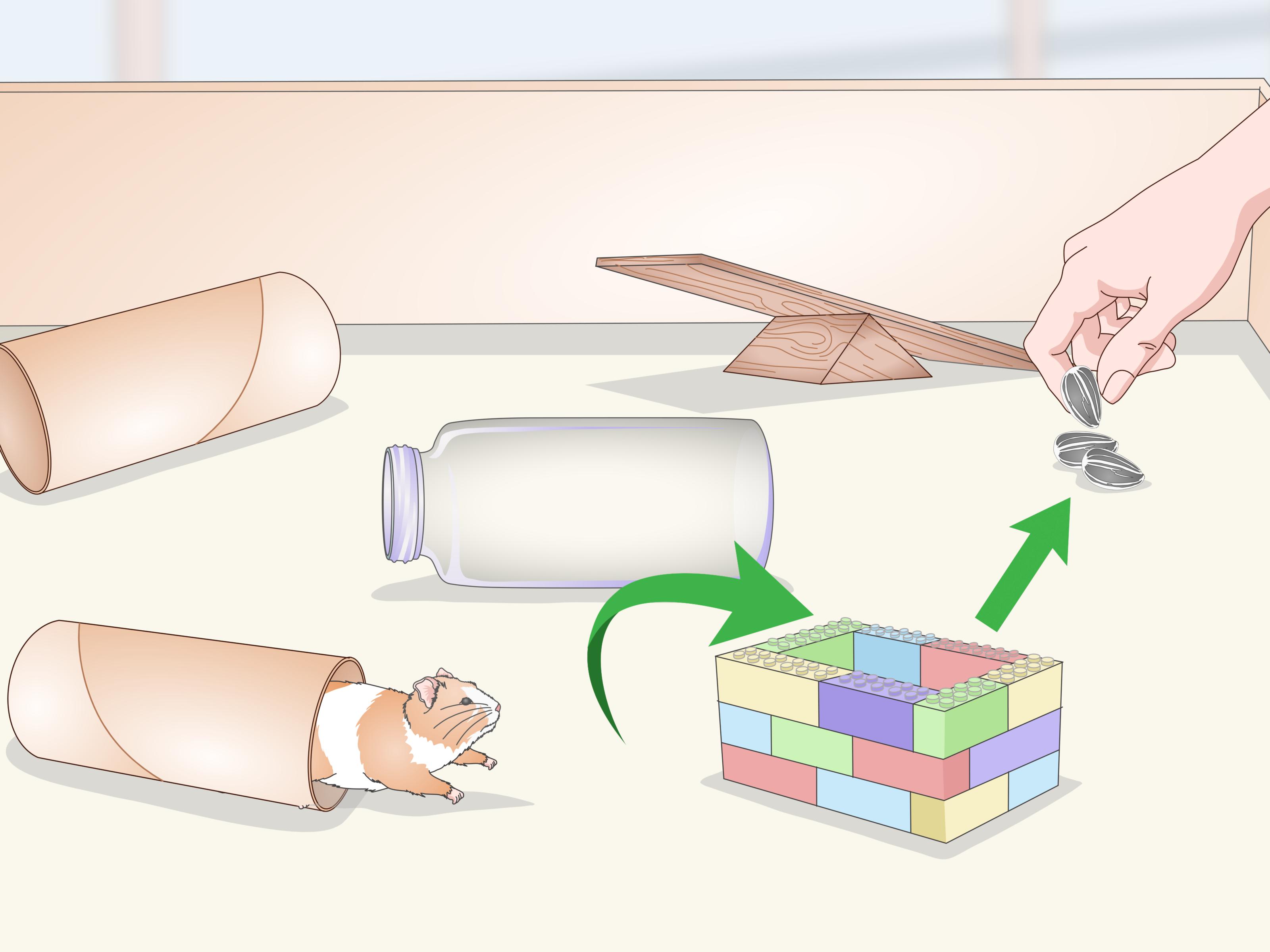
13. Build a Mini Obstacle Course
After your hamster learns to follow a target or treat, create a simple obstacle course. Use safe items such as cardboard tubes, low platforms, paper tunnels, and small boxes. Avoid anything sharp, slippery, high, painted with unsafe materials, or small enough to be swallowed.
Guide your hamster through one obstacle at a time. For example, reward it for entering a tube, then for exiting the tube, then for walking toward the next object. Keep the course short and positive. Your hamster should look curious, not stressed.
14. Keep Training Sessions Short
Hamsters do best with short sessions. Aim for about 3 to 5 minutes at a time, especially in the beginning. Stop while your hamster is still interested. If it starts grooming, freezing, hiding, biting, or trying to escape, the session is over.
Training should feel like enrichment, not homework. A hamster that enjoys sessions will learn faster than one that feels pressured. Besides, no hamster has ever looked at a 45-minute training block and thought, “Fantastic, my productivity era begins.”
15. End Every Session Positively
End with an easy win. Ask for a behavior your hamster already knows, reward it, and return your pet to its cage calmly. This helps your hamster associate training with safety and good things.
Never punish a hamster for not performing. Hamsters do not understand punishment the way humans intend it. Yelling, tapping the cage, blowing on them, or grabbing them will only damage trust. Positive reinforcement is the best method because it teaches your hamster what to do instead of making it afraid of doing the wrong thing.
Best Beginner Tricks for Hamsters
Once your hamster is comfortable with you, try these beginner-friendly tricks:
- Come: Your hamster moves toward you after hearing a cue.
- Stand: Your hamster rises on its hind legs for a treat.
- Spin: Your hamster turns in a circle by following a treat.
- Hand: Your hamster climbs into your palm willingly.
- Follow: Your hamster follows a target stick or treat.
- Tunnel: Your hamster walks through a cardboard tube on cue.
- Platform: Your hamster steps onto a low, safe platform.
These tricks are simple because they build on natural hamster instincts: exploring, sniffing, standing, climbing, and following food. The more natural the trick, the easier it is to teach.
Common Mistakes When Training a Hamster
Training Too Soon
If your hamster is still scared of your hand, tricks can wait. Trust comes first. Training before your hamster feels safe may slow progress and increase stress.
Using Treats That Are Too Large
Large treats fill your hamster quickly and interrupt training. Use tiny pieces. A crumb-sized reward is often enough for a hamster.
Moving Too Fast
Hamsters need repetition. If your hamster learns to touch your hand today, do not expect it to complete a three-part obstacle course tomorrow while dramatic music plays in your imagination.
Ignoring Stress Signals
Watch your hamster’s body language. Hiding, freezing, teeth chattering, sudden biting, frantic running, or repeated attempts to escape can mean your hamster is overwhelmed. Pause training and try again another day.
Training in a Noisy Room
Television, loud music, barking dogs, and shouting can make training difficult. Choose a peaceful area where your hamster can focus.
How Long Does It Take to Teach a Hamster Tricks?
Some hamsters learn a simple trick in a few days. Others need several weeks. Personality, species, age, past handling, environment, and your consistency all matter. Syrian hamsters are often easier to handle because they are larger and usually slower than dwarf hamsters. Roborovski hamsters are fast, tiny, and often more challenging to train, though still fascinating and fun to observe.
The best progress comes from daily or near-daily interaction, even if it lasts only a few minutes. A calm five-minute session is better than one long session that leaves your hamster annoyed enough to write a strongly worded letter in bedding.
Safety Tips for Hamster Trick Training
Safety matters more than performance. Always train in a secure area, keep your hamster close to the ground, and avoid tricks that require jumping from heights. Never use harnesses, leashes, sticky surfaces, costumes, or props that restrict movement. Hamsters are delicate animals, not tiny action figures.
Also avoid overfeeding treats. Training snacks should fit into your hamster’s overall diet. If you are using seeds or fruit, keep portions very small and occasional. Fresh water, a balanced hamster food, safe bedding, a clean enclosure, chew items, hiding places, and enrichment are all more important than any trick.
Troubleshooting: Why Your Hamster Is Not Learning
If your hamster is not responding, do not assume it is “stubborn.” It may be tired, frightened, full, distracted, or simply not ready. Try changing the training time, using a more appealing treat, shortening the session, or going back to an easier step.
If your hamster suddenly becomes less active, stops eating, develops diarrhea, looks unkempt, has trouble breathing, or behaves very differently from normal, stop training and contact a veterinarian familiar with small animals. Health comes first. A sick hamster does not need trick practice; it needs care.
Extra Experience: Real-Life Tips for Teaching Hamster Tricks
One of the most useful lessons from training hamsters is that success often looks boring at first. People imagine a hamster spinning, standing, and running through tunnels within one magical evening. In reality, the first “big win” may be your hamster calmly taking a treat from your fingers without sprinting away like it just saw a ghost wearing sneakers.
A smart approach is to keep a tiny training routine. For example, begin each evening by sitting near the cage and speaking softly. Then offer one small treat at the entrance of the cage. After your hamster accepts that comfortably for a few days, place the treat on your palm. Once your hamster climbs onto your hand, move training to a secure play area. This gradual rhythm teaches your hamster that you are predictable. Predictable humans are less scary. In hamster language, that is basically a five-star review.
Another helpful experience is learning your hamster’s favorite reward. Some hamsters will do nearly anything for a sunflower seed. Others prefer oats, cucumber, or a tiny piece of vegetable. Test safe options in small amounts and notice what gets the most enthusiastic response. The best training treat is not always the fanciest one; it is the one your hamster chooses with its whole tiny soul.
Timing also makes a huge difference. Reward immediately after the behavior you want. If your hamster stands and you wait five seconds, it may not connect the reward with standing. It might think it earned the treat for turning around, blinking, or judging your carpet. Fast rewards help your hamster understand the exact action that worked.
For nervous hamsters, try training near familiar objects. A favorite hideout, tunnel, or piece of bedding can make the training area feel safer. Do not remove every hiding place just to force interaction. A hamster that has the option to retreat often feels brave enough to explore again. Choice builds confidence.
It also helps to accept your hamster’s personality. Some hamsters become little performers. Others prefer simple hand-taming and quiet exploration. That is not failure. A hamster that willingly approaches you, takes food gently, and feels safe in your presence has already learned something valuable. Tricks are fun, but trust is the real achievement.
Finally, celebrate small progress. One paw on your hand, one step toward your voice, one calm sniff of the target stickthese are all training victories. Hamster training is not about controlling your pet. It is about communicating in a way your hamster can understand. When done gently, it becomes enrichment, bonding, and entertainment all rolled into one tiny, whiskered package.
Conclusion
Teaching a hamster tricks is possible, rewarding, and surprisingly fun when you respect your pet’s natural behavior. Start with trust, use tiny healthy treats, train during active hours, and keep sessions short. Simple tricks like “come,” “stand,” “spin,” and “climb into my hand” are realistic for many hamsters, especially when taught with patience and positive reinforcement.
Your hamster may never headline a Vegas show, but it can learn cute, useful behaviors that make daily care easier and bonding more enjoyable. The best trick of all is creating a relationship where your hamster feels safe enough to come to you willingly. That is small-pet magicno top hat required.