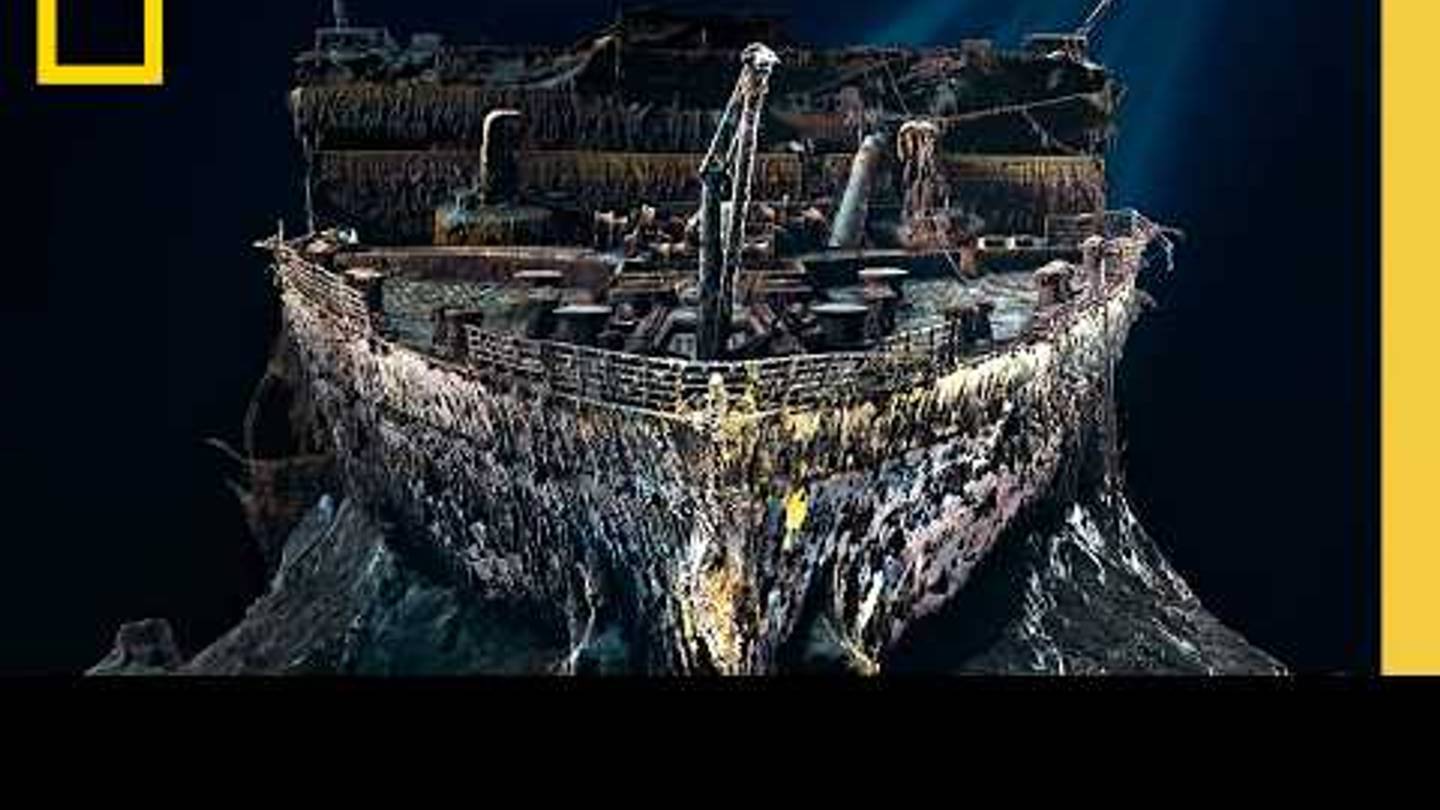
The Titanic has never exactly been short on drama. It had luxury suites, a band that became legendary, a fatal iceberg, and enough historical mystery to keep documentary producers gainfully employed for generations. But more than a century after the ship sank beneath the North Atlantic, a new 3D Titanic model is doing something surprisingly rare: it is making the familiar story feel new again.
Thanks to an enormous underwater scanning project, researchers now have a full-scale digital twin of the RMS Titanic wreck. This is not a fuzzy sonar sketch or a few spooky photos from the deep. It is a highly detailed 3D reconstruction built from hundreds of thousands of images, 4K footage, and a mountain of data collected around 12,500 feet below the ocean surface. The result lets experts examine the wreck with a level of precision that previous generations of Titanic researchers could only dream aboutpreferably while wearing warm socks, because the North Atlantic is not known for hospitality.
The headline discovery is sobering: the ship did not simply snap neatly in two like a broken breadstick. The evidence suggests Titanic was violently torn apart as the stern rose, twisted, and eventually plunged toward the seabed. The digital model also reveals smaller but deeply human clues, including evidence linked to open steam valves, damaged structures, and the possibility that engineers continued working to keep power flowing during the evacuation.
For anyone searching for “3D Titanic model,” “Titanic digital twin,” “Titanic wreck scan,” or “new Titanic discoveries,” the story is more than another historical curiosity. It is a reminder that technology can change how we understand even the most famous disasters. The Titanic’s final hours were not frozen in 1912. They are still being studied, questioned, and carefully reconstructedone rivet, one boiler, and one fractured steel plate at a time.
What Is the New 3D Titanic Model?
The new model is often described as a full-size digital twin of the Titanic wreck. In simple terms, that means researchers created a precise 3D copy of the ship as it rests today on the ocean floor. Instead of relying only on human divers, who cannot safely operate at Titanic’s extreme depth, the project used remotely operated underwater vehicles to photograph and scan the site in extraordinary detail.
The wreck sits roughly 12,500 feet below the surface of the Atlantic, off the coast of Newfoundland. At that depth, sunlight has long since given up, water pressure is crushing, and the environment is less “romantic ocean mystery” and more “deep-sea refrigerator guarded by physics.” The scanning team had to work with robotic systems capable of surviving those conditions while capturing usable visual data across the bow, stern, and debris field.
Those images were then processed into a digital reconstruction detailed enough to show the ship’s shape, damage, scattered debris, and structural clues. Earlier Titanic imagery often showed isolated sections: a railing, a boiler, a staircase area, a patch of corroded hull. The 3D scan is different because it allows experts to study the wreck as a whole. That matters because Titanic’s final moments were not caused by one dramatic detail. They were the result of connected failures: flooding, structural stress, weight distribution, rising stern angle, and the immense forces acting on steel in motion.
Why the Titanic’s Breakup Was More Violent Than Many Imagined
For decades, popular retellings often described Titanic’s breakup in broad strokes: the bow filled with water, the stern lifted, the ship split, and the pieces sank. That basic outline is still true, but the new scan adds textureand by texture, unfortunately, we mean mangled steel.
The 3D Titanic model suggests the breakup was not a clean, simple separation. The stern appears to have suffered catastrophic tearing and deformation, likely as it was exposed to enormous stresses during the ship’s final descent. When the bow pulled downward and the stern rose higher, Titanic’s structure endured forces it was never designed to survive. Think less “carefully cut in half” and more “industrial-strength chaos in slow motion.”
This matters because the nature of the damage helps researchers understand the sequence of events. A clean break would suggest one kind of structural failure. A violent tearing pattern suggests twisting, bending, and uneven stress across the hull. The ship’s stern, in particular, appears to have been devastated as it plunged, broke apart, and struck the seabed. The scan gives experts a clearer look at how steel plates, decks, and internal structures behaved under extreme pressure.
The phrase “violently torn apart” may sound theatrical, but it reflects a serious shift in interpretation. Titanic was not just a ship that sank. It was a massive moving structure undergoing progressive flooding, mechanical strain, and finally catastrophic failure. The new model helps transform that final act from a movie scene into a forensic puzzle.
The Iceberg Damage: Small Openings, Huge Consequences
One of the most striking lessons from Titanic research is that the iceberg did not need to slice open the ship like a giant can opener. The damage was devastating because it affected multiple watertight compartments. The ship was designed to survive certain flooding scenarios, but not the pattern of flooding caused by the collision.
The digital reconstruction supports the idea that a series of relatively narrow openings allowed seawater to enter across too long a section of the hull. That detail is crucial. A ship can sometimes survive a serious wound in one area; it is much harder to survive several compartments flooding in sequence. Titanic’s problem was not simply the size of the damage, but where it was distributed.
This is where the 3D model becomes more than a beautiful technical achievement. It helps researchers connect physical evidence with survivor accounts, naval architecture, and computer simulations. By studying the shape and placement of damage, experts can better understand why the ship’s fate became unavoidable after the collision.
It is also a useful reality check for Titanic myths. The disaster was not caused by one unlucky rivet, one arrogant captain, or one dramatic cinematic decision to turn left at the wrong time. It was a chain of factors: speed, visibility, iceberg detection, ship design assumptions, lifeboat capacity, communication limits, and emergency response under impossible pressure. History, like a cluttered junk drawer, rarely contains only one thing.
Boilers, Steam Valves, and the Engineers Who Stayed Behind
Among the most emotional findings connected to the Titanic scan are clues that some machinery may have still been operating late into the sinking. Reports tied to the digital model have highlighted concave boiler structures and an open steam valve, both of which support the possibility that engineers continued working to maintain power as the ship went down.
That detail changes the emotional temperature of the story. Titanic’s lights did not stay on by magic, and distress signals did not transmit themselves. Behind those final hours were engineers, electricians, stokers, wireless operators, officers, stewards, and crew members trying to keep systems working while the ship around them was failing.
If steam was still being managed and power still being supplied, it supports long-standing accounts of crew members remaining at their posts. The ship’s electricity mattered enormously. It helped passengers see, helped crew launch lifeboats, and helped operators send distress messages. In a disaster at sea, light is not just convenience. It is coordination, reassurance, and survival.
The scan does not turn history into a superhero movie, and it should not. But it does give physical weight to stories of duty under extreme conditions. The Titanic was filled with human choices in its final hourssome flawed, some brave, some heartbreaking. The 3D model helps separate sentimental legend from evidence-based respect.
A New Look at the Stern: Titanic’s Most Chaotic Remains
The bow of Titanic is famous because it still looks somewhat like a ship. It has a recognizable shape, a haunting forward profile, and that ghostly grandeur people associate with the wreck. The stern is different. The stern is wreckage in the rawest sense: twisted, collapsed, and brutally transformed.
The new digital model makes the contrast clearer. The bow sank relatively directly and landed more intact. The stern, however, appears to have experienced a far more violent descent. After separating from the bow, it likely rotated, broke open, and fell through the water in a chaotic plunge. By the time it reached the seabed, much of its structure had been crushed, torn, or scattered.
This helps explain why the stern has long been harder for the public to interpret. It does not match the elegant image of Titanic from postcards and paintings. It looks like the aftermath of tremendous force. For researchers, though, that destruction is information. Each crushed plate and scattered section may help explain how the ship moved after the breakup.
The stern reminds us that Titanic’s sinking was not a single moment. It was a sequence: collision, flooding, trim change, loss of stability, breakup, descent, impact, and long-term decay. The 3D scan allows experts to study these stages with new precision.
Why the Titanic Digital Twin Matters for Marine Archaeology
Marine archaeology has always been a race against time. Shipwrecks decay. Currents shift sediment. Metal corrodes. Microorganisms feed on iron. Human visits can disturb fragile sites. In Titanic’s case, the wreck is also a memorial site, which makes every expedition ethically sensitive.
The digital twin offers a powerful solution. Instead of repeatedly disturbing the wreck, researchers can study a detailed virtual version. They can measure, compare, zoom, annotate, and revisit areas without sending another vehicle into the deep every time someone has a new question. That does not replace physical exploration entirely, but it reduces the need for intrusive investigation.
It also makes Titanic more accessible. Most people will never descend two and a half miles into the Atlantic. That is probably for the best, because very deep ocean tourism is not exactly a casual weekend hobby. But a digital model can bring the wreck into museums, classrooms, documentaries, and research labs. It allows the public to understand the site without treating it like an underwater theme park.
For future shipwreck studies, the Titanic scan sets a high bar. It shows how photogrammetry, robotics, mapping, and historical analysis can work together. The result is not just a better picture. It is a new kind of evidence.
How the 3D Model Challenges Titanic Myths
Titanic has collected myths the way an old attic collects dust. Some are harmless. Some are dramatic. Some are flat-out wrong. The new scan helps challenge several common assumptions.
Myth 1: Titanic Was Simply “Too Big to Sink”
The ship was never literally unsinkable. It was advanced for its time, but its safety depended on specific damage assumptions. Once too many compartments flooded, the design’s limits became painfully clear.
Myth 2: The Ship Split Cleanly
The wreck evidence points to a far messier structural failure. The breakup involved tearing, twisting, and massive deformation, especially around the stern.
Myth 3: The Final Hours Are Already Fully Understood
Even after more than 110 years, the Titanic still has details to reveal. The digital scan gives researchers new ways to test old theories and compare them with physical evidence.
Myth 4: Technology Makes the Story Less Human
In this case, technology makes the human story clearer. Evidence of operating systems, lifeboat efforts, and structural damage helps explain what passengers and crew were facing in real time.
The Human Side of a High-Tech Discovery
It is easy to get dazzled by the technology. Sixteen terabytes of data! Hundreds of thousands of images! A model down to individual rivets! Somewhere, a computer hard drive probably needed a long nap.
But the Titanic is not just a technical subject. It is a grave site and a human tragedy. More than 1,500 people died after the ship struck an iceberg during its maiden voyage in April 1912. Families were separated. Crew members worked in terrifying conditions. Passengers faced confusion, cold, and limited lifeboat space. The digital model should deepen respect for that history, not turn it into a shiny gadget demo.
The most powerful discoveries are often the small ones. A valve left open. A damaged porthole. A lifeboat davit. A piece of machinery frozen in the position it occupied during the crisis. These details do not shout. They whisper. But together, they make the disaster feel less like a legend and more like a series of real decisions made by real people under unimaginable stress.
Why Titanic Still Captures the Public Imagination
Titanic remains famous because it sits at the intersection of ambition, technology, class, nature, and human vulnerability. It was a symbol of modern confidence, then became a symbol of how quickly confidence can meet cold reality. The ship represented luxury and engineering progress, but its sinking exposed weaknesses in safety planning, emergency communication, and social priorities.
The story also has layers. There is the engineering story of hull damage and watertight compartments. There is the social story of first class, second class, third class, and crew. There is the maritime safety story, including lifeboat rules and wireless communication. There is the archaeological story of the wreck’s discovery in 1985 and its ongoing decay. Now, there is the digital story: how modern scanning can resurrect evidence without raising the ship.
That layered quality is why the Titanic never quite leaves public conversation. Every generation finds its own Titanic question. Earlier generations asked, “Where is the wreck?” Later ones asked, “What does it look like?” Today’s researchers are asking, “What can its exact condition tell us about the final moments?”
Experiences Related to the 3D Titanic Model: What It Feels Like to Meet History in Digital Form
Encountering the Titanic through a 3D model is a very different experience from reading a textbook paragraph. A paragraph can tell you that the ship broke apart. A digital model lets you understand scale. You can see how far the bow and stern rest from each other, how scattered the debris field is, and how much of the ship’s once-grand structure has been transformed by violence, pressure, corrosion, and time.
For many viewers, the experience is strangely quiet. The Titanic is famous for noise in popular imagination: alarms, rushing water, shouted orders, music, engines, and panic. But the wreck itself is silent. The 3D model captures that silence in a new way. It turns the disaster into something you can examine slowly, almost respectfully, without the usual movie soundtrack telling you what to feel.
One of the most meaningful experiences is realizing how small details can carry enormous emotional weight. A steam valve is not a glamorous object. Nobody buys a poster of a steam valve for a dorm room. Yet in this context, it may suggest that people were still working below decks, trying to keep power alive. A damaged porthole is just a circular window until it lines up with survivor accounts of ice entering cabins. A distorted boiler is just metal until it becomes evidence of machinery still under pressure as the ship failed.
The model also changes how we think about distance. In the abstract, 12,500 feet sounds deep. In the digital reconstruction, depth becomes isolation. Titanic is not merely underwater; it is in a hostile, dark world where human access is limited and every visit requires advanced technology. That distance makes the digital twin feel almost like a bridge between the living world and a place history left behind.
Educators can use this experience to make history more concrete. Students who might skim past dates such as April 14 and April 15, 1912, can better understand cause and effect when they see the wreck’s layout. Designers and engineers can study how assumptions fail under real-world stress. Writers and filmmakers can find fresh ways to discuss the disaster without exaggerating it. Families and history enthusiasts can connect with the story in a way that is visual, careful, and less invasive than repeated physical expeditions.
There is also a lesson in humility. The Titanic was a masterpiece of its age, yet it was vulnerable. The 3D model is a masterpiece of our age, yet it exists partly because the original masterpiece failed. That contrast is powerful. It reminds us that technology is not a guarantee against disaster. It is a tool for learning, remembering, and doing better next time.
Perhaps the most important experience is ethical. The wreck is not just an object. It is connected to thousands of lives, including those lost and those forever changed. A digital model allows people to study the Titanic without treating the site like a trophy. It gives history room to breathe. It helps preserve evidence while honoring the fact that the ocean floor is not merely a research location; it is a memorial.
Conclusion: A Clearer View of Titanic’s Final Chapter
The new 3D Titanic model does not erase the mystery of the ship’s end, but it brings the final chapter into sharper focus. It shows a wreck that was not neatly divided but violently torn apart. It reveals clues that support accounts of engineers working to keep power alive. It gives researchers a precise digital record of a site that continues to decay in the deep ocean.
Most importantly, it helps move the Titanic story beyond myth. The disaster was not just about arrogance, ice, or bad luck. It was about engineering limits, emergency decisions, human courage, and the immense force of the sea. More than a century later, the Titanic still has something to teachnot because it is frozen in time, but because new tools are allowing us to listen more carefully to what remains.
The ship’s end was violent. The evidence is fragile. The lesson is lasting. And thanks to the digital twin, one of history’s most studied wrecks has found a new way to speak from the bottom of the Atlantic.