If your resume feels like a strange little document that asks you to summarize your entire working life in one or two pages without sounding desperate, boring, or like a malfunctioning robot, welcome to the club. Resume writing is part marketing, part storytelling, part editing, and part emotional damage. The good news is that a strong resume does not require magic. It requires clarity, relevance, and proof.
The best resumes do one thing very well: they make it easy for an employer to see why you fit the role. Not why you are a wonderful human who once organized a bake sale in eighth grade. Not why your old boss thought you had “great energy.” Why you can solve this company’s problem, in this position, right now. That is the game. Once you understand that, writing a resume gets much less mysterious.
Below are practical, modern resume tips that can help you stand out, get past applicant tracking systems, and earn the one thing every job seeker wants: a real human looking at your application for more than six seconds.
Start With a Target, Not a Generic Template
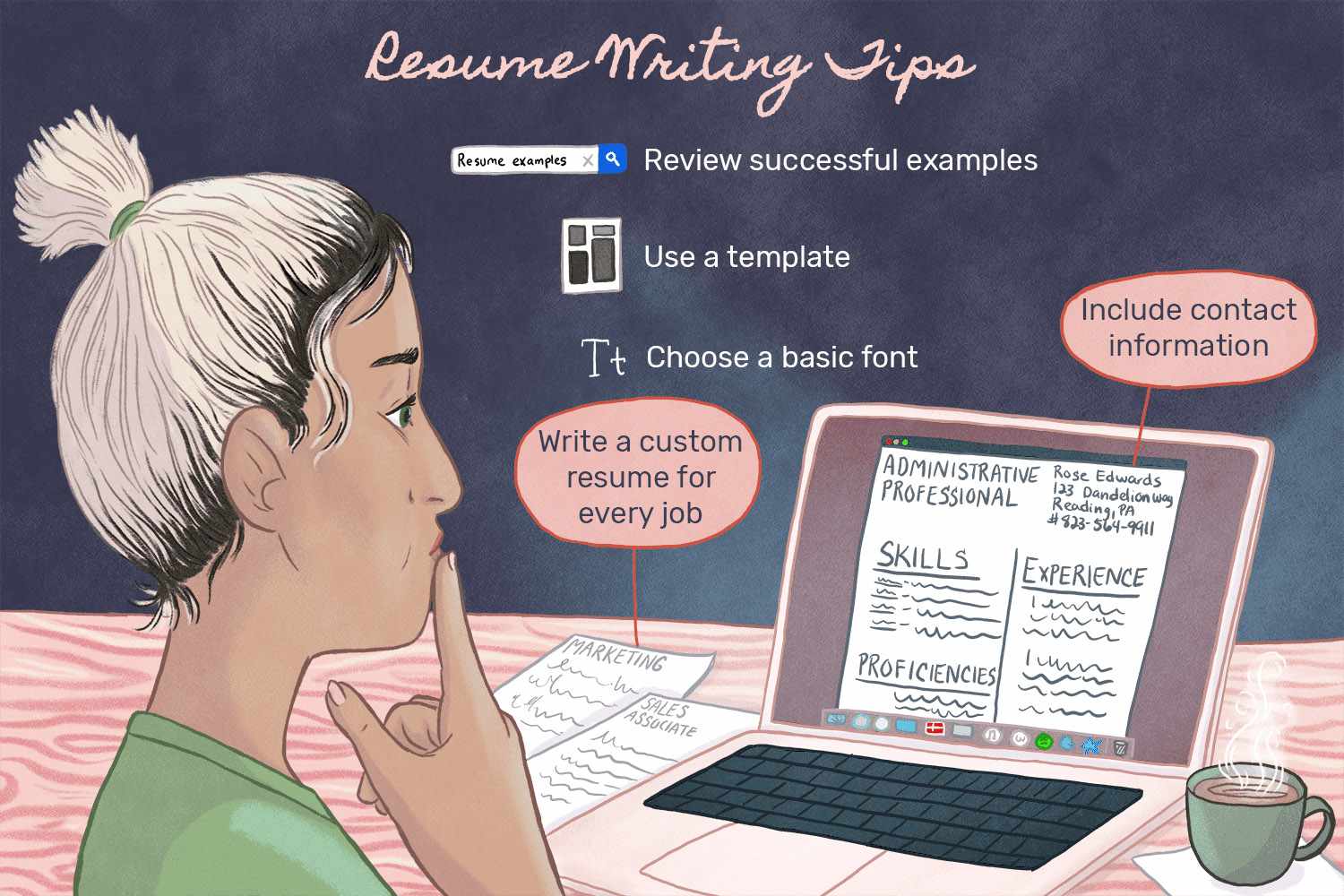
A resume that tries to apply for every job usually ends up perfect for none of them. One of the biggest mistakes job seekers make is sending the same resume everywhere and hoping destiny will handle the rest. Destiny is busy. Tailoring is faster.
Before writing or revising anything, study the job description. Look for patterns in the language. What skills appear more than once? What outcomes does the employer care about? Are they emphasizing leadership, customer service, analytics, project management, technical ability, communication, or speed? Those clues tell you what deserves the spotlight on your resume.
Think of the job posting as an open-book test. The company is practically telling you what to highlight. Your resume should reflect that language honestly and naturally. If a role emphasizes “cross-functional collaboration,” “data reporting,” and “client communication,” your resume should not bury those strengths under vague lines like “responsible for various tasks.” That phrase should be fined by the grammar police.
How to tailor your resume without rewriting your life story
- Adjust your summary or headline to match the role.
- Move the most relevant experience higher on the page.
- Use keywords from the job ad where they genuinely fit.
- Trim details that do not support your target position.
- Emphasize achievements that mirror the employer’s needs.
Tailoring does not mean inventing experience. It means organizing your real experience around the employer’s priorities.
Choose a Resume Format That Makes Sense
For most job seekers, the reverse-chronological resume is still the safest and strongest option. It is familiar, easy to scan, and easy for recruiters to follow. Employers want to know where you worked, what you did, and what happened as a result. A straightforward layout helps them find those answers quickly.
A functional resume, which focuses more on skills than work history, can sometimes look like you are trying to hide something. That does not mean it is always wrong, but it is usually less effective unless you have an unusual background, a major career pivot, or highly nontraditional experience.
A hybrid format can work well if you want to lead with a strong skills summary while still showing a clear work timeline. This is especially useful for mid-career professionals, career changers, and candidates whose relevant experience comes from multiple places.
What to include on a modern resume
- Name and contact information
- Optional headline or summary
- Work experience
- Education
- Relevant skills
- Optional sections such as certifications, projects, volunteer work, or awards
For students and early-career candidates, one page is often ideal. For experienced professionals, two pages can be perfectly acceptable if the content is relevant and strong. The rule is not “shorter is always better.” The real rule is “nothing should be there just because you had room.”
Write a Summary That Actually Says Something
A resume summary is optional, but when it is done well, it can immediately frame your value. When it is done badly, it sounds like every LinkedIn buzzword fell down the stairs together.
A weak summary says this:
“Motivated professional seeking a challenging opportunity where I can utilize my skills and grow.”
That could describe nearly every person with a pulse.
A stronger summary sounds more like this:
“Customer success specialist with 5 years of experience supporting SaaS clients, improving retention, and resolving complex account issues. Known for reducing response times, strengthening client relationships, and translating technical problems into plain English.”
See the difference? The second version is specific. It signals industry, experience level, strengths, and business value. That is what a summary should do.
Turn Duties Into Achievements
This is the resume skill that separates forgettable candidates from interview-worthy ones. Employers do not just want a list of duties. They want evidence of impact.
Many resumes say things like:
- Responsible for answering customer questions
- Managed social media accounts
- Assisted with administrative tasks
Those lines describe activity, not value. A hiring manager reads them and learns almost nothing. Instead, turn those responsibilities into accomplishment-driven bullet points.
Try this approach:
- Start with a strong action verb
- Explain what you did
- Add scope, context, or method
- Show the outcome
For example:
- Replaced: Responsible for answering customer questions
- With: Resolved 40 to 60 customer inquiries per day across phone and email channels, maintaining a 96% satisfaction rating.
- Replaced: Managed social media accounts
- With: Managed social media content calendar across three platforms, increasing engagement by 28% over six months.
- Replaced: Assisted with administrative tasks
- With: Coordinated scheduling, reporting, and document preparation for a 12-person team, helping reduce missed deadlines during a peak quarter.
Numbers are powerful because they create credibility. They show scale, speed, savings, growth, accuracy, or reach. If you do not have exact numbers, use reasonable indicators such as team size, frequency, volume, budget, timeline, or project scope.
Good metrics to include
- Percentages
- Revenue or cost savings
- Time saved
- Sales growth
- Customer satisfaction scores
- Volume handled
- Deadlines met
- Team size or client load
Use Strong Keywords Without Sounding Like a Broken Search Engine
Yes, keywords matter. No, you should not stuff them into your resume like socks into an overpacked suitcase. The goal is natural alignment with the language employers use.
If a job posting repeats phrases like “budget forecasting,” “CRM,” “stakeholder management,” or “inventory control,” and you genuinely have that experience, incorporate those terms in the appropriate sections of your resume. This helps with both applicant tracking systems and human reviewers.
The trick is balance. A resume should feel readable, not machine-fed. Keyword stuffing makes writing clunky and can make your experience sound suspiciously artificial. Use the language where it belongs: job titles, summaries, skill sections, and bullet points tied to real accomplishments.
Keep the Formatting Clean and ATS-Friendly
Your resume has two audiences: the software and the human. Both are impatient.
An ATS-friendly resume is not ugly. It is simply clean and easy to parse. That usually means standard section headings, simple fonts, consistent formatting, and no overly decorative design choices. A resume should not look like a wedding invitation, a movie poster, or a Pinterest mood board.
Formatting choices that usually help
- Use standard section headings like Experience, Education, and Skills
- Choose a readable font and consistent font sizes
- Use bullet points instead of long paragraphs
- Keep spacing and punctuation consistent
- Save and submit as PDF unless the employer requests another format
Formatting choices that often hurt
- Tables, text boxes, and overly complex columns
- Graphics, icons, and rating bars for skills
- Tiny fonts and crowded margins
- Headers or footers that hide key information
- Wild colors that make your resume look like it has been caffeinated
If a recruiter can skim your resume quickly and find the essentials, you are on the right track.
Show Skills With Proof, Not Just a Grocery List
A skills section is useful, but it cannot do all the heavy lifting. Listing “leadership,” “communication,” “problem-solving,” and “teamwork” means very little unless the rest of your resume proves it.
Employers trust examples more than labels. Instead of merely claiming you are organized, show that you coordinated multiple schedules, streamlined a process, or delivered projects on deadline. Instead of claiming leadership, show that you trained new staff, led a cross-functional initiative, or supervised a team.
Technical skills should be concrete and easy to spot. Software, tools, languages, platforms, certifications, and job-specific competencies belong in a dedicated section when relevant. Soft skills, on the other hand, are usually strongest when demonstrated through your accomplishments.
Cut Anything That Does Not Help You Get Hired
One of the hardest parts of resume writing is editing. You may love a detail because it took effort, reflects your personality, or reminds you of a past chapter. But your resume is not a scrapbook. It is a professional argument.
Remove or rethink the following when they do not support your goal:
- Objective statements that say little
- Outdated or irrelevant jobs from the distant past
- References available upon request
- Personal details such as age, marital status, or photo, unless regionally required
- Obvious skills like “Microsoft Word” for roles where that is assumed
- Dense paragraphs no sane person will read voluntarily
The strongest resumes create momentum. Every line should make the next line more convincing.
Fix the Small Mistakes That Quietly Kill Good Resumes
Sometimes candidates do the hard part well and lose points on the easy part. Typos, inconsistent tense, messy dates, uneven bullet formatting, and vague phrasing can all make a resume feel less polished than the candidate actually is.
Proofread for consistency as much as correctness. If one role uses present tense and another uses past tense, make sure that choice is intentional. If dates are right-aligned in one section, keep them right-aligned throughout. If some bullets end with periods and others do not, pick one style and stay with it.
Also, be honest. Stretching the truth on a resume is a terrible strategy. Employers may verify dates, titles, responsibilities, credentials, and achievements. A strong resume highlights reality. It does not cosplay as reality.
Build a Final Resume Checklist Before You Apply
Before you hit submit, ask yourself these questions:
- Does this resume clearly match the job I want?
- Would a recruiter understand my strengths in under a minute?
- Do my bullet points show results, not just duties?
- Have I used relevant keywords from the job description naturally?
- Is the formatting clean, consistent, and easy to scan?
- Have I removed anything irrelevant, outdated, or repetitive?
- Did I proofread it like my interview depends on it? Because sometimes it does.
A resume will not get you hired on its own, but it can absolutely get you rejected if it is unfocused, messy, or forgettable. Think of it as your ticket to the next conversation. Its job is not to tell your entire life story. Its job is to make a hiring manager want to know more.
Experience-Based Lessons From Real Resume Writing Situations
One of the most useful ways to improve a resume is to look at what happens in real life when people revise one. Over time, a pattern appears. The candidates who get better results are not always the most experienced people. They are often the people who learn how to present their experience clearly.
Take the example of an early-career marketing candidate who originally described her internship with lines like, “helped with campaigns” and “worked with social media.” Those bullets were technically true, but they were too weak to be persuasive. After revising the resume, she changed them to reflect actual results: she supported an email campaign sent to more than 20,000 subscribers, tracked performance metrics weekly, and contributed content that improved click-through rates. Same experience, very different impact. The revised version gave employers something concrete to remember.
Another common situation involves candidates changing industries. A retail supervisor moving into operations, for example, may think none of his experience translates. In reality, his background may include hiring support, shift planning, training, inventory control, customer issue resolution, and performance coaching. Once those duties are reframed in business language, the connection becomes much clearer. Resume writing often succeeds when candidates stop describing where they worked and start describing the value they created.
Students face a different challenge. Many assume they do not have enough experience to build a strong resume. But class projects, part-time jobs, campus leadership, volunteer work, and freelance assignments can all become compelling material when written well. A student who organized a campus event did not just “participate in planning.” She coordinated vendors, managed deadlines, promoted attendance, and helped deliver an event for hundreds of attendees. That is project management, communication, and execution. Employers care about evidence, even if it comes from nontraditional settings.
There is also the case of the overstuffed resume, which happens more often than people realize. Some candidates try to impress employers by including everything they have ever done since the invention of email. But longer is not always stronger. A cleaner, more targeted resume usually performs better because it respects the reader’s time. In practice, cutting old or irrelevant material often improves results more than adding new content.
One final lesson shows up again and again: feedback matters. People become so familiar with their own experience that they stop seeing what is unclear. A trusted reviewer can quickly point out weak wording, missing context, or buried achievements. Even one thoughtful revision can turn a resume from “fine, probably” into “yes, let’s interview this person.” That is why strong resume writing is less about fancy phrases and more about honest, specific, well-edited communication.
Conclusion
If you want a resume that helps you get hired, focus on relevance, clarity, and proof. Tailor it to the job. Write bullet points that show outcomes. Use keywords naturally. Keep the formatting simple. Cut the fluff. Then review it one more time with the same question every employer is silently asking: “Why this candidate?” If your resume answers that clearly, you are already ahead of a large chunk of the competition.