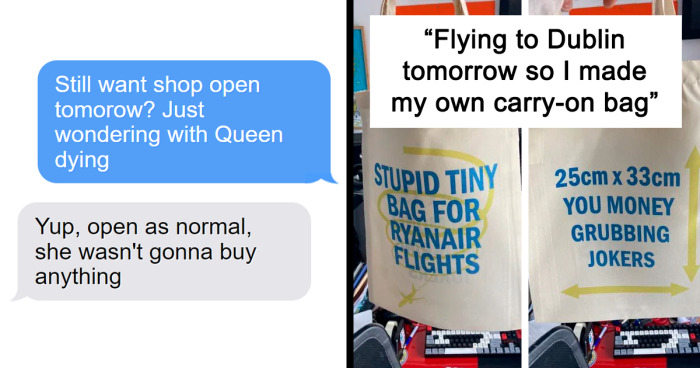
If the internet has taught us anything, it is that British humor does not need a marching band, a laugh track, or someone slipping on a banana peel. Sometimes all it takes is a hand-written sign saying “Sorry, the lift is having a wobble,” a queue forming before anyone knows what they are queuing for, or a person calmly making tea while the world appears to be folding in half like a damp camping chair.
The title “50 Funny Times Brits Was Caught Just Being Brits, As Shared In This Group” may sound like it was brewed in a kettle with chaotic grammar, but the idea is instantly understandable: there are certain moments that feel so proudly, painfully, delightfully British that they need no explanation. They are dry, polite, mildly sarcastic, weather-aware, tea-adjacent, and usually delivered with the emotional intensity of someone saying, “Bit windy, isn’t it?” during a small hurricane.
This article looks at the humor behind those moments: the cultural habits, tiny social rules, national in-jokes, and everyday oddities that make “Brits being Brits” such a popular topic online. From queuing etiquette to apology reflexes, from pub logic to biscuit diplomacy, these examples are not copied from any single post or gallery. Instead, they are original, web-ready observations inspired by real British cultural patterns, common travel experiences, and the kind of social media humor that turns everyday life into comedy gold.
Why “Brits Being Brits” Is So Funny Online
British comedy often works because it underplays the obvious. Where another culture might describe a disaster as a disaster, a Brit may call it “not ideal.” Where someone else might complain loudly, a Brit may raise one eyebrow, make a cup of tea, and silently judge the situation with the force of a thousand weathered ancestors.
That is why British humor travels so well on the internet. It is compact, visual, and strangely universal. Even if you have never stepped into a London Tube station, a village pub, a seaside chip shop, or a supermarket queue in Manchester, you can understand the comedy of a nation that treats politeness like a competitive sport and sarcasm like a second language.
50 Funny Times Brits Were Just Being Brits
1. Forming a Queue Before Knowing Why
A truly British scene begins when three people stand behind one another and everyone else assumes there must be a reason. Soon, there is a queue. Nobody asks questions. Asking questions would be dangerously continental.
2. Apologizing When Someone Else Bumps Into Them
The British “sorry” is not always an admission of guilt. Sometimes it means “You stepped on my foot,” “Please move,” “I am annoyed,” or “We are both trapped in this tiny aisle and society must survive.”
3. Treating Tea Like Emergency Medicine
Bad news? Tea. Good news? Tea. Mild confusion? Tea. Someone has just announced the roof is leaking? Put the kettle on and panic later.
4. Calling Terrible Weather “A Bit Fresh”
British weather vocabulary is an art form. Rain attacking sideways may be described as “a touch damp,” while freezing wind becomes “brisk.” The understatement is doing Olympic-level lifting.
5. Discussing the Weather Like Breaking News
Weather talk in Britain is not small talk. It is public service broadcasting. It fills awkward silences, starts friendships, and gives strangers something safe to agree on.
6. Making a Sign More Polite Than Necessary
Only in Britain can a broken door carry a sign that says, “Please use other door, many apologies for any inconvenience caused by this door’s current mood.”
7. Saying “Cheers” for Everything
Cheers can mean thank you, goodbye, yes, no problem, I acknowledge your existence, or I have successfully received this packet of crisps.
8. Taking Biscuits Very Seriously
A biscuit is not just a snack. It is a structural engineering project. Can it survive being dunked in tea? For how long? What is the crumb risk? These are adult questions.
9. Pretending the Pub Has No System While Somehow Having One
In many pubs, there may be no formal line at the bar, yet everyone knows who arrived first. The bartender knows. The customers know. The ceiling probably knows.
10. Calling Lunch “Dinner” and Dinner “Tea”
Depending on where you are in the UK, “tea” may be a drink, a meal, or a moral obligation. Visitors must simply nod and adapt.
11. Saying “You Alright?” Without Expecting a Full Answer
This phrase often means hello, not “Please open your emotional filing cabinet.” The correct answer is usually “Yeah, you?” even if your shoelace is on fire.
12. Using “Interesting” as a Warning Signal
When a Brit calls something “interesting,” pay attention. It may mean bold, unusual, terrible, confusing, or “I will never speak of this again.”
13. Making Sarcasm Sound Like Customer Service
British sarcasm can arrive so calmly that outsiders miss it completely. A flat “Lovely” may contain more emotional damage than a three-page complaint letter.
14. Keeping Calm in Completely Uncalm Situations
A train may be canceled, the sky may be leaking, and the card machine may be dead, but someone will still say, “Never mind,” as if this solves logistics.
15. Naming Food in the Most Comforting Way Possible
Bubble and squeak. Toad in the hole. Spotted dick. British food names sound like characters from a children’s book that has seen things.
16. Owning a Coat for Every Type of Rain
There is light rain, proper rain, annoying rain, cold rain, sideways rain, and “why did I bother drying my hair” rain. Naturally, each requires different outerwear.
17. Treating a Sunny Day Like a National Festival
The moment the sun appears, parks fill, shorts emerge, and everyone behaves as if summer has been granted by royal decree for exactly six hours.
18. Saying “I’ll Leave You To It” as a Social Escape Rope
This phrase is elegant, peaceful, and wildly useful. It lets a person exit any conversation without admitting they are fleeing.
19. Having Strong Opinions About Milk in Tea
Milk first or tea first? Some debates are ancient, passionate, and best avoided at family gatherings.
20. Giving Directions Using Pubs That May No Longer Exist
“Turn left where The Red Lion used to be” is a sentence that makes perfect sense to locals and absolutely no sense to modern navigation apps.
21. Making a Day Out of Going to the Garden Center
Plants, compost, greeting cards, a café, and maybe a decorative owl. The British garden center is not a shop; it is a lifestyle retreat with parking.
22. Calling Every Vacuum Cleaner a Hoover
Brand names becoming everyday verbs is common, but “hoovering” has a particularly British efficiency. It sounds productive and slightly tired.
23. Saying “Mustn’t Grumble” While Clearly Grumbling
This phrase allows a person to complain while technically claiming not to complain. It is linguistic tax planning.
24. Being Deeply Loyal to a Local Chippy
Fish and chips inspire fierce loyalty. Everyone knows the best shop, the correct vinegar level, and whether curry sauce belongs on the plate.
25. Using “Mate” for Friends, Strangers, and Mild Enemies
“Mate” can be warm, neutral, or a final warning before social temperature drops. Tone is everything.
26. Giving Pets Very Human Names
A Labrador named Nigel or a cat named Susan feels extremely British. Bonus points if the pet looks disappointed in the government.
27. Treating a Roast Dinner Like Weekly Architecture
Meat, potatoes, vegetables, gravy, Yorkshire pudding, and timing worthy of an airport control tower. A Sunday roast is not cooked; it is coordinated.
28. Saying “Pop Round” Like Distance Does Not Exist
“Pop round” can mean a two-minute walk or a 40-minute drive. The word “pop” is doing suspiciously heavy work.
29. Making Every Awkward Moment About the Kettle
When conversation fails, tea enters. The kettle is a social reset button with steam.
30. Using “Bit” Before Everything
A bit tired. A bit busy. A bit flooded. A bit on fire. The word softens reality until even chaos becomes manageable.
31. Having a Drawer Full of Plastic Bags
Somewhere in many British homes is a bag full of bags. Nobody knows when the collection began. Nobody dares end it.
32. Turning Train Delays Into Group Therapy
A delayed train can unite strangers through sighs, eye contact, and perfectly timed comments like, “Typical, isn’t it?”
33. Saying “Right” Before Leaving but Not Leaving
“Right” is the first stage of departure. There may be six more stages, including standing, keys, doorway chat, and final weather remark.
34. Treating the Seaside Like a Sacred Institution
Wind, gulls, pebbles, chips, and the brave purchase of ice cream in temperatures that suggest otherwise. British seaside joy is built different.
35. Calling People “Love” in Shops
In the right context, “love” is casual, friendly, and comforting. It can make buying bread feel like being adopted for 14 seconds.
36. Saying “That’s Not Bad” as High Praise
Do not be fooled. “Not bad” may mean excellent. British praise often arrives wearing a beige cardigan.
37. Putting Cones Around Anything Suspicious
A loose tile? Cone. Small puddle? Cone. Mysterious hole? Several cones. Cones are Britain’s orange guardians of public uncertainty.
38. Making a Big Deal Out of a “Nice Cuppa”
Not all cups of tea are equal. A nice cuppa is balanced, comforting, and capable of improving morale by at least 23 percent, scientifically or spiritually.
39. Treating the TV Remote as a Family Heirloom
The remote belongs to whoever has earned it through age, sofa position, or quiet dominance.
40. Using “Fancy” as a Verb
Do you fancy a walk? Fancy a biscuit? Fancy leaving before traffic gets silly? It is a charmingly efficient word.
41. Having Strong Feelings About Roundabouts
Roundabouts are practical, confusing, beloved, and feared. The mini-roundabout, especially, is a tiny painted circle of moral judgment.
42. Complimenting Someone by Insulting Them Gently
Among friends, affection may arrive disguised as mockery. If nobody teases you, you may need to worry.
43. Turning a Minor Errand Into a Full Report
A trip to the post office can produce a dramatic retelling involving parking, queue behavior, weather, and the shocking price of stamps.
44. Treating the Local Pub as a Community Noticeboard
The pub is often where news travels, jokes are tested, football is debated, and someone knows a man who can fix your fence.
45. Saying “It’s Fine” When It Clearly Is Not
“Fine” may mean fine, not fine, very not fine, or “I have chosen dignity over honesty.” Context matters.
46. Having a Favorite Mug
Every household has one mug that is emotionally superior. Use it without permission at your own risk.
47. Judging Restaurants by Their Chips
Fancy decor is nice, but are the chips good? British dining logic respects fundamentals.
48. Saying Goodbye Multiple Times
There is “bye,” then “see you,” then “take care,” then “cheers,” then one last wave through glass. Leaving is a ceremony.
49. Making Dry Humor Out of Bad Luck
British comedy often turns inconvenience into a punchline. A flat tire becomes “not the afternoon I ordered,” and somehow the day improves.
50. Remaining Proudly Weird About All of It
The best part of British humor is that it knows it is odd. It does not apologize for the tea, the queues, the sarcasm, or the weather commentary. Well, actually, it probably does apologize. Twice.
The Cultural Logic Behind the Jokes
These funny British moments are more than random quirks. They reveal a culture that values social order, understatement, shared discomfort, and clever language. The British love of queuing, for example, is not merely about standing in line. It reflects fairness, patience, and the quiet belief that civilization collapses the moment someone pretends not to see the back of the queue.
The apology habit works similarly. Saying “sorry” keeps public life smooth. It reduces conflict before it starts, even when nobody has done anything wrong. To outsiders, that can seem excessive. To many Brits, it is simply a low-cost way to keep everyone from becoming openly dramatic in the frozen-food aisle.
Then there is tea. Tea is funny because it appears everywhere: family visits, office breaks, awkward conversations, bad news, good news, and moments when no one knows what to do next. It is a drink, but it is also a pause button. The ritual says, “We may not be able to fix everything, but we can at least boil water in a controlled manner.”
Why Americans Love British Humor
For American readers, British humor can feel both familiar and wonderfully strange. The two cultures share language, media, history, and countless pop-culture references, yet the comedic rhythm is often different. American humor may be more direct, louder, and more emotionally obvious. British humor frequently hides the joke under politeness, understatement, or a perfectly bland facial expression.
That contrast makes “Brits being Brits” content especially clickable. A photo of a polite warning sign, a sarcastic shop notice, or a wildly calm response to inconvenience feels like a tiny cultural postcard. It lets readers laugh at difference without needing a textbook. The joke is visual, social, and instantly shareable.
It also helps that British humor often punches inward. Self-deprecation is a national comedy engine. Many Brits are perfectly happy to mock their own weather, transport systems, food debates, awkwardness, and emotional restraint. That makes the humor feel less mean and more communal, like everyone is in on the joke while waiting for a delayed bus.
Online Groups Turn Everyday British Life Into Comedy
Social media groups devoted to British memes and everyday observations thrive because they collect tiny moments that might otherwise disappear. A funny pub sign, a dramatic seagull, a badly translated menu, a handwritten note in a shop window, or a painfully polite complaint can become a shared national laugh.
These posts work because they capture real behavior in miniature. They do not need celebrities or expensive production. The star of the show may be a laminated sign, a biscuit tin, a train announcement, or a neighbor who wrote “Please stop parking like a confused badger” and still signed off with “Kind regards.”
Experiences Related to “50 Funny Times Brits Was Caught Just Being Brits”
Anyone who has spent time reading British humor online begins to notice a pattern: the funniest moments are rarely trying to be funny. They happen when ordinary people respond to ordinary inconvenience with extraordinary restraint. That is the real charm. A British person may be soaked by rain, delayed by public transport, and betrayed by a paper shopping bag, yet the public response may be no more dramatic than “Well, this is going well.”
One relatable experience is the first encounter with British indirectness. Imagine asking someone whether a restaurant was good and hearing, “It was alright.” In many places, that sounds average. In British code, it might mean the meal was excellent, acceptable, disappointing, or unforgivable. You must study the tone, eyebrow movement, and whether they mention the chips. The real review is hidden between the syllables.
Another classic experience is the supermarket dance. Two people reach the same shelf. Both say sorry. One steps left. The other steps left. Both say sorry again. They step right. Now the cart is involved. A third apology appears. Nobody is angry, yet everyone is trapped in a tiny ballet of manners. It is awkward, harmless, and deeply British.
Public transport creates its own comedy theater. A train delay announcement can turn a platform into a temporary emotional support group. Nobody wants to speak too much, but everyone wants to acknowledge the shared injustice. A sigh, a glance, and one dry comment can unite strangers more effectively than a team-building workshop.
Then there is the emotional importance of the kettle. In many British settings, tea appears whenever reality becomes too sharp around the edges. Guests arrive: tea. Someone is upset: tea. A practical decision must be made: tea first, decision second. Even people who do not drink tea understand its symbolic power. It creates a pause, a ritual, and a small sense that civilization is still functioning.
Perhaps the most enjoyable experience is discovering that British humor does not always announce itself. It may look like a complaint, an apology, a warning sign, or a casual comment about the weather. The joke often lives in what is not said. That subtlety is why screenshots of “Brits being Brits” remain so popular. They reward attention. They invite readers to decode tone, context, and social awkwardness.
Ultimately, these funny British moments are not just about stereotypes. They are about small social performances that make daily life more bearable. Queues create order. Apologies soften friction. Tea creates comfort. Sarcasm releases pressure. Weather talk gives strangers a safe place to begin. And when all else fails, someone will describe the whole disaster as “a bit much” and somehow make everyone laugh.
Conclusion
“50 Funny Times Brits Was Caught Just Being Brits, As Shared In This Group” is more than a gallery-style headline. It captures why British humor remains endlessly entertaining online: it is polite but savage, calm but chaotic, traditional but absurd, and always ready with a kettle in times of crisis. From queue discipline to dry sarcasm, from biscuit debates to emotional support tea, these little moments reveal a culture that can turn inconvenience into comedy without raising its voice.
The next time you see a British sign apologizing for something that clearly was not its fault, or a group of people forming an orderly line in the middle of nowhere, remember: this is not random behavior. This is cultural choreography. And honestly? It is not bad. Not bad at all.
Note: This is an original, publication-ready article written in standard American English, based on real British cultural habits and general research, with no copied social media captions or unnecessary source-code elements.