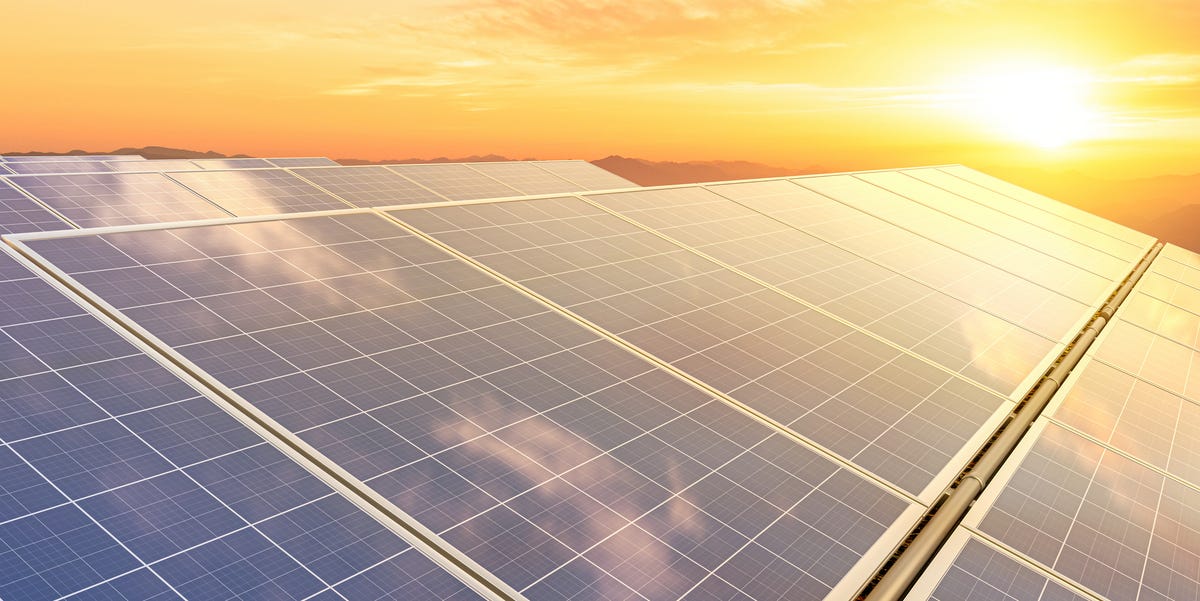
China’s old Great Wall was built to keep invaders out. Its new “Great Wall” is being built to let sunlight in. Across the Kubuqi Desert in Inner Mongolia, rows of solar panels are spreading over the sand like a futuristic blue-black carpet, turning one of China’s harshest landscapes into one of the world’s most ambitious renewable energy projects.
Often called the “Solar Great Wall,” this massive desert energy corridor is designed to do more than generate electricity. It aims to power major urban demand, support long-distance transmission, create local jobs, reduce desertification, and show how land once dismissed as empty can become a strategic energy asset. In plain English: China looked at a desert and said, “What if this became a power plant?”
By 2030, the project is expected to become a vast solar installation capable of producing enough electricity to cover the annual power needs of Beijing, one of the largest cities on Earth. That is not a small rooftop experiment. That is a national-scale energy statement.
What Is China’s “Great Wall of Energy”?
The “Great Wall of Energy” refers to a large solar development in the Kubuqi Desert, located in northern China near the Yellow River. The project is part of a broader push to build huge renewable energy bases in China’s desert regions, where land is plentiful, sunshine is strong, and large-scale construction can happen faster than in crowded cities.
Reports describe the Kubuqi solar corridor as stretching hundreds of kilometers across the desert, with a long-term plan to reach massive generating capacity by the end of the decade. The project is not just one neat rectangle of panels. It is better understood as a connected network of solar farms, transmission infrastructure, ecological restoration zones, and local development projects.
The nickname works because the project has the visual drama of a wall. From above, the panels form long strips across the desert landscape. Instead of stone and watchtowers, this wall is made of photovoltaic modules, inverters, substations, roads, and power lines. It is less medieval fortress, more energy superhighway.
Why the Kubuqi Desert Is a Solar Gold Mine
At first glance, a desert may seem like a difficult place to build anything. Sand moves. Temperatures swing. Water is scarce. Maintenance crews probably do not get a lot of shade unless they stand under the product they are installing. But for solar power, the Kubuqi Desert has several major advantages.
Strong sunshine
Solar farms need consistent sunlight, and desert regions often provide exactly that. Northern China’s dry climate and open skies make the Kubuqi area suitable for large-scale photovoltaic generation. More sun means more electricity, and more electricity means a better chance of making the economics work.
Open land
Big solar needs space. Urban rooftops are useful, but they cannot match the scale of a desert mega-base. The Kubuqi Desert offers large stretches of land where panels can be placed in long, organized rows without competing heavily with dense housing or high-value farmland.
Proximity to industrial demand
The project sits near important industrial regions and can connect to power demand in northern and eastern China. That matters because solar energy is only useful if it can reach the places that need electricity. A beautiful solar farm with weak grid connections is like a gourmet restaurant with no doors.
Can It Really Power an Entire City?
The headline claim is bold: this solar wall could generate enough energy to power Beijing. Based on public project estimates, the completed system could produce around 180 billion kilowatt-hours of electricity per year by 2030. Beijing’s annual electricity use has been reported at roughly 135.8 billion kilowatt-hours, which means the project’s potential annual output would exceed the city’s yearly demand.
Of course, electricity systems are more complicated than a single giant extension cord from the desert to the capital. Solar output rises and falls with weather, daylight, seasons, and grid conditions. The project would not necessarily send every electron directly to Beijing. Some power may serve local communities, nearby industry, and the broader Beijing-Tianjin-Hebei region through transmission networks.
Still, the comparison is useful because it shows scale. When one solar corridor can be discussed in the same breath as a megacity’s annual electricity needs, the clean energy conversation has moved far beyond backyard panels and symbolic green gestures.
China’s Solar Boom Did Not Happen by Accident
The Kubuqi project is impressive, but it is not a random miracle in the sand. It is part of China’s broader renewable energy strategy. Over the past decade, China has become the world’s largest builder of solar farms and the dominant manufacturer of solar panels. The country controls much of the global solar supply chain, from polysilicon and wafers to cells and finished modules.
That manufacturing advantage matters. When a country can produce solar equipment at enormous scale, it can build faster and cheaper. China has also used state planning, large utility companies, infrastructure investment, and long-distance transmission lines to turn remote renewable resources into national energy assets.
In 2024, China added record amounts of solar and wind power, reaching clean-energy targets years earlier than expected. This does not mean China has solved its climate problem. Coal still plays a major role in its electricity system, and demand continues to grow. But it does mean China is building renewable capacity at a speed that no other country currently matches.
The Solar Wall Is Also an Anti-Desertification Project
One of the most interesting parts of the Kubuqi solar wall is that it is not only about electricity. It is also about land restoration. The Kubuqi Desert has long been associated with desertification, dust, and difficult living conditions. Solar panels may help change some of that.
Panels create shade, which can reduce surface temperatures and slow evaporation. Their structures can also reduce wind speed near the ground, helping keep sand from moving as aggressively. In some areas, planners hope to grow grasses, forage plants, or commercial crops beneath and around the panels. The idea is to combine power generation with ecological repair.
This “solar-plus-restoration” approach is not magic. A solar panel is not a forest, and planting vegetation in dry regions still requires careful water management. But the concept is powerful: renewable energy infrastructure can be designed to do more than produce electricity. It can reshape the land around it.
The Junma Solar Power Station: A Horse Made of Panels
One famous part of the region’s solar development is the Junma Solar Power Station, known for forming the image of a galloping horse when viewed from above. “Junma” means “fine horse” in Mandarin, and the design honors local Mongolian cultural symbolism.
Yes, China built a solar farm that is also a giant horse. Renewable energy apparently has an artistic side.
Beyond the visual surprise, the Junma project shows how China uses large renewable installations as both infrastructure and public messaging. It says: solar power is not hidden in a lab or tucked behind a factory. It is big, visible, and part of the national story.
Why Desert Solar Farms Need Transmission Lines
The biggest challenge for desert solar projects is not simply installing panels. It is moving electricity from remote generation zones to population centers. China’s richest solar and wind resources are often far from its biggest coastal cities and industrial hubs. That creates a classic energy puzzle: the power is in one place, while the demand is somewhere else.
China has invested heavily in ultra-high-voltage transmission lines to move electricity across long distances. These lines help connect desert energy bases to major demand centers. Without that grid backbone, projects like the Kubuqi Solar Great Wall would be much less useful.
Transmission is the unglamorous hero of clean energy. Solar panels get the photos. Batteries get the hype. Transmission lines get people arguing at public hearings. But without modern grids, renewable energy can be wasted through curtailment, which happens when available power cannot be used or delivered.
The Storage Question: What Happens When the Sun Goes Down?
Solar power has a daily rhythm. It rises in the morning, peaks during sunny hours, and drops in the evening. Cities, unfortunately, do not politely stop using electricity at sunset. That means large solar systems need support from storage, flexible demand, backup generation, and smart grid management.
China is expanding battery storage and other balancing technologies, but integrating vast amounts of solar remains a complex task. The more solar a grid adds, the more important it becomes to manage timing. Midday electricity may become abundant, while evening supply may require stored power or other resources.
This is why the Solar Great Wall should not be viewed as a standalone solution. It is one piece of a larger energy system that includes wind power, hydropower, coal plants, nuclear energy, batteries, transmission, demand response, and market reforms.
China’s Clean Energy Paradox
China is both the world’s largest clean-energy builder and the world’s largest carbon emitter. That sounds contradictory, but it reflects the scale of China’s economy. The country builds more solar panels than anyone, installs more renewable capacity than anyone, and still burns a vast amount of coal because its electricity demand is enormous.
The Kubuqi solar wall highlights this paradox. It is a remarkable clean-energy project, but it does not erase China’s dependence on fossil fuels overnight. The real test is whether renewable growth can consistently meet new electricity demand and gradually push fossil generation downward.
There are signs this may be starting to happen. Clean power growth has increasingly covered a large share of China’s new electricity demand. However, long-term success depends on grid flexibility, storage, policy design, industrial demand, and whether coal plants are used less often over time.
Economic Benefits: Jobs, Industry, and Local Development
Large renewable projects can create jobs in construction, operations, maintenance, equipment manufacturing, logistics, and local services. In the Kubuqi region, officials have linked the solar wall to employment opportunities and rural development. Workers are needed to install panels, maintain equipment, build roads, operate substations, clean modules, manage vegetation, and monitor performance.
There can also be indirect benefits. Solar projects may bring better roads, stronger grid infrastructure, tourism interest, and new business activity. A desert that once symbolized environmental hardship can become a place associated with technology, investment, and energy security.
But the benefits are not automatic. Local communities need fair participation, long-term jobs, training, and environmental safeguards. A mega-project should not simply use land and leave residents watching from the sidelines. The best version of the Solar Great Wall is one where clean power, ecological improvement, and local prosperity grow together.
What the United States Can Learn From China’s Solar Wall
The United States has excellent solar resources, especially in the Southwest, and strong clean-energy innovation. It also has major advantages in software, finance, grid technology, research, and energy markets. But the U.S. faces challenges in permitting, transmission construction, supply-chain dependence, and political consistency.
China’s desert solar strategy offers several lessons. First, scale matters. Building clean energy fast requires not only technology, but also planning, land access, grid investment, and manufacturing capacity. Second, transmission should be treated as core energy infrastructure, not an afterthought. Third, renewable projects can be designed with land restoration and local economic goals in mind.
That does not mean the U.S. should copy China’s model exactly. The two countries have different political systems, land-use rules, labor standards, environmental review processes, and community expectations. But the basic principle is universal: solar power becomes more powerful when generation, storage, transmission, manufacturing, and land strategy are planned together.
Potential Problems Behind the Big Numbers
Mega-projects make great headlines, but they also come with risks. Solar panel manufacturing has faced overcapacity and price pressure. Some companies have struggled with falling margins. Large projects can also run into grid bottlenecks, maintenance challenges, dust accumulation, financing issues, and changing electricity market rules.
Desert solar farms must deal with sand, wind, heat, cleaning requirements, and equipment wear. Panels can lose efficiency when covered in dust, so maintenance is not optional. Water use for cleaning must be managed carefully in dry regions. The project’s environmental benefits also depend on thoughtful design, not just good intentions.
There is also the question of timing. A solar farm’s maximum capacity is not the same as its actual annual output, and annual output is not the same as reliable power every hour of the year. Readers should be careful when comparing gigawatts, kilowatt-hours, city demand, and household equivalents. Energy numbers are useful, but they can get slippery if tossed around like confetti at a climate conference.
Why This Project Matters Globally
The Kubuqi Solar Great Wall matters because it shows how renewable energy is entering the era of giant infrastructure. Solar power used to be treated as a niche technology. Now it is being deployed at scales that can influence national grids, industrial policy, and global energy markets.
For developing countries, China’s solar expansion has helped lower global panel costs, making clean energy more affordable. For competitors, it raises concerns about supply-chain dependence and industrial dominance. For climate policy, it proves that renewable energy can scale faster than many people expected.
The project also changes how we think about deserts. Deserts are not empty. They are ecosystems, cultural landscapes, and climate-sensitive regions. But when planned carefully, some desert areas can host renewable infrastructure while also supporting restoration efforts. The future of energy may not be hidden underground in coal seams or oil reservoirs. It may be spread across sunlit land, quietly converting photons into power.
Experience-Based Reflections: What This Solar Wall Feels Like in Real Life
To understand a project like China’s Solar Great Wall, imagine standing at the edge of a desert where the horizon is no longer just sand. Instead, thousands upon thousands of panels stretch into the distance. The scene feels part power plant, part science-fiction movie, and part very organized parking lot for sunlight. It is not hard to see why projects like this capture public attention. They make clean energy visible.
For anyone who has followed renewable energy for years, the most striking part is how quickly solar has moved from “alternative energy” to mainstream infrastructure. A decade or two ago, solar panels were often discussed as something for environmentally enthusiastic homeowners, research labs, or small demonstration projects. Today, an entire desert corridor can be planned around them. That shift changes the emotional tone of the energy transition. It no longer feels like a polite suggestion. It feels like construction equipment, transmission towers, supply chains, and national strategy.
There is also a practical lesson in scale. Small solar projects are easy to understand: a roof, a few panels, a lower electricity bill. A solar wall that can be compared with Beijing’s annual power needs is harder to picture. The numbers become so large that they almost stop meaning anything. That is why the “power an entire city” comparison works. It turns billions of kilowatt-hours into something human. Everyone understands a city. Everyone understands lights, elevators, subway systems, apartments, restaurants, schools, hospitals, and phone chargers. The project becomes less about abstract capacity and more about daily life.
At the same time, large renewable projects teach humility. It is tempting to look at a massive solar farm and declare victory over fossil fuels. But real energy systems are stubborn. They need reliability at night, during storms, in winter, during heat waves, and when demand spikes. The panels are the most photogenic part of the solution, but they are not the whole solution. Storage, transmission, maintenance, forecasting, and market rules matter just as much. In energy, the boring details often decide whether the beautiful vision actually works.
The ecological side of the Kubuqi project is especially fascinating. The idea that solar panels can help slow wind, reduce evaporation, and support vegetation under certain conditions makes the project feel more layered than a typical power plant. It suggests that infrastructure does not have to be purely extractive. It can be designed to cooperate with the land. That does not mean every claim should be accepted without evidence. Desert restoration is difficult, and poor planning can create new problems. But the ambition is worth paying attention to.
For readers in the United States, the project may spark mixed feelings: admiration, competition, skepticism, and maybe a little “Why are we still arguing about transmission permits?” China’s model is not directly transferable, but its speed forces a serious question. If clean energy is now cheap, proven, and scalable, what prevents other countries from building faster? Sometimes the answer is technology. More often, it is planning, policy, permitting, grid capacity, and political will.
The Solar Great Wall also gives content creators, educators, and energy communicators a powerful story. It has a catchy name, dramatic visuals, huge numbers, climate relevance, economic stakes, and a desert-to-power-plant transformation arc. In other words, it is SEO-friendly without even trying. But beneath the headline is a deeper message: the energy transition is no longer just about replacing fuels. It is about redesigning landscapes, industries, and expectations.
When people look back on this period, projects like the Kubuqi solar wall may be remembered as early symbols of the mega-renewable age. Not perfect. Not simple. Not free of trade-offs. But undeniably bold. And in a world that needs cleaner power at enormous scale, boldness is not a decorative extra. It is part of the job description.
Conclusion: A Wall Built for the Energy Age
China’s Great Wall of Energy is more than a catchy headline. It is a symbol of how quickly renewable power is changing from a climate aspiration into heavy infrastructure. The Kubuqi Desert solar corridor shows what happens when manufacturing scale, land availability, state planning, transmission investment, and environmental goals are combined into one enormous project.
If completed as planned, the Solar Great Wall could generate enough electricity to cover Beijing-sized demand, while also supporting desertification control and local economic development. It will not solve every energy problem by itself. It will still need storage, grid flexibility, careful maintenance, and smart policy. But it proves that solar power has entered a new chapterone measured not in rooftops, but in deserts, cities, and national strategies.
The original Great Wall became a symbol of protection. China’s new wall may become a symbol of transition: from fossil-heavy growth toward a future where sunlight is captured at city-sized scale. That future is not arriving quietly. It is being built panel by panel, across the sand.