Some technology records arrive with fireworks, celebrity tweets, and the kind of marketing budget that could buy a small moon. Others float quietly into history beneath a high-altitude balloon, powered by a transmitter using just 25 milliwatts. That is exactly why the story of The Things Network setting a 702 km distance record for LoRaWAN still feels so delightfully nerdy, practical, and impressive.
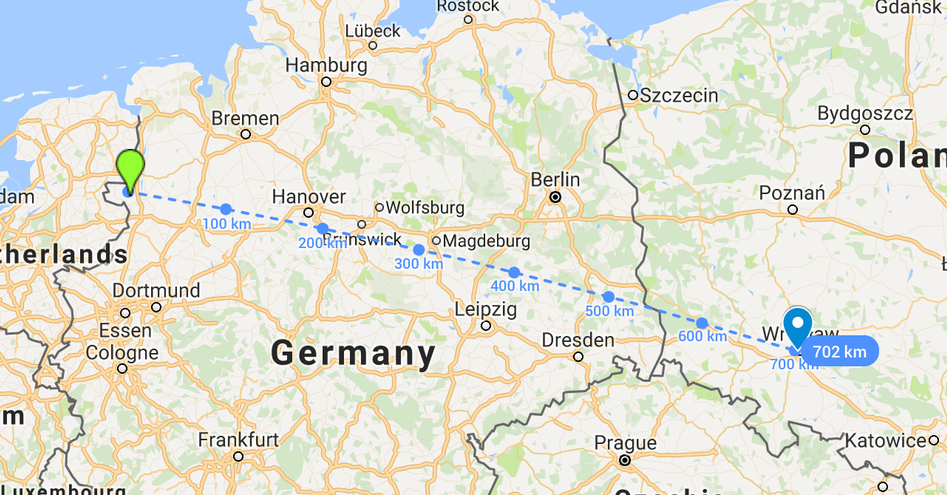
In 2017, a LoRaWAN packet was received at a distance of 702.676 kilometers, or about 436 miles. The signal traveled from a high-altitude balloon flying near the German-Dutch border to a gateway in Wrocław, Poland. Even better, the transmitter used only 14 dBm of power. In plain English: it whispered across a continent and somehow still got heard.
This was not a normal “my Wi-Fi reaches the porch” kind of achievement. It was a demonstration of what long-range, low-power IoT connectivity can do when radio conditions, altitude, line-of-sight, community infrastructure, and clever engineering all decide to cooperate for once.
What Happened in the 702 Km LoRaWAN Record?
The record involved a LoRaWAN-enabled payload carried by a high-altitude balloon. As the balloon climbed to nearly the edge of space, it reached an altitude of roughly 38.772 km. At that height, the device had something every wireless engineer dreams about: a huge line-of-sight advantage.
One of the packets transmitted by the balloon was received by a gateway connected to The Things Network in Wrocław, Poland. The reported distance between the transmitter and receiver was 702.676 km. That number is the headline, of course, but the real magic is in the details: the device was not blasting out power like a radio tower. It was transmitting with only 25 mW.
For context, many phones and cellular devices can transmit with far more power. LoRaWAN’s trick is not brute force. It is more like a patient librarian in a thunderstorm: quiet, careful, and surprisingly good at picking out meaningful signals from noise.
What Is LoRaWAN?
LoRaWAN stands for Long Range Wide Area Network. It is a low-power wide-area networking protocol built on top of LoRa radio modulation. LoRa is the physical radio technology, while LoRaWAN defines how devices communicate, join a network, format messages, and exchange data with gateways and network servers.
The technology is designed for Internet of Things applications that need to send small amounts of data over long distances while consuming very little power. Think soil moisture sensors, water meters, parking sensors, environmental monitors, asset trackers, smart city devices, and industrial equipment that only needs to say, “Still alive, temperature is 72 degrees, please do not send a technician yet.”
LoRa vs. LoRaWAN
LoRa and LoRaWAN are often used together, but they are not the same thing. LoRa is the radio modulation method. It helps signals travel long distances while remaining resistant to noise. LoRaWAN is the networking protocol and architecture that allows devices, gateways, servers, and applications to work together.
A simple way to understand it: LoRa is the voice, LoRaWAN is the conversation plan. Without LoRaWAN, you can still send radio messages, but you do not get the full network structure needed for scalable IoT deployments.
Why the 702 Km Record Matters
The 702 km record matters because it showed the enormous potential of low-power wireless communication under ideal radio conditions. It did not mean every LoRaWAN sensor in a basement can suddenly talk to another country. Sadly, your smart water meter still cannot shout through six concrete walls, a parking garage, and your neighbor’s suspiciously reflective garden sculpture.
However, the record did prove that LoRaWAN has a remarkable link budget. In wireless communication, link budget refers to the balance between transmitted power, antenna gain, path loss, receiver sensitivity, and environmental conditions. LoRa modulation is known for strong receiver sensitivity, meaning a gateway can decode very weak signals that would be useless to many other technologies.
This is why LoRaWAN has become attractive for applications where battery life and coverage matter more than speed. It is not built for streaming video, video calls, or downloading your favorite twelve-hour fireplace ambience video. It is built for tiny, efficient messages sent across farms, cities, buildings, ports, utilities, and industrial sites.
The Role of The Things Network
The Things Network, often shortened to TTN, is a global community-driven LoRaWAN network. It allows developers, makers, companies, researchers, and cities to connect gateways and build IoT applications using shared infrastructure.
The 702 km record was especially exciting because it highlighted the power of an open, distributed network. A single balloon transmission could be received by community gateways across wide areas. In other words, this was not only a radio achievement; it was also a community achievement.
That is one of the most interesting ideas behind TTN. Instead of every project needing to build a private network from scratch, communities can deploy gateways that help create shared coverage. A gateway mounted on a rooftop, tower, university building, farm office, or industrial facility can receive data from many nearby LoRaWAN devices and forward it through the internet to a network server.
How a LoRaWAN Gateway Works
A LoRaWAN gateway acts as a bridge between low-power wireless devices and internet-connected applications. Sensors transmit packets using LoRa radio. Gateways receive those packets and forward them over IP networks such as Ethernet, cellular, fiber, or Wi-Fi backhaul.
The architecture is often described as a “star-of-stars” network. End devices do not usually talk directly to one another. Instead, they send messages to gateways, and the network server handles authentication, deduplication, routing, and delivery to the correct application.
This structure is one reason LoRaWAN scales well for many IoT scenarios. A single gateway can support many devices, and a single device may be heard by multiple gateways. If three gateways hear the same message, the network server can sort out the duplicate packets. The device does not need to know or care which gateway did the job. That is refreshingly elegant, like ordering coffee and not caring which espresso machine screamed first.
Why Altitude Made the Record Possible
The 702 km distance did not happen in a typical ground-level environment. The transmitter was carried by a high-altitude balloon, giving it a wide radio horizon. At nearly 39 km above Earth, the balloon had clear line-of-sight to regions that would normally be blocked by terrain, buildings, trees, and Earth’s curvature.
This point is important. The record was real, but it should not be interpreted as a promise that every LoRaWAN deployment can reach 702 km. Most real-world LoRaWAN installations operate at much shorter ranges. In cities, signals must deal with buildings, interference, multipath reflections, and indoor penetration challenges. In rural environments, ranges can be much better, especially with elevated antennas and clean radio conditions.
The balloon record is best understood as a maximum-performance showcase. It revealed what can happen when LoRaWAN gets a clean path, low noise, and a transmitter high enough to make geography less annoying.
LoRaWAN Is Not About Speedand That Is the Point
LoRaWAN is not designed to compete with Wi-Fi, 5G, or fiber broadband. It is not trying to win a speed test. If LoRaWAN entered a speed test, it would politely take last place, then run for years on a battery while everyone else looked for a charger.
The value of LoRaWAN is in its combination of long range, low power consumption, low data rates, and relatively low deployment cost. That makes it ideal for devices that send small packets occasionally. A soil sensor may only need to report moisture levels every 15 minutes. A water meter might send usage data a few times a day. A waste bin sensor might only report when it is nearly full.
For those jobs, high bandwidth is unnecessary. What matters is reliability, coverage, battery life, and cost. LoRaWAN fits neatly into that category.
Real-World Uses of LoRaWAN
The 702 km record grabbed attention, but the everyday applications of LoRaWAN are where the technology earns its keep. Across industries, LoRaWAN is used to connect devices that are difficult, expensive, or inconvenient to wire.
Smart Agriculture
Farmers can use LoRaWAN sensors to monitor soil moisture, temperature, humidity, rainfall, livestock location, irrigation systems, and equipment status. Because farms often cover wide areas, the long-range nature of LoRaWAN is especially useful. A few well-placed gateways can provide coverage across fields where Wi-Fi would have surrendered immediately and cellular might be expensive or unreliable.
Smart Cities
Cities can deploy LoRaWAN for parking sensors, streetlight monitoring, air-quality stations, water level sensors, public trash bin monitoring, and infrastructure alerts. The low-power design helps reduce maintenance costs because batteries can last for years depending on message frequency, device class, environment, and configuration.
Utilities and Metering
Water, gas, and energy utilities are strong candidates for LoRaWAN. Many meters are installed in basements, pits, cabinets, or remote areas. LoRaWAN’s range and penetration capabilities make it useful for collecting small, periodic readings without requiring manual inspection.
Industrial Monitoring
Factories, warehouses, refineries, and logistics hubs can use LoRaWAN to monitor equipment temperature, vibration, tank levels, door status, leak detection, and asset movement. In these settings, the ability to deploy battery-powered sensors without pulling new cables can be a major advantage.
Technical Lessons From the Record
The 702 km LoRaWAN distance record teaches several important engineering lessons. First, antenna placement matters. A good radio with a terrible antenna location is like a talented singer locked in a closet. Height, orientation, gain, cable loss, and surrounding objects all influence performance.
Second, line-of-sight can dramatically improve range. The balloon’s altitude reduced obstructions and expanded the radio horizon. For ground deployments, placing gateways on rooftops, towers, hills, or tall structures can greatly improve coverage.
Third, power is not everything. The transmitter used only 25 mW, yet the packet traveled more than 700 km. Receiver sensitivity, spreading factor, bandwidth, coding rate, antenna performance, and noise floor all play major roles.
Fourth, network density helps. When more gateways are available, devices have more chances to be heard. This is one reason community networks and public LoRaWAN infrastructure are valuable. Coverage is not only about one heroic gateway; it is about many gateways quietly doing their jobs.
Limitations to Keep in Mind
LoRaWAN is powerful, but it is not magic. The 702 km record happened under exceptional conditions. Typical ranges vary widely. Urban deployments may cover a few kilometers or less depending on building density and gateway placement. Rural deployments can achieve much longer distances, especially with elevated antennas and clear paths.
Another limitation is data rate. LoRaWAN is excellent for small payloads, but it is not meant for large files or continuous data streams. Developers must design applications carefully, sending only the data they need and avoiding unnecessary chatter.
Regulatory limits also matter. LoRaWAN operates in unlicensed ISM bands, and frequency plans vary by region. Devices must follow local rules for power, duty cycle, channel use, and certification. Good IoT design is not just about making packets fly far; it is also about behaving politely in shared spectrum.
How This Record Influenced IoT Thinking
The Things Network’s 702 km LoRaWAN record became a memorable proof point for developers and IoT enthusiasts. It showed that low-power networking could be surprisingly capable. It encouraged experimentation, gateway deployment, and broader curiosity around LPWAN technologies.
For companies, the lesson was practical: not every connected device needs cellular service, Wi-Fi, or a power outlet. Sometimes the best answer is a small sensor, a long-life battery, a nearby gateway, and a protocol designed specifically for modest messages over wide areas.
For hobbyists, the record was pure inspiration. It turned LoRaWAN from a spec sheet into an adventure. Suddenly, a tiny module on a workbench was not just another unfinished weekend project. It was a possible ticket to building trackers, environmental monitors, neighborhood networks, and experiments that could reach much farther than expected.
Experience Notes: What Working With LoRaWAN Teaches You
Anyone who has spent time building LoRaWAN projects quickly learns that the technology rewards patience, testing, and humility. On paper, everything looks beautifully simple: connect a sensor, register a device, point it at a gateway, and watch data appear in the cloud. In real life, the first packet often behaves like a shy raccoon. It exists, probably, but it refuses to appear when you are watching.
The first major experience is learning how much placement matters. Move a gateway from a desk to a window and the signal improves. Move it from a window to a rooftop and suddenly the map looks friendlier. Raise the antenna a few meters, reduce cable loss, or clear nearby metal objects, and performance can change dramatically. LoRaWAN teaches that radio is not software wearing an antenna. It is physics, and physics has a very strict personality.
The second experience is understanding payload discipline. Developers coming from web applications sometimes want to send everything: full JSON blobs, long status messages, extra debug fields, maybe even a tiny emotional support string. LoRaWAN pushes back. It encourages efficient encoding, compact payloads, sensible reporting intervals, and respect for airtime. That discipline is healthy. A well-designed LoRaWAN device sends what matters, when it matters, and then goes back to sleep like a tiny professional.
The third lesson is battery reality. A sensor can last for years, but only if the hardware, firmware, transmission interval, spreading factor, sleep current, and environment are properly managed. A device that wakes too often or listens too long can drain its battery far sooner than expected. Battery life is not a feature you sprinkle on at the end. It must be designed from the beginning.
The fourth lesson is that community infrastructure changes the game. When gateways are shared through networks like The Things Network, experimentation becomes easier. Students, makers, city planners, and small businesses can test ideas without building a complete network first. That openness is one reason LoRaWAN became so attractive to the maker and civic-tech communities.
The fifth experience is learning to interpret signal metadata. RSSI, SNR, data rate, spreading factor, frame counters, and gateway IDs become part of the daily vocabulary. At first, these numbers look like a secret radio menu. Over time, they become clues. They tell you whether a device is struggling, whether a gateway is well placed, whether adaptive data rate is helping, and whether your antenna installation deserves applause or a quiet redesign.
The 702 km record is exciting because it represents the extreme edge of what can happen. But the more useful experience is discovering that even ordinary LoRaWAN deployments can solve very real problems. A farm can know when irrigation is needed. A building can monitor leaks. A city can track infrastructure conditions. A small team can build a useful network with modest hardware and careful planning. That is the true charm of LoRaWAN: it makes long-range IoT feel accessible, practical, and just a little bit magical.
Conclusion
The Things Network setting a 702 km distance record for LoRaWAN remains one of the most memorable demonstrations of low-power IoT communication. A tiny 25 mW transmitter, lifted by a high-altitude balloon, sent a packet across an astonishing distance to a community gateway in Poland. The result was part engineering achievement, part radio science lesson, and part glorious reminder that small signals can do big things.
The record does not mean every LoRaWAN device will reach hundreds of kilometers. Real-world deployments must deal with terrain, buildings, interference, regulations, antenna choices, and network design. Still, the achievement shows why LoRaWAN continues to matter: it offers a practical way to connect low-power devices over long distances for agriculture, utilities, smart cities, logistics, buildings, and industrial monitoring.
In a world obsessed with faster networks and bigger bandwidth, LoRaWAN proves that sometimes the smartest message is not the biggest one. Sometimes it is a tiny packet, sent efficiently, received reliably, and useful enough to change how we monitor the physical world.
Note: This article is based on real public information from official LoRaWAN, The Things Network, industry documentation, and technical reporting. Source links are intentionally not inserted in the article body to keep the HTML clean for web publishing.