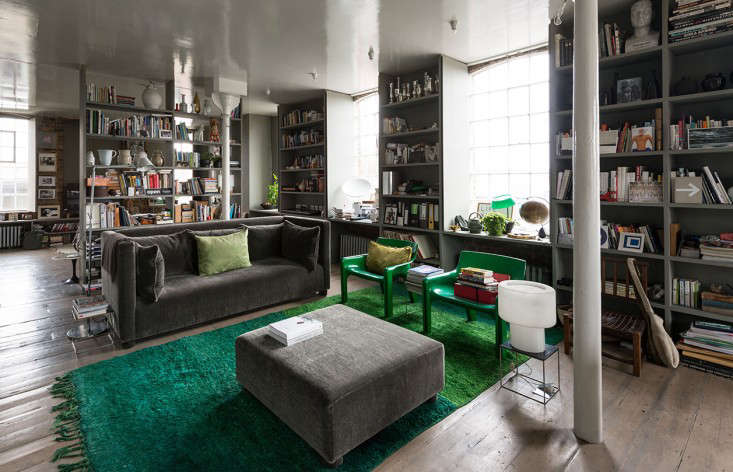
When Ilse Crawford’s London flat hit the market, it was not just another stylish property listing with big windows and a price tag that makes your coffee tremble. It was a rare chance to peek inside the private world of one of the most influential interior designers of our time. For design lovers, the listing felt less like real estate news and more like finding the answer key to a very beautiful exam called “How to Live Better.”
Crawford, founder of Studioilse, is known for interiors that feel warm, human, practical, and quietly luxurious. Her London flat, located in Borough near London’s South Bank, captured all of that in one compact, clever, and deeply personal space. Designed in collaboration with Belgian architect Vincent Van Duysen and 6a Architects, the apartment became a living case study in how open-plan living can feel intimate instead of echoey, elegant instead of staged, and useful instead of merely photogenic.
In other words, this was not a home that shouted, “Look at me!” It whispered, “Come in, sit down, read something, cook something, maybe rearrange your life while you’re here.” That is the magic of Ilse Crawford interior design: it turns everyday habits into rituals without making the kettle feel underdressed.
A London Flat With a Serious Design Pedigree
The apartment sits on the third floor of a converted Victorian warehouse on Great Guildford Street in London SE1. Its industrial bones are part of the appeal: large original windows, generous proportions, and a flexible open-plan layout that gives the flat an airy, adaptable character. Yet what makes the home memorable is not simply the architecture. It is the way Crawford and her collaborators softened the warehouse structure into something deeply habitable.
Van Duysen and 6a Architects created the architectural “frame,” while Crawford’s long-term occupation gave the flat its soul. She reportedly lived there for around 15 years, and the interiors evolved over time as her needs, routines, and tastes changed. That matters because the apartment does not feel like a showroom frozen on installation day. It feels collected, layered, and lived inthe design-world equivalent of a perfectly broken-in leather jacket.
Why This Flat Became a Design Obsession
Ilse Crawford’s London flat became famous because it solved one of the great problems of modern homes: how to make an open plan feel cozy. Many open-plan apartments look impressive in photographs but behave terribly in real life. Sound bounces, clutter multiplies, and nobody knows where the living room ends and the dining room begins. Crawford’s flat answers that problem with storage, lighting, furniture, books, and texture.
Instead of relying on walls, the flat creates zones. Floor-to-ceiling bookcases run along the living area, making the apartment feel intellectual without becoming stiff. A large bookcase separates the bedroom from the main living space and also functions as a headboard. Storage cupboards hide practical necessities, proving that the real luxury in a small home is not marble. It is a place to put the vacuum cleaner.
The result is a one-bedroom warehouse conversion that feels larger than its floor plan because every inch has a job. The apartment works hard, but politely. Like a very chic butler.
The “Kitchen in a Library” Idea
One of the most talked-about features of the flat is the kitchen, which Crawford has described as a kind of library with a cooking area. That phrase sounds charming, but it is also a serious design strategy. In many homes, kitchens dominate the room visually. Appliances glare. Cabinets march across walls. The refrigerator behaves like an overconfident guest at dinner.
Here, the kitchen is integrated into the larger living environment. The cooking zone can be concealed, and the surrounding shelves make the room feel more like a place for thinking, gathering, and living than simply preparing meals. The central island, clad in Moroccan zellige tiles, adds handmade texture and a subtle glow. Zellige is not perfect in the machine-made sense; its irregularity gives the surface depth. It catches light differently throughout the day, which is exactly the kind of sensory detail Crawford is known for valuing.
This kitchen also offers a lesson for anyone designing a compact city apartment: function does not have to look cold. Practicality can be beautiful when materials, proportions, and daily routines are considered together.
Light as Architecture
The flat’s large windows bring in natural light from the building’s warehouse shell, but Crawford and Van Duysen also treated artificial light as a major architectural tool. Rows of bulbs with dimmers helped create zones of illumination. In a home without many internal walls, lighting becomes a way to shape mood and space.
This is one of the smartest ideas in the entire apartment. Many people spend enormous sums on furniture and then illuminate it with one sad ceiling fixture that makes everyone look like they are waiting at a bus station. Crawford’s flat shows that lighting should be layered, flexible, and emotional. Bright light for cooking. Softer light for conversation. A shadow here, a glow there. Suddenly, the same room can host breakfast, work, dinner, reading, and the occasional dramatic stare out the window.
A Palette That Still Feels Fresh
The color palette of Ilse Crawford’s London flat is often described around pale gray and emerald green. That combination works because it balances calm and vitality. Gray provides a soft architectural backdrop, while green brings life into the space. The green chairs, deep-pile Moroccan rug, and upholstery choices prevent the flat from slipping into the overly restrained minimalism that can make homes feel like expensive waiting rooms.
Texture does a lot of heavy lifting here. Mohair upholstery, books, tiles, wood, glass, metal, and textiles create a layered atmosphere. Nothing feels random, but nothing feels too perfect either. This is important. A home that is too perfect can make people nervous. You should be able to put down a mug without feeling like you have offended the sofa.
The Comfort Revolution
Crawford’s broader design philosophy centers on human needs, wellbeing, comfort, and emotional experience. She has long argued that design should support real life, not just visual impact. Her work with Studioilse spans homes, hotels, restaurants, shops, schools, offices, furniture, and objects, but the common thread is humanity. Her spaces tend to ask: How does this feel? How does it sound? How does it help people gather, rest, work, cook, learn, or heal?
That philosophy is visible throughout the flat. The deep sofa is not there merely to complete the composition. It invites people to sink in. The bookshelves are not decorative wallpaper; they suggest daily use and intellectual comfort. The lighting is not a technical afterthought; it structures life. The storage is not glamorous, but it allows the home to remain calm. This is design as hospitality, even in a private apartment.
What Buyers Were Really Buying
When a flat like this reaches the market, buyers are not only looking at square footage. They are buying a design story. They are buying the credibility of Crawford, Van Duysen, and 6a Architects. They are buying a piece of London design history. They are buying a home that has already been tested by real life, not simply styled for a camera.
Of course, not every buyer wants a famous designer’s former home. Some people want blank walls, beige carpet, and the freedom to make decisions that will alarm future estate agents. But for the right buyer, this flat offers something rare: a ready-made environment with soul, intelligence, and architectural discipline.
It also demonstrates why designer-owned homes are so fascinating. A commercial project must answer a client brief. A personal home reveals what a designer believes when nobody is asking for a presentation deck.
Lessons From Ilse Crawford’s London Flat
1. Open Plan Needs Structure
Open-plan living is not a magic spell. Without structure, it can become one large room full of competing activities. Crawford’s flat uses furniture, shelving, lighting, and storage to create invisible rooms. The lesson is simple: if you remove walls, you must add rhythm.
2. Storage Is Emotional
Storage sounds boring until you do not have enough of it. Then it becomes the villain of your life. The flat’s concealed cupboards and shelving show that good storage is not just practical; it creates calm. A tidy home is not always a moral victory. Sometimes it is just excellent joinery.
3. Materials Should Be Felt, Not Just Seen
The apartment’s materials are tactile: mohair, tile, wood, glass, books, and rugs. Crawford understands that homes are experienced through the body, not only through the eyes. A room should invite touch, movement, and use.
4. Lighting Can Replace Walls
In small spaces, lighting is one of the most powerful tools available. Dimmers, task lights, and atmospheric glow can divide a room without construction. That is good news for renters, renovators, and anyone whose landlord treats drywall like a protected species.
5. Personality Beats Perfection
The flat is refined, but it is not sterile. It has books, color, texture, and traces of life. This is why it continues to inspire design lovers years after its first market appearance. The best interiors do not erase the person who lives there. They make room for that person to become more fully themselves.
Why the Flat Still Matters Today
Ilse Crawford’s London flat remains relevant because it speaks directly to how many people want to live now. City homes are often smaller. Rooms must work harder. Kitchens double as offices. Sofas host laptops, guests, naps, and occasionally laundry that has been “about to be folded” for three business days. Crawford’s design accepts this reality and elevates it.
Instead of chasing spectacle, the flat focuses on adaptability. Instead of treating comfort as a compromise, it makes comfort central. Instead of hiding daily life, it frames it. That is why the apartment feels modern even years after its original listing. Trends age quickly. Thoughtful design has better bones.
The Market Appeal of a Designer Flat
From a real estate perspective, a flat connected to a celebrated designer has a special kind of magnetism. Buyers and design fans are drawn to provenance. The phrase “designed by Ilse Crawford with Vincent Van Duysen and 6a Architects” instantly separates the property from ordinary listings. It gives the apartment cultural value as well as residential value.
But the appeal is not just name recognition. The flat shows how design can improve the way a home functions. That is what makes it more than a trophy property. It is not simply a place to own; it is a place to live well. In a market often obsessed with surface luxury, that distinction matters.
Experience: What This Flat Teaches Anyone Creating a Home
Spending time studying Ilse Crawford’s London flat is a little like receiving design advice from a very calm friend who owns better lamps than you. The first experience it offers is permission to slow down. Many people decorate in a rush. They buy the sofa, order the rug, panic about the curtains, and then wonder why the room feels like a furniture showroom that lost its manager. Crawford’s flat suggests another approach: let the home evolve with you.
That lesson is especially useful for anyone living in a city apartment. Small spaces are often treated as temporary places to survive until “real life” begins somewhere larger. Crawford’s flat argues the opposite. A compact home can be rich, layered, and deeply satisfying when it is designed around rituals. Where do you read? Where do you put your shoes? Where does morning light fall? Where does conversation naturally happen? These questions sound simple, but they are the foundation of good interior design.
Another experience connected to this topic is the realization that comfort is not the enemy of sophistication. Many people still think elegant interiors must be a little uncomfortable, as if good taste requires a chair with the emotional warmth of a tax form. Crawford rejects that idea. Her rooms are intelligent, but they are also generous. A deep sofa, warm lighting, and tactile materials can be every bit as refined as polished stone and strict symmetry.
The flat also encourages a more honest relationship with belongings. The bookcases, shelves, and storage systems do not pretend that people live without objects. They acknowledge books, tools, cookware, memories, and the pleasant clutter of life. The trick is not to own nothing. The trick is to give things a thoughtful place. That may be the most practical takeaway of all.
For homeowners, renters, and design enthusiasts, the experience of looking at this apartment is energizing because it proves that a home does not need to be huge to feel complete. It needs intention. It needs light that changes mood, furniture that supports behavior, materials that age well, and storage that quietly saves your sanity. It needs a little imperfection too, because rooms without imperfection tend to make humans feel like intruders.
In the end, Ilse Crawford’s London flat is inspiring because it feels achievable in spirit, even if the actual property belongs to the rarefied world of design-led London real estate. Most of us may not have a Victorian warehouse conversion in Borough, original sash windows, or a Moroccan-tiled island. But we can borrow the deeper ideas: design for habits, not applause; use light as structure; choose texture over flash; make storage beautiful; and let a home become fuller, warmer, and more personal over time.
Conclusion
Ilse Crawford’s London flat hitting the market gave design lovers more than a glimpse inside a famous designer’s home. It offered a masterclass in human-centered interiors. The apartment shows how open-plan living can feel intimate, how storage can become architecture, how lighting can shape space, and how comfort can be the highest form of luxury.
Its lasting appeal comes from restraint, warmth, and intelligence. This is not design that exists only for photographs. It is design that understands mornings, meals, books, guests, quiet evenings, and the ordinary mess of being alive. That is why Crawford’s former flat continues to fascinate: it makes everyday life look not only beautiful, but worth designing for.