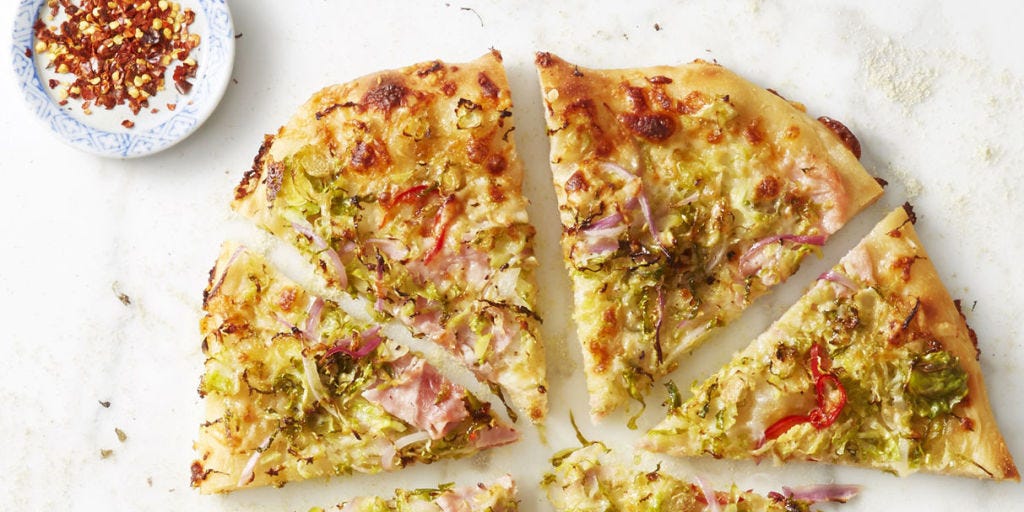
If you’ve ever looked at Brussels sprouts and thought, “You’re nice and all, but could you be… pizza?” congratulations: you’re exactly the kind of person this recipe is for. This white pizza is creamy, cheesy, and just spicy enough to keep things interesting. The Brussels sprouts get lightly caramelized (aka they finally live up to their potential), the ham brings salty-sweet comfort, and the whole thing bakes up like a fancy pizzeria pie that somehow happened in your kitchen.
Also: this is a white pizza, which means no tomato sauce. Instead, we use a garlicky ricotta base plus melty cheeses to create that rich, “why is this so good?” vibe. The Brussels sprouts add crunch and a roasty edge, while the ham keeps it firmly in the “I would order this again immediately” category.
Why This White Pizza Works So Well
1) White pizza needs contrast, and Brussels sprouts deliver
Without tomato sauce, white pizza can drift into “soft beige foods” territory if you’re not careful. Brussels sprouts add bite, texture, and a slightly nutty flavorespecially when they’re thinly sliced and exposed to high heat. Translation: they get those crisp, browned edges that taste like you tried harder than you did.
2) Ham gives salty richness without overpowering
Use a good-quality deli ham or leftover baked ham. You want thin pieces that crisp at the edges and melt into the cheese. Thick ham chunks can taste heavy on a white pie; thin torn pieces distribute flavor more evenly.
3) Ricotta + mozzarella + a “supporting actor” cheese = the dream team
Ricotta provides creamy body. Low-moisture mozzarella brings the classic pizza stretch. Then we add a sharper cheese (like Gruyère or Parmesan) for depthbecause flavor needs a little drama.
Ingredients (1 large pizza, about 12 to 14 inches)
- Pizza dough: 1 pound store-bought or homemade dough (room temp and relaxed)
- Cornmeal or semolina: for dusting (optional but helpful)
- Brussels sprouts: 8 ounces (about 10–14), trimmed
- Red onion: 1 small, thinly sliced
- Red chile or crushed red pepper: 1 small red chile thinly sliced, or 1/4 to 1/2 tsp red pepper flakes
- Olive oil: 1 to 2 tbsp, plus more for finishing
- Balsamic vinegar: 1 tsp (optional but highly recommended)
- Cooked ham: 2 to 4 ounces, thinly sliced and torn into pieces
- Low-moisture mozzarella: 3/4 cup shredded (about 3 ounces)
- Gruyère (or fontina): 3/4 cup shredded (about 3 ounces), or 1 ounce if you want it milder
- Parmesan: 2 to 3 tbsp finely grated (optional but excellent)
- Salt & black pepper: to taste
Garlicky Ricotta Base
- Ricotta: 1/2 to 3/4 cup (whole milk if possible)
- Garlic: 1 to 2 cloves, finely grated or minced
- Olive oil: 1 tbsp
- Lemon zest: 1/2 tsp (optional, but brightens everything)
- Italian herbs: 1 tsp chopped parsley or basil, or 1/2 tsp dried oregano
- Salt & pepper: to taste
Equipment (Your Pizza Will Be Better If You Use These)
- Pizza stone or baking steel (strongly recommended for a crisp crust)
- Sheet pan (works fine if you don’t have a stone/steel)
- Pizza peel (optional but funlike a tiny pizza forklift)
- Mandoline (optional for Brussels sprouts, but it makes slicing fast and thin)
How to Make White Pizza with Brussels Sprouts and Ham
Step 1: Heat your oven like it means it
Place a pizza stone or baking steel on a rack in the lower-middle of your oven. Preheat to 550°F (or as high as your oven goes) for at least 30–60 minutes. This long preheat is not “extra.” It’s the difference between crisp pizza and sad bread with toppings.
Step 2: Prep the Brussels sprouts topping
- Trim the sprouts and slice them very thin (shaved is ideal). If you slice thick, they’ll steam instead of crisp.
- In a bowl, toss sprouts with the sliced red onion, chile (or pepper flakes), 1 tbsp olive oil, 1 tsp balsamic, a pinch of salt, and black pepper.
- Optional quick flavor boost: Let it sit for 5–10 minutes while you prep the cheese. This softens the onion slightly and helps everything taste more “together.”
Step 3: Mix the garlicky ricotta base
In a small bowl, stir ricotta with garlic, olive oil, herbs, lemon zest (if using), salt, and pepper. Taste it. If you don’t want to eat it with a spoon, add a pinch more salt and/or a tiny drizzle of olive oil.
Step 4: Stretch the dough (without fighting it)
- Let dough sit at room temp until soft and elastic (usually 45–90 minutes if it was refrigerated).
- On a lightly floured surface, press dough outward from the center, leaving a thicker rim for the crust.
- Stretch to a 12–14 inch round. If it snaps back, pause for 5 minutes and try again. Dough is like a toddler: it needs a minute before cooperating.
Step 5: Assemble the pizza
- Dust a pizza peel (or the back of a sheet pan) with cornmeal/semolina or flour.
- Transfer the stretched dough to the peel/pan.
- Spread the ricotta base in a thin layer, leaving the outer rim uncovered.
- Sprinkle mozzarella evenly over the ricotta.
- Add Gruyère (or fontina) and a little Parmesan if using.
- Scatter the Brussels sprouts and onions over the top. Keep it fairly even.
- Finish with torn ham pieces (so some edges crisp) and a light drizzle of olive oil.
Step 6: Bake until blistered and beautiful
- Slide pizza onto the hot stone/steel.
- Bake 8–12 minutes (time varies by oven), until crust is deep golden and cheese is bubbling.
- If you want extra browning, switch to broil for the last 30–90 secondswatch closely.
- Cool 2–3 minutes before slicing (this helps the cheese set and keeps toppings from skating off).
Pro Tips for “Best Ever” Results
Don’t overload the toppings
White pizza is rich. Brussels sprouts are bulky. Ham is salty. If you pile everything on, the crust struggles, and your pizza becomes a casserole on a dough raft. Keep toppings balanced so the bottom crisps properly.
Use low-moisture mozzarella for better melt
Fresh mozzarella is delicious, but it releases a lot of water. If you use it here, tear it small and blot it dry. Otherwise your white pizza becomes “white pizza soup,” and nobody asked for that.
Shave the sprouts thin for crisp edges
Thin slices cook fast and brown at the edges in a hot oven. Thick slices can stay tough or steam under the cheese. If you’re aiming for that restaurant-style bite, thin is the move.
Acid is your secret weapon
That tiny splash of balsamic (or a squeeze of lemon after baking) balances the cheese and ham. It makes the whole pizza taste brighter and less heavy.
Easy Variations (Because Pizza Should Fit Your Mood)
Swap the ham
- Prosciutto: add it after baking so it stays silky
- Pancetta or bacon: cook first, then sprinkle on before baking
- Smoked turkey: lighter but still savory
Make it vegetarian
Skip the ham and add toasted walnuts, thin-sliced mushrooms, or a few olives. You’ll still get plenty of flavor from the cheese and browned sprouts.
Add a drizzle sauce
- Balsamic glaze: a thin zigzag after baking
- Hot honey: sweet-heat magic with sprouts and ham
- Lemon-garlic oil: whisk olive oil with lemon juice and a pinch of salt
FAQs
Can I use a sheet pan instead of a pizza stone?
Yes. Preheat the sheet pan in the oven (carefully!) so the bottom heat is stronger. You won’t get quite the same blistered crust as a stone/steel, but you’ll still get a very good pizza.
Do I need to cook the Brussels sprouts before baking?
Not if they’re shaved thin and your oven is hot. If you can only slice them thicker, give them a quick sauté (3–5 minutes) so they soften slightly before going on the pizza.
What’s the best way to reheat leftovers?
Use a skillet over medium heat with a lid for 2–4 minutes (crisp bottom, melty top). Or reheat on a sheet pan at 400°F until hot. The microwave works, but your crust will feel betrayed.
Storage & Make-Ahead
- Fridge: Store slices in an airtight container up to 3 days.
- Freeze: Wrap slices individually and freeze up to 2 months. Reheat from frozen at 375–400°F until hot.
- Make-ahead topping: Shave sprouts and slice onions up to 24 hours ahead; store covered in the fridge.
- Make-ahead ricotta base: Mix up to 2 days ahead; stir before using.
Conclusion: Your New Favorite “No Red Sauce” Pizza
This white pizza with Brussels sprouts and ham hits that perfect balance: creamy, salty, crisp, and bright. It’s bold enough for a dinner party but easy enough for a weeknight when you want something more exciting than “whatever is in the fridge.” Once you taste those caramelized sprouts against garlicky ricotta and melty cheese, you’ll start eyeing every vegetable like it’s auditioning for pizza night.
Kitchen Notes & Real-World Experiences (The Part You’ll Actually Relate To)
The first time I tested a Brussels sprouts white pizza, I made the classic mistake: I piled the sprouts on like I was trying to hide them from a child. I figured more vegetables meant a healthier pizza. (Adorable.) What happened was predictable: the crust baked fine around the edges, but the center turned into a soft, steamy situation where the sprouts released moisture and the cheese slid around like it was late for an appointment. It wasn’t terrible, but it wasn’t the “best” version eitherand pizza deserves its best life.
Batch two fixed it: thinner sprouts, fewer toppings, hotter oven. Shaving the sprouts made the biggest difference. When they’re cut thin (mandoline levels of thin, if possible), they behave like a topping, not a side dish. They cook fast, brown at the edges, and pick up that roasted flavor that makes people suddenly say, “Wait… I like Brussels sprouts now?” That’s the moment you want. That’s the moment you should accept compliments as if you invented vegetables.
Ham was the next lesson. Thick ham can make each bite feel heavy, and it doesn’t crisp well. Thin slicestorn into jagged piecesare better because the edges curl and brown, and you get little salty bursts throughout the pie. It also spreads the flavor so you don’t end up with one slice that’s basically a ham sandwich and another slice that’s just sprouts and cheese.
Then there’s the white pizza base. I tested it three ways: plain olive oil and garlic, a thicker ricotta spread, and a richer cream-based white sauce. The cream sauce was tasty but pushed the pizza into “very rich” territory fast, especially with ham. The plain garlic oil version was lighter but didn’t give the sprouts and ham enough creamy contrast. The winner was the garlicky ricotta: creamy, tangy, and sturdy enough to hold everything in place without turning the pizza into a puddle.
One unexpected upgrade: a tiny bit of acid. A teaspoon of balsamic in the sprouts mixture (or a quick drizzle of balsamic glaze after baking) makes the flavors pop. It cuts the richness of the cheese and balances the salty ham. If you’ve ever eaten a bite of pizza and thought, “This needs something, but I don’t know what,” the answer is often acid. Lemon zest in the ricotta helps toosubtle, not “lemon pizza,” just brighter.
Finally, the practical stuff: this pizza is a crowd-pleaser, but it’s also a “pizza night workflow” pizza. I like to prep the sprouts and ricotta base first, then stretch the dough last. If you stretch dough and then wander off to slice sprouts, the dough can stick, overproof, or tear when you move it. Also, if you’re making two pizzas, assemble one at a time. Letting a topped pizza sit too long can lead to a soggy center, especially with fresh toppings. In other words: pizza rewards confidence. Or at least the appearance of it.
By the time you’ve made this once or twice, you’ll start customizing itmaybe swapping ham for prosciutto, adding hot honey, or using fontina for extra melt. That’s the best part: it’s a recipe that teaches you how white pizza works, so you can riff without fear. And if you ever end up with extra shaved Brussels sprouts in the fridge, you’ll know what to do. (Spoiler: pizza.)