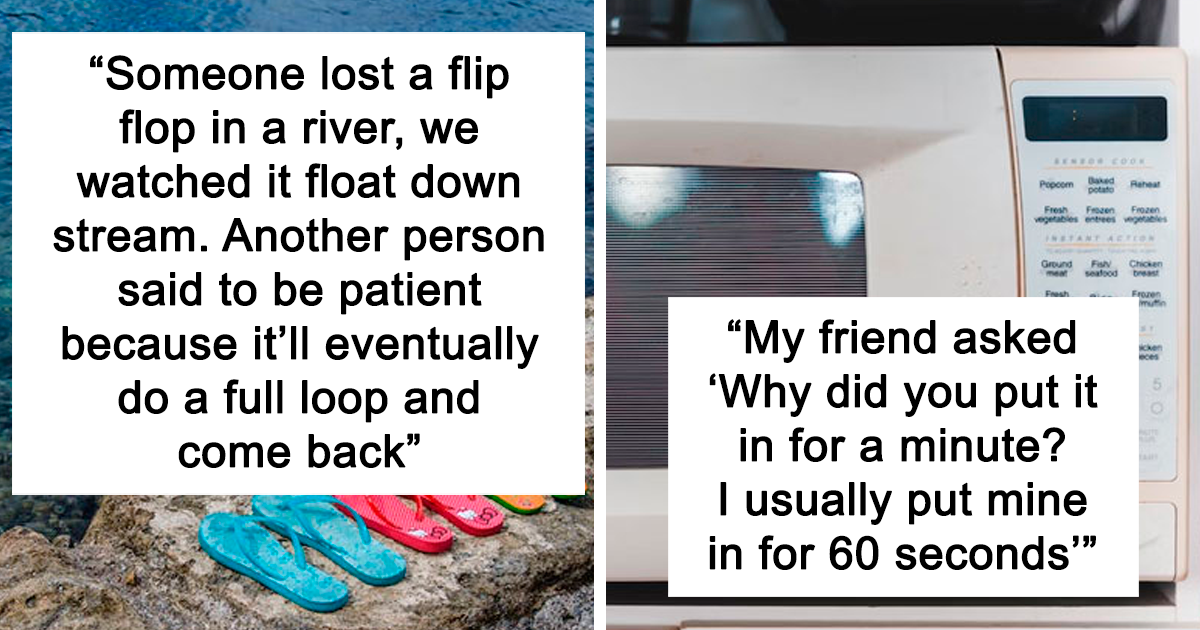
Every now and then, someone says something so baffling that the room goes silent, the birds stop chirping, and somewhere in the distance a calculator gives up. We have all heard one of those statements: a confident declaration that sounds like it was assembled in a hurry by three raccoons wearing a lab coat.
The funny part is not always that someone is wrong. Everyone is wrong sometimes. The truly unforgettable moments happen when a person is wrong with full confidence, dramatic eye contact, and the energy of a TED Talk speaker who forgot to bring facts. That is why stories about the dumbest things people have heard are so popular online. They are not just jokes; they are tiny windows into human nature, misinformation, overconfidence, memory glitches, and the magnificent chaos of everyday conversation.
This list is written in a lighthearted spirit. The goal is not to mock people for not knowing something. We all have gaps in our knowledge. The goal is to laugh at those glorious little moments when common sense took a coffee break and left confidence in charge.
Why Do People Say Completely Ridiculous Things?
Before we dive into the list, it helps to understand why people say things that sound unbelievably foolish. Psychologists have studied overconfidence, cognitive bias, and the “illusion of explanatory depth,” which is the tendency to think we understand something better than we actually do. In normal language, it means many of us feel like experts until someone asks us to explain how a refrigerator, Wi-Fi router, or basic geography works.
There is also the problem of misinformation. A person may repeat something they heard from a friend, a social media post, or a suspiciously confident uncle at Thanksgiving. If the statement fits what they already believe, they may accept it without checking. Add stress, embarrassment, poor listening, or a desperate need to sound smart, and suddenly someone is explaining that Alaska is “probably near Australia because both start with A.”
So yes, the following examples are funny. But they are also familiar. They remind us that intelligence is not a permanent setting; it is more like Wi-Fi signal strength. Some days it is strong. Some days it is searching for network.
30 Of The Dumbest Things People Say With Total Confidence
1. “If the moon is out during the day, does that mean the sun called in sick?”
This is the kind of question that sounds cute from a child and terrifying from a grown adult holding car keys. The moon can be visible during the day depending on its phase and position, but apparently the sky now has an employee schedule.
2. “I do not need directions. North is always up.”
On a map, sure. In real life, “up” is usually where the ceiling is. This person did not need GPS; they needed a quiet moment with a compass and maybe a juice box.
3. “Diet soda cancels out regular soda.”
If only nutrition worked like algebra. Sadly, drinking a diet soda after a sugary one does not create a magical beverage treaty. Your body does not see the word “diet” and start deleting calories like spam emails.
4. “I cannot be late because time is made up.”
Philosophically interesting. Professionally useless. Try telling that to a teacher, boss, dentist, or airport boarding gate and see how quickly society remembers clocks.
5. “My phone is waterproof, so I washed it with soap.”
Water-resistant does not mean “ready for a spa day.” Phones are tiny computers, not dinner plates. Somewhere, a warranty department felt a disturbance in the force.
6. “If chickens lay eggs, why do grocery stores sell them cold?”
This one sounds like the beginning of a conspiracy documentary filmed entirely in a parking lot. Food storage rules exist for safety and freshness. The chicken is not personally offended.
7. “I thought Europe was a country because people say ‘going to Europe.’”
This is a classic geography facepalm. Europe is a continent with many countries, cultures, languages, and cuisines. It is not one giant country with a single president named Pierre.
8. “How can fish drown if they live in water?”
This one is actually a decent science question until someone insists fish are “just being dramatic.” Fish need oxygen dissolved in water. If the oxygen level drops, they can suffocate. Biology: rude, but real.
9. “I do not believe in germs because I have never seen one.”
By that logic, Wi-Fi, gravity, and the inside of a microwave burrito are also suspicious. Not seeing something with the naked eye does not mean it is fake. It means microscopes have a job.
10. “Mountains are just really old clouds.”
This is poetic, wrong, and weirdly adorable. It belongs on a greeting card for confused geologists. Mountains are formed through geological processes, not retired weather.
11. “If you save a file to the cloud, does it rain when you download it?”
Someone heard “cloud storage” and pictured documents floating above a cornfield. The cloud is a network of remote servers, not a weather system with your vacation photos.
12. “I am not superstitious. I just avoid bad luck on purpose.”
This is like saying, “I am not hungry. I am just actively eating a sandwich.” Sometimes the sentence argues with itself and wins.
13. “The ocean is salty because fish sweat.”
That is not how chemistry, oceans, or fish work. The ocean’s salt comes largely from rocks, minerals, and natural processes over long periods. Fish are not running an underwater gym.
14. “If I delete the app, my account disappears from the internet.”
Deleting an app from your phone usually removes the app, not the account. The internet is not a notebook where you can tear out a page and make everyone forget.
15. “Coffee is a vegetable because beans grow on plants.”
Creative? Yes. Useful? No. Coffee beans are seeds from coffee cherries. Calling coffee a vegetable is the kind of logic that tries to make espresso part of a salad.
16. “Why do we need history class? It already happened.”
That sentence is exactly why history class exists. The past is not just old gossip; it helps explain governments, cultures, wars, inventions, mistakes, progress, and why people keep naming things “New” something.
17. “If the Earth is spinning, why do I not feel dizzy?”
This question comes up often, and it is not dumb if asked honestly. It becomes funny when someone uses it as “proof” that physics is fake. We move with Earth, atmosphere included. No cosmic merry-go-round ticket required.
18. “I only trust natural things, like electricity.”
Electricity does occur in nature, yes, but the charger plugged into the wall did not grow on an organic farm. Natural does not automatically mean safe, and man-made does not automatically mean bad.
19. “I cannot be broke. I still have checks.”
This is financial logic from a cartoon. Checks are not money; they are instructions for money to move, assuming money is actually there. The bank does not accept confidence as currency.
20. “Libraries are outdated because the internet has everything.”
The internet has everything, including wrong answers, fake quotes, conspiracy blogs, and recipes that begin with someone’s childhood trauma. Libraries offer curated information, trained staff, quiet space, and resources that do not scream at you in pop-up ads.
21. “If a restaurant has a fish logo, everything there must be seafood.”
Branding is powerful, but not that powerful. A fish on a sign does not mean the fries have fins. It means someone in marketing liked the logo.
22. “I do not need sunscreen because I am only outside in daylight.”
That is precisely when the sun is doing sun-related activities. Sunscreen is not for nighttime moonburns. This statement has the energy of bringing an umbrella only after the rain apologizes.
23. “How can batteries die if they were never alive?”
Language can be confusing, but come on. A “dead battery” is a phrase, not a tiny funeral. English is full of expressions that are not literal, which is why nobody files a missing-person report when someone “loses their mind.”
24. “I thought taxes were optional if you did not like the government.”
Many people dislike taxes. That does not transform them into a suggestion box. Civic obligations are not a streaming subscription you cancel after a boring season.
25. “I never read instructions because they ruin the surprise.”
This is fine for a mystery novel, less fine for assembling furniture. Instructions exist because manufacturers know humans will try to build a bookshelf using vibes and one mysterious extra screw.
26. “If I whisper, my smart speaker cannot hear me.”
Maybe. Maybe not. But whispering directly into a microphone and assuming it respects secrets is optimistic. Technology does not become polite because you lower your voice.
27. “I cannot have allergies. I am too healthy.”
Allergies do not ask for your gym attendance records. A strong person can still sneeze like a lawn mower starting up in April. Health and immune reactions are not the same thing.
28. “The elevator is faster if you press the button harder.”
The elevator button is not a ketchup packet. Pressing harder does not make the building panic and lift you faster. It only tells everyone nearby that patience has left the lobby.
29. “I do not use passwords. I just remember where I am logged in.”
This is less a security strategy and more a cry for help. Passwords, password managers, and two-factor authentication exist because “I know my laptop personally” is not cybersecurity.
30. “Facts are just opinions with better marketing.”
This sentence sounds deep until you pour water on it and watch it dissolve. Facts can be checked, tested, measured, or verified. Opinions can be argued. Marketing may sell both, but it does not make them equal.
The Funniest Part Is The Confidence
What makes these dumb things memorable is not simply the mistake. It is the confidence. A person who says, “I am not sure, but…” is usually safe. A person who says, “Actually, let me educate you…” right before explaining that clouds become mountains deserves a soundtrack.
Confidence can be helpful. It lets people speak up, try new things, and survive awkward conversations. But confidence without curiosity becomes a bulldozer with no steering wheel. It knocks down facts, parks on common sense, and honks at anyone holding a source.
That is why the smartest people often sound less dramatic. They say things like, “I might be wrong,” “Let me check,” or “That is not my area.” Those phrases are not weak. They are intellectual seatbelts. They keep small mistakes from turning into full-speed public embarrassment.
What Dumb Comments Teach Us About Misinformation
Funny wrong statements are harmless when someone says them at dinner and everyone laughs. But the same habits can become serious when they involve health, money, science, politics, or safety. A silly mistake about coffee being a vegetable is cute. A false belief about medicine, scams, or public safety can hurt people.
Misinformation often spreads because it is simple, emotional, and easy to repeat. A complicated truth has to put on shoes, gather evidence, and explain context. A bad claim can sprint across social media wearing sunglasses. That is why digital literacy matters. Before sharing something shocking, it helps to pause and ask: Who said this? How do they know? Is there evidence? Does another reliable source confirm it?
The best defense against saying something spectacularly wrong is not being a genius. It is being willing to check. Curiosity is the antidote to confident nonsense.
How To Avoid Becoming The Next Story
No one wants to become the person someone talks about years later with the sentence, “You will not believe what they said.” Luckily, avoiding that fate is easier than it sounds.
First, slow down. Many ridiculous comments happen because someone responds before thinking. Second, ask questions before making declarations. Third, be careful with phrases like “everybody knows” or “I heard somewhere.” Those are often the fog machines of weak information. Fourth, learn to enjoy being corrected. It is not an attack; it is a software update for your brain.
Finally, keep a sense of humor. We all say foolish things. The difference is whether we double down or laugh, learn, and move on. A person who can say, “Wow, that was dumb of me,” is already smarter than the person writing a 900-word comment defending their belief that mountains are elderly clouds.
Extra Experience Section: What It Feels Like To Hear Something Truly Dumb
Hearing one of the absolute dumbest things ever said is a full-body experience. It begins with silence. Not normal silence, but the special silence that arrives when your brain pauses the conversation to check whether your ears submitted the correct report. You look at the person. The person looks back. They seem serious. That is when panic enters the room wearing tap shoes.
Most people respond in one of three ways. The first is the polite smile. This is the smile you use when someone says, “I think islands float,” and you do not want to ruin brunch. Your face says, “Interesting,” while your soul is opening a search engine. The second response is the gentle correction. You might say, “Actually, islands are connected to the Earth’s crust,” in the same careful tone used to approach a nervous squirrel. The third response is complete surrender. You nod, sip your drink, and decide that peace is more important than explaining plate tectonics next to the appetizers.
The strangest part is that dumb statements often create unforgettable bonding moments. Friends will repeat them for years. Families build entire legends around them. A coworker who once asked whether email stamps cost money may become part of office folklore. The quote becomes a tiny cultural artifact, preserved like a fossil but with more secondhand embarrassment.
There is also something comforting about these moments. They remind us that everyone has blind spots. A brilliant engineer may not know basic cooking terms. A great writer may be hopeless with math. A successful business owner may still think pressing an elevator button seven times “wakes it up.” Human intelligence is uneven. We are not walking libraries. We are messy collections of knowledge, assumptions, habits, guesses, and things we once misheard in third grade.
That is why the best reaction is usually laughter with kindness. Laugh at the sentence, not the person. Correct the mistake if it matters. Let it go if it does not. The world is already loud enough without turning every error into a courtroom drama.
In my experience, the dumbest comments become less annoying when you treat them as reminders to stay humble. You might hear someone say something absurd today, then tomorrow you may confidently mispronounce a word you have only read in books. The universe enjoys balance. Nobody escapes.
So when someone says the moon is the sun’s night-shift replacement, take a breath. Smile if you can. Explain if you must. And maybe write it down, because one day it could become the perfect story at dinner. Just remember: the goal is not to feel superior. The goal is to appreciate the strange, funny, occasionally bewildering adventure of being human in a world where everyone is doing their best with a brain that sometimes forgets to install updates.
Conclusion
The dumbest things people say are funny because they combine surprise, confidence, and a tiny bit of chaos. They make us laugh, but they also remind us how easily people can misunderstand the world around them. From geography mistakes to internet myths, from science confusion to everyday logic failures, these moments prove that common sense is not always common and knowledge is not always where confidence says it is.
The good news is that nobody has to be perfect. Asking questions, checking facts, listening carefully, and admitting uncertainty can prevent most public brain-freeze moments. And when someone else says something ridiculous, a little patience goes a long way. After all, every person has said something silly at least once. Some of us were just lucky enough that nobody wrote it down.