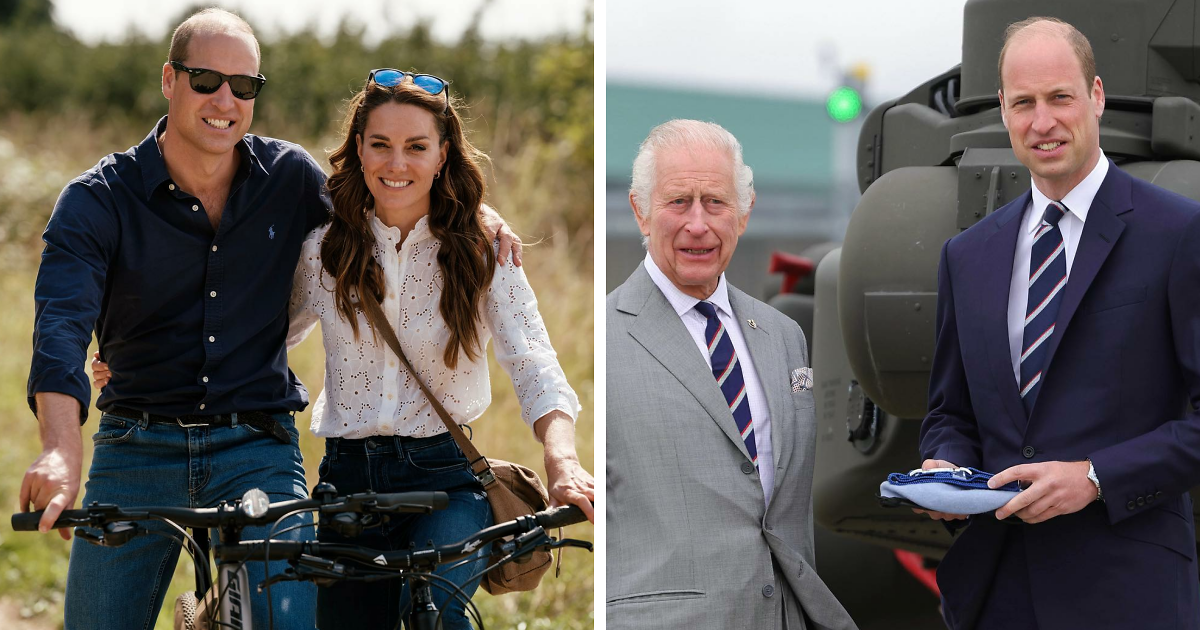
Prince William’s new royal role came with a title, a historic estate, and a number large enough to make even a palace accountant blink twice. After his first full financial year as Duke of Cornwall, the Prince of Wales received income from the Duchy of Cornwall totaling about $30 million, based on a reported distributable surplus of £23.6 million for the 2023-2024 financial year.
That is not exactly the same thing as a regular paycheck. No one is sliding a biweekly direct deposit into William’s account with “Prince Stuff” in the memo line. The money comes from the Duchy of Cornwall, a centuries-old private estate created to fund the heir to the British throne. Still, for readers wondering whether the phrase “jaw-dropping income” is doing too much, the answer is: not really. Thirty million dollars is jaw-dropping in almost any font.
The figure has revived public curiosity about royal finances, especially because William’s position changed dramatically after Queen Elizabeth II died in September 2022 and King Charles III became monarch. William became heir apparent, Prince of Wales, and Duke of Cornwall, inheriting leadership of one of Britain’s most valuable hereditary estates. Suddenly, the future king was not just cutting ribbons and attending state events; he was also connected to a sprawling land-and-property operation with farms, rental homes, commercial assets, and sustainability projects.
What Was Prince William’s New Role?
Prince William’s “new role” refers largely to his position as Duke of Cornwall, which he took on when his father became King Charles III. The Duchy of Cornwall traditionally passes to the eldest surviving son of the reigning monarch who is also heir to the throne. In plain English: when Charles moved up to king, William moved into the Duchy’s top role.
The Duchy of Cornwall is not a cute little cottage with a vegetable patch and one enthusiastic sheep. It is a major estate dating back to 1337, when King Edward III established it to provide income for the heir. Today, it includes land, farms, homes, commercial properties, and historic holdings spread across England and Wales. It has long been described as a private estate, but its public significance is obvious because it funds the life and work of the future monarch.
William became the 25th Duke of Cornwall. That sounds like a line from a fantasy novel, but the financial responsibilities are very real. The Duke is expected to steward the estate, maintain its long-term value, support tenants and communities, and use its annual income to cover official, charitable, and private expenses for himself and his family.
How Much Did Prince William Receive?
The headline number from his first full year was £23.6 million, or roughly $30.4 million, in distributable surplus for the 2023-2024 financial year. That money supports the official, charitable, and private lives of Prince William, Princess Kate, and their three children: Prince George, Princess Charlotte, and Prince Louis.
The keyword here is “distributable surplus.” It is not the same as a simple salary. The Duchy generates income from its assets, then reports the amount available after operating costs and other estate needs. That surplus is the pool used to fund the heir’s activities and household. So while many headlines describe it as Prince William’s salary, a more accurate description is royal estate income attached to his role as Duke of Cornwall.
Still, the public reaction is understandable. Most people hear “$30 million” and immediately compare it to ordinary life: mortgages, student loans, grocery bills, car repairs, and that one streaming subscription they keep meaning to cancel. Royal finances exist in a completely different universe, where a 700-year-old estate can function as both family inheritance and institutional funding machine.
Where Does The Money Come From?
The Duchy of Cornwall earns money through a broad mix of property and land-based assets. Its portfolio includes agricultural tenancies, residential rentals, commercial leases, development projects, natural resources, and investment income. Think of it less like one royal bank account and more like a giant, historic property business wearing a crown-shaped hat.
For decades, King Charles managed the Duchy while he was Prince of Wales. He became closely associated with organic farming, conservation, traditional architecture, and planned communities such as Poundbury. William inherited not only the income stream but also the expectations attached to it: preserve the estate, modernize it, and make it relevant to contemporary public concerns.
That is a tricky balancing act. On one side, the Duchy must generate enough income to fund the heir’s official and private life. On the other, it is increasingly judged by modern standards: transparency, environmental responsibility, affordable housing, tenant welfare, and whether hereditary wealth should operate with special tax arrangements. In other words, William did not inherit a sleepy country estate. He inherited a spreadsheet with opinions.
Does Prince William Pay Tax On The Duchy Income?
Prince William is understood to pay income tax on his Duchy income after deducting household expenses, although the exact amount has not been publicly disclosed. That last part matters because King Charles, when he was Prince of Wales, had traditionally shared more information about tax payments from the Duchy.
The Duchy has a special legal and tax status. It is not treated like an ordinary corporation, and the Duke is not entitled to pocket proceeds from the sale of capital assets. Capital gains must be reinvested into the estate. The annual income, however, is available to support the Duke’s official, charitable, and private activities.
For critics, the lack of a fully disclosed tax figure raises questions about royal transparency. For defenders, the argument is that William pays income tax voluntarily and that the estate is designed to support a constitutional role, not simply enrich a private individual. For everyone else, the whole thing can feel like trying to read a tax return written by a medieval lawyer after three cups of very strong tea.
Why The Number Feels So Huge
Part of the fascination comes from timing. The public learned more about William’s income during a period when many families in Britain, the United States, and elsewhere were dealing with inflation, housing pressure, and rising everyday costs. A $30 million royal income figure naturally lands differently when people are comparing the price of eggs like they are following the stock market.
Another reason it feels huge is that William’s public image has often centered on duty, family, military service, mental health advocacy, environmental causes, and a more modern approach to royalty. The Duchy income reminds people that behind the polished public service narrative is a very old financial structure built on land, inheritance, and privilege.
That does not automatically mean the income is scandalous. It does mean it deserves context. The Duchy is expected to fund official royal work, staff, travel, charitable initiatives, household costs, and future planning. It is also expected to remain financially strong for the next heir, which is likely Prince George when William eventually becomes king.
How Prince William Appears To Be Managing The Duchy
Reports around William’s first full year suggested a more modern management style. One memorable detail was that he reportedly communicates with Duchy staff through WhatsApp, while King Charles was associated with a more traditional approach. That may not sound revolutionary unless you have ever worked in a large organization where switching communication tools requires three meetings, a policy memo, and someone named Nigel saying, “We’ve always done it this way.”
William has also been linked to priorities such as sustainability, mental health support, homelessness initiatives, and community development. The Duchy has promoted a goal of becoming a net zero estate by 2032, and William has visited Duchy-related projects, including housing efforts connected to homelessness in Cornwall.
In 2026, the Duchy also drew attention for plans to sell a portion of its property portfolio over the next decade, with the stated aim of consolidating holdings and funding projects such as housing, renewable energy, and wildlife restoration. That signals William may be willing to reshape parts of the estate rather than simply preserve it in amber like a royal museum exhibit.
Why This Is Not The Same As The Sovereign Grant
One common point of confusion is the difference between the Duchy of Cornwall and the Sovereign Grant. The Sovereign Grant is public funding used to support the monarch’s official duties and royal household operations. It is linked to profits from the Crown Estate, a separate portfolio whose revenue goes to the U.K. Treasury.
The Duchy of Cornwall is different. It is tied to the heir to the throne, not the reigning monarch. It helps fund the Prince of Wales and his family, including official and charitable work. When people hear that King Charles receives public funding through the Sovereign Grant and Prince William receives Duchy income, they may lump everything into one giant royal money soup. But financially and legally, these are separate streams.
That distinction matters because it shapes the debate. Some critics focus on taxpayer support for the monarchy. Others focus on the duchies, which are private estates with public roles and special historical privileges. Both conversations involve money, monarchy, and transparency, but they are not identical.
Public Reaction: Fascination, Criticism, And Curiosity
Public reaction to William’s income tends to fall into three camps. The first group sees the money as part of the royal system: old, unusual, but expected. The second group sees it as evidence that royal wealth deserves more scrutiny, especially when public services and ordinary households face pressure. The third group just wants to know whether Princess Charlotte gets a bigger allowance than they did at age nine.
The strongest criticism often centers on transparency. Because the Duchy is deeply historic and financially complex, people want clearer answers about what counts as official spending, what counts as private household spending, how tax is calculated, and how much personal benefit the Prince and Princess of Wales receive.
Supporters argue that the Duchy allows the heir to perform public duties without relying entirely on direct taxpayer funding. They also point to charitable work, land stewardship, environmental projects, and long-term community investments as signs that the estate is not simply a royal cash machine. The truth is more complicated than either a fairy tale or a scandal poster. It is an old institution trying to justify itself in a modern world that reads annual reports and asks follow-up questions.
What It Means For Prince William’s Future As King
William’s first full year managing the Duchy offers a preview of how he may approach monarchy itself. He has often spoken about wanting to do things with purpose, impact, and a slightly leaner royal footprint. The Duchy gives him a platform to test that approach in real life.
If he uses Duchy resources to expand housing, support tenants, invest in sustainability, and show more financial openness, he may strengthen the argument that the monarchy can adapt. If the estate is seen mainly as a private income machine, the criticism will grow louder. In the age of screenshots, spreadsheets, and social media detectives, inherited privilege does not get a free pass just because it owns nice fields.
For now, the big takeaway is simple: Prince William’s first full year as Duke of Cornwall confirmed that his new role comes with enormous financial power. The reported $30 million figure is not a normal salary, but it is real income from a real estate empire with real public consequences. The monarchy may run on tradition, but the conversation around it increasingly runs on transparency.
Experience Section: What This Story Feels Like From The Outside Looking In
For many readers, the first experience of seeing Prince William’s income headline is a tiny emotional journey. Step one: shock. Step two: reread the number because surely one zero wandered in wearing a disguise. Step three: start doing mental math so aggressively that your phone calculator feels threatened.
That reaction is normal because royal money stories hit a nerve. They combine celebrity curiosity, history, politics, economics, and family drama. It is not just “How rich is Prince William?” It is also “Why does this system exist?” and “What does public service mean when private wealth is built into the job?” Those questions are why the story travels so far beyond royal fan circles.
Imagine being an ordinary reader planning a monthly budget. You are comparing utility bills, debating whether takeout is financially irresponsible, and trying to convince yourself that coffee made at home is basically a personality trait. Then a headline appears saying Prince William’s first full year in a new role brought in around $30 million. Even if you understand the Duchy is not a simple paycheck, the contrast is hard to ignore.
At the same time, the experience of reading deeper into the story can change the tone. The money is not just sitting in a vault guarded by corgis wearing tiny helmets. It funds official duties, staff, charitable work, family expenses, travel, and the broader responsibilities of the heir to the throne. The Duchy also has land, tenants, environmental targets, maintenance costs, and development obligations. The situation becomes less like a lottery win and more like running a historic institution that happens to generate an eye-watering surplus.
Still, modern audiences expect accountability. A younger reader may look at the Duchy and ask why a medieval estate should still determine a future king’s income. A taxpayer may ask how royal funding streams interact with public money. A business-minded reader may admire the asset management while still wanting clearer reporting. A royal watcher may focus on whether William’s choices differ from Charles’s long stewardship.
The most useful way to experience this story is not as pure outrage or pure admiration. It is better read as a case study in inherited power under modern scrutiny. Prince William is not just stepping into a title; he is stepping into a financial structure that has survived for nearly seven centuries. That alone is remarkable. Whether it remains acceptable depends on what he does with it next.
If William can connect Duchy wealth to visible public good, such as affordable housing, environmental restoration, tenant support, and transparent reporting, the income may be easier for the public to understand. If the numbers remain huge while the explanations stay fuzzy, the headlines will keep returning with extra dramatic adjectives. And honestly, “jaw-dropping” may be one of the polite ones.
Conclusion
Prince William’s reported $30 million income after his first full year as Duke of Cornwall is one of those royal finance stories that sounds simple but becomes more interesting the closer you look. The number is huge, but it is not a standard salary. It comes from the Duchy of Cornwall’s distributable surplus, a historic estate designed to support the heir to the throne.
The real story is not just the size of the income. It is the responsibility attached to it. William now controls an institution with land, tenants, communities, environmental goals, public expectations, and centuries of tradition behind it. His challenge is to show that this ancient financial system can serve modern purposes. The public may still gasp at the figure, but what matters next is whether the Duchy under William becomes more transparent, more useful, and more connected to the people it affects.