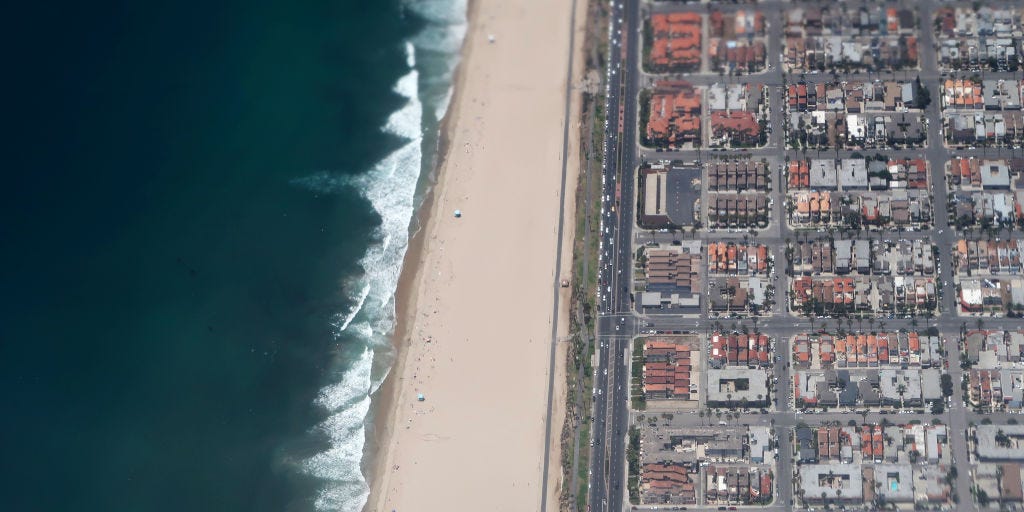
The ocean has been flexing in front of us for billions of years. Every wave that rolls toward shore carries energy, rhythm, and the occasional flip-flop someone lost in 2009. For most of human history, we admired that power, surfed it, feared it, photographed it, and wrote moody poems about it. Now scientists are asking a sharper question: can the movement of salty water over a specially engineered hydrophobic surface help generate electricity?
The answer is not “plug your phone into a seashell tomorrow.” But it is a fascinating yes-in-progress. Researchers at the University of California San Diego developed a super-hydrophobic, oil-filled, patterned surface that can generate voltage when salt water flows across it. The work is small-scale, experimental, and measured in millivolts, but it points to a much bigger idea: if engineers can manage the interaction between moving seawater, surface charge, and ion flow, the ocean may become an even more versatile renewable energy source.
That matters because wave energy remains one of the great underused players in the clean energy lineup. Solar panels nap at night. Wind turbines sometimes wait around like bored giants. Ocean waves, however, are persistent, predictable, and packed with mechanical energy. Combine that natural motion with advanced materials science, and the result could be a new class of wave energy harvesting technologies that are smaller, smarter, and better suited for marine environments.
What Is a Hydrophobic Surface?
A hydrophobic surface is a surface that repels water. The word literally means “water-fearing,” which sounds dramatic, as if the material saw a puddle and called its therapist. In science, however, hydrophobicity describes how water behaves when it touches a material. On a hydrophilic surface, water spreads out. On a hydrophobic surface, water beads up and rolls away.
Classic examples include waxed car paint, rain jackets, lotus leaves, and nonstick cookware. Super-hydrophobic surfaces go even further. They are designed with microscopic textures that reduce contact between the water and the solid material. Because less surface area touches the water, friction drops, droplets move faster, and liquids can slide across the surface more easily.
That slipperiness is important. When salt water flows over a charged surface, the ions in the water can create an electrical potential difference. In simple terms, moving charged particles can help produce voltage. If the water moves faster and interacts with the surface in the right way, the voltage can increase.
The Science Behind Turning Flowing Salt Water Into Voltage
Salt water is not just water with a beachy attitude. It contains dissolved ions, including positively charged sodium ions and negatively charged chloride ions. When salt dissolves, those ions separate and move through the liquid. This makes seawater electrically interesting, even before anyone starts adding fancy engineering.
The UC San Diego research focused on a phenomenon known as streaming potential. This occurs when an electrolyte, such as salt water, flows along a charged surface. The moving ions near the surface create an electrical imbalance between two points in a channel. That imbalance can be measured as voltage.
The problem is that traditional surfaces do not produce much usable voltage. Water experiences friction, ions do not always move efficiently, and earlier super-hydrophobic designs often trapped air in tiny surface grooves. Air reduces friction, but it does not hold charge well. That limits the electrical effect.
The new idea was clever: replace the air pockets with an oil that does not mix with water. The research team etched microscopic ridges into a silicon wafer and filled those grooves with a lubricant such as synthetic motor oil. This created a liquid-filled surface that stayed slippery while also helping preserve useful electrical interactions at the interface.
How the UC San Diego Surface Works
The experimental surface was built from a silicon substrate, a thin slice of silicon similar to what is used in microelectronics. Tiny ridges were etched into the surface, forming a patterned landscape too small for the naked eye to appreciate without scientific equipment. These ridges were then filled with oil, creating a slippery, water-repellent interface.
When dilute salt water was pumped through a microfluidic channel over this surface, the researchers measured voltage between the two ends of the channel. The system generated at least 50 millivolts, or about 0.05 volts. That is not enough to run your blender, unless your blender is imaginary and extremely polite. But for a proof of concept, it was important.
The liquid-filled surface performed better than comparable air-filled super-hydrophobic surfaces. In the Nature Communications study, the researchers reported a stronger voltage generation figure of merit, meaning more voltage was produced per unit of applied pressure. The oil-filled design improved the interaction between liquid slip and surface charge, giving engineers another tool for electrokinetic energy conversion.
This is the key takeaway: the surface does not magically create energy from nowhere. It converts part of the kinetic energy of moving salt water into electrical voltage by using the movement of ions near a charged, slippery surface.
Why Ocean Waves Make This Idea So Exciting
Ocean waves are moving energy. Wind transfers energy to the surface of the sea, creating ripples, swells, and waves that can travel long distances. Unlike a bucket of still water, the ocean is constantly pushing, pulling, lifting, falling, and sloshing. In other words, it is already doing a lot of unpaid mechanical labor.
Traditional wave energy converters capture this motion through mechanical systems. Some devices bob up and down like buoys. Others flex with passing waves. Some use oscillating water columns, where rising and falling water pushes air through a turbine. These systems can be powerful, but they also face brutal engineering challenges: corrosion, storms, biofouling, maintenance costs, and the simple fact that the ocean treats delicate machinery the way toddlers treat cupcakes.
A hydrophobic surface approach is different. Instead of relying only on large moving parts, it explores how small-scale fluid-surface interactions might contribute to energy harvesting. The concept could be used in microfluidic systems, sensors, desalination plants, or hybrid wave energy devices where salt water is already moving through channels.
The most realistic near-term application is not giant panels floating across the Pacific. It is more likely to appear first in compact systems that need small amounts of power: marine sensors, lab-on-a-chip platforms, water-quality monitors, desalination components, or low-power devices used offshore.
Hydrophobic Surfaces and Desalination: A Natural Match
Desalination plants already move seawater through pipes, pumps, membranes, and channels. That means they already have the essential ingredient for this technology: flowing salt water. If specially engineered surfaces could be integrated into parts of desalination infrastructure, they might recover small amounts of energy from water movement that would otherwise be wasted.
This does not mean a desalination plant would suddenly become a power plant. Reverse osmosis desalination requires significant energy, and a millivolt-scale surface technology will not erase that demand by itself. But energy recovery is a serious topic in desalination. Even modest efficiency improvements can matter when plants process large volumes of water every day.
Imagine a future where water treatment systems include surfaces designed not only to resist fouling and reduce friction, but also to harvest tiny amounts of electrical energy. That electricity could support embedded sensors, monitor salinity, detect pressure changes, or power control electronics. The system would be less like a giant generator and more like a smart skin for water infrastructure.
How This Fits Into the Bigger Wave Energy Picture
Wave energy has massive theoretical potential. The United States has thousands of miles of coastline, and federal energy researchers have estimated that waves off U.S. coasts contain enough theoretical annual energy to represent a major fraction of national electricity generation. The catch, as always, is the word “theoretical.” Capturing energy safely, affordably, and reliably is much harder than pointing at the ocean and saying, “Look, free power!”
That is why wave energy research is advancing along multiple paths. The U.S. Department of Energy, national laboratories, universities, and private companies are testing wave energy converters, improving modeling tools, and developing open-ocean test sites such as PacWave off the Oregon coast. These projects focus on durability, grid connection, power performance, environmental monitoring, and cost reduction.
The hydrophobic surface breakthrough belongs to a complementary category. It is not competing directly with large wave energy buoys or offshore turbines. Instead, it expands the materials-science toolbox. By understanding how seawater interacts with charged, slippery, patterned surfaces, researchers can design future devices that harvest energy at smaller scales or improve the efficiency of larger systems.
What Makes the Surface Different From Earlier Designs?
Earlier super-hydrophobic surfaces often copied the lotus leaf. They used microscopic textures that trapped air, allowing water to glide over the surface with reduced friction. That design is great for repelling water, but air pockets are electrically limited because air does not carry surface charge in the same useful way.
The UC San Diego design replaced those air pockets with a water-immiscible oil. This is the important twist. The oil remains separate from the salt water, keeps the interface slippery, and contributes to surface charge effects. The result is a better balance between fluid slip and electrokinetic voltage generation.
It is a reminder that nature-inspired engineering often works best when scientists do not simply copy nature, but remix it. A lotus leaf is impressive. A lotus leaf with microfabrication, silicon patterning, and lubricant-infused charge engineering is the sort of thing that makes a materials scientist cancel dinner plans.
The Challenges: From Millivolts to Meaningful Power
The most important limitation is scale. Generating 50 millivolts in a controlled laboratory setup is scientifically promising, but commercial power generation requires far more voltage, current, durability, and efficiency. A technology can be brilliant in a microchannel and still have a long swim before it reaches the open ocean.
Durability is another major challenge. Marine environments are harsh. Salt water corrodes materials. Tiny organisms colonize surfaces. Sand and debris scratch coatings. Waves apply unpredictable forces. A hydrophobic surface used in the real ocean would need to survive months or years of abuse without losing its structure, lubricant, or electrical performance.
Manufacturing also matters. Silicon wafers are excellent for controlled experiments, but large-scale marine infrastructure requires materials that are affordable, robust, and easy to produce in large areas. Engineers would need to adapt the concept to practical substrates, coatings, membranes, or modular components.
There is also the question of power density. How much energy can be harvested per square meter? How much pressure or flow is required? Can the system operate passively with waves, or does it require pumping? If pumping is needed, does the energy generated exceed the energy spent moving the water? These are not small details. They are the difference between clean-energy breakthrough and expensive science aquarium.
Possible Real-World Applications
1. Self-Powered Marine Sensors
Ocean monitoring depends on sensors that track temperature, salinity, acidity, pollution, oxygen levels, and biological activity. Many of these devices need low power, especially in remote locations. A hydrophobic surface that harvests energy from local water movement could help extend sensor life or reduce battery dependence.
2. Smarter Desalination Systems
Desalination facilities are full of moving salt water. Even if hydrophobic energy harvesting does not supply major power, it could support small electronics inside water-processing systems. Sensors powered by the flow itself could make plants more efficient and responsive.
3. Microfluidic Devices
Lab-on-a-chip systems use tiny channels to analyze fluids for medical, environmental, or chemical purposes. Because these devices operate at small scales, millivolt-level generation can be more meaningful. Hydrophobic surfaces could provide built-in energy harvesting for portable diagnostic tools.
4. Hybrid Wave Energy Converters
Future wave energy systems may combine mechanical power takeoff with electrokinetic materials. A buoy could generate electricity from its motion while also routing seawater through specially coated channels to recover extra energy or power onboard sensors.
5. Anti-Fouling and Low-Friction Marine Coatings
Even without major electricity generation, slippery hydrophobic surfaces could reduce drag, improve fluid transport, and help resist fouling. If such coatings can also produce useful voltage, they become multifunctional materials rather than single-purpose surfaces.
Why Small Discoveries Matter in Renewable Energy
Clean energy progress rarely arrives as one giant invention wearing a cape. It usually comes from hundreds of smaller advances: better coatings, stronger cables, smarter sensors, cheaper manufacturing, improved models, longer-lasting seals, more efficient power electronics, and materials that do one weird trick in a laboratory before eventually becoming very useful.
The hydrophobic surface research fits that pattern. It does not replace solar, wind, batteries, hydroelectric dams, or conventional wave energy converters. It adds a new way of thinking about salt water, surface charge, and motion. It asks whether the boundary between water and material can become an energy-harvesting zone.
That boundary is everywhere: inside pipes, membranes, channels, pumps, offshore structures, buoys, desalination systems, and sensors. If engineers can turn even a fraction of those interfaces into useful energy devices, the impact could spread quietly through marine technology.
Experience-Based Perspective: What This Breakthrough Feels Like in the Real World
To understand why this research feels exciting, picture standing near a seawall during a windy afternoon. The waves do not look like laboratory equipment. They look messy, loud, and slightly overconfident. Water slaps concrete, sprays into the air, retreats, and returns as if it forgot something. It is chaotic, but it is also constant. Every surge is a reminder that the ocean is not still scenery. It is an enormous moving system.
For engineers, that movement is both a gift and a headache. The gift is obvious: energy is available. The headache is everything else. The sea corrodes metal, breaks weak designs, grows barnacles on anything that sits still, and occasionally throws storms like a heavyweight champion with weather issues. Anyone who has watched coastal infrastructure age knows that the ocean does not politely cooperate with human plans.
That is why the hydrophobic surface idea is so appealing. It does not begin with a massive machine fighting the ocean. It begins with the smallest possible interaction: water sliding over a surface. Instead of asking, “How do we dominate the wave?” it asks, “What happens at the interface?” That shift feels practical and elegant. It is the engineering equivalent of finding money between couch cushions, except the couch is the Pacific Ocean and the cushions are microstructured silicon ridges filled with oil.
In a coastal community, the value of this kind of technology may not appear as a giant power station. It may show up as small improvements that make marine systems more independent. A sensor buoy that lasts longer. A desalination unit that monitors itself without extra wiring. A water-quality device that harvests enough power from flow to send data back to shore. These small wins matter because the ocean is full of places where replacing batteries is expensive, annoying, or dangerous.
There is also a psychological shift. People often think of renewable energy in visible forms: solar panels on roofs, wind turbines on hills, dams across rivers. Hydrophobic wave-related energy harvesting is more subtle. You may not see it from the beach. It could live inside channels, coatings, and devices. But invisible does not mean unimportant. Some of the most valuable energy technologies work quietly in the background, improving efficiency one percentage point at a time.
For readers who love clean technology, this research is a reminder to stay patient. The first version of a promising idea rarely looks like the final product. The early experiment may produce only a small voltage, but it gives researchers a measurable effect, a working mechanism, and a path for improvement. Faster flow, narrower channels, longer surfaces, better materials, and optimized charge properties could all raise performance.
The ocean will not become a wall outlet overnight. But it does not need to. The future of wave energy may be built from many layers: large converters offshore, wave-powered desalination, marine sensors, floating platforms, and smart materials that harvest energy from moving salt water. The hydrophobic surface is one of those layers. It is small, slippery, and scientifically sneaky in the best way.
Conclusion
A new hydrophobic surface that generates voltage from flowing salt water is not just a neat laboratory trick. It is a glimpse into how future renewable energy systems may use advanced materials to harvest power from ordinary motion. By combining microstructured surfaces, lubricant-filled grooves, surface charge, and the natural ion content of seawater, researchers have shown that the water-material interface can become an active part of energy generation.
The technology still has major hurdles to clear. It must scale, survive real marine conditions, produce meaningful power, and prove that it can operate efficiently outside the lab. But the concept is valuable because it expands the conversation around ocean energy. Waves are not only something to capture with giant mechanical devices; they are also a source of flowing salt water, moving ions, and surface interactions that can be engineered.
In the long run, hydrophobic surface technology may help power marine sensors, improve desalination systems, support microfluidic devices, and complement traditional wave energy converters. The ocean has always been powerful. Now, thanks to materials science, even the slippery conversation between seawater and a surface may help turn that power into electricity.
Note: This article is an original, publication-ready SEO draft based on real public research and current wave energy information. Source links are intentionally not included in the article body per the publishing requirement.