Chair yoga may sound like yoga’s quiet cousinthe one who brings herbal tea to a party and leaves by 9 p.m.but do not underestimate it. This gentle practice can wake up stiff shoulders, improve body awareness, support better posture, and teach your nervous system how to stop acting like every email is a charging rhinoceros.
At its heart, chair yoga is simple: you use a sturdy chair as your base, your support, or both. Instead of folding yourself into complicated shapes on a mat, you practice seated or chair-supported movements that focus on alignment, breathing, mobility, and calm attention. That makes it especially useful for beginners, older adults, desk workers, people with limited mobility, and anyone whose body has ever said, “Absolutely not,” when asked to get down on the floor.
The real magic of chair yoga is not that it is easy. It is that it is accessible. A chair turns yoga into something you can do in a living room, office, classroom, hotel room, community center, or beside your bed. No fancy studio required. No designer leggings required. No need to prove your enlightenment by balancing on one arm while pretending your hamstrings are not screaming.
What Is Chair Yoga?
Chair yoga is a modified form of yoga that uses a chair to make poses safer, steadier, and more approachable. Some poses are performed while sitting. Others use the chair for balance while standing. The goal is not to “do less yoga.” The goal is to adapt yoga so more people can benefit from mindful movement, breath control, gentle stretching, and improved posture.
A typical chair yoga routine may include seated spinal movements, shoulder rolls, neck stretches, gentle twists, seated forward folds, ankle circles, supported standing poses, and breathing exercises. The practice can be shortfive to ten minutesor expanded into a full session. The best version is the one you can do consistently without feeling punished by your own wellness plan.
Why Posture Matters More Than You Think
Posture is not about sitting like a statue or walking around as if a royal portrait painter is watching. Good posture means your body is organized in a way that reduces unnecessary strain and helps your muscles, joints, and breath work efficiently.
Modern life is not exactly posture-friendly. Many of us spend hours leaning toward screens, rounding the shoulders, tucking the chin forward, and collapsing through the chest. Over time, this can contribute to neck tension, tight hips, shallow breathing, back discomfort, and the general feeling that your body has been stored in a drawer overnight.
Chair yoga helps by encouraging gentle alignment. You learn to sit with both feet grounded, lengthen through the spine, soften the shoulders, and notice when your body is gripping for no reason. Instead of forcing a “perfect” posture, chair yoga teaches you to return to a balanced position again and again. That repetition builds awareness, which is where lasting change begins.
The Breath: Your Built-In Reset Button
Breathing is automatic, but mindful breathing is a skill. During stress, many people breathe high in the chest, hold their breath, or take quick, shallow inhales. Chair yoga invites you to slow down and breathe more fully. This does not mean puffing yourself up like a parade balloon. It means using the breath as a gentle anchor.
Slow, controlled breathing can help the body shift toward a calmer state. When you lengthen your exhale, relax the jaw, and allow the ribs to expand naturally, your nervous system gets a message: “We are safe enough to stop panicking over the printer jam.” Breath-focused movement also helps you coordinate your body. You inhale to create space, exhale to soften, and move with less force.
Benefits of Chair Yoga
1. Supports Better Posture
Chair yoga strengthens the habit of sitting tall without becoming rigid. Movements such as seated mountain pose, shoulder rolls, gentle backbends, and seated twists help counter the forward slump that often comes from computer work, phone scrolling, and long periods of sitting.
2. Improves Flexibility and Range of Motion
Gentle stretches for the neck, shoulders, spine, hips, hamstrings, wrists, and ankles can gradually improve mobility. Chair yoga is not about chasing extreme flexibility. You are not trying to become a human paperclip. The goal is to make everyday movements easier: reaching, turning, standing, bending, and breathing comfortably.
3. Builds Strength in a Low-Impact Way
Some chair yoga movements require muscular effort. Seated leg lifts, chair-supported warrior poses, seated core engagement, and sit-to-stand variations can build strength without high impact. This is especially helpful for people who want movement that feels supportive rather than aggressive.
4. Encourages Balance and Stability
Using a chair for support can help people practice balance safely. Even seated work can improve body awareness and core engagement. For older adults or anyone nervous about falling, the chair offers reassurance while still allowing the body to practice coordination.
5. Helps Reduce Stress
Chair yoga combines movement, breathing, and attention. That trio can help quiet mental noise and relax the body. A few minutes of slow breathing and gentle stretching may not solve your entire inbox, but it can help you respond to life with a little less shoulder tension and a little more dignity.
6. Makes Yoga More Inclusive
Traditional mat yoga is not comfortable or practical for everyone. Chair yoga opens the door for people with joint stiffness, limited mobility, balance concerns, fatigue, larger bodies, workplace constraints, or recovery needs. It reminds us that yoga is not about looking impressive. It is about paying attention.
How to Set Up for Chair Yoga
Choose a sturdy chair with a flat seat and no wheels. Your feet should rest comfortably on the floor. If they do not, place a folded towel, yoga block, or firm book under them. Sit near the front edge of the chair so your spine can lengthen naturally, but stay far enough back that you feel secure.
Keep the area around you clear. If you are doing standing poses, place the chair on a non-slip surface. Wear comfortable clothes that allow easy movement. You do not need shoes unless they help you feel stable. You also do not need candles, bells, incense, or a playlist called “Mystic Dolphin Sunrise,” although no one is stopping you.
A Simple Chair Yoga Routine for Posture and Breath
Seated Mountain Pose
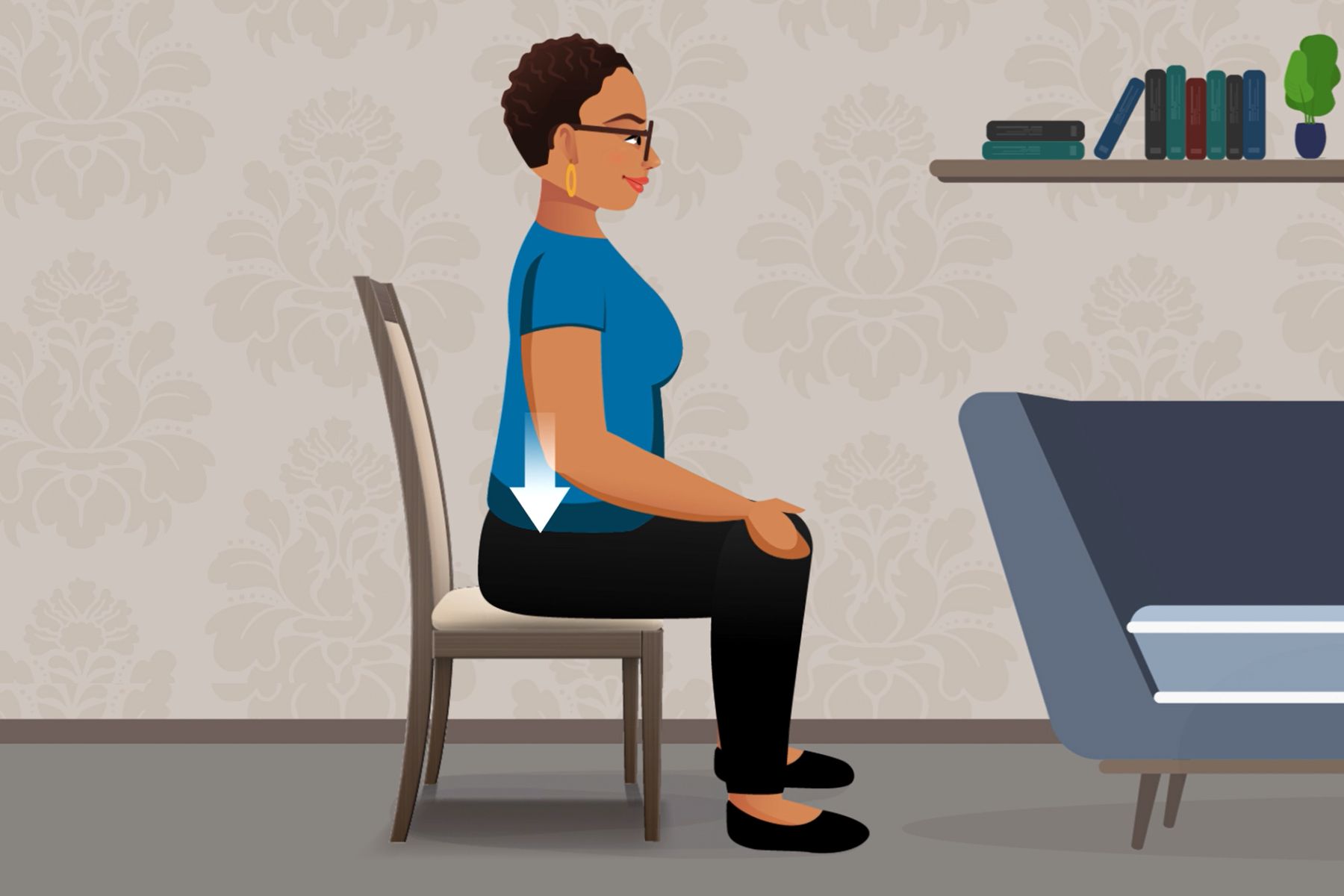
Sit tall with both feet flat on the floor. Place your hands on your thighs. Imagine the crown of your head lifting gently upward while your sitting bones settle into the chair. Relax your shoulders. Take five slow breaths. This is the foundation for the rest of the practice.
Shoulder Rolls
Inhale as you lift your shoulders toward your ears. Exhale as you roll them back and down. Repeat five to eight times, then reverse direction. This helps release tension around the neck and upper back, especially if your shoulders have been living near your eyebrows.
Seated Cat-Cow
Place your hands on your thighs. Inhale, gently arch your back, lift your chest, and look slightly upward. Exhale, round your spine, draw your belly inward, and let your chin move toward your chest. Repeat slowly for six to ten rounds. Move with the breath rather than rushing through it like a fitness commercial.
Seated Side Bend
Rest your left hand on the chair or thigh. Inhale and reach your right arm overhead. Exhale and lean gently to the left, keeping both sitting bones grounded. Breathe into the right side of your ribs. Return to center and switch sides. This movement creates space in the side body and may help counter collapsed sitting posture.
Seated Twist
Sit tall. Place your right hand on the outside of your left thigh and your left hand near the back of the chair. Inhale to lengthen your spine. Exhale and rotate gently to the left. Keep the twist comfortable and avoid forcing your neck. Hold for three breaths, then switch sides.
Seated Forward Fold
Sit with feet slightly wider than hip-width. Inhale to lengthen the spine. Exhale and fold forward only as far as comfortable, resting your hands on your thighs, shins, or a block. Let your head and neck soften. Slowly roll up when ready. This can calm the body and gently stretch the back.
Chair-Supported Standing Pose
Stand behind the chair and hold the backrest lightly. Step one foot back into a short lunge. Keep both feet grounded and your torso upright. Bend the front knee slightly. Take three to five slow breaths, then switch sides. This builds stability and gently opens the hips without requiring floor work.
Breath Practice: Three-Part Breathing
Return to sitting. Place one hand on your belly and one hand on your chest. Inhale slowly and feel the belly, ribs, and chest expand. Exhale and allow the chest, ribs, and belly to soften. Practice for one to three minutes. Keep the breath smooth. If you feel dizzy, return to normal breathing.
Common Mistakes to Avoid
The first mistake is trying too hard. Chair yoga should feel purposeful, not punishing. If your face is making the expression of someone opening a very confusing tax document, ease up.
The second mistake is collapsing into the chair. The chair is support, not a hammock. Sit with awareness. Let the spine rise naturally, keep the feet grounded, and use the breath to create space.
The third mistake is holding the breath. Breath is the guide. If you cannot breathe comfortably in a pose, back out a little. Your body is giving feedback, not filing a complaint.
The fourth mistake is comparing yourself to others. Chair yoga is personal. Your range of motion, strength, injuries, age, energy, and comfort level are your own. Progress may look like deeper breathing, less stiffness, better focus, or simply showing up for five minutes.
Who Can Benefit From Chair Yoga?
Chair yoga can be helpful for many groups, including office workers, seniors, beginners, people with balance concerns, people with arthritis or joint stiffness, caregivers, students, frequent travelers, and anyone recovering from periods of inactivity. It can also be useful for people who feel intimidated by traditional yoga classes.
That said, chair yoga is not a replacement for medical care or physical therapy. If you have severe pain, recent surgery, dizziness, uncontrolled blood pressure, a serious heart condition, or a medical condition that affects movement, speak with a qualified healthcare professional before starting. The goal is safe movement, not heroic suffering.
How Often Should You Practice?
A short daily practice can be more effective than one long session performed once in a while. Five minutes of chair yoga between work tasks can reset posture and breathing. Ten to twenty minutes several times per week can support flexibility, strength, and stress relief. The best schedule is realistic. If your plan requires the discipline of a monk and the calendar of a retired billionaire, simplify it.
Try linking chair yoga to something you already do: after morning coffee, before lunch, after work, or before bed. Habit stacking makes the practice easier to remember. Your chair is already there, silently waiting like the world’s most affordable wellness coach.
Chair Yoga for Desk Workers
Desk workers often experience tight hip flexors, rounded shoulders, stiff necks, and shallow breathing. Chair yoga offers quick relief without requiring a full workout. A two-minute desk reset might include seated mountain pose, shoulder rolls, wrist stretches, seated cat-cow, and three slow breaths with a longer exhale.
This kind of micro-practice can be surprisingly powerful. It interrupts long sitting, reminds the spine that it has options, and gives the eyes and brain a break. You may return to work feeling less cramped and slightly less tempted to argue with a spreadsheet.
Chair Yoga for Older Adults
For older adults, chair yoga can support mobility, confidence, and independence. The chair provides a stable base, reducing fear of falling while allowing gentle movement. Seated ankle circles, leg extensions, supported standing poses, and breath awareness can all contribute to daily function.
Classes designed for older adults often emphasize slow pacing, clear instructions, and modifications. This matters because comfort and safety increase consistency. A routine that feels good is much more likely to become part of everyday life.
Chair Yoga and Mindfulness
Chair yoga is not only physical. It is also a mindfulness practice. You pay attention to the body, breath, and present moment. Instead of zoning out or forcing movement, you notice small details: where your shoulders sit, how your breath changes, whether one side feels tighter than the other, and when your jaw has secretly joined a stress committee.
Mindful movement helps you build a kinder relationship with your body. You stop treating stiffness as failure and start treating it as information. That shift can make exercise feel less like a chore and more like a conversation.
Experiences With Chair Yoga: What It Feels Like in Real Life
The first time many people try chair yoga, they are surprised by how much they feel. There is a common assumption that seated movement must be too easy to matter. Then comes the first slow seated twist, and suddenly the spine sends a memo: “Hello, we have not rotated since Tuesday.” Chair yoga has a way of revealing tension without shaming you for it.
One of the most common experiences is improved awareness. After just a few minutes, people often notice that they had been sitting unevenly, lifting one shoulder, clenching their jaw, or breathing shallowly. Chair yoga does not yell, “Fix yourself!” It quietly asks, “Can you soften here?” That gentle question can change the entire tone of the day.
For desk workers, chair yoga can feel like opening a window in a stuffy room. The body may not be exhausted, but it is often compressed. A few shoulder rolls, side bends, and slow breaths can make the chest feel more open and the neck less crowded. The result is not dramatic in a movie-trailer way. No thunder. No glowing aura. Just a clear sense that your body has been given permission to take up space again.
For older adults or people with mobility concerns, the experience may be even more meaningful. The chair offers security. Instead of worrying about getting down to the floor or keeping up with fast transitions, the practitioner can focus on breathing, posture, and gentle control. This can rebuild confidence. Movement becomes less intimidating when there is a reliable place to sit, pause, and regroup.
Another experience people report is emotional release. That may sound fancy, but it can be very ordinary. You sit down tense, breathe slowly, move carefully, and realize your body has been holding the stress of the day like an overpacked suitcase. As the breath lengthens, the shoulders drop. The mind may become quieter. The to-do list is still there, of course, but it no longer has a megaphone.
Chair yoga also teaches patience. Progress is subtle. One week, you may turn a little farther in a seated twist. Another week, you may notice that your posture improves during meals or meetings. Maybe you catch yourself taking a slow breath before replying to a frustrating message. These small wins matter. They are proof that the practice is leaving the chair and following you into real life.
The best experience of chair yoga is that it feels usable. You do not need to wait for the perfect time, perfect outfit, perfect class, or perfect mood. You can practice in regular clothes, in a regular chair, on a regular day. That practicality is powerful. Wellness habits often fail because they are too complicated. Chair yoga succeeds because it is humble, flexible, and easy to begin.
In the end, chair yoga is not about becoming someone else. It is about returning to yourself with better posture, steadier breathing, and a little more kindness. And honestly, if a chair can help with all that, perhaps the chair deserves more respect than we have been giving it.
Conclusion: Sit Down, Breathe Better, Stand Taller
Chair yoga proves that meaningful movement does not have to be dramatic. You do not need to twist into advanced poses or sweat through an intense class to support your posture, breath, flexibility, and calm. A sturdy chair, a few mindful minutes, and a willingness to listen to your body can create real benefits.
By focusing on posture and breath, chair yoga helps you reconnect with the basics: grounded feet, a tall spine, relaxed shoulders, steady breathing, and gentle awareness. It is accessible enough for beginners, practical enough for busy people, and adaptable enough for many different bodies. Whether you practice at your desk, beside your bed, or in a community class, chair yoga offers a simple message: wellness can meet you exactly where you areeven if where you are is sitting in a chair.