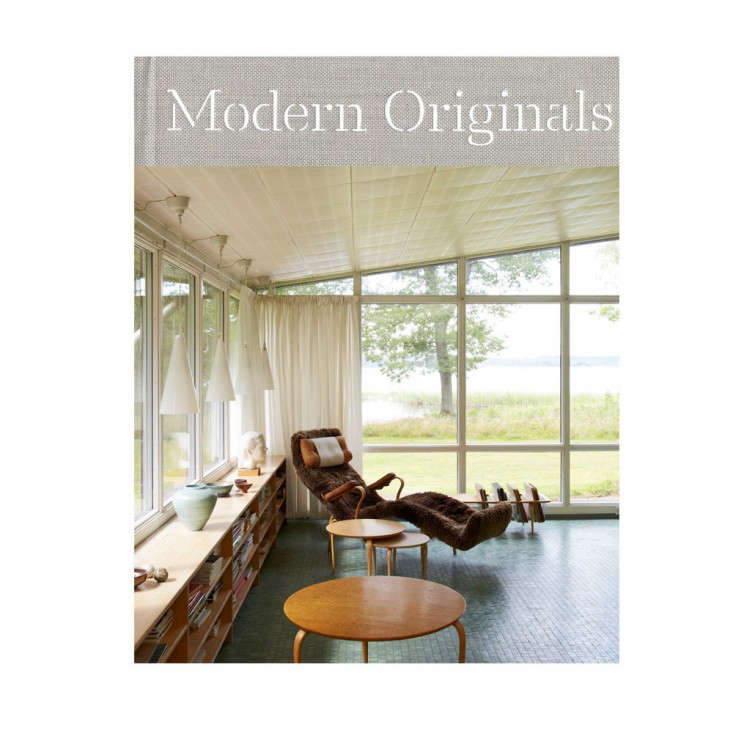
Modern Originals: At Home with MidCentury European Designers is more than a handsome design book you leave on a coffee table to quietly intimidate guests. It is a doorway into the private rooms, studios, and daily habits of some of Europe’s most influential moderniststhe people who made chairs look like sculpture, lamps behave like architecture, and plywood suddenly seem emotionally intelligent.
At its heart, the subject is simple: how did the great midcentury European designers actually live? Not how their objects looked in museum lighting. Not how a showroom arranged them with one tasteful ceramic bowl and suspiciously no mail. But how their ideas worked at home, among books, tools, textiles, prototypes, family routines, and the occasional beautifully placed mess.
Leslie Williamson’s Modern Originals, published by Rizzoli, focuses on intimate interiors connected to designers and architects such as Le Corbusier, Alvar Aalto, Finn Juhl, Robin and Lucienne Day, Achille Castiglioni, Gae Aulenti, Bruno Mathsson, and Carlo Mollino. These homes reveal a warmer, stranger, and more human version of midcentury European design. The book reminds us that modernism was never only about white walls and stern chairs. It was about solving lifepreferably with excellent joinery.
Why MidCentury European Design Still Feels Fresh
Midcentury European design has survived decades of trends because it solves a problem that never goes out of style: how to live well with less visual noise. The best modernist interiors are not empty. They are edited. Every chair, shelf, lamp, and table has a job, but nothing feels like office furniture doing overtime in your living room.
The movement grew from several overlapping ideas: Bauhaus functionalism, Scandinavian humanism, Italian experimentation, French architectural rationalism, and postwar optimism. European designers were responding to real conditionssmaller homes, new materials, changing family life, and a hunger for democratic design. Their work rejected heavy ornament, but not beauty. In fact, beauty often came from making function visible.
That is why an Aalto chair, a Juhl lounge chair, or a Castiglioni lamp still feels contemporary. These pieces do not scream, “Look at me, I am important.” They simply sit there being useful, elegant, and annoyingly better designed than whatever flat-pack side table you bought during a midnight online shopping episode.
The Home as a Design Laboratory
One of the most powerful ideas in Modern Originals is that a designer’s home is not just a residence. It is a laboratory. A studio. A diary with doors. In their own spaces, designers could test proportions, materials, light, storage, and comfort without waiting for a client to approve the invoice.
For midcentury European designers, the home often became the purest expression of their thinking. A chair was not isolated from the room. A table was not just a table. A lamp did not merely prevent people from bumping into things after sunset. Each object belonged to a larger ecosystem of living.
Alvar and Aino Aalto: Human Modernism in Wood and Light
Alvar Aalto is often described as a modernist, but his work never felt cold in the way some modernism can. Aalto and his wife, Aino Aalto, brought warmth, craft, and human comfort into functional design. Their interiors show how modern architecture could be soft without becoming sentimental.
The famous Paimio Chair, originally designed for a tuberculosis sanatorium, is a perfect example. Its bent plywood form was not merely sculptural; it was created with the patient’s body and breathing in mind. That practical compassion runs through Aalto’s work. His furniture curves because people do. His rooms breathe because people need to.
At home, the Aaltos used wood, textiles, natural light, and carefully scaled furniture to create a version of modernism that feels lived in. It is disciplined, yes, but never icy. Think less “do not touch anything” and more “please sit down, the chair has already thought about your spine.”
Finn Juhl: The Poetry of the Chair
Danish designer Finn Juhl helped introduce Danish modern design to an international audience, especially in the United States. His furniture is famous for its sculptural quality: seats seem to float inside frames, arms curve with animal-like grace, and wooden structures appear both strong and light.
Juhl’s home in Denmark shows how refined design can still feel personal. His rooms were not staged as sterile galleries. They included art, books, color, and a sense of atmosphere. The lesson is useful: a great midcentury interior does not need to be beige, silent, and afraid of personality. Juhl understood that comfort and drama can share the same chair.
His designs also prove that “functional” does not have to mean boring. A spoon is functional. A tax form is functional. Juhl’s chairs are functional and somehow flirtatious. That is a rare achievement.
Le Corbusier, Charlotte Perriand, and the Machine for Living
Le Corbusier famously advanced the idea of the house as a “machine for living,” but the best interiors connected to his circle are more nuanced than that phrase suggests. The collaboration between Le Corbusier, Pierre Jeanneret, and Charlotte Perriand produced some of the most recognizable furniture of the modern age, including tubular-steel seating and the celebrated chaise longue.
Perriand’s contribution is especially important. She brought a sharp understanding of the body, daily life, and material honesty to modern furniture. Her work balanced machine-age clarity with human ease. In today’s interiors, that balance remains incredibly relevant. People want clean lines, yesbut they also want to take a nap without feeling like they are lying on a chrome philosophy lecture.
The legacy of this French-Swiss modernist circle is not simply the look of steel, leather, and geometry. It is the idea that furniture should support modern life directly. A chair should fit the body. Storage should reduce chaos. Rooms should make daily routines easier, not more theatrical.
Achille Castiglioni: Serious Design with a Wink
Italian designer Achille Castiglioni brought humor, curiosity, and brilliant practicality to modern design. The Arco floor lamp, designed with his brother Pier Giacomo Castiglioni in 1962, is a classic example: it gives the effect of overhead lighting without requiring a ceiling fixture. The Carrara marble base anchors a long metal arc, turning a lamp into a small piece of domestic engineering.
Castiglioni’s work shows that modern design does not have to behave like it is attending a very serious conference. It can be witty. It can borrow from streetlights, tractor seats, photography equipment, or everyday objects. His studio environment reflected that curiosity, filled with references, prototypes, and humble things waiting to be reconsidered.
The Castiglioni lesson for today’s home is liberating: buy fewer objects, but choose objects with intelligence. A clever lamp can do more for a room than six decorative accessories having an identity crisis on a console table.
Gae Aulenti: Architecture, Furniture, and Strong Opinions
Gae Aulenti was one of Italy’s most important postwar designers and architects, known for projects ranging from furniture to major museum transformations, including the Musée d’Orsay in Paris. Her work often had a bold architectural presence, even at the scale of a table or lamp.
Aulenti’s interiors and furniture demonstrate that midcentury European design was not one single style. It was a conversation. Some designers preferred lightness and restraint; Aulenti often embraced weight, monumentality, and spatial drama. Her Jumbo table, for example, turns marble into something both functional and commanding.
In a home, Aulenti’s spirit encourages confidence. Not every room needs to whisper. Sometimes a space benefits from one strong piece that says, politely but firmly, “I am the reason we are all here.”
Carlo Mollino: The Eccentric Genius in the Room
If Aalto represents humane warmth and Castiglioni represents playful intelligence, Carlo Mollino represents the mysterious dinner guest who knows too much about skiing, photography, aircraft, and surrealism. An architect, designer, photographer, writer, and professor, Mollino created interiors and furniture with a sensual, almost theatrical quality.
His rooms were deeply personal, filled with curves, symbolism, and carefully staged atmosphere. Mollino reminds us that modernism was not always minimal. It could be strange, private, expressive, and even cinematic. His furniture often feels less like equipment and more like a creature that wandered in from an elegant dream.
For contemporary homeowners, Mollino offers a useful warning: do not confuse modern design with plainness. A modern room can have mystery. It can have shadows, curves, stories, and a little drama. The goal is not to remove personality. The goal is to refine it until it becomes unforgettable.
Common Threads in European Midcentury Interiors
Although these designers worked in different countries and styles, their homes reveal several shared principles. First, materials matter. Wood, leather, steel, glass, wool, marble, and ceramic were not chosen randomly. Each material carried texture, meaning, and performance.
Second, proportion is everything. Midcentury European interiors rarely depend on clutter for interest. Instead, they rely on the relationship between objects: the height of a chair back, the thickness of a tabletop, the placement of a lamp, the rhythm of shelves, the amount of air around a sofa.
Third, these homes were personal. They included art, books, tools, experiments, and collected objects. The modernist home was not a showroom; it was a working environment for living. That distinction matters. A showroom asks you to admire. A home asks you to stay for coffee.
How to Bring the Modern Originals Spirit Into Your Home
You do not need a museum-quality Finn Juhl chair or an original Castiglioni lamp to apply the lessons of Modern Originals. The deeper value lies in approach, not acquisition. Start by editing. Remove the pieces that do not work, do not fit, or only exist because you panicked before guests arrived.
Choose furniture with visible purpose. A dining chair should be comfortable enough for long conversations. A lamp should create atmosphere and serve the task. A shelf should organize life without looking like it is losing a battle against paperwork.
Mix warmth with clarity. Pair clean-lined furniture with natural materials. Use wood to soften metal. Use textiles to soften geometry. Add art and personal objects, but give them room to breathe. The European midcentury home is not about emptiness; it is about intention.
Most importantly, let rooms evolve. The best interiors in Modern Originals feel accumulated, not decorated in one heroic weekend. They show evidence of use: a chair near a window, a worktable with tools, a shelf that reflects a mind at work. That is what makes them modern originals rather than modern copies.
Experience Notes: Living With MidCentury European Design
Spending time with the ideas behind Modern Originals: At Home with MidCentury European Designers changes how you look at ordinary rooms. Suddenly, a chair is not just a place to drop a jacket. A lamp is not just a glowing stick. A table is not merely a horizontal surface where coffee mugs gather to form a tiny ceramic civilization. Everything becomes a decision about how life should feel.
The most useful experience is learning to slow down before buying anything. Midcentury European designers were not allergic to objects; they were allergic to careless objects. Their homes suggest that a room improves when every piece earns its place. This does not mean living like a monk with better lighting. It means choosing fewer things and asking better questions: Is this comfortable? Is it well made? Does it solve a real problem? Will I still like it after the algorithm stops showing it to me?
Another experience is noticing the power of light. Aalto’s interiors, Castiglioni’s lamps, and Scandinavian homes in general all teach that lighting is not decoration added at the end. It is architecture’s mood ring. A single well-placed floor lamp can make a reading corner feel intentional. A pendant over a table can turn Tuesday soup into an event. Bad lighting, on the other hand, can make even beautiful furniture look like it is being interrogated.
Living with midcentury-inspired design also reveals the importance of touch. Smooth wood arms, woven seats, wool rugs, leather cushions, ceramic cupsthese details matter because home is not only seen. It is handled. The best European modernists understood that materials should age with dignity. A scratch on real wood can become patina. A scratch on cheap laminate becomes evidence.
There is also an emotional lesson. These designers were serious, but their homes were not lifeless. Finn Juhl used color and art. Castiglioni embraced wit. Mollino built atmosphere like a novelist. Aulenti allowed strength and monumentality. The result is a generous definition of modern living: disciplined but not dull, functional but not joyless, elegant but not afraid of a little eccentricity.
For today’s homeowner, renter, student, or design enthusiast, the best takeaway is permission. Permission to edit. Permission to care about proportion. Permission to buy one excellent chair instead of five nervous ones. Permission to mix a vintage table with a new sofa, a handmade bowl with a clean-lined shelf, or a practical desk lamp with a dramatic piece of art.
The true experience of Modern Originals is not copying the homes of famous designers. It is learning to see your own home as a place where ideas become habits. When a room supports how you read, cook, work, rest, talk, and think, design stops being a style and becomes a companion. That is the quiet genius of midcentury European design: it does not merely want to impress visitors. It wants to improve Tuesday afternoon.
Conclusion: The Warm Intelligence of Modern Originals
Modern Originals: At Home with MidCentury European Designers continues to matter because it reveals the private side of public genius. Behind the iconic chairs, lamps, tables, and buildings were real homes shaped by experiment, comfort, curiosity, and daily rituals.
Midcentury European design is often praised for clean lines and timeless silhouettes, but its deeper power is emotional intelligence. Aalto made modernism breathe. Juhl made chairs lyrical. Perriand made function humane. Castiglioni made utility playful. Aulenti made furniture architectural. Mollino made interiors dream.
Together, they show that good design is not about owning famous objects. It is about creating a home where beauty and usefulness stop arguing and finally agree to split the rent.
Note: This article is original editorial content written for web publication and synthesized from reputable design-history, museum, publisher, and architecture sources. External source links are intentionally not included in the body copy.