Note: This article is written for readers who enjoy mystery without throwing science out the window. It does not claim aliens visited Earth; it explores famous UFO and UAP sightings that remain culturally fascinating, historically important, or just plain strange.
UFO stories live in a funny little neighborhood between “that is obviously a weather balloon” and “why is the Pentagon suddenly using very serious fonts?” The modern term is often UAP, short for unidentified anomalous phenomena, because apparently “UFO” arrived at the office wearing a tinfoil hat and HR had to rebrand it.
Still, the mystery remains. Most UFO sightings eventually become IFOs: identified flying objects. They turn out to be aircraft, drones, flares, balloons, satellites, planets, meteors, camera artifacts, optical illusions, or someone’s uncle misjudging Venus after two lemonades. But a few cases stay interesting because they involve multiple witnesses, unusual movement, official attention, radar or video records, or a public explanation that feels like it arrived late to class with coffee on its shirt.
Below are five famous UFO sightings that probably do not prove alien visitors, but definitely deserve the phrase: “Probably not, but that is weird.”
1. Roswell, New Mexico: The UFO Story That Refuses to Retire
What happened?
In July 1947, debris was found near Roswell, New Mexico, and the local military initially issued a statement saying it had recovered a “flying disc.” That phrase was the match. The gasoline was everything that happened afterward. The story was quickly revised, with officials saying the debris came from a weather balloon. Decades later, official Air Force research connected the debris to Project Mogul, a classified balloon program designed to detect Soviet nuclear testing through high-altitude acoustic sensors.
On paper, the explanation is fairly strong: secret military balloon, Cold War context, confusing debris, and a government that could not simply say, “Relax, everyone, it is our top-secret spy balloon system.” That is not great for public trust, but it is excellent compost for conspiracy theories.
Why it still feels weird
Roswell became the “genesis story” of American UFO culture because it contains everything a mystery needs: a remote crash site, changing official statements, classified military activity, strange materials, eyewitness memories, and a silence that people filled with increasingly cinematic possibilities. The later “alien bodies” claims are not supported by official findings, but Roswell remains important because it shows how secrecy can turn a confusing event into a permanent legend.
The lesson is simple: when the government says “weather balloon” after first saying “flying disc,” the public will not calmly nod and go make soup. It will build an entire mythology, open several gift shops, and sell T-shirts until the sun burns out.
2. The Lubbock Lights: When Professors Looked Up and Said, “Excuse Me?”
What happened?
In August and September 1951, residents of Lubbock, Texas, reported strange formations of lights moving across the night sky. The most famous witnesses included professors from Texas Technological College, now Texas Tech University. They described groups of bright, fast-moving lights, sometimes in a V-shaped pattern. A college student named Carl Hart Jr. also photographed lights that became some of the best-known UFO images of the early 1950s.
The U.S. Air Force investigated the case during the Project Blue Book era. Some proposed explanations included birds reflecting streetlights, atmospheric effects, aircraft, or experimental planes. None of those explanations satisfied everyone. Birds, for example, do not usually make professors abandon casual conversation and start reporting sky geometry like they are in a cosmic pop quiz.
Why it still feels weird
The Lubbock Lights stand out because the witnesses were not just one excited person in a field. They included educated observers who were familiar with basic astronomy and engineering. That does not make them incapable of error; smart people misidentify things all the time. But it does make the case harder to wave away with a lazy “somebody saw a duck” explanation.
The photographs also add to the intrigue, even though old nighttime photos can be tricky. Exposure, angle, motion, and contrast can turn ordinary objects into floating punctuation marks from another dimension. Still, the Lubbock Lights remain one of the classic UFO sightings because they sit in that uncomfortable zone: not enough evidence for aliens, not enough certainty for a clean dismissal.
3. The Phoenix Lights: Arizona’s Giant V-Shaped Headache
What happened?
On March 13, 1997, thousands of people across Arizona reported unusual lights in the sky. Many described a massive V-shaped formation moving silently overhead. Later that night, another set of lights appeared over the Phoenix area. The second event has often been explained as military flares dropped during a training exercise by aircraft associated with the Air National Guard.
The flare explanation is plausible for the stationary lights seen later in the evening. Flares can drift, glow, and vanish behind mountain ranges in a way that looks deeply suspicious if you are standing in your driveway wondering whether your HOA has a policy on interstellar parking.
Why it still feels weird
The weird part is that many witnesses insisted there were two different events: one involving a large, silent, moving formation and another involving lights that behaved more like flares. Skeptics argue the V-shaped object may have been aircraft flying in formation, with people misjudging distance, altitude, and scale in the dark. That is possible. Human night vision is not exactly a NASA instrument.
But the Phoenix Lights became legendary because the reports were widespread, the descriptions were dramatic, and the public response included frustration over how casually the event seemed to be handled. The case also gained extra folklore fuel when Arizona’s then-governor Fife Symington later said he had seen something unusual himself, despite initially treating the event with humor.
The Phoenix Lights are probably not proof of extraterrestrial visitors. But as a mass sighting with a split timeline, a flare explanation that only satisfies part of the story, and thousands of witnesses, it remains one of America’s most memorable UFO events.
4. Chicago O’Hare Airport, 2006: A Saucer Over Gate C17
What happened?
On November 7, 2006, several United Airlines employees at Chicago O’Hare International Airport reported seeing a dark, metallic, saucer-like object hovering above Gate C17. Witnesses said it lingered briefly, then shot upward through the clouds, allegedly leaving a circular hole in the cloud layer. That is an extremely dramatic exit for something that may have been “weather.” Weather usually does not leave like it just remembered a dentist appointment.
The Federal Aviation Administration later described the incident as a weather phenomenon and did not pursue a major investigation, partly because the object was not detected on radar. Reports from the time suggested that the sighting became public after a Freedom of Information Act request revealed communications about the event.
Why it still feels weird
This case is fascinating because it took place at one of the busiest airports in the United States and involved aviation workers, not random passersby unfamiliar with aircraft. Airline employees, pilots, and mechanics spend their lives around flying machines. When they say, “That does not look like the usual flying machine,” it gets attention.
The skeptical explanation involves unusual atmospheric conditions, airport lights, cloud formations, or a hole-punch cloud effect. That is reasonable, especially because the object was not captured on radar. But the witness descriptions remain oddly specific: a hovering disc, silence, rapid vertical movement, and a hole in the clouds.
The O’Hare UFO sighting is not the strongest evidence for alien technology. It is, however, a perfect example of why UAP cases matter for aviation safety and reporting culture. Even if the answer is “weather,” pilots and airport staff should feel comfortable reporting strange aerial events without being treated like they showed up to work wearing a cape made of aluminum foil.
5. The USS Nimitz “Tic Tac” Encounter: The Case That Made UFOs Wear a Suit
What happened?
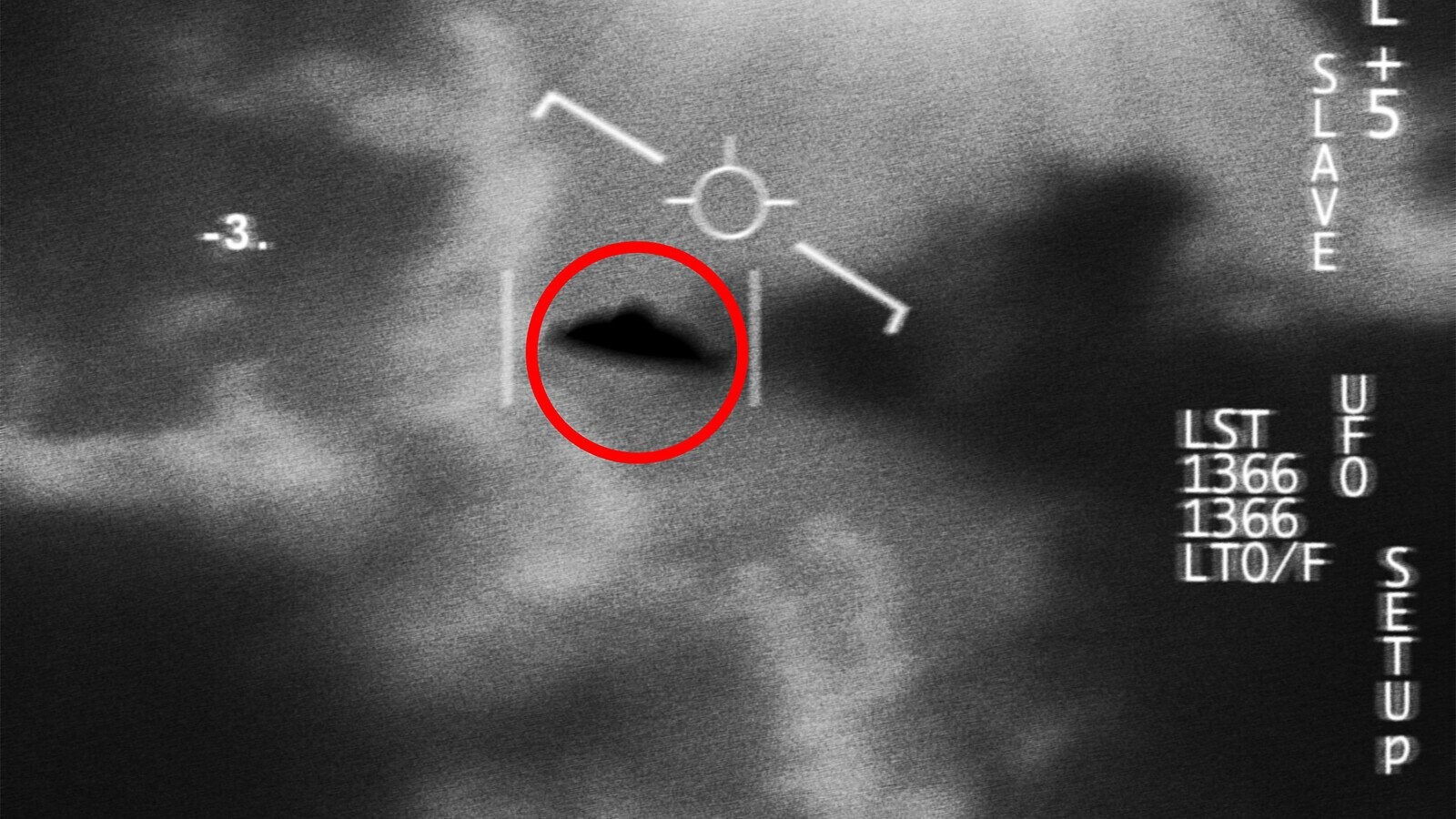
In November 2004, Navy personnel associated with the USS Nimitz Carrier Strike Group encountered an unusual object off the coast of Southern California. Navy pilot Commander David Fravor and others described a white, oblong object shaped like a Tic Tac candy, with no visible wings, rotors, or exhaust. The object reportedly moved in strange ways and was associated with unusual radar observations.
Years later, videos connected to Navy UAP encounters became public, including the famous FLIR, GIMBAL, and GOFAST clips. In 2020, the Department of Defense formally released three Navy videos, confirming they were authentic Navy footage while not claiming they showed extraterrestrial craft. That distinction matters. “Authentic video” does not mean “alien sports car.” It means the video is real and the object is not publicly identified.
Why it still feels weird
The Tic Tac case changed the public conversation because it involved trained military observers, advanced sensors, official acknowledgement, and serious national security framing. It pushed UFOs out of the late-night-radio zone and into congressional hearings, government reports, and scientific conversations about data collection.
There are still skeptical angles. Sensor artifacts, distance misjudgments, classified aircraft, atmospheric effects, and incomplete data can all create mysteries. Video clips can look spectacular while leaving out context such as range, speed, camera movement, and tracking behavior. Anyone who has ever filmed a bird with a phone and accidentally created a documentary about a blurry potato understands this problem.
Even so, the Nimitz case remains one of the most compelling modern UAP stories because it is not based only on memory. It is tied to military systems, professional witnesses, and official releases. It does not prove aliens. It does prove that some aerial encounters are confusing enough for serious institutions to pay attention.
Why UFO Sightings Are So Hard to Explain
UFO sightings are difficult because the sky is huge, fast, dark, bright, reflective, crowded, and deeply inconvenient. Humans are not built-in radar systems. We misjudge distance and speed. We see patterns where there may be none. We also live under a sky full of aircraft, satellites, drones, balloons, meteors, rocket launches, military exercises, and atmospheric phenomena.
At the same time, dismissing every report as nonsense is lazy. Some sightings involve credible witnesses and deserve structured investigation. NASA’s modern UAP work has emphasized better data, better sensors, and less stigma. That is the grown-up answer. Not “aliens are definitely here,” and not “everyone who saw something is silly,” but “let’s collect better evidence before we start naming ambassadors to Planet Zorp.”
Common Explanations That Are Less Fun Than Aliens but Usually Correct
Military flares
Flares can look like hovering lights, especially when seen from a distance at night. They can appear to move slowly, change brightness, and vanish behind terrain.
Balloons and high-altitude research equipment
Balloons have caused confusion for decades. Some are simple weather balloons; others are classified or scientific platforms. Either way, they can look strange when sunlight hits them at high altitude.
Planets, stars, and meteors
Venus has probably been accused of being an alien spacecraft more times than any actual spacecraft in history. Meteors can also create sudden flashes, streaks, and fragmentation.
Drones and satellites
Modern drone swarms and satellite trains have made the sky weirder. Many recent UFO reports are likely caused by technology that did not exist, or was not common, during older UFO waves.
Camera and sensor artifacts
Infrared cameras, zoom lenses, glare, autofocus issues, and compression can transform ordinary objects into mysterious blobs. The blob community has never been more powerful.
So… Are Any of These UFO Sightings Aliens?
Probably not. But “probably not” is not the same as “boring.” The best UFO sightings are interesting because they reveal how humans interpret uncertainty. They show how official secrecy creates legends, how eyewitness testimony can be both sincere and unreliable, and how public trust depends on transparent investigation.
Roswell shows how classified projects can become cultural mythology. The Lubbock Lights show how even educated observers can be baffled by the night sky. The Phoenix Lights show how mass sightings can split into competing explanations. O’Hare shows why aviation reports deserve serious attention. The Nimitz Tic Tac case shows that UAP can be a legitimate topic for defense, science, and public policy without requiring anyone to start packing for Mars.
The smart position is curiosity with brakes. Wonder is good. Evidence is better. A healthy UFO mindset says: “I do not know what that was, but I would love better data.” That is less dramatic than “take me to your leader,” but it is much more useful.
Experiences Related to UFO Sightings: Why Weird Sky Moments Stick With Us
Almost everyone has had at least one strange sky moment. Maybe you were walking home at night and saw a light moving too smoothly to be a plane. Maybe you watched a bright dot stop, fade, and reappear. Maybe a line of lights crossed the sky and your brain briefly opened a browser tab labeled “aliens???” before someone explained it was Starlink. These experiences are powerful because the sky is one of the few places where ordinary life still feels enormous.
What makes a UFO-like experience memorable is not always the object itself. It is the sudden emotional shift. One second you are thinking about homework, dinner, bills, or whether your phone battery is emotionally unstable. The next second you are staring upward, feeling very small and very awake. Your mind starts doing detective work: Is it moving? Is it blinking? Is there sound? Is anyone else seeing this? Should I record it? Why is my camera suddenly performing like it was built in 1998?
That last part is especially relatable. Many people who witness something odd try to capture it, only to discover that nighttime phone footage turns the universe into three pixels and a regret. A bright light becomes a trembling dot. A silent formation becomes a blurry smear. The experience felt huge in person, but the video looks like a confused firefly. This gap between lived experience and recorded evidence is one reason UFO stories are so hard to evaluate.
Group experiences are even more interesting. When several people see something together, the event becomes social. People compare descriptions, correct each other, argue about direction, and slowly build a shared memory. Sometimes that improves accuracy. Sometimes it creates a group story that feels more certain than the evidence deserves. Human memory is not a hard drive; it is more like a group chat with confidence issues.
There is also a cultural layer. People raised on science fiction may interpret a silent triangle differently from someone who works near an airport. A pilot may notice flight behavior. An astronomer may check planets. A teenager may post it online with twelve skull emojis. None of these reactions are automatically wrong; they show how background shapes perception.
The best response to a personal UFO experience is calm curiosity. Write down the time, direction, weather, sound, movement, color, duration, and whether other witnesses saw it. Check aircraft trackers, satellite passes, local rocket launches, meteor reports, and nearby military activity. If it remains unexplained, that does not mean it was alien. It means it is unidentified with the information available.
And honestly, that can still be exciting. Not every mystery needs a spaceship to be meaningful. Sometimes the weirdness itself is the point. A strange light in the sky reminds us that the world is bigger than our daily routine, that perception is fragile, and that mystery still has a reserved seat above us every night. Probably not aliens. But yes, definitely weird.
Conclusion
UFO sightings are at their best when they are treated with both imagination and discipline. The five cases above are not proof of extraterrestrial life, but they are reminders that unexplained does not mean unimportant. Some sightings are cultural artifacts. Some are aviation safety questions. Some are Cold War leftovers. Some may be ordinary objects wearing very convincing mystery costumes.
The future of UFO research will not be built on blurry clips alone. It will depend on open reporting, scientific instruments, credible witnesses, transparent investigation, and the courage to say “we do not know yet” without turning that sentence into a circus tent. Until then, the sky remains open, strange, and occasionally rude enough to make everyone stop what they are doing and stare.