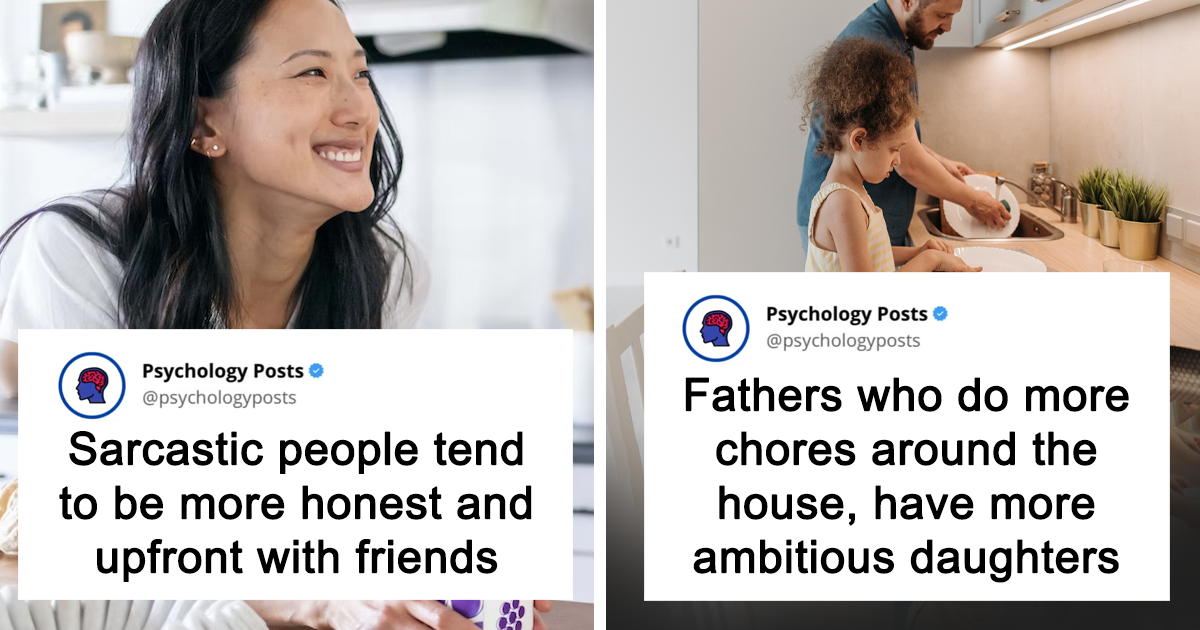
Note: This article is based on real psychology and mental-health research from reputable organizations and educational sources, including the American Psychological Association, CDC, NIMH, NIH, Harvard Health, Stanford Medicine, and peer-reviewed behavioral science literature. It is written for general education and entertainment, not diagnosis or medical advice.
Instagram has a strange superpower: it can make you laugh at a cat in sunglasses, question your entire personality, and learn a psychological fact before your coffee gets cold. That is exactly why psychology-focused Instagram pages have become so addictive. They take big ideas about memory, emotions, relationships, stress, confidence, habits, and motivation, then shrink them into bite-sized posts that feel like tiny therapy fortune cookies.
The page behind this kind of viral fascination shares short psychological facts that make people pause and say, “Wait, that explains me a little too well.” Of course, not every internet psychology post should be treated like a scientific law carved into a marble brain. Some are simplified. Some are more “interesting conversation starter” than “clinical truth.” But when these posts are grounded in real psychology, they can help people understand themselves better, communicate more kindly, and stop blaming themselves for being human.
Below are 50 fascinating psychological facts inspired by the world of social-media psychology content, rewritten with a research-informed lens and a bit of humorbecause the brain may be complicated, but that does not mean we have to discuss it like a dusty textbook wearing a tie.
Why Psychological Facts Are So Popular Online
Psychology facts go viral because they offer something the internet loves: quick meaning. People do not just want information; they want recognition. A good psychology post says, “That weird thing you do? There may be a reason.” Suddenly, overthinking becomes a pattern, procrastination becomes an emotional response, and doom-scrolling becomes less of a personal failure and more of a design problem with Wi-Fi.
Another reason these facts spread is that they are socially useful. They give people language for feelings they could not explain before. A person may learn about emotional regulation, cognitive distortions, social connection, or sleep and suddenly understand why one bad night can turn a minor inconvenience into a Shakespearean tragedy. That does not replace professional help, but it can open the door to self-awareness.
50 Fascinating Psychological Facts That Explain Everyday Behavior
1. Your brain loves shortcuts.
The brain constantly filters information to save energy. That is why first impressions, assumptions, and mental habits form so quickly. Helpful? Sometimes. Perfect? Absolutely not.
2. Sleep affects emotional control.
After poor sleep, many people become more reactive, less patient, and worse at handling stress. In other words, your “personality problem” may occasionally be a bedtime problem.
3. Social connection protects mental well-being.
Supportive relationships are linked with better emotional and physical health. Humans are not built like phone chargers; we do not work best when isolated in a corner.
4. Gratitude can shift attention.
Practicing gratitude helps the mind notice what is working, not only what is missing. It is not magical glitter, but it can train attention toward balance.
5. Your mood changes what you remember.
When people feel low, they often recall more negative memories. When they feel good, positive memories become easier to access. The brain is basically a DJ with mood-based playlists.
6. Stress can be useful in small doses.
Short-term stress can sharpen focus and motivate action. Chronic stress, however, is like leaving every browser tab open forever: eventually, the system slows down.
7. Nature can calm attention.
Time in green spaces has been linked to lower stress and improved mood. A walk outside may not solve everything, but it can make the brain stop acting like a shaken soda can.
8. Rejection hurts because belonging matters.
The need to belong is deeply human. Social rejection can feel intense because connection has always been tied to survival, support, and identity.
9. Overthinking often tries to create control.
Rumination can feel productive, but it often repeats the same worries without solving them. It is like opening the fridge ten times and expecting new snacks to appear.
10. Dopamine is about motivation, not just pleasure.
Dopamine helps drive pursuit, anticipation, and learning. It is less “happiness chemical” and more “go get the thing” messenger.
11. Habits reduce mental effort.
Once a behavior becomes routine, the brain uses less conscious energy to perform it. This is why building a good habit feels hard at first and automatic later.
12. People mirror emotions.
Emotional contagion is real: moods can spread through groups. One calm person can steady a room, while one dramatic person can turn a meeting into a weather event.
13. Confidence often follows action.
Many people wait to feel confident before starting. Psychology suggests the reverse often happens: action creates evidence, and evidence builds confidence.
14. Memory is reconstructive.
Memories are not perfect recordings. Each time we recall something, the brain can reshape it slightly. Your mind is not a camera; it is more like an editor with opinions.
15. Multitasking is usually task-switching.
The brain does not truly perform several demanding tasks at once. It switches attention quickly, which can reduce accuracy and increase fatigue.
16. Naming emotions can reduce their intensity.
Labeling a feelingsuch as “I feel anxious” or “I feel disappointed”can create distance from it. The emotion is still there, but it is no longer driving the car alone.
17. Kindness improves the giver too.
Acts of kindness can boost positive emotions and social connection. Helping someone else is one of the rare situations where both people may leave with emotional snacks.
18. People seek patterns, even in randomness.
The human brain is built to detect patterns. This helps us learn, but it also means we sometimes see meaning where there is only coincidence.
19. Anxiety often overestimates danger.
An anxious mind tries to protect you by scanning for threats. The problem is that it sometimes treats a text message delay like a tiger in the hallway.
20. Body posture can influence emotion.
How people carry themselves may affect mood and confidence. Standing tall will not turn anyone into a superhero, but the body and mind do talk to each other.
21. People remember unfinished tasks.
Unfinished goals can stay active in memory, which is why incomplete chores nag at you like tiny unpaid interns.
22. Music can regulate mood.
People use music to energize, calm down, process sadness, or feel understood. A playlist can be emotional first aid with better bass.
23. Social media affects people differently.
Online platforms can offer support and connection, but they can also increase comparison, loneliness, or stress depending on how they are used.
24. Comparison is automatic but not always accurate.
People often compare their behind-the-scenes life to someone else’s highlight reel. This is emotionally unfair and also a terrible math equation.
25. Self-talk shapes interpretation.
The way people speak to themselves influences how they understand setbacks. “I failed” feels very different from “I am learning.”
26. Laughter reduces tension.
Humor can lower stress, increase bonding, and help people cope. This is why one good joke can rescue a painfully awkward room.
27. People need both novelty and routine.
Routine creates safety and efficiency, while novelty stimulates learning and curiosity. A healthy life usually needs both a calendar and a little chaos.
28. Emotional intelligence can be practiced.
Skills like empathy, listening, self-regulation, and conflict repair improve with effort. Nobody is born knowing how to discuss feelings gracefully during a group project.
29. Loneliness is not the same as being alone.
A person can feel peaceful alone or lonely in a crowded room. Loneliness is about the quality of connection, not the number of people nearby.
30. The brain reacts strongly to uncertainty.
Uncertainty can increase stress because the mind wants prediction. This explains why “we need to talk” is one of the most terrifying sentences in modern civilization.
31. Small wins build motivation.
Progress, even tiny progress, gives the brain evidence that effort matters. That is why checking one task off a list can feel oddly heroic.
32. People are more persuasive when they feel understood.
Listening first often works better than arguing first. The brain lowers its defenses when it senses respect.
33. Your environment shapes behavior.
People often underestimate how much surroundings influence choices. Put your phone across the room, and suddenly your willpower gets a promotion.
34. Emotions are data, not commands.
A feeling can provide useful information, but it does not always require immediate action. Anger, fear, and sadness should be heard, not automatically handed the steering wheel.
35. People prefer familiar things.
The mere-exposure effect suggests repeated exposure can increase liking. This explains catchy songs, favorite mugs, and why your brain eventually forgives ugly sneakers.
36. Eye contact builds connection, but comfort varies.
Eye contact can signal attention and warmth, though people differ in what feels natural. Good communication respects comfort, culture, and context.
37. Decision fatigue is real.
After many choices, people may become mentally tired and choose impulsively or avoid decisions altogether. This is why dinner decisions at 8 p.m. can feel like a national emergency.
38. Breathing can influence the nervous system.
Slow, steady breathing can help the body shift away from stress activation. It is simple, free, and does not require a motivational poster.
39. People underestimate recovery time.
After stress, conflict, or intense focus, the brain and body need time to reset. Rest is not laziness; it is maintenance.
40. Your attention is limited.
Attention is a valuable mental resource. What you repeatedly focus on becomes louder in your inner world.
41. Emotional safety improves learning.
People learn better when they feel respected and supported. Shame may get attention, but safety helps the brain stay curious.
42. People often confuse familiarity with truth.
Repeated statements can feel more believable, even when they are not accurate. This is why checking sources matters, especially online.
43. Boundaries reduce resentment.
Healthy boundaries clarify what is okay and what is not. They are not walls; they are emotional traffic signs.
44. Touch can comfort, when welcomed.
Supportive physical contact, such as a hug from a trusted person, can help some people feel safer and calmer. Consent and comfort always matter.
45. People need meaning, not just happiness.
Meaning helps people endure effort and difficulty. A meaningful life is not always easy, but it feels connected to values.
46. Curiosity lowers defensiveness.
Asking questions can reduce conflict because it shifts the brain from threat mode to learning mode. Curiosity is basically emotional WD-40.
47. Screens before bed can disrupt sleep routines.
Late-night scrolling may interfere with rest through stimulation, light exposure, and emotional content. The brain does not always appreciate dramatic videos at midnight.
48. People are more resilient than they think.
Humans can adapt after setbacks, especially with support, healthy coping, and time. Resilience is not pretending everything is fine; it is rebuilding honestly.
49. Your inner critic learned its lines somewhere.
Harsh self-talk often develops from past experiences, expectations, or environments. The good news: learned patterns can be challenged and rewritten.
50. Self-awareness is powerful, but action changes life.
Understanding a pattern is the first step. Practicing a new response is where psychology becomes useful in real life.
What These Psychological Facts Teach Us About Modern Life
The biggest lesson from these facts is simple: people are not random. Our choices, reactions, fears, attachments, habits, and social behaviors usually come from understandable patterns. That does not excuse harmful behavior, but it does help explain why humans can be so brilliant on Monday and emotionally defeated by a missing charger on Tuesday.
Another lesson is that mental health is not separate from daily life. Sleep, relationships, movement, social media, self-talk, stress, and attention all influence how people feel and function. This is why “just think positive” is not enough. The brain needs supportive routines, meaningful relationships, realistic expectations, and sometimes professional help.
Psychology content on Instagram works best when it encourages curiosity rather than self-diagnosis. A post can help someone notice a pattern, but it cannot understand their full history, culture, health, family life, or personal circumstances. The smartest way to read psychological facts online is to treat them like a map, not a verdict.
Personal Experiences Related to These Fascinating Psychological Facts
One of the most relatable experiences with psychology facts is the sudden “oh no, that is me” moment. You are casually scrolling through Instagram, expecting recipes, memes, and someone’s suspiciously perfect vacation, when a post says something like, “People who over-explain often fear being misunderstood.” Suddenly you are staring at your phone like it just read your diary, your group chat, and the notes app confession you wrote at 1:14 a.m.
That is the charm of psychology content. It gives ordinary experiences a name. For example, many people have had the experience of feeling exhausted after doing nothing “big.” Then they learn about decision fatigue, emotional labor, or stress recovery, and everything makes more sense. The tiredness was not imaginary. The brain had been juggling choices, worries, messages, expectations, and tiny social calculations all day. No wonder it wanted to become a blanket burrito by evening.
Another common experience is realizing how much sleep changes personality. After a good night’s rest, a person may handle delays, noise, and awkward conversations with surprising grace. After a bad night, the same person may feel personally attacked by a slow elevator. Learning that sleep affects emotional regulation can create more self-compassion. Instead of thinking, “I am terrible at life,” someone might think, “I need rest before I make this everyone’s problem.” That is growth, with pajamas.
Social comparison is another experience almost everyone understands. You open Instagram for “just five minutes,” and suddenly everyone has glowing skin, perfect apartments, successful careers, peaceful relationships, and matching storage containers. Meanwhile, you are eating cereal from a mug because the bowls are “resting” in the sink. Psychology helps explain why this hurts: the brain compares quickly and often unfairly. Once you understand that comparison is automatic, you can pause and ask, “Is this real evidence, or am I comparing my full documentary to someone’s movie trailer?”
Then there is the experience of naming emotions. Many people grow up saying only “fine,” “tired,” or “stressed,” even when the real feeling is embarrassment, grief, jealousy, disappointment, or fear. Learning to label emotions more precisely can feel strange at first, like upgrading from a flashlight to a full control panel. But it helps. When someone can say, “I feel rejected,” they are more likely to respond wisely than if they only feel a mysterious emotional thunderstorm.
Psychology facts also show up in relationships. A person may learn that boundaries reduce resentment and suddenly understand why saying yes to everything has made them quietly furious. Another may learn that listening reduces defensiveness and realize why arguments improve when they stop preparing a courtroom speech and start asking better questions. These are not dramatic movie moments. They are small, practical shifts: pausing before replying, taking a breath, going to bed earlier, asking for clarification, putting the phone away, or admitting, “I reacted strongly because I felt hurt.”
The best part about these experiences is that they make psychology feel usable. It is not just something professors discuss beside complicated charts. It is in the way people apologize, procrastinate, flirt awkwardly, panic over unread messages, rewatch comfort shows, organize their desks, avoid difficult conversations, and feel better after walking outside. A good psychological fact does not make life perfect. It simply turns on a light. And sometimes, when the brain is being dramatic in the dark, a little light is exactly what we need.
Conclusion
Fascinating psychological facts are popular because they make human behavior feel less mysterious. They remind us that emotions have patterns, habits have triggers, relationships shape health, and the brain is both powerful and hilariously dramatic. Instagram pages that share psychology content can be helpful when readers approach them with curiosity, balance, and a little healthy skepticism.
The most interesting psychological facts are not just fun trivia. They can help people sleep better, communicate more clearly, manage stress, reduce comparison, build boundaries, and treat themselves with more patience. In a world full of noise, a simple insight about the mind can feel surprisingly grounding. And if that insight arrives between a meme and a cooking reel, well, the internet finally used its powers for something useful.