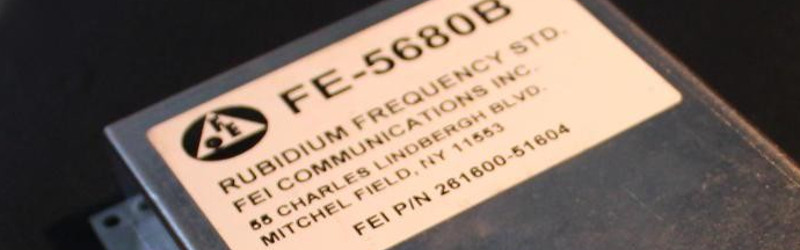
There are two kinds of clock builders. The first group is perfectly happy when a clock keeps time well enough that nobody misses lunch. The second group looks at a one-second pulse and thinks, “Yes, but how judgmental is that second?” This article is for the second group.
A rubidium reference for discrete component clocks sounds delightfully overqualified, like hiring an orchestra to play hold music. But once you understand what a rubidium standard actually does, the idea stops sounding excessive and starts sounding smart. When you are building clocks out of discrete logic, vintage transistors, dividers, buffers, or hand-tuned timing chains, your whole project lives or dies by the quality of its heartbeat. If the reference drifts, everything downstream drifts with it. Your elegant divider chain becomes a very polite liar.
That is why hobbyists, labs, and professional test benches all keep coming back to the same truth: a great clock begins with a great frequency reference. And in the world between everyday quartz and full-blown national timekeeping labs, rubidium occupies a sweet spot. It is stable, practical, compact enough to live on a bench, and far less intimidating than anything that sounds like it belongs in a missile silo.
What a Rubidium Reference Actually Is
At its core, a rubidium reference is an atomic frequency standard. That sounds dramatic because it is. Instead of trusting a crystal alone, the system uses the natural resonance of rubidium atoms as a referee for frequency. In practical units, that atomic resonance is tied to the hyperfine transition of rubidium-87 at roughly 6.834 GHz. In most instruments, a quartz oscillator is disciplined to that atomic behavior, and the user is given a much friendlier output such as 10 MHz, 5 MHz, or 1 pulse per second.
That last part matters. Most discrete component clocks are not going to sip directly from a 6.834 GHz atomic firehose. They want a clean, stable reference they can divide, buffer, square up, and distribute through ordinary logic. The magic of a rubidium standard is that it lets your homebuilt divider chain inherit atomic-level discipline without requiring your workbench to look like a microwave physics lab.
In other words, the rubidium unit handles the hard part. Your clock gets to act sophisticated while mostly just counting pulses. Not a bad arrangement.
Why It Is Better Than “Just Use a Crystal”
Quartz oscillators are wonderful. They are cheap, compact, and absolutely everywhere. If civilization ever collapses, the survivors will probably rebuild it using quartz watches and spite. But quartz also drifts with temperature, age, and environment. Even very good crystal oscillators eventually wander. Rubidium references are attractive because they bring much stronger long-term stability and reproducibility to the table.
That does not mean rubidium is perfect. It does not mean you can slam a module onto a messy power rail, drape unshielded wires across the bench, and call it atomic excellence. A rubidium standard is more like a stern but fair teacher. It will reward good design habits and expose lazy ones immediately.
Why Discrete Component Clocks Benefit So Much
Discrete component clocks are charming because they make time visible. You can trace the chain from oscillator to divider to display. You can watch transistor stages, logic families, and pulse shaping circuits do real work. A microcontroller-based clock can be elegant, but a discrete clock lets you see the machinery of timekeeping in public. It is the horological version of leaving the kitchen open in a restaurant.
That visibility is exactly why the reference matters so much. With discrete logic, every stage is honest about what it receives. If your 10 MHz input is off, your 1 Hz output will be off. If your reference is noisy, your derived clocks inherit that noise. If your source drifts because the room temperature changed or the oscillator aged, your beautiful divider chain will reproduce the mistake faithfully and without complaint.
A rubidium reference gives the entire project a stable anchor. It is especially attractive when the clock builder wants to generate multiple derived frequencies, such as 1 Hz for a second pulse, 32.768 kHz for timing experiments, 18 kHz for specialty projects, or other clean subdivisions for counters and display logic. Once the reference is trustworthy, the rest of the design becomes a question of engineering rather than guesswork.
The Difference Between Stability and Accuracy
This is where timing projects get deliciously nerdy. Stability and accuracy are not the same thing. A source can be very stable but slightly off frequency. It can also be accurate at one moment and noisy over shorter intervals. That distinction matters in clock design, calibration work, and lab measurement.
Rubidium references are prized because they tend to offer excellent stability, especially compared with ordinary oscillators. But many rubidium systems still benefit from calibration or disciplining against a more authoritative source such as GPS or a primary standard. Think of rubidium as the friend who is extremely consistent but still occasionally needs to check the map. Consistency is great. Consistently wrong is less impressive.
How a Rubidium Reference Fits Into a Real Clock Build
The classic setup is simple in concept. You start with the rubidium standard’s output, usually 10 MHz or 1 PPS. That reference feeds a distribution stage or buffer so the source is not loaded down by the rest of the circuit. From there, divider chains derive the frequencies the clock needs. A one-second pulse can drive counters. A higher reference can support multiplexing, display refresh timing, calibration points, or specialty outputs for comparison against other instruments.
For a discrete clock built from logic ICs or transistor stages, buffering is not optional. The reference should not be bullied by every downstream stage like it owes the project rent. Use a proper distribution amplifier or clean buffer stages, maintain sane impedance practices, and keep cable runs under control. Laboratories do this for a reason. The prettier your clock is, the less you want it to be ruined by a sloppy reference feed.
Power supply quality matters too. Builders who work with surplus rubidium modules quickly learn that these units are not enchanted rocks. They have warm-up behavior, current peaks, thermal needs, and sometimes wonderfully confusing connector pinouts. Some modules expose a lock signal, some provide 1 PPS only after lock, and some reveal extra frequencies if you are willing to reverse-engineer the internal signal chain. That is part of the fun, right up until the smell of cooked components suggests maybe you have had enough fun for one evening.
Thermal and Magnetic Reality Checks
Rubidium references like stable operating conditions. Temperature changes affect the physical package, electronics, and control loops. Some units are also sensitive to magnetic fields. That means a clock builder cannot treat the reference like a random metal box to be shoved beside transformers, switching supplies, or whatever mystery device is humming in the corner of the bench.
Thermal management becomes part of the design story. Too much heat sinking can slow warm-up or interfere with the unit’s internal thermal balance. Too little thought about airflow can create local hot spots. The lesson is not “fear the rubidium brick.” The lesson is to let the reference behave like the precision device it is.
The Joy of 10 MHz and 1 PPS
The reason 10 MHz keeps showing up in timing gear is simple: it is an extremely practical lab reference. It is high enough to divide into many useful values, low enough to distribute easily, and common enough that counters, oscilloscopes, signal generators, and synchronization hardware know exactly what to do with it. A clean 10 MHz rubidium reference can become the shared heartbeat for an entire workbench.
The 1 PPS signal is the opposite kind of useful. It is blunt, simple, and wonderfully readable. One pulse every second gives you a direct timing marker for counters, timestamping, and visual comparison. If a discrete component clock is your mechanical peacock, the 1 PPS output is the serious engineer standing behind it with a clipboard.
Together, 10 MHz and 1 PPS let you build clocks that are not only attractive but measurable. That is the real upgrade. You are no longer saying, “It seems pretty good.” You are saying, “It is derived from a disciplined reference, buffered correctly, and verified against known outputs.” That sentence makes timing people smile in a way that is frankly a little alarming.
Why Builders Still Love Surplus Rubidium Modules
One reason this topic keeps resurfacing is that surplus rubidium modules are irresistible. They offer genuine high-performance timing hardware at hobbyist-accessible prices, often because they once lived inside telecom, military, or measurement equipment. To a clock enthusiast, that is like finding an old Steinway at a garage sale.
Of course, surplus gear comes with personality. Lock time may be longer than ideal. Documentation may be sparse. A pin labeled “optional” may become tonight’s puzzle. Outputs may not appear exactly where you expect. Some modules reveal hidden frequencies on test points or internal nodes, which makes reverse engineering both useful and dangerously entertaining. More than one builder has started with the innocent goal of getting a 1 PPS output and ended up tracing CPLD paths, uncovering multiple clock domains, and reorganizing the whole bench around a once-forgotten rubidium block.
That spirit is part of what makes a rubidium reference so compelling in discrete component clock projects. It is not just a component. It is an invitation to learn how real timing hardware works.
Rubidium in the Bigger World
Rubidium is not merely a hobbyist fascination. Variants of rubidium standards have been used in labs, communications systems, calibration environments, and even space and navigation contexts. That broader history matters because it explains why these references exist in so many practical formats. They were built to serve serious systems that needed dependable timing without the bulk or complexity of larger primary standards.
For the bench builder, that history is excellent news. It means you are working with technology that has already earned trust in demanding environments. Your discrete clock may live on a shelf next to a soldering iron and an unreasonable number of BNC adapters, but the timing principles behind it are the same ones the professionals respect.
Design Tips for a Better Rubidium-Referenced Clock
1. Wait for Lock
Do not use the reference seriously until the unit is locked and thermally settled. A rubidium standard that is still warming up is like coffee that has not hit yet: technically present, not fully reliable.
2. Buffer the Reference
One source should feed many stages through proper buffering or distribution, not through wishful wiring. This reduces loading, preserves signal integrity, and keeps the reference from becoming the victim of your enthusiasm.
3. Respect Cabling and Impedance
Clock signals are not immune to ugliness. Use appropriate coax, reasonable lengths, correct termination where needed, and avoid turning the bench into a spaghetti audition.
4. Separate Measurement From Mythology
Verify derived outputs with a counter or instrument that can actually benefit from the rubidium reference. Once your instruments share the same reference, you can calibrate, compare, and debug with far more confidence.
5. Remember That Rubidium Is a Reference, Not a Religion
The goal is not to worship the atomic brick. The goal is to make the rest of the clock better. If the rubidium reference disappears and your architecture collapses, the design still needs work.
Hands-On Experiences With a Rubidium Reference
Anyone who spends real time with a rubidium reference learns the same lesson: the experience is half science, half relationship counseling. The first day is usually magical. You wire power, watch the current rise, stare at the lock indicator like it owes you a favor, and suddenly your bench has an atomic standard sitting on it. That moment feels absurdly grand for something that probably arrived in a reused cardboard box with enough bubble wrap to survive reentry.
Then the practical lessons begin. You notice that warm-up is not theoretical. It is real, visible, and sometimes a little dramatic. Some units settle quickly. Others take their time like retired professors walking to class. You learn that “locked” and “ready for serious measurement” are close cousins, not twins. You also learn that old modules have moods. One day they lock beautifully. Another day they act like they need a pep talk, a cleaner supply rail, and maybe a room that is not freezing.
There is also the thrill of discovery. Many builders start with the obvious outputs and end up poking around for more. A hidden 10 MHz node. An internal 20 MHz line. A logic divider path that explains how 1 PPS is really being created. This is where discrete clock builders feel at home, because reverse engineering a reference source feels like opening the back of time itself and finding out it was built by very clever people with very strong opinions about oscillators.
My favorite part of the experience, though, is what happens after the novelty wears off. The rubidium reference stops being the star of the bench and becomes the grown-up in the room. Suddenly every other project gets easier to judge. Is that divider chain clean? Is the display multiplex timing really stable? Is that oscillator drifting because of design choices or because the room got warmer? Once a trustworthy reference is available, arguments with your circuit become shorter and much more factual.
There is a confidence that comes from comparing a discrete clock against a serious source and seeing it behave exactly as intended. A one-second pulse lands where it should. A derived frequency sits still instead of wandering off like it has errands to run. Even when a design fails, it fails more honestly. That is valuable. The reference strips away excuses and leaves only engineering.
Of course, there are humbling moments too. An overloaded output, a noisy bench supply, poor grounding, or a careless cable choice can make an expensive reference look ordinary. Rubidium will not rescue sloppy construction. If anything, it makes sloppiness easier to detect. That can bruise the ego, but it also improves the work. Good clocks are built by people who are willing to let the measurements win.
In the end, using a rubidium reference in a discrete component clock project changes your expectations. You stop asking whether the clock merely runs. You ask how well it tracks, how cleanly it divides, how repeatably it behaves, and how elegantly the whole system distributes time. That shift is the real payoff. The rubidium box is impressive, sure, but the deeper reward is that it teaches you to build everything around it with more care. And that is how a weirdly overqualified frequency source turns a charming homemade clock into something genuinely serious.
Conclusion
A rubidium reference for discrete component clocks is not overkill. It is a strong answer to a very real problem: every clock is only as good as the signal it trusts. By bringing atomic discipline to a practical 10 MHz or 1 PPS output, rubidium standards let builders create clocks that are not only beautiful and educational, but also verifiable, repeatable, and impressively stable.
For hobbyists, it turns the bench into a miniature timing lab. For serious builders, it creates a stable foundation for dividers, counters, calibration work, and multi-instrument synchronization. And for anyone who loves watching circuits count their way down to one perfect second, it adds something wonderfully satisfying: confidence.
Build the clock from transistors, CMOS, TTL, relays, or pure stubbornness if you like. Just give it a reference worthy of the effort.