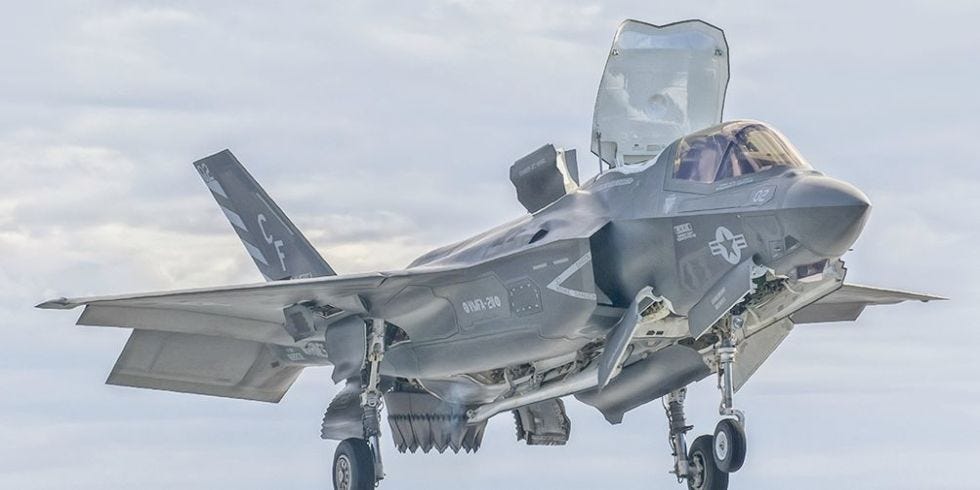
The Pacific is not exactly short on drama. It has superpower competition, missile tests, carrier strike groups, disputed seas, nervous allies, and enough acronyms to make a Pentagon briefing look like alphabet soup. Into that crowded picture comes the F-35 Lightning II, America’s fifth-generation stealth fighter, now playing a larger role in the Pacific theater as the United States, Japan, and South Korea sharpen their deterrence posture against North Korea.
The headline sounds simple: the F-35 is going to the Pacific to oppose North Korea. The reality is more layered. This is not a lone squadron riding in like a cowboy with afterburners. It is part of a broader modernization plan that places more advanced U.S. and allied aircraft closer to the region’s most urgent security problems. North Korea’s missile and nuclear programs remain a constant concern, and the F-35’s arrival signals that Washington and its allies want deterrence to be visible, credible, and technologically ahead of the threat.
In plain English: the F-35 is not just a shiny jet with a superhero helmet. It is a flying sensor network, a stealth platform, and a symbol of alliance commitment. For North Korea, that matters. For Japan and South Korea, it matters even more.
Why the Pacific Theater Matters More Than Ever
The Pacific theater has become one of the world’s most important security zones. North Korea continues to expand and test missile systems, Japan is strengthening its defense posture, South Korea is investing heavily in advanced military capabilities, and the United States is trying to reassure allies while also managing wider Indo-Pacific competition.
North Korea’s strategic playbook is familiar but dangerous: test missiles, issue threats, show off new weapons, and pressure neighbors into taking its regime seriously. These actions are not background noise. They affect air defense planning, military exercises, diplomatic talks, and the daily security calculations of Seoul, Tokyo, and Washington.
That is where advanced airpower enters the story. The F-35 gives the United States and its allies a platform designed for contested environments. It can gather information, share data, operate with allied forces, and increase the uncertainty facing an adversary. In deterrence, uncertainty is not a bug; it is a feature. If a potential aggressor cannot easily predict what allied aircraft can see, where they can operate, or how quickly they can respond, the cost of starting trouble rises.
The F-35’s Pacific Move Is Part of a Bigger Plan
The growing F-35 presence in Japan and the wider region reflects a major modernization of U.S. tactical airpower in the Indo-Pacific. The U.S. Department of Defense announced a plan to upgrade tactical aircraft based in Japan, including replacing older aircraft with newer platforms and increasing the role of fifth-generation fighters.
Misawa Air Base in northern Japan is central to that shift. The U.S. Air Force has begun transitioning the base from F-16 aircraft to F-35A fighters, marking a major upgrade in capability. Kadena Air Base in Okinawa is also part of the modernization picture, with rotational fourth- and fifth-generation aircraft maintaining presence during the transition. Meanwhile, Marine Corps Air Station Iwakuni continues to host and rotate Marine F-35B aircraft, strengthening U.S. aviation options across Japan.
That geography matters. Japan sits close to the Korean Peninsula, the Sea of Japan, and key Pacific routes. It is not just a convenient parking spot for expensive aircraft. It is a strategic hub. By placing advanced aircraft in Japan, the United States improves its ability to work with Japanese and South Korean forces, respond to regional crises, and maintain pressure against coercive behavior.
What Makes the F-35 Different?
The F-35 is often described as a stealth fighter, but that label only tells part of the story. Stealth helps reduce detection, but the aircraft’s bigger value comes from how it collects, processes, and shares information. Think of it less as a traditional fighter jet and more as a high-speed intelligence node with wings. A very loud, very expensive, very complicated nodebut still, a node.
The F-35’s sensors allow pilots to build a broad picture of the air and ground environment. Its systems are designed to fuse information from multiple sources, helping operators understand what is happening faster than older aircraft might. In coalition operations, that can help U.S., Japanese, and South Korean forces act with better coordination.
This is especially relevant near North Korea, where missile activity and air defense concerns require rapid awareness. The F-35 does not magically solve the North Korean threat. No aircraft does. But it adds a modern layer to allied deterrence by improving survivability, information sharing, and response options.
North Korea’s Reaction: Predictably Angry
North Korea has long criticized U.S.-South Korea and U.S.-Japan military exercises, often describing them as hostile or provocative. The presence of F-35 aircraft tends to draw especially sharp language because Pyongyang understands the aircraft’s symbolic value. A stealth fighter near the Korean Peninsula is not just another jet. It is a message.
North Korea’s government often frames allied defensive measures as threats, even while continuing its own missile development. This creates a familiar cycle: North Korea tests weapons, allies conduct exercises or deployments, North Korea condemns those moves, and the region braces for the next round. It is diplomacy’s least relaxing treadmill.
Still, allied leaders argue that the deployments are defensive. The purpose is not to start a conflict but to prevent one. Deterrence works when a potential aggressor believes the cost of aggression would be too high. The F-35 contributes to that calculation by making allied airpower more advanced, more integrated, and harder to dismiss.
Japan and South Korea Are Not Just Watching
One major change in the region is that U.S. allies are not simply waiting for Washington to handle everything. Japan is investing heavily in defense modernization, including its own F-35A and F-35B fleets. South Korea already operates F-35A aircraft and continues to expand its advanced military capabilities.
This creates a more networked deterrence structure. The United States brings global reach and alliance commitments. Japan brings geography, infrastructure, and growing airpower. South Korea brings direct experience living under the North Korean threat and a powerful modern military of its own. Together, the three countries are increasingly practicing trilateral cooperation, including air exercises and shared deterrence messaging.
That trilateral piece is important. For years, historical and political tensions complicated deeper Japan-South Korea defense cooperation. North Korea’s missile program, however, has a way of making old arguments look less useful. When missiles fly over or near the region, coordination becomes less like a diplomatic luxury and more like common sense wearing a helmet.
Deterrence Is About Signals, Not Just Steel
Military deployments communicate. The arrival of F-35s in the Pacific tells North Korea that U.S. commitments are not only written in joint statements; they are backed by hardware, training, and forward presence. It tells Japan and South Korea that Washington is investing in regional defense. It also tells other powers in the Indo-Pacific that the United States intends to remain a serious military actor in the region.
But deterrence is not only about having advanced aircraft. It is about readiness, maintenance, logistics, training, and political unity. A jet on a runway looks impressive, but its real value depends on the entire ecosystem behind it: pilots, crews, spare parts, secure communications, allied coordination, and clear decision-making.
The F-35’s Pacific role therefore should not be understood as a single move on a chessboard. It is part of a long game involving posture, credibility, and alliance management. The aircraft helps, but it does not replace diplomacy, missile defense, intelligence sharing, or crisis communication.
Why North Korea Is a Unique Challenge
North Korea is not a conventional rival in the usual sense. Its economy is limited, its people face hardship, and much of its military equipment is older. Yet its missile and nuclear programs make it a serious threat. That combination is what makes the problem so difficult. A country does not need a world-class economy to create world-class anxiety.
North Korea’s arsenal includes short-range missiles that threaten South Korea and Japan, as well as longer-range systems designed to pressure the United States. Its leadership uses weapons tests as political theater, military signaling, and domestic propaganda. The result is a security environment where allied forces must be ready for sudden escalation, even when nobody actually wants a war.
The F-35 fits into this environment as a tool for awareness and deterrence. It can support allied operations, improve the ability to monitor complex airspace, and strengthen confidence among partners. Most importantly, it complicates North Korea’s calculations. The more capable and integrated the allied response appears, the less attractive aggression becomes.
The Role of Exercises and Rotational Deployments
Military exercises in the Pacific are often misunderstood. Critics sometimes see them as saber-rattling, while supporters describe them as necessary readiness. The truth is that exercises serve several purposes at once. They train forces, reassure allies, test logistics, demonstrate capability, and send political messages.
F-35 deployments and rotations are especially useful because they help pilots and maintainers operate in real regional conditions. Weather, distance, basing, coordination with allies, and maintenance demands all matter. A fighter squadron cannot learn the Pacific from a brochure. It has to be there, operate there, and understand the region’s tempo.
For Japan and South Korea, seeing U.S. F-35s participate in regional activity reinforces the idea that the alliance is active, not decorative. For North Korea, those same activities show that provocations will be met by coordination rather than confusion.
Does the F-35 Increase Tensions?
This is the awkward question in the room, sitting there like a folding chair at a defense conference. Does sending more advanced aircraft to the region make the situation safer or more dangerous?
The answer depends on perspective. From the allied view, the F-35 strengthens deterrence and reduces the chance that North Korea miscalculates. If Pyongyang sees a strong, coordinated defense posture, it may be less likely to take reckless action. From North Korea’s view, however, the same deployments can be portrayed as hostile, useful for propaganda, and cited as justification for more weapons development.
That does not mean allies should avoid modernization. It means military signaling must be paired with diplomatic clarity. The message should be firm but not reckless: defense is ready, aggression will fail, and dialogue remains possible if North Korea chooses a less dangerous path.
What This Means for the United States
For the United States, the F-35’s growing Pacific role reflects a broader shift toward the Indo-Pacific as the central theater of long-term strategic competition. North Korea is one part of that picture, but not the only one. China’s military rise, Russia’s regional activity, maritime disputes, and alliance politics all shape U.S. planning.
That creates a balancing act. Washington must reassure South Korea against North Korean threats, support Japan’s defense modernization, maintain readiness across the Pacific, and avoid overstretch. The F-35 helps because it is designed to work across missions and with allies. But it is also expensive and maintenance-intensive, which means strategy must be realistic rather than glossy.
In other words, the F-35 is not a magic wand. It is a high-end tool. Used well, it strengthens deterrence. Used carelessly, it becomes an expensive symbol without enough substance behind it.
Experience-Based Reflection: Watching the F-35 Story Unfold
For anyone who follows defense news, the F-35’s move into the Pacific feels like one of those stories that is both dramatic and deeply practical. The dramatic part is obvious: stealth jets, North Korea, missile threats, alliance politics, and the Pacific theater. It sounds like the trailer for a geopolitical thriller where every character speaks in briefings.
But the practical side is more interesting. What stands out is how much of this story is really about reassurance. People often focus on the aircraft itselfthe shape, the stealth, the sensors, the futuristic helmet. Yet the deeper message is aimed at allies. Japan and South Korea live close to the threat. They do not have the luxury of treating North Korean missile tests as distant headlines. For them, deterrence is not an abstract theory. It is part of national life.
From that perspective, the arrival of F-35s is less about showing off and more about reducing doubt. Doubt is dangerous in alliance politics. If allies doubt U.S. commitment, they may feel pressure to make riskier security choices. If adversaries doubt allied unity, they may test boundaries. A visible, modern, forward-deployed aircraft presence helps narrow that space for miscalculation.
Another experience from following this topic is realizing how slowly fast jets actually move through strategy. The aircraft may fly at high speed, but basing decisions, maintenance planning, pilot training, infrastructure upgrades, and alliance agreements take years. A headline might say the F-35 is “going” to the Pacific, but behind that word are budgets, hangars, fuel systems, simulators, spare parts, diplomatic approvals, local concerns, and many meetings where someone probably says “interoperability” twelve times before lunch.
There is also a human side that can get lost. Every deployment affects service members, families, local communities, and host nations. A fighter jet may symbolize national power, but it is supported by people doing exhausting, technical work far from the spotlight. Maintainers, logistics teams, air traffic controllers, security personnel, and planners all make the aircraft useful. Without them, even the most advanced fighter is just a very expensive lawn ornament.
Finally, the F-35 story is a reminder that deterrence is uncomfortable but often necessary. Nobody should cheer for tension. The best outcome is not a dramatic confrontation; it is a boring day where nothing terrible happens. In security policy, boring can be beautiful. If the presence of advanced allied aircraft helps prevent a crisis, then the success story may look like silence: no missile exchange, no emergency broadcast, no panicked summit, no war.
That is the quiet logic behind the F-35 in the Pacific. It is there to make dangerous choices look less tempting. It is there to reassure allies who face real threats. It is there to strengthen a regional defense network that depends on trust, readiness, and modern capability. And yes, it is also there to remind North Korea that the neighborhood is watching.
Conclusion
The F-35’s expanding presence in the Pacific theater is not just another aircraft deployment. It is a strategic signal aimed at North Korea, a reassurance measure for Japan and South Korea, and a major piece of U.S. military modernization in the Indo-Pacific. The aircraft’s stealth, sensors, and networking capabilities make it valuable, but its real power comes from how it fits into allied deterrence.
North Korea’s missile and nuclear programs will not disappear because advanced jets arrive in Japan or rotate through regional bases. But the F-35 makes the allied defense posture harder to ignore. It strengthens readiness, improves coordination, and sends a clear message: the United States and its allies are preparing together, not separately.
In a region where miscalculation can be costly, that message matters. The Pacific does not need more drama. It needs stability, credible deterrence, and enough calm that the most important military success is the one nobody has to witness.
Note: This article is written for public analysis and general education. It does not provide operational guidance, tactical instructions, or targeting advice.