Some party games require a rulebook, a scoreboard, and at least one person named Brad who “used to play competitively.” A Saran wrap ball requires none of that. It asks for only three things: plastic wrap, tiny prizes, and a room full of people willing to act like unwrapping candy is an Olympic sport.
Also called a plastic wrap ball game, cling wrap ball game, or Saran wrap candy ball, this party activity is simple: you wrap prizes inside layers of plastic wrap until you have one giant prize-filled ball. Players take turns trying to unwrap as many goodies as possible while another player rolls dice, usually trying to roll doubles. When doubles appear, the ball gets passed. Chaos follows. Laughter is guaranteed. Dignity is optional.
This guide explains exactly how to make a Saran wrap ball, what to put inside it, how to play, how to adjust the rules for kids or adults, and how to avoid the classic mistake of creating a plastic-wrapped boulder that takes three business days to finish.
What Is a Saran Wrap Ball?
A Saran wrap ball is a party game made by wrapping small prizes, candy, cash, toys, gift cards, or gag gifts inside layers of plastic wrap. The finished ball is passed around during a game, and players keep whatever falls out during their turn.
The game is especially popular for Christmas parties, family reunions, classroom celebrations, birthday parties, youth groups, office parties, and New Year’s Eve gatherings. It works because it combines suspense, competition, and the universal human desire to win a tiny bottle of hand sanitizer like it is buried pirate treasure.
The best part? You can customize it for almost any group. A kids’ version might include candy, stickers, small toys, and pencils. A teen version could feature snacks, lip balm, phone accessories, and gift cards. An adult version might include coffee packets, lottery tickets, mini tools, funny socks, or cash. The structure stays the same; the prizes change with the crowd.
Supplies You Need to Make a Saran Wrap Ball
You do not need fancy equipment. In fact, the Saran wrap ball game is beloved because it feels homemade in the best possible way. Here is what you need:
- Plastic wrap: One large roll is enough for a small group, but two or three rolls may be better for a large party.
- A center prize: This should be one of the best prizes because it ends up in the middle and is usually revealed last.
- Small prizes: Candy, coins, small toys, gift cards, stickers, snacks, beauty items, or novelty gifts.
- Optional tape: Clear tape or packing tape can make the game more challenging.
- Scissors: Useful while building the ball, but do not give them to players during the game.
- Two dice: Used for the classic “roll doubles” version.
- Oven mitts or gloves: Optional, but highly recommended if you enjoy watching people struggle politely.
- A tray or bowl for dice: This keeps dice from flying under the sofa and beginning a new life among the dust bunnies.
How to Make a Saran Wrap Ball Step by Step
Step 1: Choose the Center Prize
Start with the grand prize. This prize goes in the middle of the ball, so it should be something worth chasing. It does not have to be expensive. A $10 gift card, folded cash, a mini toy, a special candy bar, or a funny “winner” item works perfectly.
Choose something that helps form the core. Round or soft items are easier to wrap than flat, slippery objects. If your center prize is flat, such as cash or a gift card, wrap it around a small item like a pair of socks, a small plush toy, or a wrapped candy box to create a better starting shape.
Step 2: Wrap the First Few Layers
Place the center prize on a sheet of plastic wrap and begin wrapping tightly around it. Turn the prize as you wrap so the shape becomes more like a ball and less like a suspicious leftover burrito.
Use several layers before adding the next prize. This gives the ball structure and makes the final prize feel more exciting. Keep tension on the plastic wrap, but do not stretch it so tightly that it tears every two seconds. The goal is firm, not “sealed by NASA.”
Step 3: Add Prizes Every Few Layers
Once the center is secure, add another small prize against the outside of the ball, then wrap over it until it is trapped inside. Continue rotating the ball and adding prizes every few layers.
For a faster game, place prizes close together. For a longer, more suspenseful game, add more plastic wrap between prizes. If children are playing, more frequent prizes help keep everyone engaged. If adults are playing, you can space the prizes farther apart because adults are surprisingly willing to fight for a peppermint patty.
Step 4: Change Direction Often
This is the secret to a good Saran wrap ball. Do not wrap in the same direction the entire time. Turn the ball sideways, upside down, diagonally, and around again. Changing direction makes the ball harder to unwrap and prevents one lucky player from finding a single long seam and peeling half the ball in one glorious victory lap.
You can also tear the plastic wrap every so often and restart from a different spot. This creates multiple ends and makes the game more challenging. For kids, use this trick lightly. For competitive adults, use it generously and watch Aunt Linda discover a new side of herself.
Step 5: Use Tape for Extra Difficulty
Tape is optional, but it adds drama. A small piece of clear tape every few layers can slow players down. Packing tape makes the game harder, so use it carefully unless your goal is to create a holiday party endurance test.
Never overdo the tape. The game should be challenging, not emotionally damaging. A few taped seams are funny. A full layer of packing tape may cause guests to question your character.
Step 6: Keep Building Until the Ball Is Full
Keep wrapping, rotating, and adding prizes until you run out of prizes or the ball reaches your desired size. For a small family game, a softball-sized or volleyball-sized ball may be enough. For a large party, aim for something closer to a soccer ball or basketball.
As a general guide, plan for at least one or two prizes per player. If you want the game to last longer, add more layers and more small items. If you want everyone to walk away happy, include enough prizes so even slower players have a chance to win something.
Best Saran Wrap Ball Prize Ideas
The prizes make the game. You do not need luxury items; you need variety. A good Saran wrap ball mixes useful items, silly items, sweet treats, and a few “ooh, I want that” prizes.
Prize Ideas for Kids
- Wrapped candy
- Stickers
- Mini notebooks
- Crayons or markers
- Bouncy balls
- Small puzzles
- Toy cars
- Temporary tattoos
- Fruit snacks
- Glow sticks
For young children, avoid small parts, hard candies, gum, button batteries, magnets, and anything that could be a choking hazard. If toddlers are present, supervise closely and choose age-appropriate prizes.
Prize Ideas for Teens
- Phone grips
- Charging cables
- Mini snacks
- Lip balm
- Scrunchies
- Sticker packs
- Small gift cards
- Gum or mints
- Novelty keychains
- Cash in small bills
Prize Ideas for Adults
- Coffee packets
- Tea bags
- Lottery tickets
- Mini candles
- Hand lotion
- Travel-size toiletries
- Funny socks
- Small tools
- Chocolate
- Gift cards
- Cash
- Gag gifts
For office parties, keep the prizes neutral and workplace-friendly. Nobody needs to unwrap something that turns the break room into a meeting with Human Resources.
How to Play the Saran Wrap Ball Game
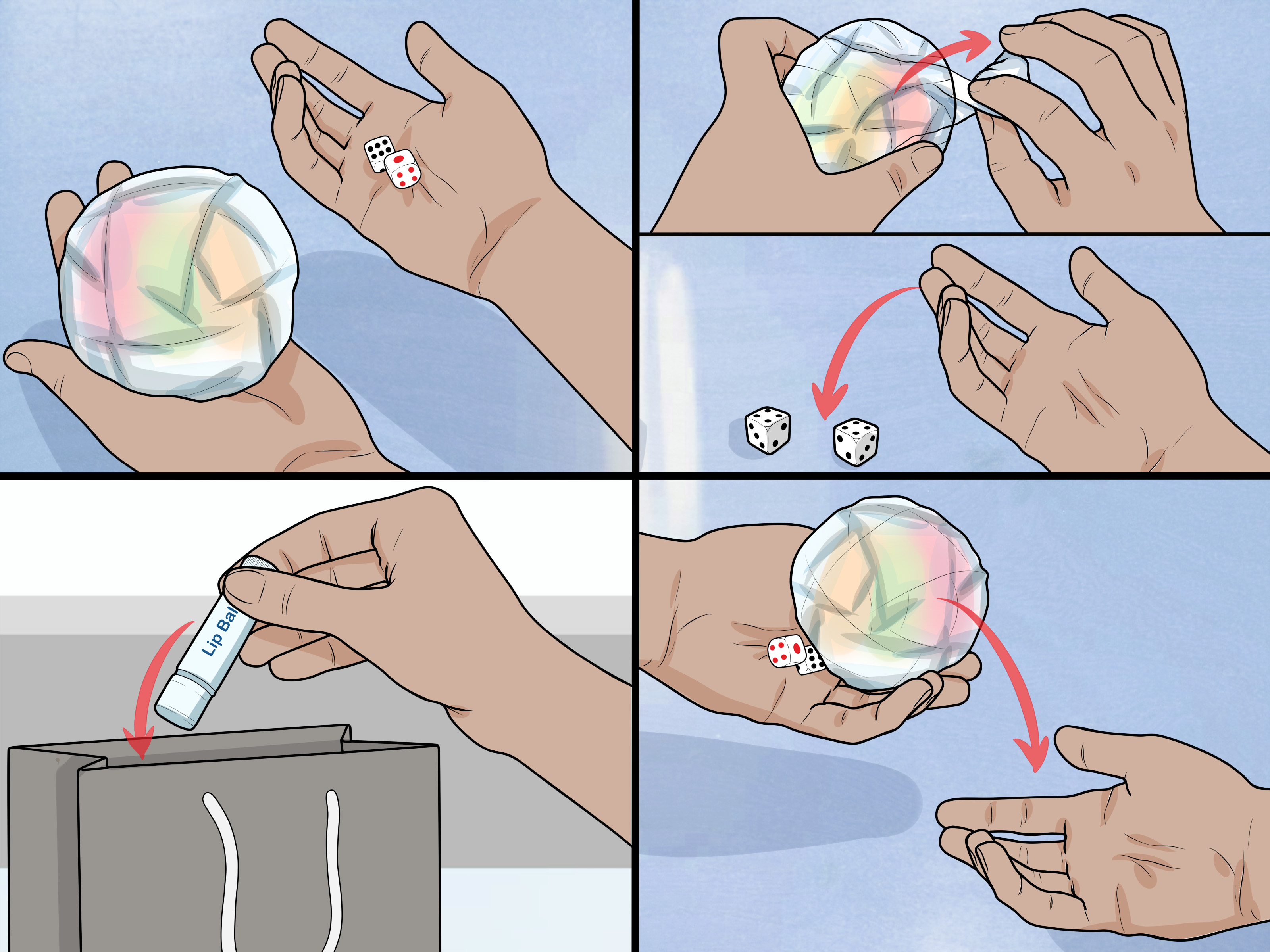
Once your ball is built, the game is easy to set up. Have players sit in a circle, either on the floor or around a table. Give the Saran wrap ball to the first player. Give two dice to the player on their left.
- The person holding the ball begins unwrapping.
- The person with the dice rolls repeatedly, trying to roll doubles.
- Any prize that falls out during the ball holder’s turn belongs to that player.
- When the dice roller gets doubles, they yell “Doubles!”
- The ball passes to the dice roller.
- The dice pass to the next person on the left.
- Play continues until the ball is completely unwrapped.
The classic rule is that players must unwrap the ball properly. No ripping, clawing, biting, or using the ball as a stress object. You may allow tearing if the group is very young, but for older kids and adults, finding the edge is part of the fun.
Fun Rule Variations
Oven Mitt Version
This is the most popular variation for a reason. The ball holder must wear oven mitts while unwrapping. It instantly turns a simple game into a comedy routine. People who can assemble furniture suddenly cannot locate the end of plastic wrap. It is humbling. It is beautiful.
Timed Turn Version
Instead of dice, set a timer for 20, 30, or 45 seconds per player. This version works well for younger children because everyone gets an equal turn. It is also helpful in classrooms or structured parties where time matters.
Challenge Card Version
Add small cards inside the ball with instructions. When a player unwraps a card, they must follow it before continuing. Try challenges such as:
- Unwrap with one hand for the rest of your turn.
- Give one prize to the player on your right.
- Trade one prize with another player.
- Skip the next player.
- Wear the oven mitts for two turns.
- Sing a holiday song before continuing.
Challenge cards add personality, but keep them short. Nobody wants to pause the game for a five-paragraph legal document.
Holiday Theme Version
For Christmas, use candy canes, ornaments, cocoa packets, and holiday socks. For Halloween, use glow-in-the-dark toys, wrapped candy, spider rings, and mini flashlights. For birthdays, use party favors, confetti poppers, and small gifts related to the guest of honor’s interests.
Tips for Making the Game More Fun
First, match the difficulty to the players. A ball for six-year-olds should not be wrapped like a bank vault. A ball for adults can handle more layers, more direction changes, and a few taped seams.
Second, mix prize values. Add plenty of small items, then hide a few better prizes throughout the ball. This keeps people excited from beginning to end. If the only good prize is in the center, some players may lose interest early. If prizes appear throughout, everyone stays alert.
Third, set house rules before play begins. Decide whether ripping is allowed, whether the ball must stay in the player’s lap, whether players must stop immediately when doubles are rolled, and whether trading is allowed at the end.
Fourth, keep safety in mind. Use wrapped candy rather than loose food. Check labels for common allergens such as peanuts, tree nuts, milk, eggs, wheat, soy, fish, shellfish, and sesame if food allergies may be a concern. If children are playing, avoid sharp objects, tiny toys, balloons, magnets, and hard candies for younger players.
Finally, plan your cleanup. Plastic wrap can create a lot of waste. Gather the used wrap as the game goes, and check whether plastic film recycling is accepted at a local store drop-off in your area. Do not automatically toss plastic wrap into curbside recycling unless your local program clearly accepts it.
Common Mistakes to Avoid
Using Too Few Prizes
If the ball has only five prizes and fifteen players, the game may feel less exciting. Add enough small rewards so players feel like they have a real chance.
Wrapping in One Direction
This makes the ball too easy to unravel. Rotate constantly and restart the wrap from different angles.
Making the Ball Too Hard for Kids
Kids love the game, but they can get frustrated if the wrap is too tight or taped too heavily. Keep the layers manageable and prizes frequent.
Forgetting About Allergies
If you include candy or snacks, consider allergy-friendly options and non-food prizes. When in doubt, choose stickers, pencils, small toys, or sealed treats with clear labels.
Letting the Game Drag On Too Long
A huge ball sounds impressive until everyone is still unwrapping it an hour later and the cookies are gone. For most groups, 15 to 30 minutes is a great game length.
How Big Should a Saran Wrap Ball Be?
The ideal size depends on the number of players and the amount of time you want to spend playing. For a small family of four to six people, a ball the size of a grapefruit or small melon can be enough. For eight to twelve players, aim for volleyball size. For a large party, a soccer-ball-sized or basketball-sized version works well.
If you are hosting a classroom party, consider making several smaller balls instead of one giant ball. Small groups keep the game moving and give more children a chance to participate. For adults, one large ball can be hilarious, especially when the dice are rolling fast and someone is desperately trying to peel plastic wrap with oven mitts the size of bear paws.
Budget-Friendly Saran Wrap Ball Ideas
You can make a fun Saran wrap ball without spending much. Buy candy in bulk, use dollar-store items, add coins, include printed coupons for silly privileges, or wrap homemade prize cards. A prize card might say “Choose the next movie,” “Skip one chore,” “Pick dessert,” or “Steal one snack from the snack table.”
For a family Christmas party, small bills can make the game feel exciting without requiring expensive gifts. Place one-dollar bills throughout the ball and save a five-dollar bill or gift card for the center. For kids, stickers and candy stretch the budget. For adults, useful small items like pens, coffee packets, lotion, and mints are inexpensive but appreciated.
Real-Life Experiences: What Actually Makes a Saran Wrap Ball Memorable
The first thing people learn after making a Saran wrap ball is that the ball has a personality. Some are friendly little prize bundles. Others are stubborn plastic goblins that refuse to reveal even a single candy. The difference usually comes down to how tightly the ball is wrapped, how often the direction changes, and whether tape is involved.
At family parties, the game often becomes less about the prizes and more about the performance. There is always one player who unwraps with calm, surgical focus. There is another who panics the moment the dice start rolling. Someone will yell “I can’t find the end!” as if the wrap has personally betrayed them. And there is usually one quiet relative who turns out to be terrifyingly good at the game. Every family has a secret Saran wrap champion. They walk among us.
For kids, the magic is in frequent wins. A child who unwraps three layers and gets nothing may feel disappointed, especially if the player before them won a candy bar, a glow stick, and enough stickers to decorate a refrigerator. When making a Saran wrap ball for children, add prizes close together. The game should feel like a treasure hunt, not a patience test. Younger kids also do better with timed turns because dice-based turns can be uneven. One child may get ten seconds while another gets two minutes, and suddenly the party has become a courtroom drama.
For teens, the best balls include items that feel current and useful. Candy is fine, but add phone accessories, lip balm, keychains, mini snacks, or small gift cards. Teens may pretend they are too cool for party games, but hand them a plastic-wrapped ball with a coffee gift card inside and watch civilization collapse in thirty seconds.
For adults, humor matters. A few practical items are nice, but gag gifts create the stories people remember. Funny socks, tiny trophies, dramatic challenge cards, novelty pens, or a “grand prize” that turns out to be a single fancy chocolate can make the room laugh. The key is balance. If every prize is a joke, the game loses excitement. If every prize is serious, the game loses personality. Mix both.
One of the best hosting tricks is to place a few strong prizes near the outside of the ball, not just in the center. This creates early excitement and tells players, “Pay attention, good stuff can happen at any time.” Another smart trick is to keep extra small prizes nearby. If someone finishes with nothing, especially a child, you can quietly hand them a consolation prize. The official scoreboard may say they lost, but the host scoreboard says nobody leaves sad over plastic wrap.
The biggest lesson from real parties is that clear rules prevent confusion. Before starting, explain whether players may tear the wrap, whether the ball must stay in their lap, whether they must stop immediately when doubles are rolled, and whether oven mitts are required. Demonstrate one sample turn. People understand faster when they see it, and it prevents the classic “Wait, what are we doing?” moment that somehow happens after every game explanation in human history.
Cleanup is another real-world detail worth planning. Put a trash bag or collection bowl nearby and ask players to toss loose plastic wrap into it after each turn. Without a cleanup plan, the room will look like a cling-film snowstorm hit a candy store. If your area accepts plastic film at store drop-off locations, collect the wrap separately and check local instructions. If not, dispose of it properly and consider making a smaller ball next time.
In the end, a Saran wrap ball is memorable because it is low-tech, silly, and surprisingly suspenseful. It gives people permission to laugh at themselves. It turns tiny prizes into big moments. It works for holidays, birthdays, classrooms, office parties, and family nights because everyone understands the goal immediately: unwrap fast, grab prizes, pass the ball, repeat. Simple? Yes. Ridiculous? Absolutely. Worth it? Every crinkly second.
Conclusion
Learning how to make a Saran wrap ball is easy, but making a great one takes a little planning. Start with a fun center prize, add small rewards every few layers, change wrapping direction often, and choose rules that fit your group. Use dice for fast-paced competition, oven mitts for extra comedy, or timed turns for younger players.
The best Saran wrap ball game is not necessarily the biggest or most expensive. It is the one that keeps people laughing, gives everyone a fair shot, and creates a few unforgettable “I almost had it!” moments. With the right prizes, clear rules, and a little plastic-wrap mischief, this simple party game can become the highlight of your gathering.