Note: This article is written for web publishing in standard American English and synthesizes real behavior-science, wellness, sleep, productivity, and mental-health guidance into an original, reader-friendly format.
Big life changes have excellent public relations. They get the movie montages, the dramatic music, the “new me” captions, and occasionally a suspiciously expensive gym membership. But in real life, the habits that change people most often look almost boring from the outside: putting a glass of water on the nightstand, walking after dinner, making the bed, saying hello first, or writing down tomorrow’s three priorities before sleep.
That is the quiet magic of small habits. They do not demand that you become a different person by Monday. They simply ask you to repeat one better choice often enough that your future self starts sending thank-you notes. Research on behavior change repeatedly points toward the same pattern: habits stick better when they are specific, easy to repeat, attached to an existing routine, and rewarding enough that the brain does not file them under “absolutely not.”
The following 45 small habits are inspired by everyday experiences people often share when asked what tiny change improved their lives. Some are physical, some are emotional, some are practical, and a few are so simple they sound like advice from a very organized refrigerator magnet. Together, they prove that a better life is not always built with giant leaps. Sometimes it is built with socks, sunlight, and a five-minute cleanup.
Why Small Habits Can Create Big Results
Small habits work because they reduce friction. A person who says, “I will completely transform my health, career, relationships, and inbox before breakfast,” has built a mountain. A person who says, “I will take a ten-minute walk after lunch,” has built a sidewalk. Sidewalks get used.
Healthy daily habits also create identity momentum. When you stretch each morning, you begin to see yourself as someone who takes care of your body. When you write down what you are grateful for, you become someone who notices good things instead of only collecting irritations like emotional fridge magnets. When you prepare clothes the night before, you become someone who protects tomorrow from today’s chaos.
The best habits are not punishments. They are tiny systems that make the next good choice easier. A water bottle on your desk is a system. Sneakers by the door are a system. A bedtime alarm that says “future you deserves mercy” is also a system, and frankly, future you has been through enough.
45 Small Habits That Can Change Everyday Life
1. Wake Up Ten Minutes Earlier
A calmer morning can soften the whole day. Ten extra minutes gives you time to drink coffee, feed the pet, stretch, breathe, or simply exist without sprinting into your pants like life is an emergency drill.
2. Make Your Bed
Making the bed is not about impressing imaginary hotel inspectors. It creates an early win and makes your room feel less like a laundry-based crime scene.
3. Drink Water First Thing
After hours of sleep, your body appreciates hydration. A glass of water in the morning supports energy, digestion, and clearer thinking. Coffee can still be invited to the party; water just gets the first handshake.
4. Step Outside for Morning Light
Morning light helps support your internal clock and can make waking up feel less like negotiating with a tiny angry raccoon inside your brain.
5. Stretch After Waking
A short stretch loosens stiff muscles and signals that the day has officially begun. No need to fold yourself into a human pretzel. Gentle movement counts.
6. Plan the Day the Night Before
Writing tomorrow’s top three tasks before bed can reduce morning decision fatigue. It is like leaving a map for your future self, who is probably holding coffee and blinking slowly.
7. Use the “Two-Minute Rule”
If something takes less than two minutes, do it now: hang the coat, rinse the cup, reply to the simple message. Tiny closures prevent clutter from forming a labor union.
8. Wash Dishes While Cooking
Cleaning as you cook keeps the kitchen from becoming a documentary about regret. It also makes eating more enjoyable because the sink is not staring at you afterward.
9. Take a Short Walk Daily
Walking supports cardiovascular health, mood, sleep, and focus. Even ten minutes can help. Walking also gives your brain a chance to solve problems without pretending scrolling is “research.”
10. Keep Shoes by the Door
A visible cue makes exercise easier. When your sneakers are waiting by the door, they become less like footwear and more like tiny athletic guilt statues.
11. Do One Push-Up
One push-up sounds ridiculous until it becomes two, then five, then a small bodyweight routine. Starting tiny removes the pressure that kills consistency.
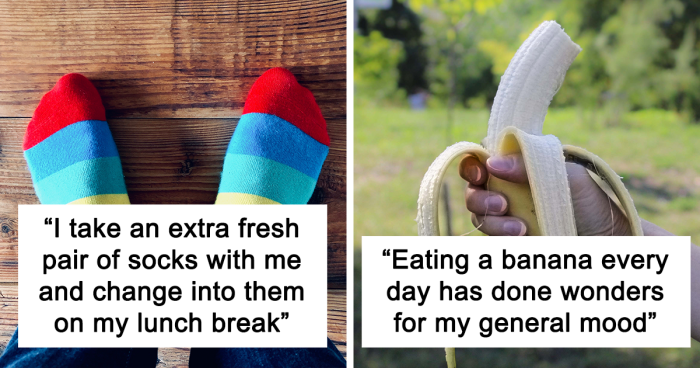
12. Change Into Fresh Socks Midday
For people who stand all day, fresh socks can feel like a luxury spa treatment with aggressively low overhead. Dry feet, better comfort, improved mood: a small miracle in cotton form.
13. Keep an Emergency Outfit at Work
A spare shirt, socks, or full change of clothes can rescue you from coffee spills, rain, wardrobe malfunctions, and other plot twists your morning did not authorize.
14. Say Hello First
A cheerful greeting can improve workplace mood and connection. Kindness spreads faster than you think, especially when it does not require a meeting invite.
15. Drop Your Shoulders and Smile
Many people carry tension in their shoulders and jaw. Pausing to relax your posture can change how you feel and how others experience you.
16. Replace “I Have To” With “I Get To”
Language shapes perspective. “I have to exercise” feels like punishment. “I get to move my body” feels like access, ability, and choice. Same treadmill, less emotional tax.
17. Keep a Gratitude Journal
Writing down a few things you appreciate can train attention toward what is working, not just what is leaking, late, loud, or mysteriously sticky.
18. Pair Gratitude With Handwashing
Choose one person, moment, or comfort to appreciate while washing your hands. Clean hands, warmer heart, fewer germs: a surprisingly efficient combo.
19. Read Before Bed
Replacing late-night scrolling with reading can support better wind-down time. Books rarely shout breaking news at your nervous system at 12:43 a.m.
20. Keep a Consistent Wake Time
A stable wake time supports sleep rhythm and helps mornings feel less random. Yes, weekends count. Your body does not fully understand “Saturday mode.”
21. Stop Fighting Sleep
When you are tired, go to bed. It sounds obvious, yet many people treat sleepiness like a debate opponent. Sleep usually wins anyway, just later and with worse lighting.
22. Put Your Phone Away Before Bed
Reducing screen time before sleep can make it easier to unwind. Your brain deserves a softer landing than “one quick video” that becomes 87 minutes of raccoon content.
23. Do a Ten-Minute Evening Reset
Before fully relaxing, spend ten minutes putting dishes away, clearing surfaces, feeding pets, or prepping tomorrow. The reward is a calmer home and less morning chaos.
24. Prepare Clothes the Night Before
Choosing clothes ahead of time removes one decision from the morning. This is especially helpful when your early brain has the processing power of a sleepy toaster.
25. Pack Lunch or Snacks Ahead
Preparing food in advance can save money, improve nutrition, and reduce desperate vending-machine negotiations.
26. Add One Fruit or Vegetable Daily
Instead of redesigning your entire diet, add one colorful plant food to a meal. Small nutrition upgrades are easier to sustain than dramatic food declarations made after midnight.
27. Choose Water, Tea, or Sparkling Water More Often
Replacing sugary drinks with water or unsweetened options can reduce added sugar while supporting hydration. Sparkling water counts, even if it feels like your drink is whispering static.
28. Take the Stairs When Practical
Stairs add small bursts of movement to daily life. You do not need a heroic fitness speech; you just need one flight and a willingness to breathe dramatically at the top.
29. Cycle or Walk for Short Trips
Active commuting can improve fitness, mood, and energy while turning transportation into built-in movement. It also makes parking problems someone else’s personality development exercise.
30. Practice One Minute of Deep Breathing
Slow breathing can help calm the body’s stress response. Try inhaling for four counts and exhaling for six. It is free, portable, and does not require special pants.
31. Meditate for Five Minutes
Meditation does not require perfect silence or a mystical mountaintop. Five minutes of noticing your breath can improve awareness and help you respond instead of react.
32. Write Down Worries
A worry list can move anxious thoughts from your head to paper, where they look less like thunderclouds and more like tasks, questions, or things to release.
33. Use a Laundry Cue
If you forget wet laundry, place the basket somewhere impossible to ignore. A physical cue can prevent musty clothes and the tragic rewash cycle of shame.
34. Keep Counters Clear
Clear surfaces reduce visual stress. You do not need a perfect home; you need one calm zone that does not look like a drawer exploded.
35. Spend Five Minutes Tidying One Area
Five focused minutes can transform a desk, nightstand, kitchen counter, or car seat. The secret is stopping before it becomes a full archaeological dig.
36. Romanticize the Morning
Light a candle, use a favorite mug, play music, apply lotion, or make a cozy drink. A pleasant ritual makes mornings feel less like a corporate system update.
37. Keep a Small Notebook
A notebook helps capture ideas, tasks, gratitude, quotes, or reminders. It is less distracting than using your phone, which often opens the portal to everything except the thing you meant to do.
38. Compliment One Person
A sincere compliment improves connection and trains you to notice good things in others. Keep it specific. “Great presentation” beats “You are generally not terrible.”
39. Call or Text Someone You Love
Relationships thrive on small contact. A quick message can maintain closeness, especially when life gets busy and everyone is being chased by calendars.
40. Say No Faster
A polite, timely no protects your energy. Boundaries are not rude; they are the fence around your limited supply of attention, time, and snacks.
41. Automate One Repeating Task
Set bill reminders, calendar alerts, grocery lists, or recurring orders for essentials. Automation is not laziness. It is delegation to Future Robot Assistant, who never forgets toothpaste.
42. Review Spending Once a Week
A weekly money check-in helps you catch subscriptions, impulse spending, and budget leaks early. It is less scary than ignoring finances until your bank account starts speaking in riddles.
43. Keep a “Done List”
To-do lists show what remains. Done lists show what you accomplished. This simple habit can build motivation and remind you that the day was not a total wash.
44. Practice the “Good Enough” Version
If a task matters, doing a partial version is often better than doing nothing. A five-minute workout, a quick shower, or a half-clean room still counts. Perfection is frequently procrastination wearing a tiny crown.
45. End the Day With One Reset Question
Ask, “What made today slightly better?” This question helps the brain notice progress, pleasure, and meaning. Some days the answer is “clean sheets.” That still counts. Clean sheets are basically domestic poetry.
How to Make Small Habits Stick
The easiest way to build a habit is to attach it to something you already do. After brushing your teeth, stretch for thirty seconds. After pouring coffee, write one priority. After locking the door, take three deep breaths. This approach uses an existing routine as the reminder, which means you do not have to rely on motivation, memory, or a dramatic sunrise personality.
Another useful strategy is to lower the entry fee. Want to journal? Write one sentence. Want to exercise? Put on your shoes. Want to read more? Read one page. Starting small may feel silly, but silly is better than impossible. A habit that is easy to start becomes easier to repeat, and repetition is where the results live.
Finally, make the habit satisfying. Track it with a checkmark, pair it with music, do it with a friend, or celebrate the tiny win. The brain repeats what feels rewarding. You do not need fireworks, although if you can safely arrange emotional fireworks after flossing, congratulations on your flair.
Common Mistakes That Make Habits Fail
Many people fail at habits because they try to change everything at once. They decide to wake up at 5 a.m., run five miles, meditate for an hour, eat only greens, learn French, and become spiritually above email. By Wednesday, they are exhausted, resentful, and eating cereal from a saucepan.
Another mistake is choosing habits that sound impressive but do not fit real life. The best habit is not the one that looks best online. It is the one you can repeat when you are busy, tired, mildly cranky, or out of clean workout clothes.
People also underestimate environment. If the phone is on the pillow, bedtime scrolling will win. If fruit is washed and visible, fruit has a chance. If the guitar is in the closet behind three boxes, your future music career may remain theoretical. Design your surroundings so the good habit is easier than the old one.
Real-Life Experience: What Small Habits Feel Like Over Time
The thing nobody tells you about small habits is that they rarely feel life-changing at first. The first glass of morning water does not make you glow like a wellness commercial. The first ten-minute walk may feel like walking, because that is exactly what it is. The first gratitude entry might be “coffee, socks, no one yelled in traffic,” and honestly, that is a respectable start.
But small habits have a delayed charm. After a week of preparing clothes at night, mornings become less frantic. After a month of walking, your mood may feel more stable and your body less stiff. After several weeks of writing down priorities, your workday may stop feeling like a swarm of bees wearing tiny business suits. The change is not cinematic; it is practical. You notice fewer emergencies, fewer forgotten tasks, and fewer moments where you stand in the kitchen wondering why you entered it.
One common experience is that tiny habits create trust with yourself. When you promise to do one push-up and actually do it, you send yourself a message: “I follow through.” That message matters. It is not about the push-up. It is about rebuilding the relationship between intention and action. Many people are not lazy; they are tired from repeatedly making huge promises to themselves and then feeling guilty when those promises collapse under real life.
Another experience is emotional spaciousness. A ten-minute cleanup after work can make the evening feel longer because your brain is not quietly nagging you about dishes. A bedtime routine can make sleep feel less like a crash landing. A quick text to a friend can make relationships feel alive instead of accidentally archived. Small habits reduce background noise. They do not remove all stress, but they lower the volume.
There is also a pleasant ripple effect. A person who starts walking may begin drinking more water. A person who writes gratitude lists may become more generous with compliments. A person who makes the bed may start keeping the nightstand clear. This is not magic; it is momentum. One small action changes the environment, and the environment invites the next small action.
The most powerful part is that small habits are forgiving. If you miss one day, you have not ruined your life. You have simply missed one day. The next repetition is always available. That is why modest habits often beat dramatic resolutions: they leave room for being human. And being human includes busy weeks, bad moods, surprise errands, and the occasional evening when dinner is crackers and optimism.
If there is one lesson from people whose lives improved through tiny changes, it is this: do not wait until you can overhaul everything. Choose one habit that makes tomorrow easier. Put the water by the bed. Take the walk. Say the kind thing. Wash the pan before dinner. Stretch your shoulders. Write the list. The habit may look small, but repeated over time, it becomes a vote for the kind of life you want to live.
Conclusion
Small habits are not glamorous, but they are powerful because they work with real life instead of demanding a fantasy version of it. A better routine does not need to begin with a dramatic personality transplant. It can begin with a glass of water, a clear counter, a kind hello, a five-minute walk, or the decision to go to bed when your body is already waving a tiny white flag.
The secret is consistency, not perfection. Choose habits that are simple, specific, and easy to repeat. Attach them to routines you already have. Make them satisfying. Let them grow slowly. Over time, these small daily habits can improve health, productivity, relationships, confidence, and peace of mind. Tiny choices become routines, routines become identity, and identity becomes the life you actually live.