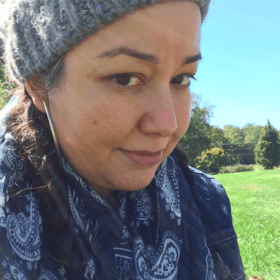
Carolina Riveros-Ruenes is not the kind of educator whose work can be summarized with a tidy little label like “English teacher” and then filed away in the dusty cabinet of ordinary school biographies. Yes, she is a sixth-grade English Language Arts teacher. Yes, she has spent many years at Two Rivers Public Charter School in Washington, DC. And yes, her professional world includes reading, writing, discussion, project-based learning, critique, and the occasional middle school moment that probably deserves its own weather alert.
But the more interesting story is how her career reflects a larger idea in American education: students learn deeply when they are treated as thinkers, not empty notebooks with sneakers. Through her long tenure at Two Rivers, her writing for Edutopia, and her participation in a school culture built around project-based learning, Carolina Riveros-Ruenes has become associated with a practical, human-centered vision of teaching. It is a vision where feedback matters, vulnerability is not a weakness, and a classroom is less of a lecture hall and more of a workshop with pencils, questions, drafts, and just enough controlled chaos to keep everyone awake.
Who Is Carolina Riveros-Ruenes?
Carolina Riveros-Ruenes is a longtime educator and current Lead Teacher for sixth-grade English Language Arts at Two Rivers Middle School in Washington, DC. Public profiles describe her as an educator since 1999, with a background in English and language arts instruction. Before settling into her work at Two Rivers, she taught high school Language Arts in Miami, Florida, and later moved to Washington, DC, where her connection to Two Rivers began in 2004.
Her personal and professional journey also crosses countries and classrooms. She was born in Santiago, Chile, and moved with her family to Miami during her middle school years. That detail matters, because middle school is not exactly known as the easiest era of human civilization. Anyone who has survived lockers, friendship drama, and the mystery of cafeteria meat has earned a certain empathy for adolescents. Riveros-Ruenes eventually pursued English Literature and teacher certification in Florida, then built a career centered on helping students become stronger readers, writers, speakers, and thinkers.
At Two Rivers, her work has included Spanish instruction in the school’s early years and, later, English Language Arts in the middle school. Over time, she has become part of the school’s identity: a teacher connected not only to curriculum, but also to community, collaboration, and the art of helping sixth graders discover that revision is not punishment. It is just writing wearing its gym shoes.
Her Role at Two Rivers Public Charter School
Two Rivers Public Charter School is a Washington, DC network serving students from pre-K through eighth grade. The school is known for project-based learning, expeditionary learning influences, whole-child development, and a community motto that emphasizes shared responsibility: “We are crew, not passengers.” In plain English, that means students are expected to participate, contribute, revise, question, collaborate, and care about the people around them. It is school as a team sport, minus the awkward uniforms.
Riveros-Ruenes’s sixth-grade ELA classroom fits naturally within that approach. Language Arts is not just about grammar worksheets, although commas still deserve respect. It is about helping students interpret texts, build arguments, make meaning, listen closely, and express ideas with clarity. In a project-based environment, English becomes connected to real questions and authentic audiences. Students do not simply write because the teacher says, “Please produce five paragraphs before lunch.” They write because writing helps them investigate, explain, persuade, reflect, and communicate.
That kind of teaching takes more than content knowledge. It requires relationships. Riveros-Ruenes’s public school profile emphasizes her passion for nurturing relationships and a love of reading, discussion, and writing with students, families, and colleagues. This is not decorative language. In middle school, relationships are the operating system. Without trust, feedback sounds like criticism. With trust, feedback becomes a ladder.
A Career Built Around Reading, Writing, and Real-World Learning
One reason Carolina Riveros-Ruenes stands out is the consistency of her educational philosophy. Her work sits at the intersection of literacy, project-based learning, and reflective professional practice. That may sound like a conference brochure, but it becomes concrete in the classroom: students read closely, discuss ideas, create drafts, receive feedback, revise, and learn how to notice quality in their own work and the work of others.
Project-based learning, often called PBL, asks students to learn by engaging with meaningful questions, problems, or challenges. In strong PBL classrooms, the project is not a glitter-covered poster slapped onto the end of a unit like an educational bumper sticker. The project is the engine of learning. Students investigate, collaborate, build knowledge, and produce work that has purpose beyond a gradebook cell.
At Two Rivers, that philosophy shows up in multi-week modules that integrate literacy, science, social studies, critical thinking, and problem solving. For an ELA teacher, this is fertile ground. A student might read to understand a community issue, write to influence an audience, or revise an argument after hearing feedback from peers. Instead of treating reading and writing as isolated school chores, the classroom treats them as tools for participating in the world. Imagine telling a twelve-year-old, “Your words can matter.” Then imagine the twelve-year-old briefly pretending not to care while secretly caring very much. That is middle school magic.
The Power of Vulnerability in Professional Development
One of the clearest windows into Riveros-Ruenes’s teaching philosophy is her Edutopia article on vulnerability in professional development. In that piece, she describes how educators at Two Rivers meet regularly to analyze student work, identify gaps between learning goals and student mastery, and improve instructional planning. The process is simple in theory and deeply brave in practice: teachers bring real student work to colleagues, listen to feedback, and use that conversation to make teaching better.
For anyone outside education, this may sound easy. It is not. Showing student work to colleagues can feel like placing your lesson plan under a microscope while wearing a paper hospital gown. Riveros-Ruenes writes about the emotional side of that process: the vulnerability, the trust, and the need to separate one lesson from one’s identity as a teacher. A rough lesson does not make someone a bad teacher. It makes them a teacher with evidence. Evidence is useful. Ego, less so.
This mindset is valuable because it models the same habits educators want students to develop. Students are often asked to revise, accept feedback, and try again. When teachers do the same, they make improvement visible. The adult version of “please revise your paragraph” becomes “let us examine this assignment, ask what students understood, and plan better next steps.” No confetti cannon required, though honestly, professional development could use one.
Learning From Peers’ Strengths
Another education practice connected to the Two Rivers model is the critique protocol, featured in Edutopia’s “Learning From Peers’ Strengths.” The idea is elegant: students learn to improve their own work by identifying the strengths in the work of others. Instead of waiting for the teacher to be the sole dispenser of wisdom, students become active analysts of quality. They learn to ask, “What makes this piece strong?” and “What can I borrow, adapt, or try in my own work?”
The critique norms are memorable: be kind, be specific, and be helpful. These three rules sound simple enough to fit on a sticky note, yet they can transform classroom culture. “Good job” may be kind, but it is not very specific. “Your introduction clearly previews your argument and makes me want to keep reading” is kind, specific, and helpful. It is also more useful than the ancient student feedback classic: “I like it because it is good.”
For sixth graders, peer critique can be especially powerful. Students at this age are intensely aware of one another. That social awareness can become distraction, comparison, or comedy hour. But with strong norms, it can also become an academic asset. Students begin to see classmates as resources. They learn that someone else’s strong transition, vivid evidence, or thoughtful conclusion is not a threat. It is a model. The classroom becomes a gallery of possible moves.
Why Her Work Matters for Middle School Education
Middle school is a strange and important bridge. Students are no longer little kids, but they are not yet high schoolers. They are building identities, testing boundaries, forming opinions, and occasionally forgetting that backpacks have zippers. A strong sixth-grade teacher has to balance academic rigor with emotional intelligence. Carolina Riveros-Ruenes’s public comments about sixth grade emphasize curiosity, self-knowledge, and being grounded in what matters. That advice is not fluffy. It is survival gear.
In ELA, students need more than decoding skills or essay templates. They need confidence to discuss complex ideas, stamina to read challenging texts, and resilience to revise work that is not yet where it needs to be. They also need adults who understand that learning is social. When students feel seen and respected, they are more likely to take risks. A classroom that values discussion, critique, and relationships gives students a place to practice academic courage.
That is why Riveros-Ruenes’s work resonates beyond a single classroom. It points to a model of teaching where students are not passive recipients of information. They are participants in a learning community. They read, talk, question, draft, critique, revise, and try again. It is not always neat. Real learning rarely is. If the classroom looks too perfect, someone may be hiding the drafts.
Climate, Community, and Big Questions
Riveros-Ruenes has also been publicly connected with climate change instruction at Two Rivers. A 2019 WAMU report identified her as part of a team of teachers leading an approach to climate change lessons that helped students navigate emotions and difficult questions. This detail adds another dimension to her profile: the willingness to bring real-world issues into the classroom in thoughtful, age-appropriate ways.
Climate change is not a small topic. It involves science, policy, ethics, community, fear, responsibility, and hope. For an ELA teacher, it also offers rich opportunities for reading informational texts, evaluating arguments, writing persuasively, and discussing how language shapes public understanding. When students engage with issues that matter outside school walls, they begin to see literacy as power. Reading becomes a way to understand the world. Writing becomes a way to respond to it.
This is where project-based learning and English Language Arts can become especially strong partners. Students may analyze sources, compare claims, write letters, create presentations, or reflect on civic responsibility. The goal is not to make every student an expert scientist by Friday. The goal is to help them think carefully, communicate clearly, and understand that big problems require informed voices.
Lessons Educators Can Learn From Carolina Riveros-Ruenes
1. Build Trust Before Demanding Risk
Students do not revise deeply in classrooms where they feel unsafe. Teachers do not share student work honestly in professional communities where they fear judgment. Riveros-Ruenes’s work highlights the importance of trust as a foundation for growth. Feedback is only useful when people believe it is meant to help.
2. Make Quality Visible
Students often hear teachers say, “Do your best work,” but they may not know what best work actually looks like. Critique protocols help students identify qualities of strong work. Once students can name those qualities, they can aim for them. Naming is power. It is also cheaper than buying everyone a personal writing coach.
3. Treat Feedback as a Skill
Helpful feedback does not magically appear because students are placed in groups. Teachers have to model it, practice it, and return to it. “Be kind, be specific, and be helpful” gives students a clear structure. Over time, feedback becomes less awkward and more productive.
4. Let Teachers Be Learners Too
Professional vulnerability is not a trendy slogan. It is a practical tool for improvement. When teachers analyze student work together, they make instruction more responsive. They also show students, indirectly, that learning never stops just because someone owns a lanyard and a coffee mug.
5. Connect Literacy to Life
Reading and writing become more meaningful when students see their relevance. Whether the topic is literature, climate change, identity, or community, strong ELA instruction helps students use language to think and participate.
Experiences Related to Carolina Riveros-Ruenes and Her Educational Approach
To understand the kind of educational experience associated with Carolina Riveros-Ruenes, picture a sixth-grade classroom during a writing workshop. The room is not silent, because silence in middle school is either a miracle or a warning sign. Students have drafts in front of them. Some are proud. Some are nervous. One student has written an opening sentence with real energy, the kind that makes a reader lean in. Another has evidence but no explanation. A third has a conclusion that waves goodbye too quickly, like a bus leaving before everyone gets on.
In a traditional classroom, the teacher might collect the papers, disappear under a mountain of grading, and return the essays with comments that students glance at for twelve seconds before asking, “Is this going in the gradebook?” In a critique-centered classroom, the experience changes. Students examine examples. They notice strengths. They name what works. They talk about clarity, detail, organization, and voice. They begin to understand that writing is not a mysterious talent granted at birth to a chosen few. Writing is a craft. Craft can be studied. Craft can be practiced. Craft can improve.
Another experience might happen in a teacher professional development meeting. A teacher brings student work to colleagues and sits quietly while the group discusses what they notice. This is not easy. Every teacher has an inner defense attorney ready to object: “Your honor, the lesson was right before lunch!” But the protocol asks the teacher to listen first. Colleagues look for evidence of student thinking. They ask what students understood, where confusion appeared, and what instructional move might come next. The point is not blame. The point is better learning.
There is also the experience of transition. Fifth graders becoming sixth graders are stepping into a new social world. Riveros-Ruenes has spoken about the importance of being secure in what matters and remaining curious. That advice captures the emotional terrain of middle school. Students are figuring out who they are while also learning thesis statements, classroom routines, and how to open combination locks without panic. A teacher who recognizes both the academic and human sides of that transition can help students feel anchored.
Finally, there is the experience of real-world inquiry. A class discussing climate change, community, or ethical questions is doing more than covering content. Students are practicing how to read complicated information, manage emotions, listen to different perspectives, and respond thoughtfully. These are not bonus skills. They are the skills young people need in a noisy world where everyone has an opinion and not everyone has evidence.
The common thread in these experiences is agency. Students are not merely completing assignments; they are learning how to learn. Teachers are not merely delivering lessons; they are studying evidence and improving practice. The classroom becomes a place where quality is discussed openly, mistakes are useful, and revision is normal. That may not sound flashy, but it is powerful. Real education is rarely a fireworks show. More often, it is a series of small, thoughtful moves that help a student say, “I can make this better.”
Conclusion
Carolina Riveros-Ruenes represents the kind of educator whose influence is best seen in habits: students learning to critique kindly, teachers learning to be vulnerable, and classrooms learning to treat reading and writing as tools for deeper thinking. Her work at Two Rivers Public Charter School reflects a broader movement toward project-based learning, authentic feedback, and community-centered education. In a world where schools are often pressured to chase quick scores and shiny shortcuts, her approach reminds us that meaningful learning still depends on relationships, revision, curiosity, and courage.
She may not be a household name, but in education, household names are not always the people doing the daily work that changes students’ lives. Sometimes the most important work happens in a sixth-grade classroom, one draft, one discussion, and one brave revision at a time.