Note: This original SEO article is based on synthesized public information about Akie Nakata’s stone animal art, found-object art, rock art history, pareidolia, and responsible nature-craft ethics.
Most of us see a stone and think, “Great, something to trip over.” Japanese artist Akie Nakata sees a sleeping rabbit, a dignified owl, a tiny turtle with main-character energy, or a dog so realistic it looks like it might wag its pebble tail. In a 2025 feature showcasing 64 new pieces, Nakata’s work once again proved that a humble rock can become a miniature animal portrait when the right artist finds it, studies it, and says, “Yes, you are clearly a frog.”
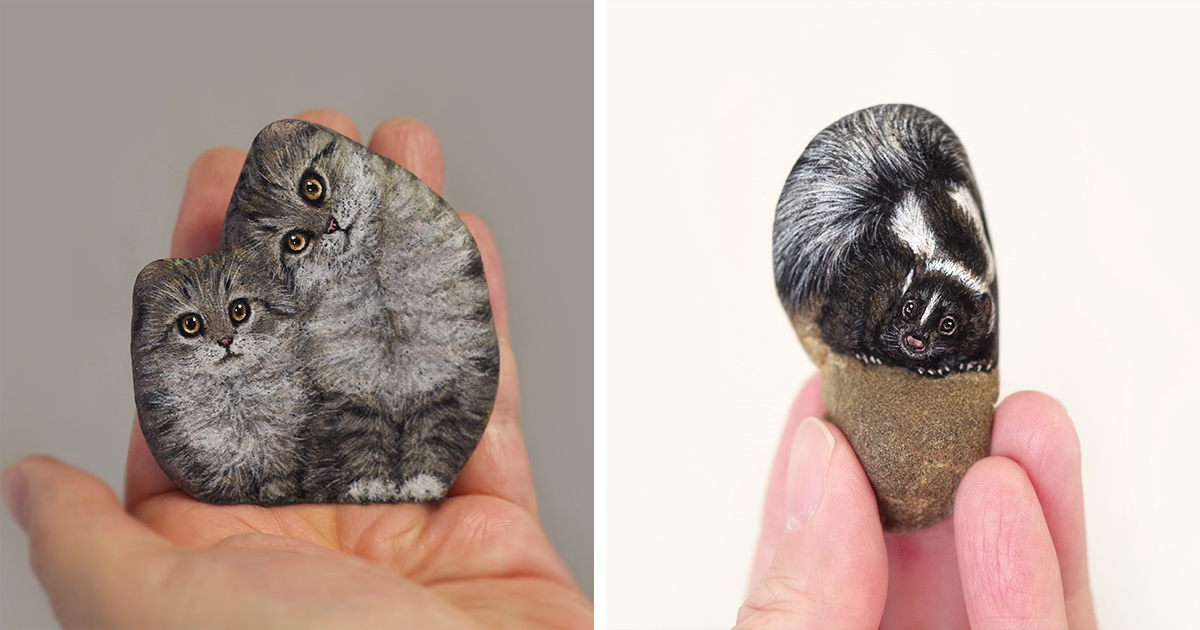
The charm of the series is simple but irresistible: natural stones are transformed into adorable animals without losing their original shape. This is not sculpture in the usual sense. Nakata does not carve the stones into creatures. Instead, she reads their curves, bumps, markings, and odd little personalities, then uses paint to reveal the animal she believes is already hiding inside. The result is a collection of palm-sized creatures that feel halfway between fine art, nature study, and the world’s most low-maintenance pets.
Why Akie Nakata’s Stone Animals Feel So Alive
Akie Nakata, often known online as Stone Artist Akie, has developed a recognizable style built on patience, observation, and an unusually respectful relationship with her materials. Earlier coverage of her work notes that she uses acrylic gouache and tiny brushes, allowing the natural form of each rock to guide the final animal. She has painted dogs, cats, frogs, birds, mice, seals, raccoons, and other creatures, often making them look so soft that your brain briefly forgets they are geological objects with zero cuddle compliance.
The real magic is in the illusion. A rounded stone becomes a curled rabbit. A triangular edge becomes a beak. A dark mineral line becomes the shadow under a sleepy eye. A lumpy pebble, which most people would ignore, becomes a porcupine with a face that says it knows all your secrets. This is why Nakata’s work travels so well online: the viewer gets the joy of a before-and-after transformation without needing a studio visit, an art history degree, or the ability to pronounce “gouache” with confidence.
The Stone Chooses the Animal
Nakata has described her stone art as a kind of collaboration with the stone rather than a one-way act of decoration. In her own explanation, the practice began when she encountered a riverbank stone that looked unmistakably like a rabbit. She had loved collecting natural stones and drawing animals since childhood, and that single rabbit-like rock brought the two interests together. Around 2010, she began working seriously as a stone artist.
That origin story matters because it explains why the pieces feel organic. Nakata is not forcing a design onto a random object. She is waiting for the stone to suggest a posture, a mood, or a species. Some artists sketch first and find a surface later. Nakata seems to reverse the order: she finds the surface, listens to it visually, then paints what the shape already implies. It is a slow conversation, except one participant has been quiet for several million years.
From Ordinary Pebble to Tiny Creature
In one sense, stone animal painting is wonderfully accessible. Stones are everywhere. Paint is common. Tiny brushes exist. In another sense, Nakata’s level of realism is extremely hard to copy. The process requires choosing the right stone, rotating it until the best angle appears, understanding animal anatomy, and applying color in a way that works with the stone’s texture rather than against it.
My Modern Met’s feature on Nakata notes that she sometimes shares before-and-after images, which make the transformation even more impressive. Natural markings may become eyes, a pointed edge may become a nose, and a soft curve may become the animal’s back. The piece is not finished simply because every detail has been painted; Nakata has said completion depends on whether she feels the life in the stone.
The Eyes Are the “Wake-Up” Moment
If the body shape sells the idea, the eyes seal the deal. Animal eyes are tiny emotional engines. A frog’s glossy stare, a dog’s hopeful gaze, or an owl’s round, alert expression can turn a painted object into something that appears to be watching you back. Nakata has explained that she paints the eyes at the very end and considers a work complete when the eyes feel alive.
That final detail is why her painted stones do not look like flat illustrations pasted onto rocks. They look inhabited. Even when the body is minimal, the face carries personality. A stone cat can seem sleepy, suspicious, royal, or mildly disappointed in your life choices. That is advanced pet portraiture, except the pet began as a rock and will never destroy a sofa.
The Art-History Side: Found Objects With Fur
Nakata’s painted stones fit naturally into the wider tradition of found-object art. The Museum of Modern Art defines a found object as something not originally designed for artistic use but repurposed into art. In Nakata’s case, the found object is natural rather than manufactured, and the transformation is gentle: the stone remains itself while gaining a second identity as an animal.
This is different from the famous “readymade” tradition associated with Marcel Duchamp, where ordinary manufactured objects were presented as art by context and selection. Nakata’s approach is warmer and more intimate. She does not simply declare, “This stone is art.” She builds a relationship between the stone’s existing form and the viewer’s recognition of a living creature. The art lives in that overlap.
There is also a much older echo here. Rock art is among humanity’s most enduring forms of visual expression. The National Park Service describes petroglyphs and pictographs as windows into lives from hundreds or thousands of years ago, often featuring animals, humanlike figures, and design motifs connected to everyday and spiritual worlds. Contemporary painted pebbles are not the same cultural category as ancient sacred rock art, of course, but both remind us that stone has long invited people to look, mark, interpret, and remember.
Why Our Brains Love Animal-Shaped Stones
Part of the appeal comes from pareidolia, the human tendency to see meaningful images in random or ambiguous patterns. Psychology Today describes pareidolia as the perception of likenesses such as faces, animals, or objects in clouds, rock formations, and other random images; importantly, it is not a disorder, just a common way the brain assigns meaning.
Nakata’s art plays beautifully with that tendency. She starts where many of us start: “This rock looks a little like something.” Then she takes that faint spark and develops it with precise painting. Instead of leaving the viewer to squint and argue whether the stone resembles a hamster or a potato with social anxiety, she completes the visual suggestion.
Scientific American has also discussed pareidolia as the misperception of vague or accidental stimuli as meaningful forms. In Nakata’s hands, that “mistake” becomes a creative superpower. She notices the animal-ish possibility inside an ordinary object and turns it into a finished artwork. Her stone animals succeed because they feel discovered, not invented.
Why the 64-Stone Collection Went Viral
The title “Artist Turned 64 Stones Into Adorable Animals” works because it promises abundance and surprise. One painted rock is cute. Sixty-four painted rocks create a tiny wildlife sanctuary for people who like their animals silent, portable, and immune to vet bills. The 2025 Bored Panda feature highlights owls, dogs, turtles, and other realistic creations, emphasizing that each piece begins with a walk in nature and a stone that “speaks” to the artist.
Online audiences love art that creates an instant “wait, what?” reaction. Nakata’s work does exactly that. First, you notice the animal. Then you realize the animal is a stone. Then you zoom in and notice the fur texture, the feather pattern, the tiny glint in the eye, and the clever way the rock’s shape becomes part of the anatomy. It is a three-step delight machine.
Small Art, Big Personality
Another reason the pieces resonate is scale. These are not huge gallery installations demanding a warehouse and a forklift. They are small enough to sit in a hand. That changes the emotional tone. A palm-sized owl feels protective. A tiny painted dog feels like a keepsake. A curled stone rabbit feels like something you might find in a fairy tale, right next to a mossy teacup and a squirrel with strong opinions.
Small art also invites close looking. You lean in. You notice brushstrokes. You compare the stone’s roughness with the painted softness. The artwork slows you down, which is probably illegal on the internet but very good for the soul.
Lessons for Artists, Crafters, and Curious Beginners
Nakata’s work can inspire beginners, but it also teaches an important lesson: do not rush the material. Many craft projects begin with a plan and force the object to obey. Stone animal art works better when the artist observes first. The right question is not “What do I want to paint?” but “What does this shape already want to become?”
A beginner might start with simple silhouettes: a ladybug on a round pebble, a sleeping cat on an oval stone, or a fish on a long smooth rock. The goal is not to imitate Nakata’s realism immediately. That way lies frustration, spilled paint, and possibly calling a pebble “uncooperative.” Instead, the better path is to practice seeing. Rotate the stone. Look for a nose, back, wing, tail, or resting pose. Sketch lightly if needed. Then build color gradually.
Responsible Stone Collecting Matters
There is one practical caution: nature crafts should respect nature. Leave No Trace principles include “Leave What You Find,” and the National Park Service encourages visitors to avoid marking paint, rock cairns, and other alterations in protected outdoor spaces. Leave No Trace also warns that moving rocks can disturb habitats for insects, aquatic macroinvertebrates, fish, and other animals, while contributing to erosion.
So, if you want to try painted stones at home, do it responsibly. Buy smooth craft stones, use stones from your own property where allowed, or collect only where local rules permit it. Do not remove stones from national parks, protected lands, cultural sites, riverbeds with sensitive habitats, or places where the rock is doing an actual ecological job. The goal is adorable animal art, not becoming the villain in a park ranger’s Monday meeting.
What Makes Akie Nakata’s Work Different From Ordinary Rock Painting?
Rock painting is popular as a hobby, but Nakata’s work stands apart because it is deeply form-specific. Many painted rocks use the stone as a blank canvas. A flower, quote, mandala, or cartoon character could be painted on almost any smooth surface. Nakata’s animals, by contrast, depend on the exact object. Swap the stone, and the animal may no longer make sense.
Spoon & Tamago notes that Nakata’s stones are not carved or altered; she finds inspiration in the natural form and paints the animal suggested by that form. This distinction is crucial. The stone is not a passive background. It is a co-author. The bump that might annoy another painter becomes a shoulder. The uneven edge becomes a muzzle. The gray speckling becomes fur. The imperfections are not hidden; they are recruited.
That is a generous way to make art. It says beauty does not require a perfect surface. Sometimes it requires the right attention.
Why These Tiny Animals Feel Comforting
At a glance, Nakata’s stone animals are cute. Look longer, and they also feel calming. They combine three things people tend to love: animals, nature, and handmade detail. Animals bring warmth. Stones bring earthiness. Hand painting brings evidence of care. Together, they create the feeling of a tiny companion object, something quiet but emotionally present.
There is also humor in the contradiction. A stone is hard, cold, and silent. A rabbit is soft, warm, and capable of judging your vegetable storage. When one becomes the other, the mind enjoys the mismatch. The viewer knows it is a rock, but the eyes insist it is a creature. That tension is the charm.
In a fast digital culture, Nakata’s work also feels refreshingly analog. No glowing screen is required to understand it. No software update. No subscription. Just a stone, a brush, patience, and the kind of imagination that can look at a pebble and see a turtle waiting for its big break.
Experience Section: Pebble-Sized Lessons From Looking More Closely
Spending time with the idea behind “Artist Turned 64 Stones Into Adorable Animals” changes the way you walk outside. Suddenly, the ground becomes suspiciously interesting. That oval stone near the garden path might be a sleeping seal. The flatter one by the driveway could be a fish. A rough gray pebble might be an owl, although, to be fair, owls already look like they were designed by someone who enjoyed circles a little too much.
The first experience this topic offers is a lesson in attention. Most people move through the day filtering out ordinary objects. Stones are background noise. They sit underfoot, hold down soil, decorate paths, and occasionally enter shoes with the confidence of unpaid interns. Nakata’s work suggests that ordinary objects are not empty. They are waiting for the right kind of looking.
The second experience is patience. If you try painting a stone animal, you quickly learn that the stone has opinions. A brush slides differently over rough texture than over paper. Paint catches in pores. Curves distort the image. The “perfect” cat face may look perfect from one angle and like a haunted pancake from another. This is humbling, which is good. Art that humbles you tends to teach better than art that behaves.
The third experience is respect for limitation. A stone is not flexible. You cannot stretch it, fold it, erase its shape, or ask it to be more foxlike. You must work with what exists. That limitation becomes creative fuel. The more you accept the stone’s form, the more believable the final animal becomes. This is also a useful life lesson, though admittedly life lessons are more fun when they come with tiny painted frogs.
The fourth experience is the joy of small achievements. Not every beginner will create a hyper-realistic owl. But painting a ladybug, turtle, bee, fish, or sleeping cat can still feel deeply satisfying. There is a special pleasure in turning something overlooked into something someone smiles at. Even a simple painted pebble can make a desk, windowsill, or bookshelf feel more personal.
The fifth experience is sharing. Stone animals invite conversation. Place one on a table and people will pick it up, rotate it, ask about it, and often name it without permission. This is how a gray pebble becomes “Professor Snout,” and once a rock has a name, there is no going back. Nakata’s work shows why tiny handmade objects can create big emotional responses: they feel intimate, surprising, and oddly companionable.
Finally, this topic encourages kinder creativity. You do not need expensive materials to begin noticing shapes. You do not need a perfect studio. You need curiosity, ethical collecting habits, and the willingness to let a material lead. Whether you are an artist, a crafter, a parent looking for a nature-inspired activity, or simply someone who enjoys ridiculously cute animals, Nakata’s stone creatures remind us that imagination is not always about making something from nothing. Sometimes it is about finding the life already waiting in something small, quiet, and easy to miss.
Conclusion
Akie Nakata’s 64 adorable stone animals are more than a viral collection of cute painted rocks. They are a study in observation, restraint, and respect for natural form. By allowing each stone to guide the animal it becomes, Nakata turns ordinary pebbles into miniature companions filled with personality. Her work blends found-object art, animal portraiture, nature appreciation, and a playful sense of wonder. It also reminds us that creativity does not always need grand materials. Sometimes, the next great idea is sitting on a riverbank, pretending to be a rabbit.