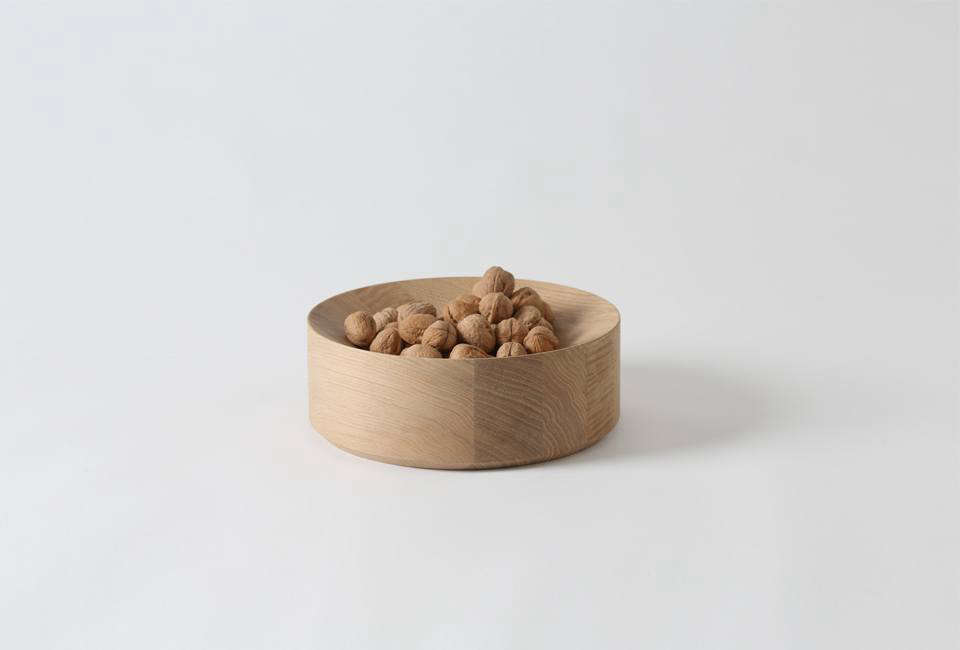
The Michaël Verheyden Oak Coupe is the kind of object that looks quiet at first, then slowly takes over the room like the best-dressed guest at a dinner party. It is not loud, shiny, or desperate for attention. It does not wink at trends. It simply sits there in solid oak, calm and sculptural, proving that a bowl can have better posture than most of us after a long workday.
Designed by Belgian designer Michaël Verheyden for When Objects Work, the Oak Coupe belongs to that refined world where daily objects are treated with the seriousness of art, but without losing their usefulness. It is a vessel, a centerpiece, a small architectural gesture, and, depending on where you place it, a very persuasive argument for owning fewer but better things.
What Is the Michaël Verheyden Oak Coupe?
The Michaël Verheyden Oak Coupe is a minimalist solid oak bowl with a conical interior and a pure, grounded silhouette. Official product information describes it as a “coupe – cône,” a form that can be presented with or without a lid. In practical terms, that means it has the presence of a sculptural object and the usefulness of a bowl, without looking like it is trying to audition for a museum label.
The piece is often listed as approximately 30 cm in diameter, or about 11.8 inches, with a height around 10 cm, or about 3.9 inches. That size makes it substantial enough for a dining table, console, sideboard, or coffee table, but not so enormous that it looks like it might be storing emergency blankets.
Its material is the star: solid oak. Oak gives the Coupe warmth, grain, tactility, and visual weight. Unlike a glossy decorative bowl that announces itself from across the room, this one works through proportion, shadow, and restraint. It is the design equivalent of speaking softly and somehow getting everyone to listen.
The Designer Behind the Piece
Michaël Verheyden is a Belgian designer known for creating objects that sit somewhere between everyday tools and collectible art. Born in 1978, he studied industrial design and later developed a body of work that includes furniture, lighting, vessels, trays, leather objects, marble accessories, and bronze pieces. His creative world is built on noble, durable materials such as oak, marble, leather, bronze, walnut, and stone.
Verheyden works closely with his wife, Saartje Vereecke. Their practice is often described through ideas of silence, care, proportion, and material honesty. That may sound poetic, but in the Oak Coupe, it becomes very practical. The bowl does not need decoration because the form and material do the talking. The oak grain becomes the pattern. The curve becomes the ornament. The shadow inside the conical hollow becomes the drama.
Why His Minimalism Feels Warm, Not Cold
Minimalist design can sometimes feel like it was created by someone who has never enjoyed a cookie. Verheyden’s work avoids that problem. His pieces are restrained, yes, but they are also tactile and human. The Oak Coupe is clean-lined without being sterile. It has enough mass to feel serious, enough wood grain to feel alive, and enough simplicity to avoid visual noise.
This is why the piece works in many interiors: modern, Belgian-inspired, organic minimalist, Japandi, rustic contemporary, gallery-like, or even a traditional room that needs one confident modern accent. It does not scream “design object.” It says, “I was considered.” Big difference.
Design Analysis: Why the Oak Coupe Works
The success of the Michaël Verheyden Oak Coupe comes from a deceptively simple design move: a solid cylindrical mass is shaped with a conical interior. That hollow gives the piece depth and purpose. The outside feels grounded; the inside feels open. Together, they create a beautiful tension between weight and emptiness.
This balance is a classic reason sculptural vessels remain so appealing in interiors. A vessel is never just a container. It is a shape that frames space. The Oak Coupe does this with unusual quietness. It can hold lemons, walnuts, keys, linen napkins, seasonal greenery, or nothing at all. Empty, it still feels complete. That is the test of a strong decorative object: it does not panic when left alone.
Solid Oak: The Material That Does the Heavy Lifting
Oak is a hardwood associated with durability, grain character, and long-term beauty. In the Oak Coupe, the wood adds warmth without turning the piece rustic. This matters because many people want natural materials at home but do not necessarily want their living room to look like a cabin rental with emotional baggage.
The solid oak version feels especially versatile. Marble versions of the Coupe bring coolness and luxury; walnut versions bring deeper richness; oak sits in the sweet spot. It is lighter, warmer, and easier to place in everyday rooms. It pairs well with stone countertops, linen upholstery, leather chairs, plaster walls, brass lamps, blackened metal, and ceramic tableware.
The Beauty of the “Almost Nothing” Object
The Oak Coupe is not covered in carvings. It does not have handles, feet, gold trim, or a decorative motif. Its beauty comes from “almost nothing” done very well. That is harder than it looks. When an object is this simple, every curve, proportion, thickness, and surface matters. There is nowhere to hide. A bad proportion would be obvious. A clumsy rim would ruin the mood. A cheap finish would make the whole thing feel flat.
Instead, the Oak Coupe lands with calm confidence. It shows how minimal design can be expressive when the material is respected and the form is resolved.
How to Style the Michaël Verheyden Oak Coupe
The best way to style the Oak Coupe is to let it breathe. This is not a bowl that wants to be buried under twelve remote controls, three receipts, and the mysterious little screw nobody in the house can identify. Give it space and it will reward you.
On a Coffee Table
Place the Oak Coupe slightly off-center on a coffee table with two or three large art books nearby. Add a small ceramic vase or a low candleholder if the table is large. The goal is balance, not clutter. The Coupe can hold a few smooth stones, natural beads, or seasonal objects, but it is often strongest when left empty.
On a Dining Table
On a dining table, the Oak Coupe becomes a centerpiece with restraint. Fill it with lemons, pears, unshelled walnuts, or folded linen napkins. Avoid overfilling it. The conical interior is part of the design, so let the shape remain visible. A few objects inside it should look intentional, not like the produce drawer staged a jailbreak.
On a Console or Entry Table
In an entryway, the Coupe can serve as a refined catchall for keys or small everyday items. If used this way, keep the contents edited. A sculptural oak bowl can make keys look elegant; it cannot perform miracles on a pile of expired coupons.
In a Kitchen
In a kitchen, the Oak Coupe softens hard surfaces such as marble, quartz, stainless steel, or tile. It looks especially good on a stone island, where the warmth of oak creates contrast. Use it for fruit, decorative produce, or simply as an object that says, “Yes, this kitchen has taste, and no, the toaster does not get to be the focal point.”
Where the Oak Coupe Fits in Today’s Interior Design
The Michaël Verheyden Oak Coupe fits naturally into several major design movements: warm minimalism, organic modern interiors, Belgian-inspired restraint, slow design, and collectible home objects. These are not just buzzwords. They reflect a real shift in how people want their homes to feel. After years of disposable decor and overly staged spaces, many homeowners are choosing pieces with quieter beauty, better materials, and longer emotional shelf life.
The Oak Coupe is a strong example because it is not tied to one micro-trend. It does not rely on a fashionable color, a novelty shape, or a viral gimmick. Its appeal comes from oak, proportion, craftsmanship, and function. Those qualities age better than trend-driven decor. In five years, it will not look like a 2026 time capsule. It will simply look like a good object.
Why It Works With Layered Materials
One of the easiest ways to make a room feel expensive is to layer natural materials: oak with stone, leather with linen, bronze with plaster, wool with ceramic. The Oak Coupe participates beautifully in that conversation. It adds warmth to stone, softness to metal, and structure to textiles.
For example, pair it with a travertine coffee table, a linen sofa, and a bronze floor lamp. Or place it on a dark walnut sideboard to create a quiet contrast between wood tones. Modern interiors no longer need every wood finish to match perfectly. In fact, slightly varied tones often feel more natural and collected.
Care Tips for a Solid Oak Coupe
Because the Oak Coupe is made from solid oak, it deserves gentle care. Treat it like a design object, not like a mixing bowl that just survived pancake batter season. Unless a retailer or manufacturer specifically states that your version is food-safe for wet foods, it is best used for dry items, decorative styling, or light serving of dry goods.
For regular cleaning, wipe the surface with a soft, dry or slightly damp cloth. Avoid soaking the wood. Do not place it in the dishwasher. High heat and prolonged water exposure can damage wood, encourage warping, and dull the finish. If the bowl is used with dry food or fruit, clean it soon afterward and dry it thoroughly.
Depending on the finish, occasional conditioning with a suitable food-grade mineral oil or wax may help maintain the surface, but always confirm with the seller or maker before applying anything. Some designer objects have specific finishes that should not be altered. When in doubt, ask first. Your Oak Coupe deserves better than experimental spa treatments from the back of the utility drawer.
What to Avoid
Keep the bowl away from direct sunlight for long periods, extreme heat, standing moisture, and harsh cleaners. Avoid leaving wet fruit, berries, or oily foods sitting inside it. If you use it for decorative objects, consider soft materials that will not scratch the interior. The goal is not to keep the piece frozen in perfection, but to let it age gracefully.
Is the Michaël Verheyden Oak Coupe Worth It?
The Oak Coupe is not a bargain-bin bowl. It belongs in the category of collectible design and luxury home accessories. Whether it is “worth it” depends on what you expect from an object. If you simply need something to hold apples, many bowls can do the job. If you want a sculptural vessel made from solid oak with a refined design language, the Oak Coupe offers something more lasting.
Its value is not only in function. It is in the daily visual pleasure of seeing a well-made object in your space. It is in the way the oak warms a room. It is in the way the conical hollow catches shadow. It is in the quiet satisfaction of owning something that does not need to be replaced when trends change.
For design collectors, the appeal is even clearer. Michaël Verheyden’s work has a recognizable philosophy: noble materials, serene forms, and understated luxury. The Oak Coupe captures that philosophy in a compact, usable form. It is accessible enough to live with every day, but refined enough to feel special.
Buying Considerations Before You Choose One
Before purchasing a Michaël Verheyden Oak Coupe, confirm the material, dimensions, availability, lid options, finish, and care recommendations with the retailer. Some listings show the Coupe in multiple materials, including oak, walnut, Carrara marble, and Portoro marble. Some versions may offer lids separately, while availability can vary.
Also consider where it will live. If your home has many pale woods, the oak Coupe will blend softly. If your room has dark stone or blackened metal, it will create contrast. If your decor is already full of small objects, the Coupe may need a cleared surface to shine. Minimalist pieces often require negative space; otherwise, they get visually swallowed by the everyday chaos of life.
Best For
The Oak Coupe is best for people who appreciate quiet luxury, natural materials, collectible design, and functional sculpture. It suits homeowners, interior designers, stylists, architects, and anyone who believes a bowl can be more than a bowl. It is especially fitting for dining rooms, living rooms, kitchens, entryways, shelves, and styled vignettes.
Not Ideal For
It may not be ideal if you want a dishwasher-safe serving bowl, a brightly colored statement piece, or a low-maintenance container for messy daily use. This is a refined solid oak object. It is strong, but it is not asking to be treated like camping cookware.
Extended Experience Notes: Living With a Michaël Verheyden Oak Coupe
The experience of living with a Michaël Verheyden Oak Coupe is less about one dramatic moment and more about many small ones. You notice it in the morning when sunlight hits the rim and the oak grain becomes more visible. You notice it when the room is freshly cleaned and the bowl suddenly looks like the calm center of the entire space. You notice it when someone visits, pauses, and says, “That’s beautiful,” without immediately knowing what it is or why it works.
That is the charm of a piece like this. It does not behave like ordinary decor. Ordinary decor often tries to fill a gap: a blank shelf, an empty table, a sad corner that needs emotional support. The Oak Coupe changes the feeling of the surface it sits on. Put it on a console table and the console feels more intentional. Put it on a dining table and the table feels more architectural. Put it on a coffee table and suddenly the stack of books beside it looks curated instead of abandoned halfway through a Sunday cleaning sprint.
In real life, the most successful use is often the simplest. A few lemons in the Oak Coupe can look wonderful because the yellow plays against the warm wood. A small cluster of walnuts feels natural and seasonal. A folded linen cloth adds softness. But empty may be the most elegant option of all. An empty Oak Coupe allows the viewer to see the form clearly: the outside mass, the carved interior, the rim, the shadow, and the material. It becomes less of a container and more of a pause.
There is also something satisfying about its scale. It is large enough to matter but not so large that it bullies the table. Some decorative bowls behave like they are trying to land a helicopter. The Oak Coupe is calmer. It has presence without ego. That makes it easy to move around the home. It can live on a kitchen island for a month, then migrate to a sideboard, then become part of a holiday table, then return to a quiet shelf. It adapts without losing identity.
The tactile experience matters too. Solid oak has a warmth that stone and metal do not. Marble may feel glamorous, bronze may feel ceremonial, but oak feels companionable. It belongs near hands, food, books, and fabric. It makes a room feel less staged and more lived-in. That is especially valuable in minimalist interiors, where too many hard surfaces can create a showroom effect. The Oak Coupe adds humanity.
Over time, the piece may develop subtle signs of use. That is not failure; it is part of owning natural materials. A small change in tone, a slightly deeper grain, or the gentle softening of a surface can make the object feel more personal. The important thing is to care for it respectfully: keep it dry, avoid harsh cleaners, and do not treat it like a dishwasher-safe salad bowl unless the seller confirms that use. Let it age like a good leather chair or a well-loved wooden table.
The Oak Coupe is ultimately for people who enjoy the quiet daily pleasure of good design. It will not make coffee, charge your phone, or organize your inbox. Honestly, rude. But it will make a room feel more considered. It will bring warmth to a surface. It will remind you that useful objects can still have soul. And in a home full of screens, cables, appliances, and things that beep for no clear reason, that kind of silence feels surprisingly luxurious.
Conclusion
The Michaël Verheyden Oak Coupe is a masterclass in restrained design. It takes a simple ideaa solid oak vessel with a conical interiorand turns it into something warm, sculptural, and deeply livable. Its beauty does not come from decoration, but from proportion, material, and confidence. That is why it fits so naturally into modern interiors, from organic minimalist homes to layered, Belgian-inspired rooms.
For anyone looking to invest in a luxury oak bowl, a minimalist centerpiece, or a collectible design object with everyday presence, the Oak Coupe is a compelling choice. It is practical enough to use, refined enough to admire, and quiet enough to stay relevant long after trendier decor has retired to the donation box.
SEO Tags
Note: Current pricing, finish options, lid availability, and food-use suitability may vary by retailer, so buyers should confirm details before purchasing or using the Oak Coupe for serving.