Harrison Ford has one of those movie-star résumés that looks less like a filmography and more like a pop-culture monument with a fedora on top. He has played smugglers, archaeologists, detectives, presidents, cowboys, lawyers, doctors, mentors, fathers, and one very cranky therapist who could probably diagnose your entire personality before finishing his coffee. The best Harrison Ford characters are not just famous because the movies were big. They endure because Ford gives them a particular mix of intelligence, impatience, wounded decency, dry humor, and “please stop explaining the plan and let me fly the plane” energy.
This ranking looks at Ford’s most memorable roles across blockbuster cinema, prestige drama, science fiction, thrillers, and recent television. The focus is not only on popularity, but also on character depth, cultural impact, performance quality, rewatch value, and how strongly each role shows what Ford does better than almost anyone: making heroism feel reluctant, human, and slightly annoyed.
Why Harrison Ford Characters Still Work
Ford’s greatest characters often begin as professionals who want to be left alone. Han Solo wants his money. Indiana Jones wants the artifact, the classroom, or ideally both without being punched. Richard Kimble wants the truth. Rick Deckard wants the assignment to be over. Jack Ryan wants people in government to stop lying for five minutes, which is apparently asking a lot.
That tension is the magic. Ford rarely plays clean, shiny heroes. He plays capable people dragged into moral action. His characters sweat, bleed, complain, improvise, and then somehow become legends. That is why ranking the best Harrison Ford roles is difficult: half of them deserve a museum exhibit, and the other half would hate being in a museum exhibit.
The Best Harrison Ford Characters, Ranked
1. Indiana Jones The Indiana Jones Franchise
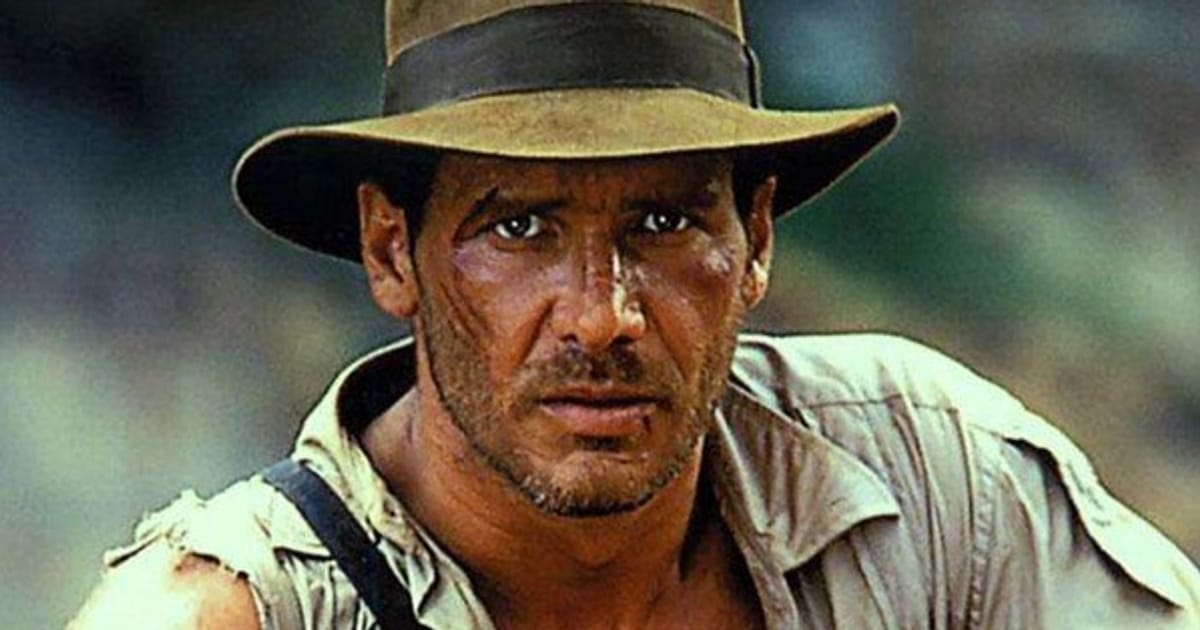
Indiana Jones is the definitive Harrison Ford character because he combines everything audiences love about him: courage, sarcasm, physical comedy, intellectual credibility, and the ability to look heroic while clearly wishing he had chosen a quieter profession. First introduced in Raiders of the Lost Ark, Dr. Henry “Indiana” Jones Jr. is both a respected archaeology professor and an action hero who treats ancient temples like extremely dangerous office buildings.
What makes Indy special is his imperfection. He is brilliant, but not invincible. He gets scared. He makes mistakes. He loses fights. He survives mostly through nerve, knowledge, and the occasional miracle of screenwriting. The fedora, whip, leather jacket, and fear of snakes are iconic, but Ford’s performance is what turns the costume into a character. He gives Indiana Jones a lived-in weariness that makes every chase feel earned.
Across Raiders of the Lost Ark, Temple of Doom, The Last Crusade, Kingdom of the Crystal Skull, and Dial of Destiny, Indy evolves from pulp-adventure hero to aging legend confronting time itself. He remains Ford’s most complete heroic creation: funny, bruised, romantic, stubborn, and unforgettable.
2. Han Solo Star Wars
Han Solo may be the coolest space smuggler ever created, which is impressive because he spends a surprising amount of time denying that he cares about anyone. Introduced in Star Wars: A New Hope, Han begins as a debt-ridden pilot with a fast ship, a loyal Wookiee co-pilot, and a flexible relationship with morality. Ford makes him instantly magnetic by playing him not as a mythic hero, but as a guy who thinks mythic heroes are bad for business.
The genius of Han Solo is his arc from cynicism to commitment. He says he is in it for the reward, but returns at the crucial moment. He argues with Leia, doubts the Force, mocks noble speeches, and still becomes one of the Rebel Alliance’s most important figures. In The Empire Strikes Back, Ford sharpens Han into a romantic rogue with real vulnerability. In Return of the Jedi, Han becomes more openly loyal, even if he would prefer nobody make a big speech about it.
His later return in The Force Awakens adds melancholy to the legend. Older Han is still charming, still reckless, and still emotionally evasive, but now carries the weight of regret. That final chapter gives the character unexpected tragic depth. Han Solo remains one of the best Harrison Ford characters because Ford made swagger feel soulful.
3. Rick Deckard Blade Runner and Blade Runner 2049
Rick Deckard is Ford at his most haunted. In Blade Runner, Deckard is a former police officer pulled back into hunting replicants, artificial humans who may be more emotionally alive than the society that created them. Unlike Indiana Jones or Han Solo, Deckard is not fun in the traditional sense. He is exhausted, morally compromised, and trapped inside a rain-soaked future that looks like a noir detective story had a nervous breakdown.
Ford’s performance is deliberately restrained. Deckard observes more than he explains. He moves through the film like a man trying not to ask questions because he suspects the answers will ruin him. His connection with Rachael forces him to confront what humanity means, and whether memory, fear, love, and mortality are enough to make someone real.
In Blade Runner 2049, Ford revisits Deckard decades later with more grief and vulnerability. The older Deckard is not merely a cameo machine; he is a man who has paid heavily for love and survival. Rick Deckard ranks high because he reveals Ford’s ability to play ambiguity. He is not a clean hero. He is a question mark in a trench coat.
4. Dr. Richard Kimble The Fugitive
Dr. Richard Kimble in The Fugitive is one of Ford’s finest thriller performances. Kimble is a respected surgeon wrongly convicted of murdering his wife. After a prison transport crash, he escapes and begins searching for the real killer while being hunted by U.S. Marshal Sam Gerard. The role requires Ford to carry the emotional burden of grief, fear, intelligence, and desperation without turning the character into a superhero.
Kimble’s appeal comes from his decency under pressure. Even while running for his life, he helps others, uses his medical skills, and refuses to become the criminal everyone thinks he is. Ford plays him as a man who is terrified but focused, wounded but analytical. The performance is physical, tense, and deeply human.
The Fugitive works because Kimble is not trying to save the world. He is trying to clear his name and honor his wife. That personal drive gives the movie its power. Among Harrison Ford’s best characters, Richard Kimble stands out as proof that Ford can make quiet desperation as gripping as a lightsaber battle or boulder chase.
5. John Book Witness
John Book in Witness gave Ford one of his richest dramatic roles. He plays a Philadelphia detective protecting a young Amish boy who witnesses a murder. Forced into hiding in an Amish community, Book becomes an outsider in a world defined by restraint, faith, and nonviolence. For an actor often associated with action and adventure, this role allowed Ford to slow down and explore silence, longing, and moral conflict.
Book is tough, but not invulnerable. He is protective, but not pure. His relationship with Rachel Lapp is charged with feeling precisely because it cannot easily be acted upon. Ford communicates much of the character through glances, posture, and hesitation. The famous barn-raising sequence shows him integrating into a community while still remaining separate from it.
This is one of Ford’s most mature performances. John Book belongs near the top because he shows the actor’s ability to build tension without spectacle. Sometimes the most powerful Harrison Ford moment is not a punch, a chase, or a blaster shot. Sometimes it is a man standing quietly in a room, knowing the right thing will cost him something.
6. Jack Ryan Patriot Games and Clear and Present Danger
Harrison Ford’s Jack Ryan is not the flashiest version of a screen hero, which is exactly why he works. In Patriot Games and Clear and Present Danger, Ryan is an intelligence analyst pulled into violent political crises. Ford plays him as smart, principled, and increasingly furious at corruption. He is not a spy because he loves danger. He is a public servant with a conscience, which in a political thriller makes him practically an endangered species.
Ford’s Ryan has the moral clarity of a classic hero but the frustration of a modern professional trapped inside broken systems. He is at his best when confronting powerful people who assume rules are decorative. The character gives Ford a chance to merge intellect with action, and the result is a grounded, credible protagonist.
Jack Ryan earns his place among the best Harrison Ford characters because he captures a key Ford specialty: the reasonable man pushed too far. He does not want chaos, but when chaos arrives, he knows where to stand.
7. President James Marshall Air Force One
President James Marshall is the role that answered a question audiences may not have known they had: what if Harrison Ford were president and also personally handled the hostage crisis? In Air Force One, Ford plays a former soldier turned U.S. president whose plane is hijacked by terrorists. The character is pure 1990s action-movie wish fulfillment, but Ford gives him enough authority and emotional seriousness to make the fantasy irresistible.
Marshall is honorable, protective, and extremely bad at staying safely hidden when his family and staff are in danger. His most famous line has become part of movie history, but the character works beyond that one moment because Ford sells the stakes. He is not just punching villains on a plane. He is a husband, father, commander-in-chief, and reluctant action hero all at once.
Is President Marshall subtle? Not particularly. Is he effective? Absolutely. Sometimes cinema needs a complicated moral puzzle. Sometimes it needs Harrison Ford telling someone to get off his plane.
8. Rusty Sabich Presumed Innocent
Rusty Sabich in Presumed Innocent is one of Ford’s most interesting morally gray roles. He plays a prosecutor accused of murdering a colleague with whom he had an affair. The performance is controlled, guarded, and uncomfortable in exactly the right way. Rusty is not a typical Ford hero; he is compromised, secretive, and difficult to fully trust.
That complexity gives the character lasting value. Ford uses his familiar screen integrity against the audience. We want to believe him because he is Harrison Ford, but the story keeps making that belief harder. The role depends on restraint, and Ford understands that Rusty’s silence can be more revealing than a confession.
Among Ford’s best characters, Rusty Sabich matters because he disrupts the heroic image. He reminds viewers that Ford’s charisma can work in darker keys. Not every Harrison Ford character should be invited to fly the Millennium Falcon. Some should be questioned under oath.
9. Branch Rickey 42
In 42, Ford plays Branch Rickey, the Brooklyn Dodgers executive who helped Jackie Robinson break Major League Baseball’s color barrier. The performance is big, gravelly, theatrical, and full of old-school conviction. Ford disappears behind Rickey’s heavy brows, cigar-chomping presence, and strategic mind, creating a supporting character who feels both historical and dramatically alive.
Rickey is not the emotional center of the film, but he is its catalyst. Ford plays him as a man who understands both the moral necessity and the business pressure of changing baseball. The character’s best scenes come when he challenges Robinson not only to play brilliantly, but to endure hatred without giving opponents an excuse to destroy him.
Branch Rickey deserves recognition because he shows Ford embracing character acting. The role is not about movie-star cool. It is about conviction, calculation, and a voice that sounds like it has been aged in a wooden desk drawer.
10. Dr. Paul Rhoades Shrinking
Dr. Paul Rhoades in Shrinking is one of Ford’s best late-career characters. As a senior therapist dealing with Parkinson’s disease, complicated friendships, professional boundaries, and his own emotional armor, Paul lets Ford explore comedy and vulnerability in a fresh way. He is blunt, dry, stubborn, and often hilarious, but the performance has real tenderness underneath.
What makes Paul so compelling is that he feels like a natural evolution of Ford’s screen persona. Here is a man who has spent a lifetime being competent, controlled, and intimidatingly smart, now facing the reality that control has limits. Ford’s comic timing is sharp, but he never turns Paul into a joke. The humor comes from honesty, not gimmicks.
Paul Rhoades belongs on this list because he proves that the best Harrison Ford characters are not only in the past. Ford can still surprise audiences by revealing new emotional colors inside that familiar gruff exterior.
11. Jacob Dutton 1923
Jacob Dutton in 1923 brings Ford into the modern prestige Western. As the patriarch of the Dutton family, Jacob is stern, weathered, and shaped by violence, land, loyalty, and survival. The role fits Ford naturally because it draws on his ability to project authority without overexplaining it.
Jacob is not a romantic cowboy fantasy. He is a man carrying history in his bones. Ford plays him with a slower, heavier rhythm than many of his famous film roles. The character has power, but also age, pain, and obligation. His scenes with Helen Mirren’s Cara Dutton add emotional weight, showing a partnership built on endurance rather than decorative romance.
While Jacob Dutton may not be as universally iconic as Han Solo or Indiana Jones, he is important in Ford’s later career. He proves that the actor can still command the screen in a crowded ensemble and make silence feel like a family constitution.
12. Allie Fox The Mosquito Coast
Allie Fox in The Mosquito Coast is one of Ford’s boldest and most unsettling roles. He plays an inventor who rejects modern American life and drags his family into the jungle to build a new society according to his own obsessive ideals. Unlike many Ford characters, Allie is not a reluctant hero. He is a visionary curdling into a tyrant.
This performance is valuable because it is risky. Ford lets Allie become arrogant, controlling, and frightening. The character’s intelligence becomes dangerous because it is fused with ego. Watching Ford play a man so convinced of his own righteousness that he endangers everyone around him is fascinating precisely because it works against his usual appeal.
Allie Fox may not be the most beloved Harrison Ford character, but he is one of the most revealing. He shows what happens when Ford’s familiar determination loses its moral compass.
Honorable Mentions
Linus Larrabee Sabrina
Ford’s Linus Larrabee is a controlled, business-minded romantic lead whose emotional thaw gives Sabrina its charm. He is not Ford’s most explosive character, but he shows his lighter dramatic touch.
Dr. Richard Walker Frantic
In Frantic, Ford plays an American doctor searching for his missing wife in Paris. The role turns confusion and panic into a tense international mystery.
Henry Turner Regarding Henry
Henry Turner allows Ford to explore vulnerability after trauma. The film is sentimental, but the character gives him room to play emotional reconstruction rather than action survival.
Thaddeus “Thunderbolt” Ross Captain America: Brave New World
Ford’s entry into the Marvel universe as President Thaddeus Ross adds another powerful, politically charged authority figure to his career. It may not outrank his classics yet, but it proves Ford can still step into a giant franchise and bring immediate gravity.
What Makes a Harrison Ford Character “The Best”?
The best Harrison Ford characters usually share five qualities. First, they are competent. Whether flying a ship, solving a murder, reading intelligence reports, or surviving a temple trap, they know what they are doing. Second, they are skeptical. Ford characters rarely believe the inspirational speech on the first draft. Third, they are physically present. Ford acts with his whole body: the limp, the grimace, the narrowed eyes, the exhausted lean against a doorway.
Fourth, they have emotional armor. Han hides loyalty behind jokes. Indy hides pain behind adventure. Deckard hides confusion behind professionalism. Paul Rhoades hides fear behind sarcasm. Finally, Ford’s best characters change because they are forced to care. That is the essential Ford formula: a man insists he is not emotionally involved, then risks everything because he absolutely is.
Experience Notes: Watching the Best Harrison Ford Characters Today
Revisiting the best Harrison Ford characters is a strange and satisfying experience because they do not feel trapped in the decade that created them. Sure, the technology changes. The hair changes. The visual effects definitely change. But Ford’s screen presence travels well. Watch Han Solo today, and the character still feels modern because his humor is defensive, his confidence is messy, and his charm is not polished into bland perfection. He is cool because he seems one bad decision away from disaster, which is honestly more relatable than most perfect heroes.
Indiana Jones offers a different kind of viewing pleasure. The films remind you that adventure stories are best when the hero is both brave and deeply inconvenienced. Indy is not a floating symbol of courage; he is a professor who keeps being punched in historical locations. That human quality makes the action more fun. When he runs from traps, argues with allies, or looks horrified by snakes, viewers feel invited into the adventure rather than asked to worship it from a distance.
Then there are the heavier roles. Watching Witness after years of knowing Ford mostly as Han and Indy can feel like discovering a quieter room inside a very famous house. John Book is restrained, observant, and emotionally conflicted. The Fugitive creates another experience entirely: pure forward motion. Richard Kimble is the kind of character who makes viewers lean toward the screen. You know he is innocent, but Ford makes every narrow escape feel uncertain, as if the movie might still crush him at any moment.
Rick Deckard is perhaps the most interesting character to revisit because Blade Runner changes as the viewer changes. When you are younger, the world-building may dominate: neon, rain, flying cars, artificial humans, and existential dread with excellent lighting. Later, Deckard’s exhaustion becomes more visible. He is not simply solving a case. He is being pulled apart by the moral implications of his own work. Ford’s quietness becomes the point.
Ford’s recent television roles add a rewarding final layer to the experience. Dr. Paul Rhoades in Shrinking feels like a conversation with Ford’s entire career. The bluntness is familiar, but the vulnerability is closer to the surface. Jacob Dutton in 1923 carries the weight of age and legacy. These roles show that Ford’s best characters are not frozen in nostalgia. They continue to evolve, becoming older, sadder, funnier, and sometimes even more moving.
The real pleasure of watching Harrison Ford is that he rarely begs the audience to love him. His characters do not sparkle for approval. They grumble, resist, make mistakes, and then reveal their hearts through action. That is why the best Harrison Ford characters remain so watchable: they make heroism look difficult, costly, and occasionally irritating. In other words, they make it feel real.
Conclusion
The best Harrison Ford characters form a remarkable map of American screen storytelling. Indiana Jones is the ultimate adventure hero. Han Solo is the gold standard for lovable rogues. Rick Deckard brings noir sadness to science fiction. Richard Kimble turns a manhunt into a moral endurance test. John Book proves Ford can do quiet, romantic, award-worthy drama. Jack Ryan, President Marshall, Rusty Sabich, Branch Rickey, Paul Rhoades, Jacob Dutton, and Allie Fox all reveal different sides of an actor whose career has lasted because he never plays heroism as simple.
Harrison Ford’s characters endure because they are iconic without feeling untouchable. They get tired. They get scared. They get angry. They also keep moving when the situation is impossible, which may be the most Ford-like quality of all. Whether he is cracking a whip, piloting the Millennium Falcon, chasing the truth, or delivering a withering therapist stare, Ford gives audiences characters who feel carved from movie history and still somehow alive in the present tense.