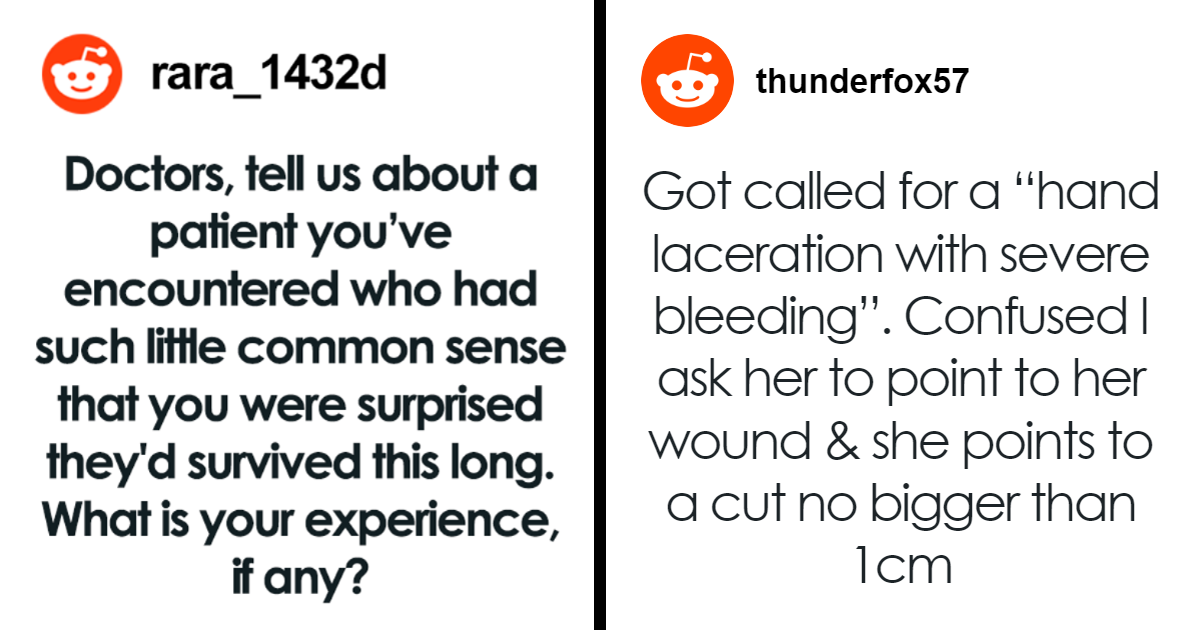
Every doctor has at least one story that makes them pause, blink twice, and quietly wonder whether basic human survival should come with an instruction manual. The internet loves these tales because they are part comedy, part tragedy, and part “please tell me that did not actually happen.” But beneath the laughs, there is a more useful truth: many of the so-called dumbest patient moments are really a messy mix of panic, misinformation, magical thinking, social media nonsense, half-remembered advice from an aunt named Denise, and the universal American belief that one Google search equals a medical degree.
That is what makes this topic so strangely fascinating. Doctors are not just dealing with illness. They are also dealing with myths, denial, fear, embarrassment, wishful thinking, and the stubborn idea that if something sounds natural, viral, or “kind of true,” it must be medically sound. Spoiler: it must not. So instead of lazily recycling a viral thread, this article pulls together the kinds of baffling misunderstandings physicians repeatedly describe online and the common myths major medical institutions keep debunking. The result is a funny, readable, slightly forehead-slapping tour through 45 patient moments that make doctors want to sit down for a second.
Why These Stories Keep Happening
The easiest explanation is to say, “People are ridiculous,” and yes, sometimes that shoe fits like a hospital-issued slipper. But the deeper explanation is that modern healthcare is full of confusing language, scary diagnoses, conflicting advice, and algorithm-fed junk science. A patient walks into a clinic carrying symptoms, stress, and ten contradictory things they read online. By the time they speak to a doctor, common sense has often left the building and is waiting in the parking lot with the hazard lights on.
That is why the funniest doctor stories tend to follow a pattern. Patients confuse side effects with allergies. They want antibiotics for viruses. They assume “natural” means safe. They treat social media myths like sacred text. They skip instructions, misunderstand anatomy, or decide that if a symptom becomes inconvenient enough, it might simply go away out of respect for their schedule. Sadly, the human body does not negotiate like that.
45 Dumbfounding Patient Moments Doctors Keep Running Into
These are not copied case notes or one-to-one transcripts. They are freshly written, real-world composite examples based on the kinds of myths, misconceptions, and facepalm moments doctors and major medical organizations keep encountering.
Medication And Treatment Mix-Ups
- The “antibiotics fix everything” patient. They have a cold, it is clearly viral, and they still want antibiotics like they are ordering fries with a combo meal.
- The early quitter. They stop antibiotics the second they feel better, then save the leftovers for a future mystery illness like some kind of pharmaceutical squirrel.
- The fake allergy historian. They insist they are allergic to a medication, but when asked what happened, the answer is basically, “It upset my stomach in 2009.”
- The double-dose optimist. One pill did not work fast enough, so they took two, then four, then showed up wondering why everything feels weird and slippery.
- The supplement believer. They refuse a prescribed medication but trust an unlabeled herbal capsule sold online by a person with a ring light and perfect teeth.
- The expired medicine collector. They pull a bottle from the depths of a purse, glove box, or kitchen drawer and ask whether tablets from the Obama era are still fine.
- The “natural means harmless” patient. They forget that arsenic is natural too, and that “plant-based” is not the same thing as “safe in any amount.”
- The detox devotee. Instead of following actual treatment, they decide tea, charcoal, celery juice, and vibes will reset the entire body by Monday.
- The side-effect panic sprinter. They experience a mild expected effect, decide the medication is trying to assassinate them, and quit before the drug even has time to work.
Infection, Immunity, And Germ Theory Gone Off The Rails
- The flu-shot blamer. They got vaccinated, then later caught a different respiratory bug, so naturally the vaccine is now the villain in their personal documentary.
- The immune-system alarmist. They think vaccines “overload” the body, as if the immune system is an old power strip running three space heaters and a microwave.
- The toilet-seat HIV theorist. Somehow, despite decades of public education, this myth still shuffles into exam rooms wearing cheap sunglasses and bad logic.
- The invisible infection denier. No symptoms means no disease, according to them, which is not how many infections work at all.
- The COVID-needs-antibiotics customer. They hear “infection” and immediately want bacteria medicine for a virus because apparently details are optional.
- The household-cleaner experimenter. They try something meant for countertops on a human body and are shocked to learn the body is not, in fact, a countertop.
- The fever phobic. A mild fever appears, and they react as if the thermostat reading itself is the disease rather than a sign the body is doing its job.
- The “I felt fine, so I went to work” patient. They were coughing, contagious, and glowing like a toaster, but since they could still answer emails, they assumed all was well.
- The internet cure enthusiast. Garlic, silver, vinegar, and random internet hacks become a first-line treatment plan, while evidence-based care sits ignored in the corner.
Sex, Pregnancy, And Reproductive Confusion That Refuses To Retire
- The douching strategist. They believe pregnancy can be outsmarted with timing and bathroom products, as if biology were a loophole-based tax code.
- The breastfeeding absolutist. They think nursing makes pregnancy impossible, not less likely under some conditions, but fully impossible like gravity on the moon.
- The tampon myth loyalist. They still believe tampons affect virginity, which is a social concept, not a medical switch hidden somewhere in the anatomy.
- The universal birth-control weight-gain believer. Every method is supposedly a guaranteed fast pass to dramatic weight changes, because nuance has apparently been discontinued.
- The STI stereotype thinker. They assume sexually transmitted infections happen only to “other people,” preferably strangers in cautionary tales.
- The “my partner looks healthy” detective. Since their partner appears fine, they conclude testing is unnecessary. That is not medicine. That is wishful casting.
- The emergency-contraception improviser. They treat timing like a suggestion and assume one pill solves every scenario regardless of when or how it is used.
- The first-time immunity myth fan. They somehow believe pregnancy or infection has special exemptions for beginners, like a loyalty program nobody asked for.
- The anatomy guesser. They speak about reproductive organs with such confidence and such inaccuracy that every biology teacher in America feels a disturbance in the force.
Chronic Disease, Serious Symptoms, And Pure Denial
- The cholesterol truther. They think high cholesterol would obviously feel like something dramatic, because silent risk factors are apparently too boring to be believed.
- The heart-disease sexist. They assume heart trouble is mostly a men’s issue and are offended to learn arteries do not care about outdated stereotypes.
- The statin horror-story collector. One terrifying post online outweighs years of evidence, so they reject treatment while quoting a guy named “FreedomEagle74.”
- The Parkinson’s-medication skeptic. They fear standard treatment will somehow speed up the disease, because bad myths travel faster than good neurology.
- The dementia minimizer. They wave off serious cognitive changes as “just getting older,” which is a dangerous game when memory loss is changing daily life.
- The addiction moralizer. They insist substance use disorder is just weak character, ignoring the medical, psychological, and neurological reality standing right in front of them.
- The liver-cleanse dreamer. Years of unhealthy habits are expected to evaporate after a weekend drink powder that tastes like lawn clippings and regret.
- The vitamin-D-for-everything patient. Bone health, fatigue, sadness, bad haircuts, world eventsapparently one vitamin is now responsible for all of civilization.
- The testosterone explanation machine. Every normal dip in energy becomes proof of a hormone catastrophe that must be fixed immediately and preferably marketed aggressively.
Tests, Instructions, And The Strange Confidence Of People Who Did Not Read The Handout
- The fasting-rule improviser. They are told not to eat before blood work, then arrive after a full breakfast sandwich and a caramel latte, asking if that counts.
- The colonoscopy prep minimalist. They “mostly followed directions,” which in practice means they interpreted a medical prep like a casual dinner recipe.
- The discharge-instruction freestyler. They leave the hospital with written guidance, ignore half of it, then return confused because the body did not honor their edits.
- The blood-pressure contradiction. They want perfect numbers while smoking, sleeping four hours, drowning in energy drinks, and treating stress like a hobby.
- The everything-scan shopper. They want one magical test to check literally every disease on Earth because that seems more efficient than clinical reasoning.
- The symptom delay champion. They have had chest pain, bleeding, numbness, or alarming weight loss for weeks, but they came in today because now it is “annoying.”
- The Google gladiator. They ask for expert advice and then battle the expert with search results from websites that also sell crystals or apocalypse buckets.
- The omitted-detail artist. They say “nothing has changed,” then casually mention a new supplement stack, a vape habit, three energy shots a day, and a recent dog bite.
- The truth-last patient. Only after twenty minutes of detective work do they admit the key fact they thought “probably wasn’t relevant,” which of course was the entire plot.
What These Stories Actually Reveal
It is fun to laugh at these examples because some of them truly sound like lost scenes from a medical sitcom. But if you stop there, you miss the bigger point. Most baffling patient behavior is not born from evil or even laziness. It grows in the fertile soil of confusion. Healthcare language is dense. Appointments are short. Shame makes people hide details. Social media rewards confidence more than accuracy. And once somebody believes a myth strongly enough, facts start bouncing off like Nerf darts.
Doctors know this better than anyone. The best clinicians are not just anatomy experts; they are translators, myth-busters, negotiators, and professional untanglers of nonsense. They spend a surprising amount of time explaining why antibiotics do not treat viruses, why “natural” does not mean safe, why a side effect is not always an allergy, why vaccines are not villainous, and why “I read online” is the opening line to a conversation, not the end of one.
That is also why the funniest stories often hide the saddest truth: a lot of patients are genuinely overwhelmed. They are embarrassed to ask basic questions. They do not want to look foolish. So instead of saying, “I don’t understand,” they improvise. And improvisation in medicine is how you end up drinking the wrong thing, skipping the prep instructions, misusing a medication, or waiting a month to mention a symptom that should have been addressed on day one.
Extra Perspective: What Doctors Experience Behind The Facepalm
Spend enough time in medicine and you realize that the legendary patient story rarely starts with stupidity alone. It usually starts with a rushed morning, a scary symptom, a search engine, and an adult trying very hard not to feel helpless. A patient gets chest pain, reads six conflicting articles, watches two short videos by strangers, asks a cousin, and walks into the clinic already carrying a private courtroom of bad evidence. By the time the doctor says hello, the patient has built a full theory, assigned blame, dismissed one treatment, and become emotionally attached to a diagnosis that makes no sense.
That experience is exhausting for clinicians, but it is also strangely human. Doctors see people at their most anxious. Smart people say silly things when they are scared. Organized people forget crucial facts when they are embarrassed. Calm people become conspiracy enthusiasts after three nights of poor sleep and one alarming symptom. A perfectly competent adult can manage a company, raise children, file taxes, and still look a doctor in the eye and ask whether a virus can be fixed with leftover antibiotics from a dental visit in 2018.
What makes these moments memorable is the contrast between confidence and misunderstanding. The patient is not usually unsure. That would be easy. The patient is often gloriously certain. They are certain they cannot be pregnant. Certain they do not need testing. Certain their “allergy” is real. Certain their supplement is cleaner than a prescription. Certain the internet found the answer in seven seconds that a trained physician somehow missed after a decade of education. That confidence is what makes the stories funny, but also what makes them dangerous.
Experienced doctors learn that correcting people is only half the job. The other half is getting them to feel safe enough to admit what they really thought. A good physician does not just say, “That’s wrong.” They ask where the belief came from. They explain in plain English. They repeat the plan. They use the teach-back method. They ask, “Can you tell me how you’re going to take this medicine when you get home?” because nodding is not understanding, and a patient saying “got it” can mean absolutely nothing.
And that is the real lesson behind the funniest patient encounters. The problem is not that common sense has permanently vanished. The problem is that fear, misinformation, shame, and overconfidence can knock it unconscious for a while. The doctors who handle this well are not just medically sharp. They are patient, direct, and oddly skilled at cleaning up the intellectual debris left by bad advice. So yes, these stories are hilarious. But they are also a reminder that better communication can save a lot of suffering, a lot of time, and a truly impressive number of unnecessary facepalms.
Conclusion
The dumbest patient stories doctors tell are funny because they reveal a truth nobody loves admitting: when health anxiety meets misinformation, human logic can go fully off-road. One person wants antibiotics for a virus. Another fears a vaccine more than the disease. Someone else mistakes a side effect for an allergy, ignores instructions, or arrives armed with internet confidence and biological confusion. It is hilarious, yes, but it is also revealing.
These moments remind us that medicine is not just about diagnosing disease. It is about translating reality. Doctors spend a huge chunk of their day correcting myths, simplifying instructions, calming panic, and turning bad assumptions into useful decisions. That work may not be glamorous, but it matters. Because behind nearly every baffling patient moment is a person trying, badly, to make sense of something frightening. And when better communication shows up, common sense sometimes wanders back into the room.