Sound is supposed to be the friendly stuff: birdsong, your favorite playlist, rain on the roof, the microwave politely screaming because you forgot your coffee again. But humans, being humans, looked at vibrations in the air and eventually asked, “Could this make someone surrender, scatter, confess, panic, or move away from a storefront?” Congratulations, civilization. We weaponized the playlist.
Weaponized sound does not always mean a futuristic “sonic cannon” from a spy movie. Sometimes it is a siren strapped to an aircraft. Sometimes it is a loudspeaker blasting rock music at a dictator hiding in an embassy. Sometimes it is a high-frequency tone aimed at teenagers because apparently “please don’t loiter” was not dramatic enough. Across history, sound has been used to frighten enemies, disrupt sleep, control crowds, repel pirates, confuse soldiers, and apply psychological pressure without firing a traditional shot.
This article explores 10 times sound was weaponized, from ancient-style intimidation to modern acoustic hailing devices. The common thread is simple: sound enters the body whether we invite it or not. We can close our eyes, but we cannot close our ears with the same elegance. That makes sound powerful, intimate, and, in the wrong hands, deeply uncomfortable.
What Does “Weaponized Sound” Mean?
Weaponized sound is the deliberate use of noise, music, vibration, voice, or acoustic pressure to influence, hurt, frighten, disperse, or control people. It can be physical, as with extreme noise that risks hearing damage, or psychological, as with eerie recordings intended to weaken morale. The effects depend on volume, duration, frequency, environment, and the listener’s vulnerability. A marching drumbeat may boost one army while terrifying another. A song at a wedding is charming; the same song blasted for days during a siege becomes something much darker. Even “Baby Shark” has a villain arc if you give it enough amplification.
1. Ancient Horns, Drums, and the Original Battlefield Soundtrack
Long before electricity, armies understood that sound could enlarge their presence. Drums kept troops moving in rhythm, horns transmitted commands, and mass shouting could make a smaller force seem more intimidating. The famous biblical story of Jericho describes trumpets, marching, and a collective shout as central to the city’s fall. Whether treated as sacred history, legend, or cultural memory, the story captures an old human idea: sound can turn fear into a battlefield force.
Ancient military sound was not just decoration. In chaotic combat, organized noise signaled discipline. To enemies, that discipline could feel like doom arriving with percussion. Imagine standing behind a wall and hearing hundreds of feet, horns, and voices moving in terrifying coordination. That is not merely music; that is psychological architecture. The weapon is not the trumpet alone, but what the trumpet makes the mind imagine.
2. Aztec Death Whistles and Ritual Fear
The so-called Aztec death whistle is one of the creepiest objects ever to make archaeologists say, “Well, that is unsettling.” These skull-shaped whistles, associated with Mexica ritual contexts, can produce harsh, scream-like or wind-like sounds depending on construction and reproduction. Modern studies suggest that these sounds can be perceived as frightening and aversive, activating emotional attention in listeners.
Were they battlefield weapons? That part is debated. Popular culture loves the idea of warriors blowing them before battle like a horror-movie brass section. Scholars are more cautious, noting that many known finds point toward ritual and ceremonial use rather than confirmed battlefield deployment. Still, the death whistle belongs in the history of weaponized sound because it shows how acoustic design can exploit the human brain’s alarm system. A sound that resembles a scream, wind, animal distress, and something not quite human is basically the audio equivalent of seeing a shadow move in your hallway at 2 a.m.
3. The Stuka Siren: Terror Before the Bomb
During World War II, Germany’s Junkers Ju 87 “Stuka” dive bomber became infamous not only for its attacks but for its sound. Early versions were fitted with wind-driven sirens, often called “Jericho trumpets” in popular memory. As the aircraft dived, the sirens produced a wailing scream that announced danger before the bombs struck.
The military logic was brutal but clear: fear could be delivered seconds before explosives. The sound made the attack feel larger, closer, and more inevitable. Even when the sirens created drag and were not always kept on later aircraft, their psychological legacy endured. Hollywood still uses similar shrieks whenever a falling object needs to sound as if gravity hired a drama coach.
The Stuka siren is a classic example of sound as emotional pre-impact. It did not destroy a target by itself, but it prepared the nervous system for terror. In warfare, that preparation can matter. Panic slows reaction, breaks coordination, and magnifies the perceived power of the attacker.
4. The Ghost Army’s Sonic Deception in World War II
Not all weaponized sound is painful. Sometimes it is theater with excellent logistics. The U.S. Army’s 23rd Headquarters Special Troops, better known as the Ghost Army, used inflatable tanks, fake radio traffic, visual trickery, and sound effects to deceive German forces in Europe during World War II.
The sonic part was especially clever. Engineers recorded the sounds of armored and infantry units, then played them through powerful speakers to make it seem as if large military formations were gathering where they were not. Tanks, trucks, and troop movements could be suggested acoustically. It was not “boom, you are injured” sound; it was “oops, you moved your forces to the wrong place” sound.
This case proves that weaponized sound can target decision-making rather than eardrums. The enemy hears what sounds like a real unit and acts on false information. In modern terms, it was audio misinformation with a military-grade speaker system. The Ghost Army weaponized expectation itself.
5. Operation Wandering Soul in Vietnam
During the Vietnam War, U.S. psychological operations included an eerie campaign commonly known as Operation Wandering Soul. The concept exploited traditional beliefs about the dead needing proper burial. Recordings were made to sound like wandering spirits or voices from beyond the grave, then broadcast in jungle areas to unsettle enemy fighters.
The tactic was culturally targeted psychological warfare. Instead of relying on volume alone, it used meaning. A strange voice in the dark jungle is unnerving in any language; a strange voice tied to beliefs about restless souls is even more calculated. Reports on effectiveness are mixed, and in some cases fighters reportedly recognized the trick and fired toward the speakers. Still, the operation shows how sound can become a vehicle for superstition, grief, and fear.
In other words, the weapon was not only the tape recorder. It was the story the sound carried.
6. Rock Music Against Manuel Noriega
In 1989, after the U.S. invasion of Panama, Manuel Noriega took refuge in the Vatican’s diplomatic mission in Panama City. U.S. forces surrounded the building and, among other pressure tactics, blasted loud music toward the embassy. The playlist reportedly leaned into rock, metal, and pointed song choices. It was psychological pressure with a radio-DJ personality disorder.
The goal was not to injure Noriega with a guitar solo. It was to make the environment unbearable, interfere with sleep, irritate everyone inside, and increase pressure for surrender. The episode became famous because it sounded almost absurd: geopolitics by loudspeaker. Yet the absurdity should not hide the deeper point. Music can be joyful when chosen freely and coercive when imposed relentlessly.
Eventually, the music campaign drew criticism, including from U.S. leadership, and was stopped. Noriega surrendered in January 1990. Whether the music was decisive is debatable, but as a symbol of sound weaponization, it remains one of history’s loudest “please come outside” moments.
7. The Waco Siege and Sonic Harassment
During the 1993 standoff between federal agents and the Branch Davidians near Waco, Texas, sound became part of the pressure campaign. Reports and official reviews describe the use of loud music, chants, irritating noises, and other broadcasts directed at the compound. Some negotiators reportedly opposed such harassment tactics, fearing they would harden resistance rather than encourage cooperation.
That is one of the great problems with weaponized sound: the user may believe it creates compliance, while the target experiences humiliation, siege, or persecution. Noise can push people out, but it can also push them deeper into defiance. The Waco case remains tragic and controversial for many reasons, and the sonic element is only one part of a much larger failure. Still, it shows that sound used as pressure can become psychologically risky, especially in tense standoffs where trust is already microscopic.
8. Loud Music in Interrogations and Detention
One of the darkest chapters in weaponized sound is the use of loud music and noise in detention and interrogation settings. Reports from the post-9/11 era describe music and sound being used to disorient detainees, contribute to sleep deprivation, and create a sense of helplessness. In such contexts, the issue is not whether a song is “bad.” A harmless pop track can become abusive when played at high volume, at unwanted hours, under captivity, with no ability to make it stop.
This is where sound crosses from irritation into coercion. The body cannot adapt peacefully when sleep is repeatedly broken and the mind is denied silence. Musicologists and human-rights advocates have pointed out that music’s emotional power makes it especially disturbing when turned against unwilling listeners. The same beat that energizes a stadium can become a tool of domination in a cell.
It is a grim reminder that weaponized sound is not defined by genre. Heavy metal, children’s songs, country music, patriotic music, novelty songsunder coercive conditions, any of them can become the soundtrack of suffering. Yes, even the catchy ones. Especially the catchy ones.
9. LRADs: The Modern “Sound Cannon”
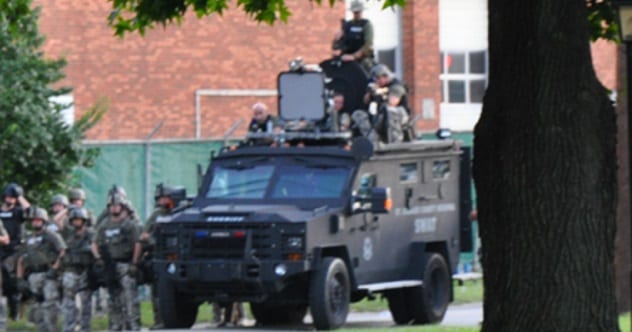
The Long Range Acoustic Device, commonly called LRAD, was developed as an acoustic hailing system capable of sending clear voice messages over long distances. It has been used for military communication, maritime security, emergency warnings, and law enforcement. It can also emit extremely loud warning tones, which is why critics describe some uses as “sound cannon” tactics.
LRADs entered public controversy through protest and crowd-control deployments. Civil liberties groups have warned that intense acoustic exposure can cause pain, disorientation, tinnitus, and possible hearing damage. Public-health guidance on noise exposure is clear about one thing: loud sound is not harmless just because it is invisible. The ear is delicate equipment, not a replaceable phone charger.
Supporters argue that acoustic hailing devices can communicate warnings clearly and reduce the need for more violent force. Critics counter that when the alert function is used aggressively, it becomes a less-lethal weapon with serious risks and inconsistent oversight. Both points matter. A technology designed to communicate can become a technology used to compel. The difference often lies in training, rules, distance, duration, accountability, and restraint.
10. The Mosquito Device and Anti-Loitering Sound
The Mosquito device uses high-frequency sound to discourage young people from gathering in certain spaces. Because many people lose sensitivity to higher frequencies with age, the tone can be more noticeable and irritating to teenagers and young adults than to older adults. It has been installed in some public or semi-public areas as an anti-loitering tool.
Supporters call it a nonviolent deterrent. Critics call it discriminatory acoustic hostile architecture. That phrase may sound like something invented by a graduate seminar wearing black turtlenecks, but it is useful. The device changes who feels welcome in a space by making the environment uncomfortable for a targeted group. Instead of a sign saying “No Teens,” the wall simply screams at them.
Human-rights advocates have objected to the device because it affects people based on age and may distress individuals with sensory sensitivities, tinnitus, or certain disabilities. This is weaponized sound in everyday clothing: not a battlefield technology, but a social-control tool hidden in the background of shopping centers, transit stations, and public spaces.
Bonus Case: Havana Syndrome and the Mystery of Directed Energy
Havana Syndrome, now often discussed under the broader label of anomalous health incidents, is one of the most disputed modern cases associated with sound or directed energy. Beginning in 2016, U.S. and Canadian personnel reported strange sounds, pressure sensations, dizziness, headaches, cognitive symptoms, and other health problems. Early public discussion often framed the incidents as possible “sonic attacks.” Later scientific and intelligence assessments became more cautious.
A National Academies report found that some symptoms were consistent with directed, pulsed radiofrequency energy, not necessarily audible sound. U.S. intelligence assessments later stated that most agencies considered it very unlikely that a foreign adversary was responsible for the incidents. That does not mean all symptoms were imaginary; it means the cause remains complex, contested, and not cleanly proven as a sonic weapon.
Havana Syndrome belongs in this conversation because it shows how quickly “mysterious sound” becomes “possible weapon” in public imagination. It also reminds writers, researchers, and readers to keep one hand on the drama and the other on the evidence. Not every frightening noise is an attack. Not every unexplained illness has a single villain. Reality, annoyingly, refuses to be as tidy as a spy thriller.
Why Sound Works So Well as a Tool of Control
Sound is powerful because it is physical and emotional at the same time. It vibrates through air, walls, vehicles, and bodies. It can carry language, memory, threat, rhythm, and cultural meaning. A siren can make your pulse jump before you know why. A chant can unify a crowd. A repeated tone can irritate someone into leaving. A familiar song can become unbearable when stripped of choice.
Weaponized sound often relies on four effects. First, it startles. Sudden noise forces attention. Second, it masks. Loud sound can block communication and coordination. Third, it exhausts. Repeated unwanted noise can interfere with sleep and recovery. Fourth, it symbolizes power. The person controlling the sound controls the space.
That last point is crucial. Sound fills an environment. When someone else controls that environment, silence becomes a privilege. This is why noise-based tactics can feel so invasive. They do not merely say, “You are in danger.” They say, “You cannot even choose what enters your own head.”
Experiences and Lessons From a World Where Sound Can Become a Weapon
Most people will never face a wartime siren, a psychological-operation broadcast, or an LRAD at close range. But almost everyone has experienced a tiny domestic version of weaponized sound. The neighbor’s midnight bass line. The leaf blower that begins exactly when your soul finds peace. The car alarm that continues long enough to become a member of the family. These ordinary irritations help explain why sound is such an effective pressure tool. It bypasses polite boundaries.
One practical lesson is that context changes everything. A song you love on a road trip can become maddening when repeated in a workplace, a detention room, or a siege. Volume matters, but control matters too. The same sound feels different when you choose it, when you can leave it, and when you are trapped under it. This is why discussions of weaponized music should never become silly debates about whether a particular band is annoying. The ethical issue is coercion, not taste. Nickelback jokes are optional; consent is not.
Another lesson is that sound can shape behavior without leaving visible marks. A bruise can be photographed. Hearing damage, tinnitus, panic, sleep loss, and disorientation may be harder to document, especially after a chaotic crowd event or high-stress operation. That invisibility can make acoustic force easier to minimize. People may say, “It was just noise.” But the human auditory system is not a decorative accessory. Loud noise exposure can have lasting consequences, and psychological stress can outlive the event that caused it.
There is also a design lesson. Public spaces increasingly use subtle discomfort to control who stays and who leaves: harsh lighting, awkward benches, surveillance announcements, and sometimes unpleasant sounds. When sound is used to push away a category of people, especially young people or vulnerable people, it becomes part of a broader debate about who public space is for. A city that solves social problems by making places unbearable has not solved the problem. It has simply installed a speaker and called it policy.
For writers and readers, the biggest lesson is to treat weaponized sound with both curiosity and caution. The topic is fascinating because it sits at the intersection of physics, psychology, history, law, music, and ethics. It is also easy to exaggerate. Not every strange hum is a secret weapon. Not every ancient whistle was used in battle. Not every loudspeaker deployment has the same purpose or risk. The best approach is evidence-based: ask who used the sound, against whom, for how long, under what authority, and with what documented effects.
Finally, sound teaches us something uncomfortable about power. A society can reveal a lot about itself by what it chooses to amplify. Warnings, music, prayer, propaganda, alarms, protest chants, crowd-control tones, lullabieseach says something about human intention. Sound can comfort a baby, guide a ship, save people during an emergency, or pressure a person until silence feels like freedom. The technology is not automatically cruel. The choice to use it against unwilling ears is where the moral volume knob turns red.
Conclusion
Sound has been weaponized in many forms: ancient horns, terrifying whistles, aircraft sirens, deceptive recordings, siege music, interrogation noise, crowd-control devices, anti-loitering tones, and mysterious alleged directed-energy incidents. Some examples are proven and well documented. Others remain debated, exaggerated, or culturally misunderstood. But together they show that sound is never “just sound” when it is used to control bodies, emotions, and choices.
The history of weaponized sound is not merely a strange cabinet of military curiosities. It is a warning about invisible force. Noise can travel through walls, through sleep, through memory, and through public life. Used responsibly, sound can warn, communicate, and protect. Used recklessly, it can frighten, injure, humiliate, and erase the basic human need for peace. The next time someone says, “Turn it up,” history gently suggests asking, “For whom?”