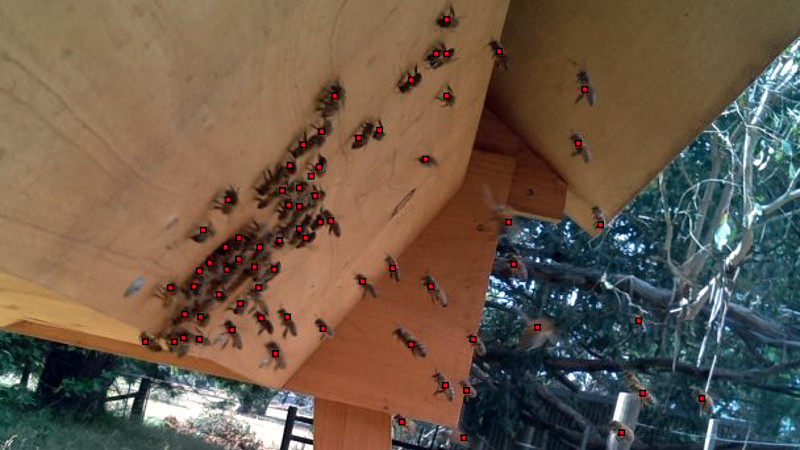
Counting bees sounds like the kind of job assigned to someone who lost a bet at a beekeeper meeting. One bee, two bees, three bees, wait, that one came back, start over. Fortunately, a Raspberry Pi can do what human eyes cannot do for long: watch the hive entrance patiently, record traffic patterns, and turn buzzing chaos into useful data.
A bee counter built with a Raspberry Pi is more than a fun weekend project. It can help hobbyists, researchers, and small-scale beekeepers understand when foragers leave, when they return, how weather changes activity, and whether a colony’s daily rhythm looks normal. It will not replace regular hive inspections, mite checks, or good beekeeping judgment. But it can become a quiet digital assistant sitting near the hive, taking notes while the bees handle the real work.
Why Count Bees In The First Place?
Honey bee colonies are living systems with busy schedules. When a colony is strong and weather conditions are favorable, foragers stream in and out of the entrance throughout the day. When traffic suddenly drops, that change may point to weather shifts, queen problems, pesticide exposure, robbing pressure, disease, poor nutrition, or simple seasonal changes.
Beekeepers have always watched entrance activity. A quick glance can reveal pollen baskets, orientation flights, guard behavior, and general colony mood. However, human observation is limited. You may watch for five minutes at noon and miss the morning surge, the late-afternoon slowdown, or the odd traffic crash that happened while you were inside looking for coffee.
A Raspberry Pi bee counter solves that problem by recording consistent data. Instead of guessing whether “traffic seemed lower this week,” you can compare actual counts by hour, day, temperature, or hive. That makes beekeeping a little less mystical and a little more measurable, while still leaving plenty of room for bee-related surprises.
What Is A Raspberry Pi Bee Counter?
A Raspberry Pi bee counter is a small monitoring system that detects bees moving through or across the hive entrance. The Raspberry Pi acts as the brain. A camera or sensor captures activity. Software analyzes movement and records counts. The result can be a simple daily chart, a spreadsheet, a dashboard, or a real-time alert.
There are two common ways to build one: sensor-based counting and camera-based counting.
Sensor-Based Bee Counting
A sensor-based counter usually uses infrared beams, light gates, or physical channels at the hive entrance. When a bee crosses a beam, the system logs movement. If two sensors are placed in sequence, the device can estimate direction: out of the hive or into the hive.
This method can be efficient because it requires less processing power. It also works without recording video. The tradeoff is that bees do not always walk politely through tiny lanes like commuters at a subway turnstile. They cluster, reverse, clean, fan, argue with wasps, and occasionally act like they were designed by a committee of chaos engineers.
Camera-Based Bee Counting
A camera-based bee counter uses a Raspberry Pi camera module, USB camera, or AI camera to watch the hive entrance. Software such as OpenCV or a lightweight machine learning model detects bees in frames and tracks their motion across virtual lines.
This approach is flexible. You can analyze direction, traffic density, pollen loads, unusual behavior, and time-of-day patterns. The downside is that lighting, shadows, rain, bee overlap, and camera angle can reduce accuracy. In short, computer vision is powerful, but bees do not care about your clean dataset.
Basic Parts You Need
A practical bee counter does not require a laboratory budget. Many hobbyists can start with common maker parts and expand later.
Recommended Hardware
- Raspberry Pi: A Raspberry Pi 4 or Raspberry Pi 5 is comfortable for computer vision. A Raspberry Pi Zero 2 W can work for lighter models or sensor-based counting.
- Camera: A Raspberry Pi Camera Module, Camera Module 3, NoIR camera, USB webcam, or AI camera can be used depending on lighting and processing needs.
- MicroSD card: Use a reliable card with enough space for the operating system, scripts, and temporary image storage.
- Power supply: Stable power is essential. For outdoor use, consider a battery with solar charging, but test it before trusting it.
- Weatherproof enclosure: The Pi needs protection from rain, condensation, propolis dust, and curious insects.
- Mounting bracket: Keep the camera fixed. A shaky camera turns bee tracking into abstract art.
- Optional sensors: Temperature, humidity, weight, and sound sensors can add useful context to traffic data.
How Bee Counting Works
The simplest camera-based setup follows a clear workflow: capture frames, detect bees, track movement, count crossings, store results, and visualize patterns.
Step 1: Capture The Hive Entrance
The camera should face the entrance from above or slightly in front, with the entire landing board visible. Avoid steep angles that hide bees behind each other. A consistent background helps the software separate bees from wood grain, shadows, and debris.
Good lighting matters. Direct sun can create harsh shadows. Low light can blur wing movement. A shaded mount or diffuser may improve results. Some builders use infrared lighting with a NoIR camera for early morning or evening monitoring, but avoid anything that heats the hive entrance or disrupts the colony.
Step 2: Detect Bees In The Image
Basic detection can begin with motion analysis. If the camera is fixed, software can compare one frame to the next and identify moving blobs. This is simple, fast, and often good enough for experiments.
More advanced systems use object detection models such as YOLO-style networks trained to recognize bees. These can be more accurate when the background is messy, but they require labeled images and more computing power. On a Raspberry Pi, lightweight models, lower resolution, and optimized inference settings are your friends.
Step 3: Track Direction
Counting every bee in every frame creates inflated numbers because the same bee appears again and again. A useful system tracks movement across a virtual line. If a bee moves from outside to inside, it counts as incoming. If it moves from inside to outside, it counts as outgoing.
Direction is the magic ingredient. A total “bee seen” number is interesting, but incoming and outgoing counts tell a better story. During strong foraging hours, outgoing bees may rise early, incoming bees may increase later, and pollen-bearing returns can hint at available forage.
Step 4: Store And Display The Data
The Raspberry Pi can save data locally as CSV files or push it to a database. A simple dashboard can show hourly traffic, daily totals, weather comparisons, and moving averages. For a backyard beekeeper, a weekly chart may be more useful than a flashy real-time screen. Bees do not become healthier because your dashboard has neon gradients.
What The Data Can Tell You
Bee counts are most useful when viewed as patterns rather than single numbers. A low count on a rainy morning is not alarming. A sudden traffic collapse on a warm, calm, nectar-flow day deserves attention.
Daily Foraging Rhythm
A healthy colony often shows a predictable daily rhythm. Activity increases as temperatures rise, peaks when foraging conditions are good, and drops in the evening. A bee counter can reveal this curve with surprising clarity.
Weather Effects
Temperature, wind, rain, and sunlight all influence flight. Foraging usually improves when conditions are warm enough and calm enough for safe flight. Pairing entrance counts with a temperature sensor makes the data far more meaningful.
Colony Strength
Traffic volume can help estimate colony strength, especially when compared with previous days or neighboring hives. Strong colonies usually move more bees, but entrance counts should never be used alone. A small colony in excellent forage may look busy, while a large colony may slow down during poor weather or a nectar dearth.
Potential Warning Signs
Repeated abnormal patterns may suggest that something deserves inspection. Examples include a sudden drop in activity during good weather, unusually high incoming traffic without pollen during robbing season, intense fighting at the entrance, or major differences between similar hives in the same yard.
Bee Counting And Hive Health
Modern hive monitoring is moving toward non-invasive observation. Opening a hive is sometimes necessary, but every inspection disrupts temperature, scent, and colony organization. Entrance monitoring gives beekeepers an additional layer of information without lifting the lid.
This matters because honey bees face serious stressors, including Varroa mites, viruses, pesticide exposure, habitat loss, poor nutrition, and extreme weather. A Raspberry Pi bee counter cannot diagnose these problems by itself. It can, however, help identify changes early enough to prompt a closer look.
Think of it as a smoke detector, not a firefighter. It alerts you to patterns. You still need experience, mite monitoring, seasonal management, and common sense. Common sense, unfortunately, is not yet available as a Raspberry Pi HAT.
Common Challenges When Counting Bees
Overlapping Bees
At busy entrances, bees overlap constantly. The software may see three bees as one fuzzy blob or one bee as two objects. Wider entrances and angled cameras make this harder. A controlled entrance lane can improve accuracy, but it must not restrict ventilation or create congestion.
Changing Light
Morning glare, afternoon shade, clouds, and reflections can confuse computer vision. A stable camera position and a shaded entrance cover can help. Manual exposure settings may also improve consistency.
False Positives
Ants, wasps, beetles, drifting leaves, and shadows may be counted as bees. A trained model can reduce false positives, but field testing is essential. A bee counter that proudly counts falling leaves is technically enthusiastic, but not helpful.
Weatherproofing
Outdoor electronics need serious protection. Use sealed enclosures, cable glands, drip loops, ventilation, and moisture control. Heat is also a concern. A sealed plastic box in full sun can become a tiny oven with a Linux login prompt.
Best Practices For A Better Raspberry Pi Bee Counter
- Start simple: Begin with video recording and manual review before building a complex AI pipeline.
- Use consistent placement: Keep camera angle, distance, and lighting as stable as possible.
- Record weather: Temperature and rain explain many changes in flight activity.
- Count direction: Incoming and outgoing counts are more useful than raw detections.
- Validate manually: Compare automated counts with short human observations.
- Protect the bees: Do not block ventilation, narrow the entrance dangerously, or create stress at the landing board.
- Protect the electronics: Weatherproof everything before the first storm teaches the lesson for you.
A Simple Example Setup
Imagine a backyard beekeeper with two hives. They mount a Raspberry Pi 4 inside a weatherproof box, attach a Camera Module 3 above the entrance, and run a Python script that captures video during daylight hours. The software draws two virtual lines: one near the hive entrance and one near the landing board edge.
When a bee crosses from the outer line toward the hive, it is marked as incoming. When it crosses from the inner line outward, it is marked as outgoing. Every hour, the system saves counts to a CSV file. At night, a small script creates a chart showing traffic by hour.
After two weeks, the beekeeper notices that Hive A has strong morning and afternoon peaks, while Hive B has steadily declining traffic despite similar weather. That does not prove Hive B is sick, queenless, or overloaded with mites. But it does give the beekeeper a reason to inspect Hive B carefully, check brood pattern, evaluate food stores, and perform a proper mite test.
Experience Notes: What You Learn After Building One
The first lesson is humility. Bees are small, fast, reflective, and deeply uninterested in your engineering plan. A prototype that works perfectly on a desk may fail outside because sunlight hits the landing board at noon and turns every bee into a golden blur. The fix is usually not glamorous. Move the camera. Add shade. Lower the frame rate. Clean the lens. Repeat.
The second lesson is that accuracy depends on context. A bee counter does not need to be perfect to be useful. If it consistently undercounts by 10 percent but tracks trends reliably, it can still show meaningful changes. For beekeeping, pattern recognition often matters more than laboratory precision. A clean daily trend can tell you when activity is rising, falling, or behaving strangely.
The third lesson is that bees create their own user interface. Some colonies calmly walk across the entrance. Others pile up, fan, wrestle, drift, and launch themselves like tiny fuzzy aircraft from unpredictable angles. A design that works for one hive may need adjustment for another. This is why modular mounting is important. Use brackets that can be moved without rebuilding the whole device.
The fourth lesson is that power management becomes a real project. A Raspberry Pi running a camera all day uses more energy than people expect. If you plan to use solar power, test the system through cloudy days, not just during a heroic afternoon of perfect sunshine. Add safe shutdown behavior, monitor battery voltage, and avoid corrupting the microSD card with repeated power loss.
The fifth lesson is that charts become addictive. Once you see your first daily traffic curve, you may start checking bee data the way other people check sports scores. Morning rise? Nice. Afternoon dip? Interesting. Sudden flatline? Time to visit the hive. This is the moment the project changes from a gadget into a management tool.
The sixth lesson is to avoid overclaiming. Entrance counts are useful, but they are not a full health report. They do not replace mite sampling, brood inspection, queen evaluation, or checking food stores. Use the Raspberry Pi as an extra sense, not an oracle. The bees are still the experts, even if they refuse to export their opinions as JSON.
Finally, building a bee counter teaches patience. You will adjust the camera more than once. You will discover that spiders enjoy electronics enclosures. You may learn that rain can enter from directions previously unknown to physics. But when the system finally runs for a full week and produces a clean chart of colony activity, the reward is real. You are not just counting bees. You are listening to the rhythm of the hive in a language made of motion, time, and data.
Conclusion
Counting bees with a Raspberry Pi is one of those projects that combines technology, biology, and just enough chaos to keep things interesting. With a camera, stable power, thoughtful software, and careful mounting, a beekeeper can turn hive entrance activity into practical data. The system can reveal foraging patterns, weather effects, colony differences, and possible warning signs that deserve closer inspection.
The best Raspberry Pi bee counter is not necessarily the most complicated one. It is the one that runs reliably, respects the bees, records consistent data, and helps the beekeeper make better decisions. Start simple, validate your counts, improve gradually, and remember: the goal is not to turn bees into numbers. The goal is to understand the colony more clearly without bothering it more than necessary.
Note: This article is intended for educational publishing. A Raspberry Pi bee counter can support observation and recordkeeping, but it should be used alongside responsible beekeeping practices, regular inspections, and proper Varroa monitoring.