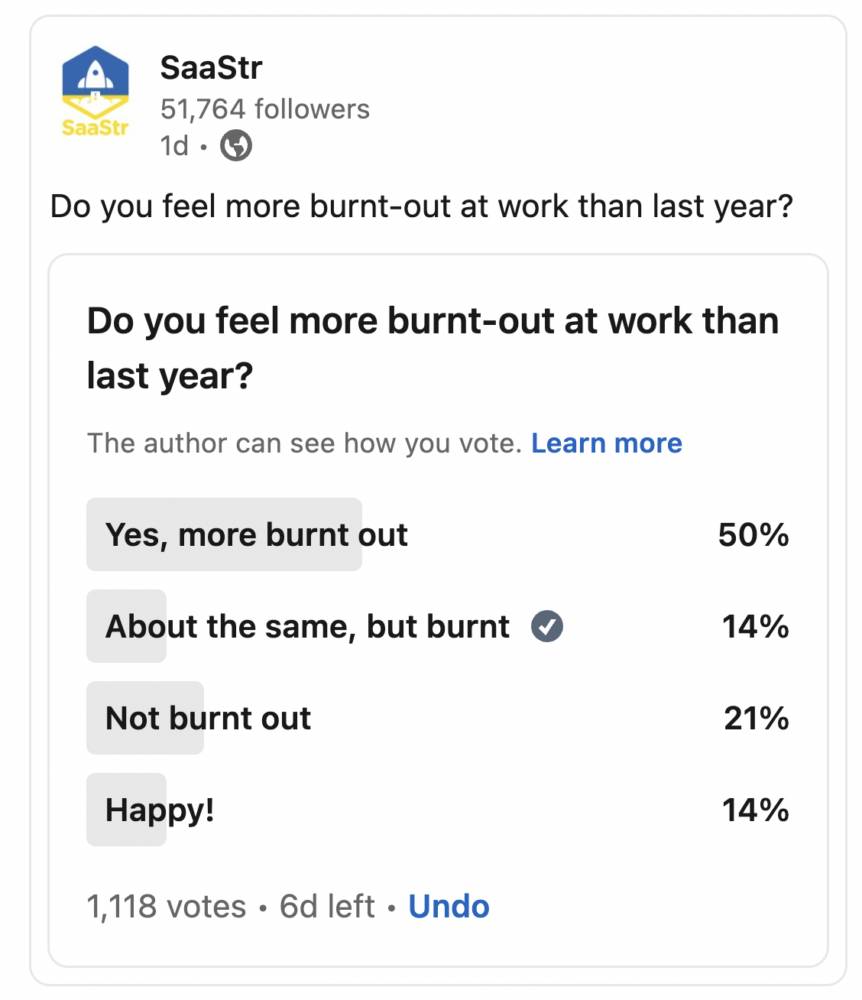
There is a special kind of tired that laughs in the face of coffee. It is not the “I stayed up too late watching one more episode” kind of tired. It is not even the “my inbox has started reproducing like a science experiment” kind of tired. It is burnout: the slow, joy-draining, motivation-melting feeling that your battery is not just low, but possibly missing from the device entirely.
Recent workplace research suggests that two-thirds of American employees are experiencing some kind of burnout. That number66%should make every manager, team leader, and overachieving calendar-color-coder sit up a little straighter. Burnout is no longer a private inconvenience. It is a workplace culture problem, a productivity problem, a health problem, and, frankly, a “why does everyone look haunted during the 9 a.m. meeting?” problem.
The tricky part is that many popular burnout fixes sound helpful but barely touch the real cause. A meditation app is nice. A webinar about resilience is fine. A pizza party can be delicious. But if people are drowning in impossible workloads, unclear expectations, poor tools, job insecurity, and a culture that treats exhaustion like a badge of honor, these solutions are basically handing someone a scented candle while their house is on fire.
What Burnout Really Means
Burnout is often used casually, but it has a specific meaning. The World Health Organization describes burnout as an occupational phenomenon caused by chronic workplace stress that has not been successfully managed. It is commonly marked by three major symptoms: exhaustion, mental distance or cynicism toward work, and reduced professional effectiveness.
In plain English: you are tired, you care less than you used to, and you feel like you are not doing good workeven if you are still doing a lot of it. That last part matters. Burned-out people are not necessarily lazy. Many are high performers who have been sprinting for so long that their nervous system finally files a complaint.
Burnout Is Not Just Being Busy
Busy can be temporary. Burnout is sticky. Busy says, “This week is intense.” Burnout says, “I cannot remember the last time work felt manageable.” Busy may improve after a deadline. Burnout often hangs around even after the calendar clears because the body and mind have learned to expect the next wave.
That is why the usual advicetake a day off, get more sleep, drink water, try yogacan feel insulting. Those things may help with recovery, but they rarely solve burnout by themselves. If the same broken work system is waiting when you return, your vacation becomes less like rest and more like a commercial break in a disaster movie.
Why So Many Workers Feel More Burned Out Than Ever
The current burnout wave is not coming from one source. It is a messy cocktail of too much work, too little support, economic anxiety, shifting technology, staff shortages, and always-on communication. Add return-to-office tension, layoffs, inflation worries, AI uncertainty, and the tiny psychological jump scare of seeing “quick sync?” on your calendar, and you have a recipe for mass exhaustion.
One major driver is workload. Employees frequently report having more work than time to complete it. Another is lack of resources: outdated systems, missing staff, unclear training, and tools that create more steps instead of fewer. When workers are expected to produce more with less, “efficiency” starts to look suspiciously like “please absorb the job of the person we did not replace.”
Job insecurity adds another layer. When people worry that their role could disappear, they often work harder, say yes more often, and avoid asking for help. That may look productive in the short term, but it is emotionally expensive. Fear is a terrible project manager. It gets results for a while, then leaves everyone exhausted and resentful.
A Few Things That Don’t Actually Seem to Help
Let’s be fair: not every workplace wellness effort is useless. Some programs help when they are thoughtful, accessible, confidential, and connected to real changes in job design. But many popular burnout “solutions” fail because they focus on fixing the employee instead of fixing the conditions burning the employee out.
1. Mandatory Wellness Training
Nothing says “we care about your stress” quite like adding another required module to an already overloaded schedule. Mandatory wellness training can become part of the problem when it takes time away from actual work without reducing the workload. Employees click through slides about breathing exercises while quietly wondering when they are supposed to finish the report due in forty-three minutes.
Training works best when it is relevant, practical, and paired with structural support. If the lesson is “set better boundaries,” but the company culture rewards instant replies at 10 p.m., the training is not empowerment. It is theater with bullet points.
2. Wellness Apps Without Workload Changes
A meditation app can be useful. So can sleep tracking, journaling, therapy platforms, and breathing exercises. The problem begins when companies treat these tools as a substitute for better staffing, realistic deadlines, manager training, and psychological safety.
If someone is burned out because three jobs have been folded into one, a mindfulness notification that says “take a calming breath” may not land well. It may, in fact, inspire a calming throw of the phone across the room. Personal tools can support recovery, but they cannot compensate forever for a workplace that keeps generating stress faster than workers can process it.
3. One-Day Mental Health Events
A mental health day can help. A mental health awareness event can open conversation. But a single day of programming does not erase months of overwork. It is similar to cleaning one fork and calling the whole kitchen spotless.
Real mental health support is ongoing. It includes manageable workloads, trained managers, fair policies, adequate time off, confidentiality, and a culture where people can say “I am at capacity” without being treated like they confessed to stealing office chairs.
4. “Just Be More Resilient” Messaging
Resilience is valuable. People need coping skills, emotional flexibility, and the ability to recover from hard seasons. But resilience becomes toxic when it is used to avoid responsibility for bad systems. Telling employees to become more resilient without reducing unreasonable demands is like telling a fish to develop better walking skills.
Burnout research consistently points to workplace factors such as workload, control, reward, community, fairness, and values. When those areas are out of alignment, the answer is not simply tougher employees. It is better work design.
5. Perks That Don’t Address Power
Free snacks, branded water bottles, casual Fridays, and office massage chairs are not evil. Most people are pro-snack. But perks do not solve burnout when employees lack autonomy, respect, schedule predictability, or influence over decisions that affect their work.
A perk says, “Enjoy this benefit.” A healthy culture says, “Your time, voice, and well-being matter.” Workers can usually feel the difference. One comes with kombucha. The other comes with trust.
What Actually Helps With Burnout
The most effective burnout prevention strategies usually sound less glamorous than wellness trends. They are not always Instagrammable. Nobody posts a dreamy flat-lay photo of “reasonable staffing levels.” But these are the changes that matter.
Reduce the Load, Not Just the Mood
If burnout is driven by too much work, the most direct solution is to reduce or rebalance the work. That can mean hiring, prioritizing, removing low-value tasks, extending timelines, automating repetitive processes, or clearly deciding what will not get done. A team cannot have seventeen top priorities. That is not strategy; that is a buffet of panic.
Leaders should regularly ask: What work is essential? What work is legacy clutter? What meetings could be emails, documents, or quiet disappearance? If every task is urgent, employees eventually stop believing urgency means anything.
Give People More Control
Burnout worsens when workers feel powerless. Autonomy helps because people can shape how they meet expectations. Flexible scheduling, fewer unnecessary approvals, clearer decision rights, and more trust can reduce stress without lowering standards.
Control does not mean chaos. It means adults are allowed to work like adults. When employees have some say in how, when, and where they work, they are often better able to protect focus, energy, and personal responsibilities.
Train Managers to Spot Problems Early
Managers have a huge impact on burnout. A supportive manager can notice workload creep, clarify priorities, protect boundaries, and create psychological safety. A poor manager can transform a normal Tuesday into a leadership-themed escape room with no exits.
Manager training should go beyond performance reviews. It should include how to discuss capacity, respond to mental health concerns, prevent favoritism, handle conflict, and build trust. Burnout often becomes severe because early warning signs are ignored: missed deadlines, irritability, withdrawal, cynicism, declining quality, and people saying “I’m fine” in a tone that suggests they are absolutely not fine.
Make Recovery Normal, Not Suspicious
Rest should not require a dramatic confession. People need breaks before they collapse, not after. Organizations can support recovery by respecting time off, discouraging after-hours messages, making paid leave usable, and modeling boundaries from the top.
If senior leaders send emails at midnight and praise people for “doing whatever it takes,” employees learn the real policy. Culture is not what the handbook says. Culture is what gets rewarded.
What Individuals Can Do While Waiting for the System to Grow Up
It would be lovely if every workplace immediately redesigned jobs, improved staffing, trained managers, and stopped pretending that burnout is solved by cupcakes. Until then, individuals still need survival strategies.
Start by naming the problem accurately. Are you exhausted because of workload, lack of control, unfair treatment, unclear expectations, values conflict, or poor recovery time? The answer matters because each cause requires a different response.
Next, document your workload. Instead of saying, “I am overwhelmed,” try, “Here are my current projects, deadlines, estimated hours, and conflicts. Which should take priority?” This turns burnout from a private emotional burden into a visible operational issue.
Set smaller boundaries before you need giant ones. Block focus time. Turn off nonessential notifications. Stop volunteering for tasks you do not have capacity for. Use clear language: “I can complete A by Friday or B by Friday, but not both at the current quality level.” This is not being difficult. This is physics.
Finally, take your symptoms seriously. If burnout is affecting sleep, mood, relationships, concentration, appetite, or physical health, talk with a health care professional or mental health professional. Burnout can overlap with depression, anxiety, medical conditions, grief, caregiving stress, and other issues that deserve real support.
Examples of Burnout in Everyday Work Life
Burnout does not always arrive dramatically. Sometimes it sneaks in wearing business casual. Consider the employee who used to enjoy brainstorming but now sits silently in meetings because every new idea sounds like another unpaid subscription to chaos. Or the manager who wants to support the team but spends each day translating executive urgency into employee exhaustion.
There is the remote worker who technically has flexibility but never fully logs off because work lives in the same laptop as groceries, banking, family photos, and the group chat. There is the nurse, teacher, customer service rep, warehouse worker, developer, designer, accountant, or assistant who keeps absorbing extra tasks because the team is short-staffed and “just for now” has quietly become the business model.
Burnout also affects people outside traditional offices. Caregivers, students, freelancers, founders, gig workers, and parents can experience similar patterns of depletion, even if occupational burnout is specifically tied to work. The common thread is chronic demand without enough recovery, support, control, or meaning.
Personal Experiences: What Burnout Feels Like Up Close
One of the most common burnout experiences is the strange loss of personality. People describe feeling like a dimmer version of themselves. The jokes become rarer. The patience gets thinner. The hobbies begin to look like chores wearing nicer shoes. You may still function, still reply to messages, still meet deadlines, still look “fine” from the outsidebut internally, everything feels heavier than it should.
Another experience is decision fatigue. Burned-out people often struggle with tiny choices. Dinner becomes a philosophical crisis. Choosing a font feels like negotiating international policy. Even pleasant invitations can feel demanding because every yes requires energy you do not have. This can confuse friends and family. They may think you are uninterested, when really your brain has started treating all incoming requests as suspicious packages.
Burnout can also make people cynical in ways that surprise them. A team celebration feels fake. A new company initiative sounds like extra work wrapped in optimistic language. Praise may bounce off because you are too tired to absorb it. This cynicism is not always a character flaw. Often, it is a protective response from someone who has cared too much for too long without seeing enough change.
There is also the “Sunday dread” experience. It starts as a small cloud in the afternoon and becomes a full weather system by evening. You may not hate your job, but your body reacts as if Monday is a bear with a laptop. That dread is information. It may be telling you that your work rhythm is unsustainable, your boundaries are too porous, your manager is unsafe, or your role no longer matches your values.
For many people, burnout includes guilt. You feel guilty for resting, guilty for being less productive, guilty for not being grateful, guilty for wanting something different. This guilt can be especially strong among high achievers, caregivers, and people who were praised for being dependable. The dependable person often becomes the overloaded person because everyone knows they will “figure it out.” Eventually, figuring it out becomes the problem.
Recovery usually begins with honesty. Not dramatic honesty. Just practical honesty. “I cannot keep working this way.” “This deadline is not realistic.” “I need support.” “I am not okay.” These sentences can feel risky, but they are often the first step toward change. Sometimes the change is a conversation. Sometimes it is a new boundary. Sometimes it is a different role, a different team, or a different organization entirely.
The biggest lesson from real burnout stories is that people do not recover by becoming machines with better morning routines. They recover by rebuilding capacity, reconnecting with meaning, receiving support, and changing the conditions that drained them. A walk helps. Sleep helps. Therapy helps. Time off helps. But the deepest healing happens when life stops demanding that you prove your worth through exhaustion.
Conclusion: Burnout Is a Signal, Not a Personal Failure
If 66% of workers are feeling burned out, the problem is not that everyone suddenly forgot how to breathe properly. The problem is that modern work often asks people to operate beyond human limits while calling it ambition, teamwork, or “a fast-paced environment.” Burnout is not weakness. It is feedback.
The fixes that actually matter are not flashy. Reduce impossible workloads. Give people better tools. Train managers. Respect boundaries. Create psychological safety. Pay attention to fairness. Let workers have a voice. Make recovery normal. Treat people like people, not productivity software with legs.
And if you are burned out right now, start with this: you are not broken. You are receiving a message from your mind and body that something needs to change. Listen before the message gets louder.