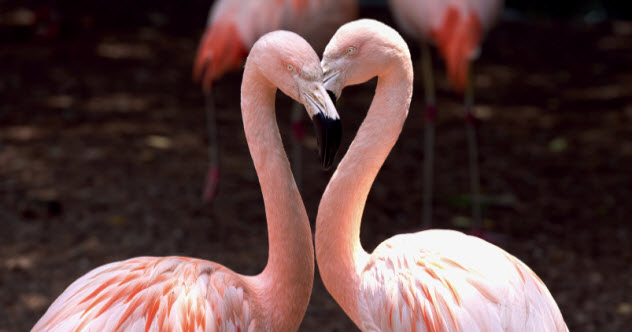
Bird romance is rarely subtle. Across forests, lakes, grasslands, and ocean cliffs, feathered hopefuls build art galleries, moonwalk across branches, inflate balloon-like throats, drum with homemade tools, and even sprint across water. These spectacular bird mating rituals are not random stunts. They are carefully shaped signals that help birds advertise health, coordination, territory, experience, and compatibility.
Some avian courtship displays are solo auditions. Others are duets that help a pair synchronize before the exhausting work of nesting and raising chicks. In many species, females evaluate several males and choose among them, which means every polished feather, precise footstep, and well-timed call may affect which traits reach the next generation. Nature, apparently, invented both the talent show and the highly selective judging panel.
Why Are Bird Courtship Displays So Elaborate?
Bird courtship behavior often works as a test. A demanding dance can reveal stamina. Bright plumage may reflect nutrition and physical condition. A carefully built structure can demonstrate persistence and motor skill. A coordinated duet can show that two birds are capable of noticing and responding to each other.
Courtship displays also help birds recognize suitable members of their own species. Closely related birds may live in the same habitat, but each species can have a distinctive combination of calls, movements, colors, postures, and display locations. Performing the right sequence reduces the chance of sending an expensive romantic message to the wrong recipient.
Not every ritual results in a lifelong partnership, and males are not always the only performers. However, sexual selection frequently favors elaborate male displays in species where females compare potential partners. The result is an astonishing range of bird mating rituals, from delicate bill tapping to full theatrical productions featuring costumes, choreography, percussion, and competitive landscaping.
1. Satin Bowerbirds Build a Romantic Art Installation
The bower is a showroom, not a nursery
A male satin bowerbird does not simply sing from a branch and hope for the best. He constructs a ground-level avenue from twigs and decorates the surrounding area, often with blue objects. Natural treasures such as berries, flowers, feathers, and shells may appear beside human-made discoveries such as bottle caps, clothespins, or plastic fragments.
The color coordination can be so committed that a home-design influencer would quietly take notes. The male continually rearranges his collection, removes items that clash with the theme, and searches for replacements that improve the overall presentation.
The structure is called a bower, but it is not a nest. Its purpose is courtship. A visiting female inspects the architecture and decorations while the male performs nearby. Some males steal attractive pieces from neighboring bowers or damage the work of competitors. The finished display combines construction skill, visual presentation, territory management, and dance into one elaborate mating résumé.
2. Red-Capped Manakins Perform a Branch-Top Moonwalk
A tiny forest bird with major stage presence
In the tropical forests of Central and South America, male red-capped manakins gather at communal display areas known as leks. Each male prepares and defends a small performance space, frequently using a horizontal branch as a miniature stage.
During courtship, the male produces sharp snapping sounds with his wings and moves rapidly across the perch. His most famous move is a backward slide that resembles a moonwalk. His feet work at remarkable speed while the upper body appears almost controlled and effortless.
The performance may look playful, but it requires excellent balance, timing, coordination, and physical condition. The quality of the branch and the male’s ability to remain visible also matter. Females visit the lek and watch competing performers before choosing a mate.
Young males must practice their movements before they can deliver a polished routine. Even in the rainforest, it seems, nobody becomes a dance-floor legend without rehearsal, a suitable stage, and at least one brutally honest critic.
3. Western Grebes Run Across Water Together
The rushing ceremony is synchronized aquatic theater
Western grebes perform one of North America’s most spectacular bird courtship dances. The sequence begins with calls, raised crests, lowered postures, bill dipping, and rapid head shaking. Then comes the grand finale.
Two birds rise almost upright and race side by side across the surface of the water. Their feet slap rapidly against the lake while their necks remain gracefully curved and their wings are held back. After traveling an impressive distance in near-perfect synchronization, both birds suddenly dive.
This behavior is called the rushing ceremony. It depends on explosive leg power, high stepping rates, precise foot placement, and careful coordination between the performers. Grebes can also conduct a later weed ceremony in which paired birds rise from the water while holding aquatic plants in their bills.
The resulting performance is part athletic test, part relationship workshop, and part ballet staged on a lake with no visible floor. Human synchronized swimmers, please accept the challenge with appropriate humility.
4. Greater Sage-Grouse Turn the Prairie Into a Competitive Arena
Dozens of males gather on traditional display grounds
Each spring, male greater sage-grouse assemble before sunrise on open areas called leks. Some lek sites are used repeatedly for many years, making them traditional gathering places for generations of displaying birds.
A male fans his long, pointed tail, raises a dramatic white breast ruff, sweeps his wings across his chest, and inflates two yellow air sacs. The movement produces swishing, popping, and bubbling sounds that carry across the sagebrush. A determined male may repeat his routine several times a minute for hours.
Females walk through the lek and carefully compare the contestants. Despite the number of males present, only a few dominant performers may receive most of the mating opportunities. Rival males also defend small display territories and may face off, peck, or strike each other with their wings.
The lek therefore operates as a runway, percussion section, competitive sports arena, and neighborhood argument before most people have finished their first cup of coffee.
5. Magnificent Frigatebirds Inflate a Red Throat Balloon
The display is visual, vocal, and surprisingly musical
Male magnificent frigatebirds possess a red throat pouch called a gular sac. During the breeding season, a male inflates this pouch until it becomes a giant, heart-like balloon. He sits in a prominent location with his dark wings spread and his bright red display fully visible.
The performance does not stop with inflation. The male shakes his head, clatters his bill, calls, and produces resonating sounds through the expanded pouch. Females flying above a crowded colony can inspect numerous hopeful males before choosing where to land.
The combination of posture, territory, sound, pouch condition, and persistence may help females compare possible partners. Because many males display close together, being visually and acoustically memorable is important.
The transformation is extraordinary. One moment, the male looks like a sleek black seabird. The next, he appears to be wearing a crimson parade balloon large enough to require its own weather permit.
6. The Vogelkop Superb Bird-of-Paradise Becomes a Smiling Oval
Shape-shifting feathers create an optical spectacle
The male Vogelkop superb bird-of-paradise does not merely show his feathers. He uses them to transform his apparent body shape. Before performing, he prepares a display court on the forest floor, removing visual clutter that could distract from the main attractionwhich is, naturally, himself.
When a female arrives, the male raises specialized black feathers into a curved cape and reveals brilliant blue markings. From the female’s viewing angle, his ordinary bird shape seems to disappear. In its place is a dark oval bordered by electric blue, with markings that resemble a glowing smile.
He hops around the female in quick semicircles while keeping the display aimed toward her. Position is crucial because iridescent feathers can look dramatically different depending on the angle of light and the observer.
The routine is less “please notice my plumage” and more “welcome to this carefully directed, fully immersive visual experience.”
7. Blue-Footed Boobies Advertise With a High-Step
Bright feet become the centerpiece of the dance
Blue-footed boobies make their most famous feature impossible to miss. During courtship, a bird raises one foot and then the other in a slow, exaggerated high-step. Instead of hiding the movement beneath its body, the bird carefully presents each bright foot to the potential partner.
The pair may also face each other, spread their wings, point their bills toward the sky, whistle, honk, and present pieces of nesting material. The overall routine looks charmingly awkward, but the information being communicated is serious.
Research indicates that blue-footed booby foot coloration can change with nutritional condition. The color is influenced by pigments obtained through the bird’s diet, and brighter feet may provide useful information about recent health and vitality.
By repeatedly lifting each foot, the booby places its best advertising space directly in the viewer’s line of sight. It is the biological equivalent of arriving at a date and repeatedly pointing out your excellent shoes.
8. Atlantic Puffins Strengthen Their Bonds by Billing
Their colorful beaks become courtship tools
Atlantic puffins are famous for their colorful breeding-season bills, and those bills are central to a behavior called billing. Two puffins face one another, lower their heads, rub or tap their bills together, and rapidly shake their faces from side to side.
Other puffins sometimes gather nearby, turning what began as a private romantic exchange into a public event with unsolicited spectators. Puffin colonies are busy, noisy places where hundreds or thousands of birds may nest within a relatively small area.
Billing helps establish or reinforce a pair bond. Puffins spend much of the year at sea, so recognizable visual, tactile, and behavioral signals may be especially useful when partners return to the colony during breeding season.
The bright bill is therefore more than decorative packaging. It serves as a seasonal display badge, communication tool, and relationship-maintenance devicewhile remaining perfectly capable of holding an impressive row of slippery fish.
9. Albatrosses Rehearse Complex Dances Before Pairing
A long courtship suits a long-lived seabird
Young albatrosses may spend several years participating in social dances before forming a stable pair. Depending on the species, their routines can include bowing, bill clacking, mutual preening, calling, staring, wing spreading, and sky pointing.
During sky pointing, a bird rises upward, stretches its neck, and aims its bill toward the sky. A potential partner must respond appropriately, creating a sequence that becomes increasingly coordinated as the birds continue interacting.
Once a pair forms, the relationship may continue through many breeding seasons. Returning partners can perform shortened versions of their familiar dance when they reunite. The behavior appears to help prospective mates evaluate compatibility while developing a shared communication routine.
Albatross romance is therefore less like speed dating and more like a multi-year audition followed by an annual renewal ceremony. The process takes time, but when your lifespan can stretch across several decades, there is little reason to rush the choreography.
10. Palm Cockatoos Make Drumsticks and Play a Beat
One of the most unusual instrumental displays in nature
Male palm cockatoos take courtship percussion to an extraordinary level. A bird may break off a stick, trim it into a suitable shape, or select a hard seedpod. It then grips the object in one foot and strikes it repeatedly against a hollow tree.
The hollow trunk acts as an amplifier, carrying the sound through the surrounding woodland. The drumming can accompany calls, crest raising, wing movements, and other visual signals directed toward a female.
Scientific observations suggest that the rhythms are not random. Individual males can produce distinctive beat patterns, and different birds may prefer tools with different shapes or materials. This gives each performance a degree of personal style.
The behavior is exceptional because it combines tool selection or manufacture, rhythm, visual display, and acoustic communication. Somewhere in the Australian woodland, an audience of one is carefully reviewing an unplugged set performed by a musician who built his own drumstick.
What These Avian Mating Rituals Reveal
These surprising bird mating rituals are entertaining, but they also reveal how evolution operates through communication and mate choice. A female does not need to calculate genetic quality consciously. She responds to signals that, over many generations, may have become associated with traits such as health, coordination, persistence, maturity, or territory quality.
The rituals also show that attraction is rarely based on a single feature. A decorated bower is accompanied by a dance. Bright feet are combined with posture, calls, and nesting gestures. An albatross duet succeeds only when both birds respond correctly. Courtship is usually a complete performance in which movement, sound, color, timing, and location reinforce one another.
Some displays can also help synchronize a bonded pair before nesting. Raising chicks requires cooperation in many bird species, so partners that communicate effectively during courtship may be better prepared to coordinate nest defense, incubation, and feeding.
This complexity makes bird behavior especially vulnerable to disturbance. A sage-grouse lek needs quiet open ground. A grebe needs sufficient water and space to complete its rush. Seabirds require secure breeding colonies, while forest performers depend on intact display courts and mature trees. Protecting habitat preserves not only bird populations but also the behaviors that make those populations unique.
Field Experience: Watching Bird Courtship Without Ruining the Date
Seeing an avian courtship display in the wild feels very different from watching a short video. The first surprise is often how much waiting is involved. A spectacular ten-second rush across a lake may be preceded by an hour of ordinary floating, preening, and calling. A grouse lek may require a dark drive, a cold predawn arrival, and a long period of sitting silently before the first popping sounds begin. Wildlife rarely respects the observer’s schedule, which is probably healthy for the observer’s ego.
The second surprise is how strongly place shapes the experience. On a lake, the low angle of sunrise can turn each splash from a rushing grebe into a silver spark. On sagebrush flats, sounds that seem modest in a recording can feel strangely powerful as they travel through open air before the landscape is fully awake. In a seabird colony, the visual drama competes with wind, salt spray, constant calls, and the unmistakable perfume of many thousands of birds living close together.
Responsible observation begins with distance. Binoculars or a spotting scope allow natural behavior to continue without forcing birds to retreat, interrupt a display, or waste energy watching a person. Remaining near established viewpoints, blinds, boardwalks, or guided observation areas is especially important at leks and nesting colonies. A dramatic photograph is not worth separating a pair, flushing a bird, or attracting predators to a nest.
Patience also changes what an observer notices. At first, the largest gesture dominates: the balloon throat, backward slide, glowing cape, or sprint over water. After several minutes, smaller signals become visible. One bird adjusts its position to control the viewing angle. A female approaches, pauses, and leaves. A rival steps closer and changes the performer’s rhythm. A pair repeats a movement with slightly better synchronization. The display stops being a novelty and becomes a conversation.
Sound can be just as revealing as color. Closing one’s eyes briefly, while remaining safely positioned, can separate wing snaps, foot slaps, bill clacks, and low calls from the surrounding noise. Playback should generally be avoided because broadcasting recordings can distract birds, trigger territorial responses, or pull them away from important locations. The best soundtrack is the one the birds choose to perform themselves.
Keeping a field notebook adds another layer to the experience. Record the date, time, weather, habitat, distance, number of birds, and sequence of behaviors. Instead of writing “the bird danced,” note what happened first, what followed, how another bird reacted, and how long the display lasted. Even simple notes sharpen attention and reduce the temptation to interpret every movement as romance. Some displays are territorial, some reinforce an existing pair bond, and others serve several purposes.
The most rewarding moment is often not the most spectacular one. It may be the instant two grebes align before rushing, the quiet inspection of a bower, or the way an albatross pair resumes a familiar sequence after months apart. Bird courtship rewards people who slow down enough to notice the structure inside the spectacle. The lesson is wonderfully inconvenient for modern life: arrive early, stay still, watch carefully, and let the performance unfold without making yourself part of it.