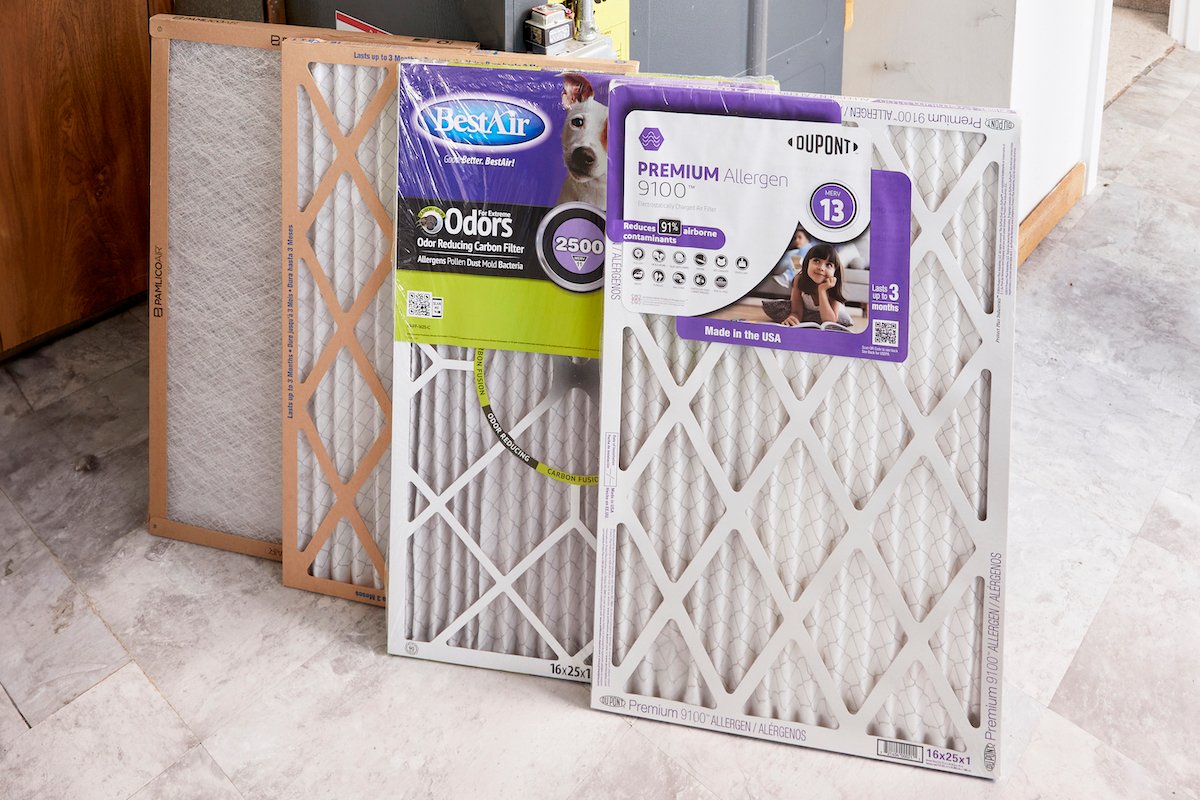
Buying an HVAC filter should be simple. Find the right size, slide it into the slot, and congratulate yourself for behaving like a responsible homeowner. Then you encounter MERV 8, MERV 11, MERV 13, MPR, FPR, pleats, electrostatic media, and packaging that makes an air filter look capable of defending Earth from an asteroid.
The good news is that choosing the best MERV rating for your home does not require an engineering degree. For many households, the practical range is MERV 8 to MERV 13. The right number depends on your HVAC system, household pollutants, allergies, pets, local air quality, and how consistently you replace the filter.
A higher MERV rating generally means better particle filtration, but “higher” does not automatically mean “better for your house.” A filter that captures microscopic particles while strangling your system’s airflow is not an upgrade. It is an expensive way to make your furnace breathe through a couch cushion.
Core definition and recommendations synthesized from EPA and ASHRAE guidance.
What Does a MERV Rating Mean?
MERV stands for Minimum Efficiency Reporting Value. It is a standardized rating developed through ASHRAE testing procedures to compare how effectively an air filter captures particles between approximately 0.3 and 10 microns.
The scale runs from 1 to 20, although most disposable filters designed for ordinary residential HVAC systems fall between MERV 1 and MERV 16. As the number rises, the filter becomes more efficient at capturing smaller particles.
That sounds straightforward, but MERV is a measure of particle-removal performance, not overall filter quality. It does not tell you how well the filter fits your return grille, how much resistance it creates in your specific system, or how long it will last in a home containing three cats and a renovation project.
What Different MERV Ratings Capture
| MERV range | Typical filtration level | Common household applications |
|---|---|---|
| MERV 1–4 | Large debris, lint, carpet fibers, and coarse dust | Basic equipment protection and older systems |
| MERV 5–8 | Household dust, pollen, dust mites, and some mold spores | General residential use |
| MERV 9–12 | Finer dust, pet dander, smaller allergens, and some smoke particles | Homes with pets or allergy concerns |
| MERV 13–16 | Fine particles, including much of the smoke, bacteria-carrying particles, and respiratory aerosols | Enhanced indoor air quality when the HVAC system is compatible |
| MERV 17–20 | Very high-efficiency filtration used in specialized environments | Hospitals, laboratories, clean rooms, and specially designed systems |
Under the rating criteria summarized by the Environmental Protection Agency, a MERV 13 filter captures at least 50% of particles measuring 0.3 to 1 micron, at least 85% of particles from 1 to 3 microns, and at least 90% of particles from 3 to 10 microns. That is a meaningful improvement over a basic MERV 8 filter, especially for fine smoke and other airborne particles.
MERV efficiency figures are based on EPA and CDC summaries of ASHRAE Standard 52.2.
Is MERV 8 Good Enough for a Home?
MERV 8 is a sensible baseline for many ordinary households. It captures common particles such as lint, pollen, household dust, and larger mold spores while generally maintaining manageable airflow in typical residential equipment.
Many home HVAC systems use MERV 8 as the default. It is often a suitable choice when:
- No household member has significant allergies or respiratory sensitivities.
- The home has few or no pets.
- Outdoor smoke and fine-particle pollution are uncommon.
- The HVAC system is older or has limited airflow capacity.
- The primary goal is protecting the blower and indoor coil from dust buildup.
MERV 8 is not a bad filter. It simply emphasizes basic dust control rather than aggressive removal of smaller airborne particles. It is the dependable family sedan of furnace filters: not glamorous, but usually capable of getting everyone where they need to go.
When Should You Choose MERV 11?
MERV 11 is often the residential sweet spot. It provides stronger filtration than MERV 8 without creating as much airflow resistance as some high-efficiency one-inch filters.
Consider MERV 11 when your household includes:
- One or more shedding pets
- People with seasonal allergies
- Noticeable dust accumulation
- Occasional outdoor smoke or urban pollution
- A modern HVAC system rated for medium-efficiency filters
MERV 11 filters are designed to capture finer dust, pet dander, dust-mite debris, and smaller pollen particles more effectively than MERV 8 products. They can improve indoor cleanliness without demanding the maximum filtration level available.
For a family with a dog, two cats, and a vacuum cleaner that has emotionally resigned from its position, MERV 11 is often a practical upgrade.
Residential MERV ranges and product performance considerations synthesized from Carrier, Lennox, Consumer Reports, and AAFA.
Is MERV 13 the Best Choice?
MERV 13 is generally the preferred residential target when the HVAC system can accommodate it. The EPA, ASHRAE, CDC guidance, California air-quality authorities, and the American Lung Association all support MERV 13 or better filtration in appropriate systems when enhanced particle removal is needed.
MERV 13 is especially worth considering for:
- Households affected by wildfire smoke
- People with asthma, allergies, COPD, or other respiratory concerns
- Homes near major roads, industrial areas, or frequent construction
- Families seeking better removal of respiratory aerosols
- Homes with properly sized filter cabinets and capable blower systems
MERV 13 captures substantially more fine particulate matter than lower-rated filters. However, it only cleans air while the HVAC fan is moving air through the filter. Installing one and leaving the system off most of the day is like hiring a security guard and locking the guard in the supply closet.
During wildfire events, authorities commonly recommend using the highest-efficiency filter the system can safely handle, often MERV 13 or higher, setting the system to recirculate, and running the fan more frequently. Filters may also become dirty faster during heavy-smoke periods.
MERV 13 recommendations synthesized from EPA, CDC/NIOSH, CARB, ASHRAE, and the American Lung Association.
Why the Highest MERV Rating Is Not Always Best
Every air filter creates some resistance as air passes through it. This resistance is called pressure drop. A dense filter, an undersized filter, or a filter clogged with dirt can reduce the amount of air delivered by the HVAC system.
Insufficient airflow may contribute to:
- Longer heating and cooling cycles
- Hot or cold rooms
- Higher energy consumption
- Extra blower-motor strain
- Furnace overheating or safety shutdowns
- Air-conditioner coil icing
- Reduced dehumidification and comfort
Filter construction matters as much as the number on the label. Some well-designed MERV 13 filters allow better airflow than poorly designed filters with lower ratings. Consumer testing has found that certain one-inch, high-MERV products can maintain good airflow, so you cannot judge resistance by MERV alone.
Thicker filters often provide more surface area. A four- or five-inch pleated filter may deliver high-efficiency filtration with less resistance and a longer service life than a one-inch filter of the same nominal MERV rating. Unfortunately, you cannot squeeze a five-inch filter into a one-inch slot using optimism and a rubber mallet. The filter cabinet must be built for it.
Airflow and pressure-drop considerations synthesized from DOE Building Science, NIST, Consumer Reports, Carrier, and Lennox.
How to Find the Highest MERV Rating Your System Can Handle
1. Read the HVAC Manual
Look for the manufacturer’s recommended filter type, dimensions, maximum resistance, and approved efficiency range. The label on the furnace, air handler, or filter cabinet may also provide useful information.
2. Check the Existing Filter
Record all three dimensions. A nominal 16-by-25-by-1 filter may have slightly smaller actual measurements, so match the product carefully. A filter that leaves gaps allows air to bypass the media, carrying dust around your expensive filtration upgrade.
3. Inspect the Filter Slot
Look for gaps, bent racks, missing covers, and loose-fitting filters. A properly sealed MERV 11 filter may outperform a poorly fitted MERV 13 filter because air follows the easiest route available. Given a choice between squeezing through filter fibers and wandering around the edge, air will choose the scenic route.
4. Watch for Airflow Problems
After upgrading, pay attention to weaker airflow, unusually long cycles, new equipment noise, icing, overheating, or rooms that no longer reach the thermostat setting. These signs do not prove the filter is responsible, but they justify an inspection.
5. Ask an HVAC Professional to Measure Static Pressure
The most reliable approach is to have a technician measure system airflow and external static pressure with the filter installed. This replaces guesswork with actual data and can reveal restrictive ductwork, undersized returns, dirty coils, or other problems that existed before the filter upgrade.
Correct sizing, fit, and system compatibility are emphasized by EPA, CDC, ENERGY STAR, and DOE guidance.
A Simple MERV Rating Decision Guide
Choose MERV 8 if:
You want reliable equipment protection and basic dust control, your indoor air concerns are modest, or your older HVAC system has limited airflow capacity.
Choose MERV 11 if:
You have pets, mild-to-moderate allergies, or persistent household dust and want stronger filtration without automatically jumping to the highest residential level.
Choose MERV 13 if:
You need better fine-particle removal because of smoke, asthma, respiratory concerns, heavy traffic pollution, or illness preventionand your system is designed or verified to support it.
Consider MERV 14–16 only if:
The HVAC manufacturer or a qualified technician confirms compatibility. These filters may be appropriate in specially designed systems but are not automatically suitable for standard residential filter slots.
How Often Should You Change an HVAC Filter?
There is no universal replacement schedule. Filter life depends on its size, thickness, construction, system runtime, indoor particle levels, pets, renovation activity, and outdoor conditions.
A practical routine is to inspect a one-inch filter every month. Many need replacement every one to three months, while thicker media filters may last considerably longer when the system and manufacturer allow it.
Replace the filter sooner when:
- It is visibly coated with dust or smoke residue.
- Airflow has weakened.
- The HVAC system runs almost continuously.
- You have several pets.
- Construction or remodeling is underway.
- Wildfire smoke or heavy outdoor pollution is present.
- The manufacturer’s service interval has arrived.
Do not wait for the filter to resemble a gray throw pillow. A dirty filter can dramatically reduce airflow, increase energy use, and add strain to HVAC equipment.
Maintenance recommendations synthesized from EPA, DOE Building Science, and the American Lung Association.
Installation Mistakes That Reduce Filter Performance
Even the perfect MERV rating cannot rescue an incorrectly installed filter. Avoid these common mistakes:
- Installing it backward: The airflow arrow should point toward the furnace, air handler, or blower.
- Using the wrong size: Gaps allow unfiltered air to bypass the media.
- Stacking filters: Two filters usually add unnecessary resistance unless the system was specifically designed for that arrangement.
- Forgetting the access cover: An open or poorly sealed filter cabinet can pull air from an attic, basement, garage, or utility space.
- Ignoring multiple returns: Some homes have filters in more than one return grille.
- Using a damaged filter: Crushed pleats and torn media can compromise both fit and performance.
ENERGY STAR and CDC guidance both emphasize proper sizing and sealing because filtration works best when air passes through the media rather than around it.
What MERV Filters Cannot Remove
Standard MERV-rated HVAC filters are primarily designed to capture particles. They do not reliably remove gases such as carbon monoxide, radon, or most volatile organic compounds. Ordinary particle filters also cannot correct excessive humidity, eliminate a mold source, or make indoor smoking harmless.
Activated-carbon or other sorbent media may reduce certain odors and gases, but MERV alone does not measure gas-removal performance. Carbon monoxide requires properly maintained combustion appliances and working carbon-monoxide alarms. Radon requires testing and, when elevated, a dedicated mitigation system.
The most effective indoor air quality strategy combines several methods:
- Control pollution at its source.
- Use kitchen and bathroom exhaust fans that vent outdoors.
- Provide appropriate ventilation when outdoor air is clean.
- Maintain reasonable indoor humidity.
- Use central filtration and portable air cleaners where needed.
Limits of particle filters and the importance of ventilation and source control synthesized from NIST, ENERGY STAR, and American Lung Association guidance.
Should You Add a Portable HEPA Air Purifier?
A portable HEPA air cleaner can complement an HVAC filter, particularly in a bedroom, nursery, home office, or cleaner-air room used during wildfire smoke.
Central filters treat air throughout the ducted system but only while the fan operates. Portable purifiers clean the room in which they are placed and can run continuously without operating the entire heating or cooling system.
Select a purifier with an appropriate Clean Air Delivery Rate for the room, place it where airflow is not blocked, and avoid devices that intentionally generate ozone. For larger homes or separated rooms, more than one portable unit may be necessary.
Conclusion: The Best MERV Rating Is a Balanced Choice
For most homes, the right MERV rating falls between MERV 8 and MERV 13. MERV 8 handles ordinary dust and equipment protection. MERV 11 is a strong middle-ground option for pets, pollen, and household allergens. MERV 13 provides better protection from fine particles, smoke, and respiratory aerosols when the HVAC system can maintain proper airflow.
Do not choose a filter by number alone. Confirm the size, examine the fit, consider the filter’s thickness and construction, follow the equipment manufacturer’s recommendations, and replace it before it becomes clogged. When system capacity is uncertain, an HVAC professional can measure static pressure and identify the most efficient filter your equipment can use safely.
The winning filter is not necessarily the one with the most impressive packaging. It is the one that captures the pollutants you care about, fits tightly, allows healthy airflow, and gets changed before it becomes a household archaeological exhibit.
Real-World Experiences With Choosing a MERV Rating
The following composite scenarios are based on common homeowner experiences and are provided as practical illustrations rather than individual testimonials.
The Older Furnace That Did Not Appreciate MERV 13
One common experience begins with a homeowner reading that MERV 13 offers better filtration and immediately replacing a basic fiberglass filter. Within several days, the bedrooms feel warmer, airflow from the registers seems weaker, and the furnace runs longer than usual.
The problem is not that MERV 13 is inherently harmful. The older system has a small return duct, a narrow one-inch filter slot, and a blower that was already operating close to its limit. A technician checks the static pressure and finds that the new filter adds too much resistance for the existing configuration.
The homeowner switches to a well-performing MERV 11 filter and replaces it more consistently. Airflow improves, dust remains under better control than it was with the original filter, and the furnace stops behaving as though every heating cycle is a personal betrayal.
The Pet Household That Found Its Middle Ground
Another household has two dogs, visible dust on dark furniture, and a family member with seasonal allergies. Its MERV 8 filter protects the equipment, but it does not capture as much fine dander and allergen-carrying material as the family would like.
After moving to MERV 11, they notice less dust near the supply registers and fewer floating clumps of pet hair. The filter still does not replace vacuuming, laundering pet bedding, or grooming the dogs. It does, however, reduce the amount of airborne debris circulating through the home.
The major lesson is maintenance. The household initially expects the filter to last three months, but frequent inspections show that it becomes heavily loaded after six to eight weeks. Adjusting the replacement schedule produces a larger improvement than simply buying the most expensive filter on the shelf.
The Wildfire-Season Upgrade
A family living in a smoke-prone region normally uses MERV 8. Before wildfire season, an HVAC technician confirms that the system can support MERV 13. When outdoor air quality deteriorates, the family closes windows and doors, sets the central system to recirculate, installs a fresh MERV 13 filter, and runs the fan more frequently.
They also operate a portable HEPA purifier in the bedroom. The central filter reduces particles throughout the ducted portion of the house, while the purifier provides focused air cleaning where the family sleeps. After several smoky days, the HVAC filter is visibly darker than normal, so they replace it early rather than waiting for the usual date.
The experience demonstrates that MERV 13 is most effective as part of a larger plan. Closing the building, limiting indoor particle-generating activities, recirculating air, and using localized filtration all contribute to the result.
The Newer System With a Thick Media Cabinet
A newer home may have a four-inch media cabinet designed for higher-efficiency filtration. Its owner uses a MERV 13 filter without experiencing the airflow problems associated with some one-inch products. The deeper pleats provide more media surface area, allowing the filter to collect particles while maintaining acceptable airflow.
The thicker filter also lasts longer, although it still receives regular inspections. During a remodeling project, drywall dust loads the filter much faster than normal, proving that calendar-based replacement schedules are only estimates.
Across all four experiences, the same principle emerges: the best MERV rating is not selected in isolation. System design, filter dimensions, household activities, outdoor pollution, fan runtime, and maintenance habits determine how well the filter performs in everyday life.
Note: Before increasing filter efficiency, check your HVAC manual or ask a qualified technician whether the system can support the filter’s airflow resistance. People with asthma or other respiratory conditions should also follow guidance from their healthcare professionals.