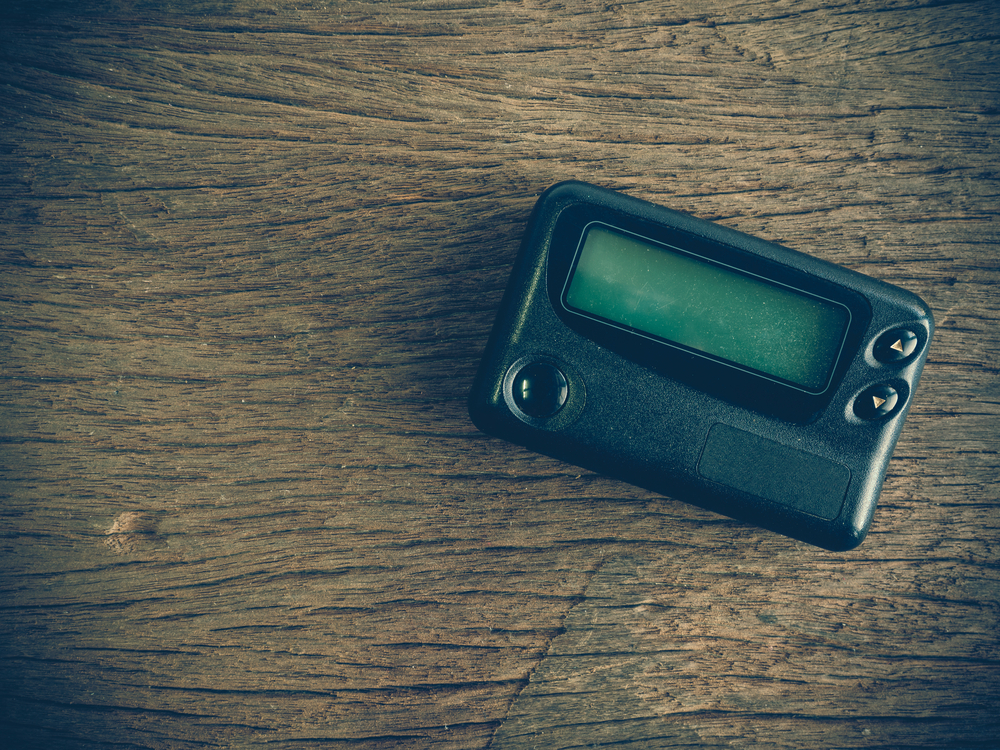
There are goodbyes that feel dramatic, like waving from the deck of a departing ship. Then there are quieter goodbyes, like dropping a tiny black pager into a drawer beside old keys, dried-out pens, and a mystery cable no one dares throw away. The pager did not ask for a farewell party. It did not demand a software update, request facial recognition, or interrupt dinner with twelve notifications from apps you forgot you installed. It simply beeped, buzzed, flashed a number, and expected you to find a phone like a responsible citizen of the late twentieth century.
And yet, for such a small device, the pager carried a surprisingly large emotional load. It was a pocket-sized symbol of urgency, importance, romance, annoyance, responsibility, and occasionally, “Please call Mom before she calls everyone you know.” For doctors, first responders, journalists, business owners, teenagers, and anyone who once clipped one to a belt with more confidence than fashion sense, the pager was more than old technology. It was a lifestyle accessory for the age before everyone became permanently online.
This is a farewell to the pager: the beep that trained us to respond, the tiny screen that made numbers feel like secret codes, and the communication tool that helped bridge the gap between landlines and smartphones. Goodbye, little beeping legend. You were annoying, useful, oddly stylish, and impossible to ignore.
The Pager Was the Original “Always On” Device
Before smartphones turned every pocket into a glowing command center, the pager introduced a radical idea: someone could reach you even when you were not standing beside a telephone. That sounds ordinary now, but in the mid-twentieth century it was practically science fiction. The pager helped create the first version of mobile availability, long before group chats, read receipts, and the modern horror of seeing “typing…” for three minutes.
The story begins with wireless pioneer Al Gross, who invented the telephone pager in 1949. His idea was practical and even noble: doctors could be contacted quickly when patients needed them. The funny part is that many early doctors were not exactly thrilled. Being reachable at all times sounded less like progress and more like a threat to golf, dinner, and basic peace. In other words, the first reaction to mobile communication was the same reaction many people have today when their phone rings after 9 p.m.: absolutely not.
Still, the concept was too useful to disappear. Early paging systems gave hospitals, emergency teams, and businesses a way to summon people quickly. By the 1960s, devices such as Motorola’s Pageboy helped move paging into more recognizable form. These early units were simple. Some did not display messages at all; they only made a tone. But that tone meant action. Call the office. Call the hospital. Call home. Call someone who is probably already irritated that you have not called yet.
Why the Pager Became a Cultural Icon
The pager hit its cultural peak in the 1980s and 1990s, when wearing one suggested that you were important enough to be interrupted. A pager clipped to your belt said, “I have responsibilities.” Sometimes it said, “I am a doctor.” Sometimes it said, “I own a small business.” Sometimes it said, “I am thirteen and somehow convinced my parents this was necessary.”
In that era, the pager had a strange glamour. It was not glamorous in the red-carpet sense. It was more of a mall-food-court, denim-jacket, pay-phone glamour. A beep in public could turn heads. Someone would glance down, read the number, and suddenly become a person with somewhere to be. That little rectangle delivered status with a side of panic.
It also created its own language. Before emojis and GIFs, people used numbers as emotional shorthand. “143” meant “I love you.” “911” meant urgent. A callback number with a familiar area code could brighten your day or ruin your lunch. People learned to decode messages with detective-level intensity. A pager did not give you context; it gave you a clue. The rest was up to your imagination, and imagination is dangerous when all you have is seven digits and anxiety.
How Pagers Worked Without Trying to Be Smart
A pager’s genius was its simplicity. A paging system sent a radio signal from a transmitter to a small receiver. One-way pagers received alerts. Alphanumeric pagers displayed short text. Two-way pagers eventually allowed limited replies. But even the more advanced versions were modest compared with smartphones. They did not host games, scan faces, track steps, recommend videos, or ask whether you wanted to enable cloud backup.
This simplicity made pagers extremely dependable in certain environments. Hospitals, for example, often have thick walls, basements, crowded networks, and rooms where cellular signals behave like shy ghosts. Paging signals could travel where early cell service struggled. Batteries lasted a long time. The device was lightweight. It did one job and, most of the time, did it well.
That focus is why pagers survived long after most consumers moved on. Even as smartphones became common, hospitals and emergency workers continued using pagers because reliability matters when a delayed message can affect real-world decisions. A smartphone may be more powerful, but power is not the same as dependability. Sometimes the best tool is not the one with the most features. Sometimes it is the one that screams “BEEP” and refuses to be fancy.
The Hospital Pager: Beloved, Hated, and Hard to Replace
Nowhere has the pager lasted longer than in healthcare. Doctors, nurses, residents, and emergency teams have used pagers for decades because they are fast, familiar, and difficult to ignore. A hospital page can cut through noise, routine, and fatigue. It can also interrupt a sandwich with the precision of a tiny plastic tyrant.
Research on hospital paging shows why the device is both useful and frustrating. In academic medical settings, physicians have received large numbers of pages per day, many of them clinically relevant and requiring a response. That means the pager was not merely a nostalgic gadget; it was deeply woven into real workflows. But one-way paging also created problems. A page often forced the recipient to stop, find a phone, call back, clarify the issue, and then act. In a busy hospital, that is not exactly smooth. It is more like communication with extra cardio.
Modern secure messaging platforms are gradually replacing traditional pagers in many healthcare systems. These tools can include patient context, message priority, team lists, and read receipts. That sounds better, and in many ways it is. But new tools bring new challenges too: message overload, wrong-recipient risks, privacy concerns, and the expectation that everyone should reply immediately. The pager was inefficient, yes, but it also had boundaries. It said, “Call me.” It did not open a waterfall of follow-up texts while you were trying to finish a shift.
The 1998 Galaxy IV Outage: When the Beep Went Silent
One of the most dramatic reminders of pager dependence came in May 1998, when the Galaxy IV satellite malfunctioned and disrupted a huge portion of paging service across the United States. Millions of users were affected, including businesses, hospitals, media services, and people who suddenly discovered that “always reachable” depended on infrastructure floating far above Earth.
For many people, the outage was a shock. Pagers had become so normal that their absence felt almost unnatural. Doctors had to rely on alternate contact plans. Companies scrambled. News organizations adjusted. The event exposed a truth we still wrestle with today: communication technology feels invisible until it breaks. Then everyone remembers that convenience is built on towers, satellites, networks, batteries, maintenance crews, and a frightening amount of trust.
The Galaxy IV outage was a pager-era version of a modern cloud-service failure. Today, when a major app goes down, people rush to another platform to ask, “Is it down for everyone?” In 1998, when pagers stopped working, users could not even complain on their pagers. Truly, a darker time.
Why Smartphones Finally Won
The pager did not vanish overnight. It was slowly crowded out by devices that could do more. Cell phones became smaller, cheaper, and more reliable. Text messaging turned short communication into a daily habit. Smartphones then absorbed everything: phone, camera, calendar, map, music player, flashlight, wallet, alarm clock, and, for many people, a portable source of mild emotional chaos.
Smartphone adoption in the United States grew rapidly. Pew Research Center data shows that smartphone ownership rose from 35% of U.S. adults in 2011 to about 91% by 2025. Once nearly everyone carried a phone capable of instant messaging, email, voice calls, video calls, and app alerts, the consumer pager had little room left. Why carry a separate beeper when one device could do everything except fold laundry and make people answer unknown numbers?
But this victory came with a cost. Smartphones made communication richer, faster, and more visual. They also made it relentless. The pager interrupted you only when someone intentionally paged you. The smartphone interrupts you because a store you visited once in 2019 wants to offer 15% off socks. The pager was demanding, but at least it was honest about it.
What We Lost When We Stopped Using Pagers
Technology does not merely change tools; it changes behavior. The pager created a pause between being contacted and responding. You had to find a phone. You had to decide whether to call back. You had a moment to breathe, think, panic, rehearse, or pretend you did not see it until later. That pause has mostly disappeared.
Today, messages arrive with full sentences, photos, location pins, links, and expectations. People can see when something was delivered. They may see when it was read. Silence now feels like a statement. In the pager era, silence was often just logistics. Maybe you were driving. Maybe the nearest pay phone was broken. Maybe you did not have a quarter. Maybe you were simply living a life with fewer digital witnesses.
The pager also gave communication a certain drama. A beep could mean anything. Good news. Bad news. A work emergency. A family update. A friend asking you to call back because the movie starts at eight. The lack of information made the moment bigger. The device did not deliver the story; it delivered suspense.
What We Gained by Moving On
Nostalgia is charming, but let’s not pretend pagers were perfect. They were limited. Numeric messages could be confusing. One-way communication created delays. Lost pages caused stress. Privacy and security could be weak, especially when sensitive information was transmitted carelessly. In professional settings, those limitations mattered.
Modern communication tools can be safer, clearer, and more collaborative when designed well. A secure hospital messaging system can include the patient’s name, room, care team, urgency, and relevant context. A smartphone can let a parent know exactly where to pick up a child. Emergency alerts can reach entire communities. Video calls can connect families across oceans. The world did not trade pagers for nothing; it traded them for speed, detail, and connection.
Still, the pager deserves credit for teaching us the first lesson of mobile life: being reachable changes everything. It changes work. It changes relationships. It changes expectations. It makes people feel safer and more pressured at the same time. The pager was the tiny ancestor of the notification age, and honestly, it handled the job with far fewer pop-ups.
Farewell Pager: A Personal Tribute to the Beep
Farewell, pager. You were the little device that made people pat their pockets in public. You turned phone numbers into emotional weather reports. You gave doctors headaches, teenagers secret codes, parents new ways to worry, and professionals a reason to look urgently important while standing in line for coffee.
You were not beautiful, at least not in the traditional sense. Most of you looked like garage-door openers with ambition. But you had personality. Your screen glowed with possibility. Your clip was stronger than some modern relationships. Your battery life made smartphones look embarrassingly needy. You could survive drops, drawers, backpacks, hospital corridors, and the occasional laundry incident that no one wanted to discuss.
Most of all, you represented a time when communication was mobile but not endless. We were reachable, but not fully consumed. We could be summoned, but not tracked through every app. We could respond, but usually after finding a phone and gathering ourselves. That small delay now feels almost luxurious.
of Memories: The Beep That Lived in Real Life
My fondest imagined memory of the pager era begins with sound: not a ringtone carefully chosen from a digital library, but a sharp little beep that cut through the room like a tiny robot clearing its throat. Everyone knew the sound. In a diner, it made people look up from pancakes. In a hospital hallway, it made someone move faster. In a family living room, it made one person sigh and another person ask, “Who is it?” even though the pager never answered that question politely.
There was a whole ritual to it. First came the beep. Then the quick reach to the belt or pocket. Then the squint at the screen, because pager displays were not exactly cinema-quality. Then came the decoding. Was that number familiar? Was “911” attached? Was it work? Was it family? Was it the person you hoped would page you, or the person you were absolutely not emotionally prepared to call back? A smartphone tells you too much. A pager told you just enough to make your imagination put on tap shoes.
The search for a phone was part of the adventure. Pay phones were once the unsung partners of pagers. You would spot one in a gas station, a school hallway, outside a grocery store, or near a restaurant restroom, standing there like a public communication altar. People carried coins, calling cards, or memorized numbers. Today, forgetting your phone feels like losing a limb. Back then, getting paged meant entering a small quest: find a phone, make the call, learn your fate.
There was also something wonderfully physical about the pager. It had weight. It clipped to clothing. It could be passed across a table. It could be checked, ignored, dropped, decorated, hidden, or dramatically slapped off like a badge at the end of a long shift. The pager lived in the real world in a way many modern notifications do not. It did not float silently among dozens of app bubbles. It occupied space. It had a job. It was not trying to entertain you.
For families, pagers created their own comedy. Parents used them like emergency ropes. Kids used them like secret channels. Friends developed codes. Couples sent numbers that meant more than numbers had any right to mean. A simple “143” could carry more sweetness than a paragraph of modern texting, partly because it required effort and partly because nobody ruined it with an animated sticker.
Work memories were different. For doctors, technicians, managers, and on-call workers, the pager could feel like a tiny boss. It respected no meal, no nap, no movie climax. It beeped because something needed attention. That could be exhausting, but it also gave the device a seriousness that modern alerts often lack. When a pager went off, people usually assumed it mattered. When a smartphone buzzes now, it might be your bank, your best friend, a calendar reminder, a shipping update, or a raccoon video. The urgency has been diluted by abundance.
That is why saying farewell to the pager feels strangely emotional. We are not just saying goodbye to hardware. We are saying goodbye to a communication rhythm: brief, mysterious, direct, and human-sized. The pager belonged to a world where messages had edges. You received one, acted on it, and returned to life. It was imperfect, inconvenient, and sometimes maddening. But it gave us stories. And for a little plastic box with a tiny screen, that is not a bad legacy at all.
Conclusion: The Pager Deserves One Last Callback
The pager may no longer rule pockets and belt clips, but its influence is everywhere. Every buzz from a smartphone, every urgent alert, every work notification, and every expectation of instant response owes a little something to the beeper. The pager taught society what mobile communication could feel like before we had the language to describe it.
So yes, farewell pager. Thank you for the memories, the mystery, the panic, the codes, the callbacks, the reliability, and the wonderfully dramatic beeps. You were small, stubborn, and unforgettable. You walked so smartphones could sprint, stumble, and then ask us to update our privacy settings.
SEO Tags
Note: This article is written for web publication in standard American English, based on real historical and technology information, rewritten in an original style without source links in the body content.