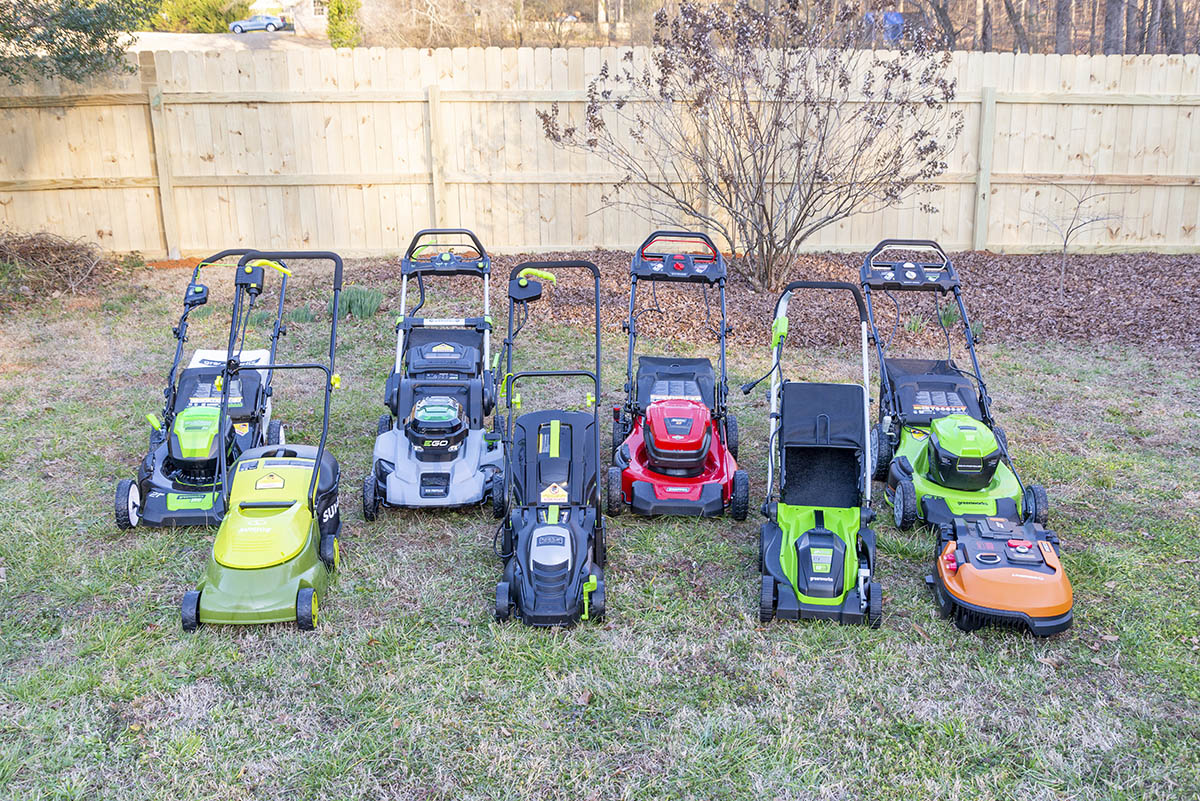
Battery-powered lawn mowers have officially moved beyond the “promising alternative” stage. The best models now deliver strong cutting power, useful runtime, self-propelled convenience, and enough mulching muscle to make many gas mowers nervous. They also start with a button, which means no pull cord, no gasoline can, and no annual ceremony involving spark plugs and language unsuitable for neighborhood children.
Bob Vila’s hands-on mower testing highlights just how competitive cordless machines have become. The strongest performers were evaluated for cut quality, runtime, maneuverability, noise, ease of adjustment, construction, and overall value. Some are designed for compact city lawns, while others have the battery capacity and drive systems needed for hills, thick turf, and larger suburban properties.
This guide examines the standout electric battery-powered mowers from those tests, explains what separates them, and offers practical advice for choosing a mower that fits your lawn rather than simply choosing the model with the largest voltage number printed on the box.
Why Battery-Powered Lawn Mowers Are Finally Serious Gas Alternatives
Early cordless mowers were wonderfully quiet but sometimes approached tall grass with the determination of a sleepy salad spinner. Modern models are different. High-efficiency brushless motors, larger lithium-ion batteries, improved blade systems, and electronic power management allow premium electric mowers to adjust their output as cutting conditions change.
When a mower encounters a thick patch, the motor can increase blade speed automatically. When the grass is light and dry, it can reduce output to conserve battery power. This ability helps current cordless lawn mowers balance performance and runtime without requiring the operator to make constant adjustments.
Electric mowers also eliminate several routine gas-engine chores. There is no engine oil to change, carburetor to clean, fuel stabilizer to remember, or gasoline to store. Owners still need to sharpen the blade, remove grass buildup, inspect the wheels, and care for the battery, but the overall maintenance list is dramatically shorter.
They are quieter at the point of use and produce no exhaust from an onboard engine. That makes mowing more pleasant for the operator, nearby family members, and the neighbor who has somehow scheduled every weekend nap to begin exactly when yard work starts.
How the Battery Mowers Were Evaluated
A meaningful mower test involves more than checking whether the blade spins. Bob Vila’s evaluations considered how effectively each machine cut ordinary lawn grass, dense growth, weeds, and uneven sections. Testers also examined how cleanly the mowers mulched, how fully they packed collection bags, and whether they left clumps or missed blades behind.
Runtime was considered alongside recharge time, but advertised minutes were not treated as guarantees. Battery consumption changes according to grass height, moisture, terrain, blade mode, walking speed, and use of the self-propel system. A mower that runs for an hour on flat, dry turf may have a much shorter session when climbing a hill through damp spring growth.
Ease of use mattered as well. Important details included handle comfort, control placement, deck-height adjustment, mower balance, turning behavior, battery installation, folding mechanisms, and storage. Those details may sound minor in a showroom, but after 40 minutes of mowing, an awkward drive lever can become the most important object in the universe.
Best Electric Battery-Powered Mowers at a Glance
| Mower | Best Use | Deck | Drive Type |
|---|---|---|---|
| Ego Power+ 21-Inch Select Cut | Best overall | 21 inches | Self-propelled |
| Ryobi 40V HP 21-Inch | Best value | 21 inches | Self-propelled |
| Litheli Easysurge | Small and obstacle-filled yards | 18.5 inches | Self-propelled |
| Milwaukee M18 Fuel | Large lawns and demanding grass | 21 inches | Self-propelled |
| Echo 56V Cordless Mower | Best push mower | 21 inches | Push |
| Ryobi 40V HP AWD | Slopes and rough terrain | 21 inches | All-wheel drive |
| Ego Power+ Aluminum Deck Select Cut | Premium mulching performance | 22 inches | Self-propelled |
The Best Battery-Powered Lawn Mowers
1. Ego Power+ 21-Inch Select Cut: Best Overall
The Ego Power+ Select Cut earned the top position because it combines excellent cut quality with intuitive controls and flexible blade options. Its dual-blade system accepts different lower blades for mulching, bagging, or extending runtime. That gives homeowners more control over performance throughout the season instead of locking them into a single cutting setup.
The Touch Drive self-propel system is activated through controls positioned beneath the operator’s palms. Drive speed can be adjusted while mowing, making transitions between open lawn, turns, and hills relatively natural. Bob Vila’s testing found the mower comfortable on both flat ground and slopes, with enough power to create a clean, consistent finish.
The included bag is not especially large, so owners who collect fast-growing grass may stop more frequently to empty it. For most medium-size lawns, however, the Ego offers one of the most complete combinations of cutting ability, runtime, storage convenience, and user-friendly operation.
2. Ryobi 40V HP 21-Inch: Best Value
The Ryobi 40V HP is aimed at homeowners who want premium features without moving into the most expensive professional-style category. It includes self-propulsion, a 21-inch composite deck, multiple clipping modes, single-lever height adjustment, and electronic motor management that increases output when the blade meets heavier resistance.
Its dual-battery configuration provides enough working time for many typical suburban properties. Test results praised its ability to lift grass for an even cut and push clippings efficiently into the collection bag. The composite deck will not rust, although its shape and weight can make grass buildup beneath the mower more noticeable than with some metal decks.
The headlights are not the machine’s greatest achievement, but that is a minor complaint. The Ryobi’s combination of strong cutting performance, useful runtime, and broad 40V tool compatibility makes it a sensible entry point for homeowners building a cordless yard-equipment collection.
3. Litheli Easysurge 18.5-Inch: Best for Small Yards
A smaller deck can be an advantage when mowing narrow side yards, landscaped corners, gates, trees, and garden beds. The Litheli Easysurge uses an 18.5-inch deck that is easier to maneuver than a full-size 21- or 22-inch mower. It also folds flat, making it attractive for garages, sheds, and other storage spaces where every square foot has already been claimed by bicycles and mysterious boxes.
Despite its compact size, the Easysurge produces an aggressive cut and supports mulching, bagging, and side discharge. Electronic cutting-height adjustment is a particularly convenient feature. Its smaller wheels are less comfortable on deeply rutted or rough ground, so it is best suited to relatively smooth lawns.
The long charging time is another consideration. Owners should plan to recharge well before mowing day instead of discovering an empty battery five minutes before guests arrive.
4. Milwaukee M18 Fuel 21-Inch: Best for Large Lawns
The Milwaukee M18 Fuel mower is built for demanding work. It requires two M18 batteries and uses a steel deck, rear-wheel drive, variable self-propel speeds, and a high-lift mode that maintains faster blade rotation for stronger airflow.
That airflow is especially useful when bagging, cutting dense turf, or collecting leaves. In testing, the mower lifted grass blades effectively and packed the collection bag without leaving troublesome clumps behind. Standard mode conserves energy by increasing blade speed only when heavier growth is detected, while high-lift mode prioritizes maximum cutting and collection performance.
The Milwaukee is heavier and more expensive than basic residential machines, but it feels substantial. It is particularly appealing to owners who already use M18 tools and have compatible batteries in their workshop. For thick grass, larger properties, and people who dislike the phrase “good enough,” it is a formidable cordless mower.
5. Echo 56V 21-Inch: Best Push Mower
Not every lawn requires self-propulsion. A balanced push mower can cost less, conserve battery energy, and offer better control around obstacles. Echo’s 56V model combines a 21-inch deck with high rear wheels and a relatively straightforward control layout.
Its motor automatically increases output in thick grass but operates at a lower speed when maximum power is unnecessary. Two battery ports allow the mower to draw from one pack and then switch to the second. This arrangement can be useful for longer sessions because a depleted pack can begin charging while the mower continues operating on the other.
The mower is not exceptionally light, but its balance helps it track smoothly instead of bouncing across uneven ground. It is a strong choice for flat or gently sloped lawns where the operator does not need powered assistance.
6. Ryobi 40V HP AWD: Best for Hills and Rough Ground
Steep sections and uneven lawns can expose the weaknesses of front-wheel or rear-wheel drive systems. Ryobi’s all-wheel-drive mower sends assistance to all four wheels, improving traction and helping the machine remain manageable when the grass bag becomes heavy.
Its self-propel system adjusts to the operator’s movement rather than forcing the user to constantly manipulate a separate speed control. This makes it useful on properties where the mowing pace frequently changes around trees, slopes, drainage areas, and landscaping.
The trade-off is battery consumption. The mower uses both batteries simultaneously, and powering four-wheel assistance can reduce runtime in difficult conditions. Owners with challenging terrain may consider that a fair exchange for improved control and fewer uphill wrestling matches.
7. Ego Power+ 22-Inch Aluminum Deck: Best for Mulching
Ego’s premium 22-inch Select Cut mower emphasizes cutting power, airflow, and mulching performance. Its stacked blades process clippings into fine particles, while adjustable blade speeds allow the operator to choose between maximum performance and greater energy efficiency.
The cast-aluminum deck is lighter than an equivalent steel structure and will not rust. It also gives the mower a premium, durable feel. However, aluminum can be less forgiving of severe impacts, so owners with rocky lawns should remove stones and hidden debris before mowing.
This model is heavy once its large battery is installed, but the self-propelled system handles most of that weight during operation. It is an excellent option for homeowners who mulch frequently and want clippings distributed finely enough to disappear back into the lawn.
How to Choose the Right Battery-Powered Mower
Match Runtime to Actual Mowing Conditions
Do not choose a mower using acreage claims alone. Manufacturers usually calculate coverage in favorable conditions. Tall grass, wet turf, hills, aggressive self-propel settings, high-lift modes, and frequent starts can consume significantly more energy.
For a small lawn below roughly one-quarter acre, a compact mower with one moderate-capacity battery may be sufficient. Medium lawns benefit from a full-width deck and at least one high-capacity pack. Larger properties are better served by two batteries, automatic switchover, rapid charging, or a premium mower designed for sustained output.
Consider the Complete Battery Ecosystem
A battery is not merely a mower component; it is an investment in a tool platform. The same pack may operate a string trimmer, leaf blower, hedge trimmer, chainsaw, or snow blower from the same manufacturer. Choosing a well-supported ecosystem can reduce the cost of future bare tools and prevent the garage from becoming a wildlife preserve for incompatible chargers.
Choose Self-Propulsion for Weight, Hills, or Large Areas
Battery mowers can be heavy because large lithium-ion packs add substantial weight. Self-propulsion is helpful on hills, during long mowing sessions, and when using a grass bag. A push mower remains practical for small, flat properties, particularly when it is well balanced and equipped with larger rear wheels.
Look Beyond Voltage
Voltage is only one part of mower performance. Battery capacity, motor efficiency, blade design, deck airflow, software, and total watt-hours all influence real-world cutting ability. A well-designed 40V mower can outperform a poorly designed machine with a larger number on its label.
Check Storage and Adjustment Features
Folding handles and vertical storage can save considerable floor space. Single-lever height adjustment is also worth having because it changes all four wheels at once. Without it, adjusting the cut can feel like completing a tiny, unnecessary automotive repair before every mowing session.
Field Experience: What Using a Battery Mower Really Feels Like
The first noticeable difference is the starting process. Insert the battery, press the safety control, engage the handle, and the blade begins spinning. There is no priming, choking, pulling, resting, pulling again, questioning your upper-body strength, or wondering whether gasoline somehow expires faster when stored in your garage.
The second difference is noise. Battery mowers are not silentthe blade still creates a strong rushing sound, and self-propelled wheel motors may produce a noticeable whinebut the overall experience is less harsh. Conversations are easier, vibration is reduced, and the operator does not finish the job smelling like exhaust. Early-morning mowing may still annoy the neighbors, but at least it sounds less like a small aircraft attempting to leave the driveway.
On ordinary dry grass, a quality cordless mower feels remarkably similar to a gas machine. The blade maintains speed, the deck creates enough lift for an even cut, and the mower moves at a comfortable pace. The difference becomes more obvious in tall, damp, or neglected turf. As resistance increases, many brushless motors automatically accelerate. The change may be heard as a quick rise in pitch.
This automatic boost is helpful, but it also reveals the relationship between power and runtime. Every dense patch demands additional energy. A battery gauge that seemed comfortably full can begin dropping quickly when the mower is asked to mulch wet growth or climb repeated slopes. That is why mowing regularly matters more with a cordless machine. Cutting a modest amount each week is far easier on the battery than attacking a miniature prairie once every three weeks.
Self-propel behavior also shapes the experience. Palm-activated systems, such as Ego’s Touch Drive, feel natural once the operator learns how much pressure to apply. Pace-sensing systems can be even more intuitive because the mower responds to forward movement. Traditional levers and paddles remain effective, but poorly positioned controls can cause hand fatigue during a long session.
Turning requires practice with any powered drive. Releasing the propulsion slightly before reaching the end of a row prevents the mower from trying to continue into a fence, flower bed, or inflatable swimming pool. Heavier commercial-style machines feel wonderfully stable in straight lines but demand more effort during tight turns. Compact mowers are more agile, although smaller wheels may bounce over roots and ruts.
Battery management quickly becomes part of the routine. The best habit is to charge the pack after it cools rather than immediately after heavy use in hot weather. Keeping a second charged battery available makes mowing more flexible, particularly during spring growth. Owners with several tools on the same platform can rotate packs between the mower, trimmer, and blower, but should remember that a mower usually demands far more energy than a handheld tool.
Storage is pleasantly simple. Remove the battery, clean dry clippings from the deck, fold the handle, and place the mower in its designated space. Models approved for vertical storage can reclaim a surprising amount of garage floor area. There is no concern about gasoline leaking when the mower is tilted, although owners should still follow the manufacturer’s instructions and avoid spraying electrical components with a garden hose.
Blade maintenance remains essential. A dull blade forces the motor to work harder, reduces runtime, and tears grass rather than cutting it cleanly. Sharpening or replacing the blade can improve both lawn appearance and battery efficiency. The electric motor may be modern, but the metal edge meeting the grass is still doing the actual haircut.
Over an entire mowing season, the greatest advantage is convenience. A cordless mower removes many small barriers that encourage people to delay yard work. It starts instantly, requires less preparation, stores cleanly, and is ready whenever the battery is charged. That convenience can lead to more frequent mowing, which in turn improves cut quality and reduces the workload placed on the machine.
Final Verdict
The Ego Power+ 21-Inch Select Cut is the strongest all-around recommendation from Bob Vila’s battery-mower testing. It cuts cleanly, offers adaptable blade choices, handles hills well, and provides controls that are easy to adjust while moving.
The Ryobi 40V HP 21-Inch mower is a compelling value for a typical suburban property, while the Litheli Easysurge is better suited to compact lawns and limited storage. Milwaukee’s M18 Fuel mower is the heavy-duty choice for owners who prioritize power, bagging performance, and professional-style construction. Echo provides a well-balanced push option, Ryobi’s AWD model improves traction on difficult ground, and Ego’s aluminum-deck mower is the premium pick for serious mulching.
The best battery-powered mower is ultimately the one that can finish your lawn under real conditions without making storage, charging, or maneuvering unnecessarily difficult. Choose according to lawn size, terrain, battery capacity, and tool compatibilitynot merely voltage or advertising claims. With the right match, switching from gas no longer feels like accepting a compromise. It feels like retiring a pull cord that had it coming.
Note: Runtime, included batteries, warranties, model numbers, and available features may change. Actual mowing time depends on grass height, moisture, terrain, temperature, blade mode, battery condition, and use of self-propulsion. Charge and store lithium-ion batteries only as directed by the manufacturer, use the approved charger, and check current safety notices before operation.